


Subpanel Installation in Spring Hill, FL
Breaker Space Where the New Circuits Are|Licensed & Insured, EC13011268
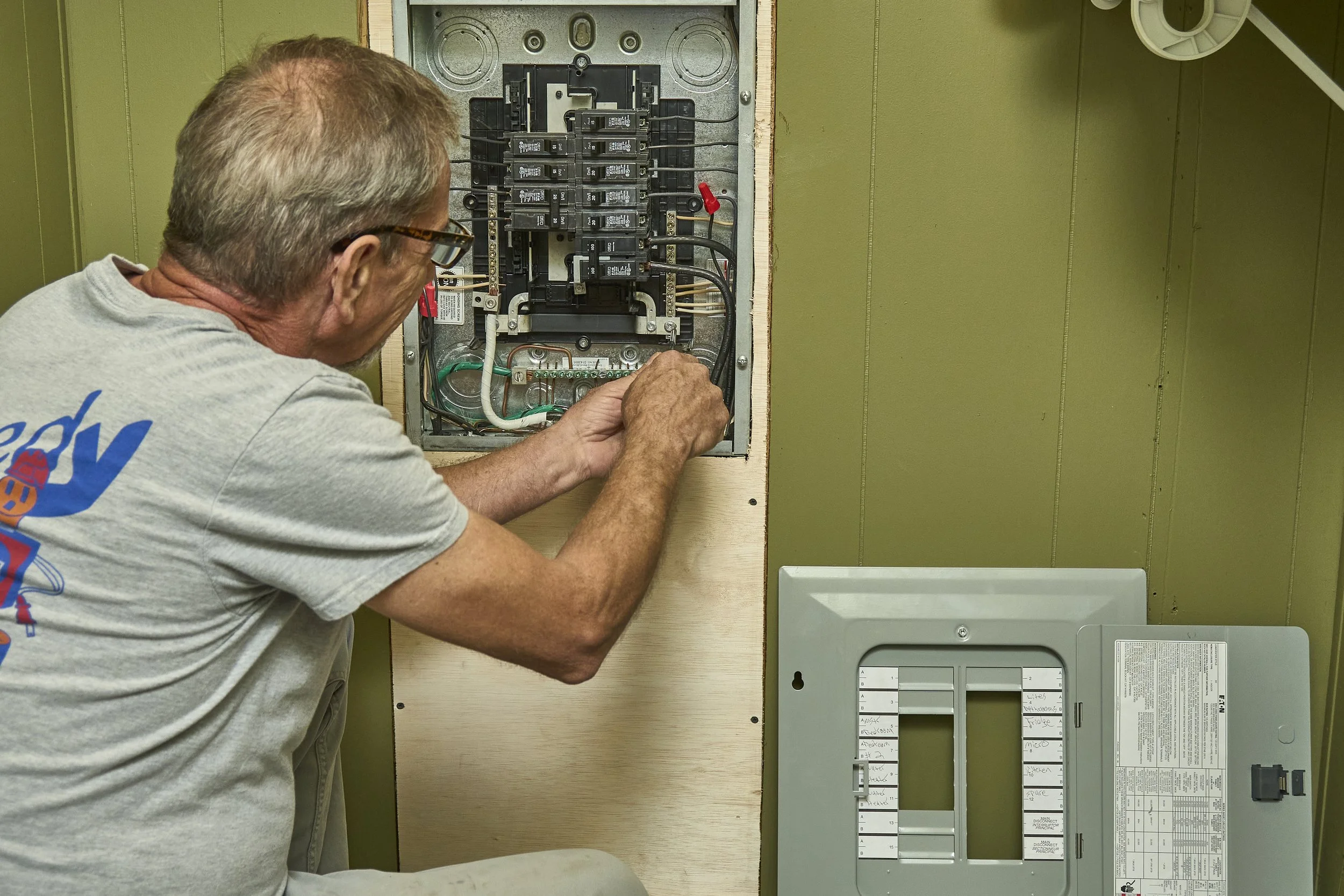
A subpanel turns one breaker in the main panel into a full row of new breaker spaces somewhere else in the house or out on the lot. That one breaker feeds it, and each new circuit then starts at the subpanel, a short run from what it powers. Kennedy Electric installs subpanels in Spring Hill homes, with the panel placed near the new circuits and its feeder sized to what they will draw.
List what the new circuits will feed.
Call (352) 251-2795, Monday through Friday, 8 a.m. to 4 p.m., or send a request online. Calls after hours are returned the next business day.
At a glance
Spring Hill Lot Rules That Place the New Load
In Hernando County's residential zoning districts, pools and screened pool enclosures are permitted in the side or rear yard, no closer than 5 feet to the side and rear lot lines, and a roofed detached building follows the same rule. In the R-2.5 district, lots that border a golf course, a river, or a lake follow other rear-yard rules for pool enclosures. New load from a pool or an outbuilding lands toward the rear or a side of the lot, which can be well away from the main panel on the house, and the feeder's length and trench route follow from that spot.
Lots zoned as a planned development, marked PDP, work differently: their setbacks come from the development's own master plan and its conditions of approval, and the spot for a pool or an outbuilding, with the feeder's run to it, follows that plan. The county's planners can tell you which setbacks apply to your lot.
The feeder, the breaker that serves it in the main panel, and the subpanel at its far end can all be shown on the electrical diagram that Hernando's residential electrical permit asks for. No work may begin until the permit is issued, so the diagram is settled before anything is installed.
How it runs
Where the Power Goes Off During a Subpanel Install
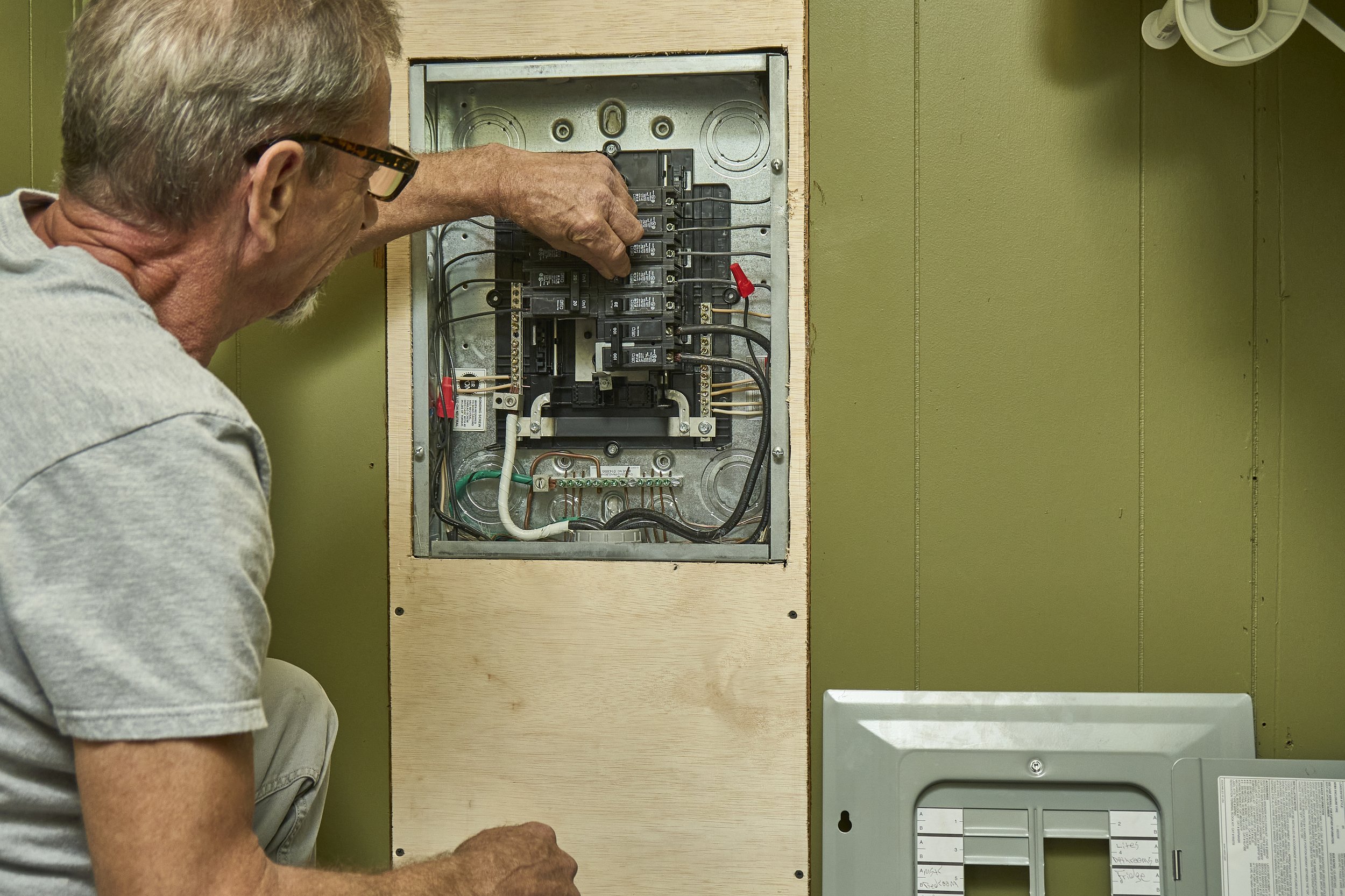
A subpanel job typically has one stretch with the house's power off, and the rest of the work falls on either side of it.
-
1
The subpanel and its feeder, with the house still on
The subpanel is mounted on its wall and the feeder is run from it to the main panel while every circuit in the house keeps working, since nothing inside the main panel has been touched yet.
-
2
The shut-off, for work inside the main panel
The house goes without power for the part of the job inside the main panel: setting the breaker that will feed the subpanel and connecting the feeder to it. Knowing that stretch is coming lets you plan around it, whether that means a home office's computers or a full freezer kept shut until the power is back.
-
3
The new circuits, with only the subpanel's breaker off
With the main panel closed and the house back on, the branch circuits are connected at the subpanel with just its feeder breaker switched off. The rest of the house keeps its power through that last part, and through any circuit added to the subpanel in later years.
What we cover
The Trade Behind Each Spring Hill Subpanel
Whoever brings the new load also brings the plans that place it, and each set of plans leads to a different subpanel job.
Subpanels at a pool builder's equipment pad
A pool builder's layout puts the pump and the rest of the equipment on a pad, and the circuits for that equipment can start in a subpanel at or near it. The pool's bonding and its equipment wiring belong to our pool work; the subpanel side is the feeder from the house and the panel those circuits leave from. When the deck goes in after the pad, the feeder's trench is simplest to place before it's poured.
A detached garage or shed going up
For a building on its own foundation, the first question is how much it will run. A shed with a light and one receptacle may need nothing more than a single circuit, while a detached garage or shop with tools, lights, and a door opener calls for a subpanel and a feeder sized for all of it.
A remodeler's addition or converted room
An addition's floor plan settles which wall can take a panel. A subpanel inside the addition gives its block of new circuits a nearby starting point, so none of them has to travel back to the original panel, and its feeder can pass through the attic before the ceiling is closed in.
A subpanel for equipment the owner adds alone
Sometimes the owner is the only one bringing the load, with an EV charger for the garage or a hot tub set on an existing patio. When every space in the main panel is taken, a subpanel gives those circuits somewhere to start, but it adds breaker spaces only. The house can draw no more power than it could before, so when the existing load is already close to the panel's rating, a load calculation comes first and may point to a panel upgrade instead.
Pricing
What a Spring Hill Subpanel Price Rests On
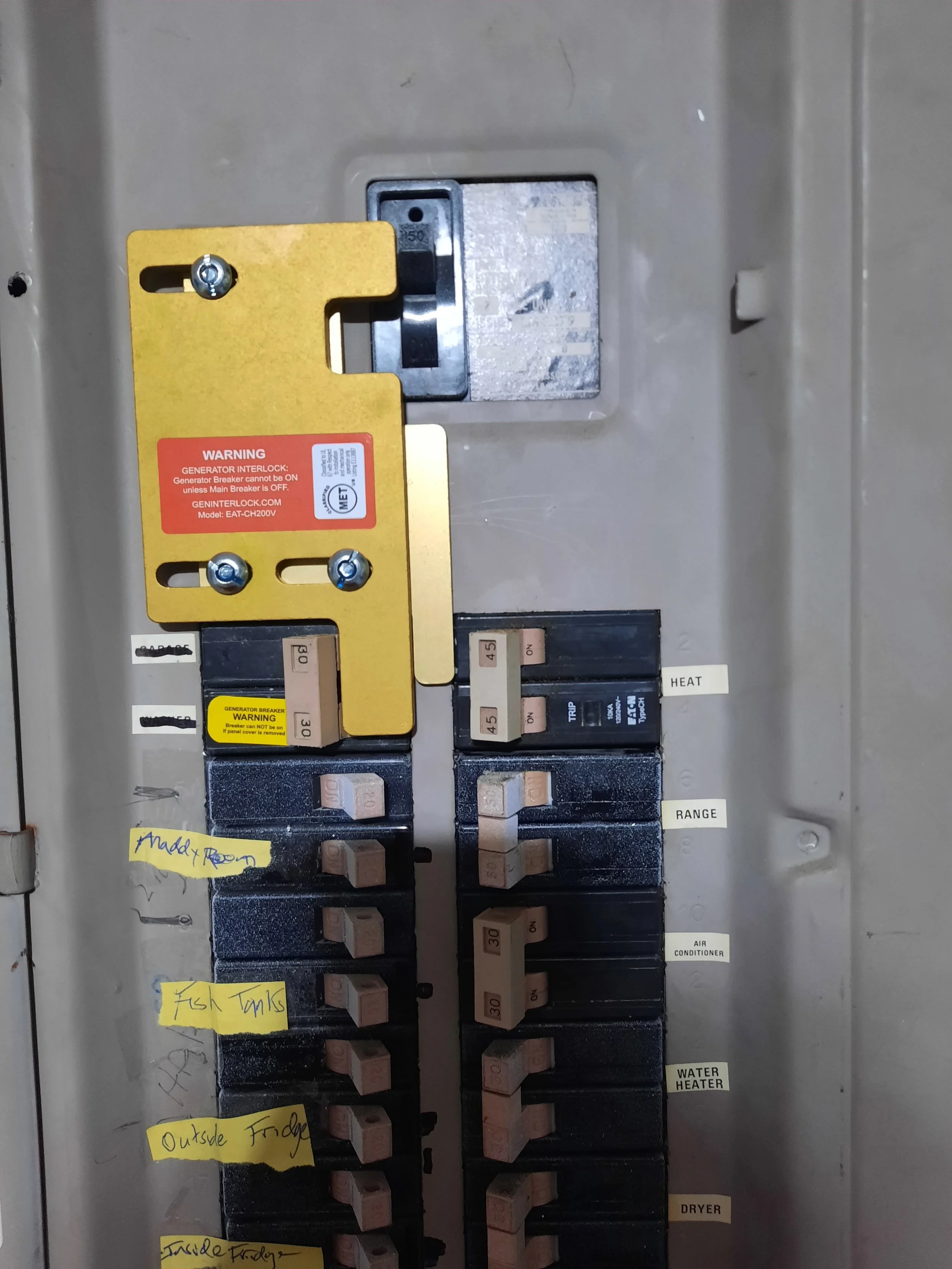
The price follows the feeder from the main panel out to the subpanel. A site plan or floor plan, if there is one, and a photo of the main panel with its door open are useful to send with the request.
Custom homes and large or multi-phase projects are estimated as soon as we can, or on the timeline your project sets.
Repair and troubleshooting visits are billed by the hour from arrival: $100 residential, $150 commercial, one-hour minimum, then half-hour increments, plus materials. No trip charge and no service fee. No hidden fees: the 3.5% surcharge on card and ACH payments is listed in our terms.
We don't do upfront pricing. No job has a standard price with us: each one is tailored to the property and the work you've asked for, and priced once we've seen it.
We offer free estimates on installs, upgrades, and replacements in our service area. Estimates aren't free when the job needs troubleshooting or testing to price, falls after hours or outside our service area, needs several meetings to gather information, or is new construction or a custom remodel with multi-party walk-throughs. For most jobs, estimates arrive by email by the end of the next business day, and quotes are good for 30 days.
Our warranty
05If something we installed fails because of our workmanship within 30 days of completion, we waive the hourly labor to put it right. Materials Kennedy Electric purchases for your job carry the manufacturer's one-year warranty. To replace defective materials we supplied, or materials damaged by storm, flood, fire, or other acts of God, we charge a reduced warranty labor rate of $50 an hour residential and $75 an hour commercial. The warranty does not cover materials not purchased by Kennedy Electric, work performed by the customer, or materials the customer purchased or damaged. Our warranty terms are printed on the estimate, the invoice, and the receipt, and the product boxes stay with you so you can register each product with its manufacturer.
Can a mini-split in a Spring Hill addition run from the addition's subpanel?
Can one subpanel in a detached garage also run the pool equipment?
Our Spring Hill shed already has a buried cable from the house. Can a subpanel go on it?
Can a 100-amp subpanel run from a 60-amp breaker in our main panel?
How many breakers can a subpanel hold?
Reviews
Hindsight on Panel and Feeder Jobs
Straight from Google, in our customers' own words.
Request service
Match a Spring Hill Subpanel to the Load Coming In
Tell us what the new circuits will feed and where on the property they'll be used. Our office will reach you during business hours.