



HomeRepairsElectrical Troubleshooting
Electrical Troubleshooting in Brooksville, FL
Repeat Tripping, Flicker, and Power That Comes and Goes|Circuit Tracing and Insulation Testing|Licensed & Insured, EC13011268
Tell us when it happens and what else is running at the time.
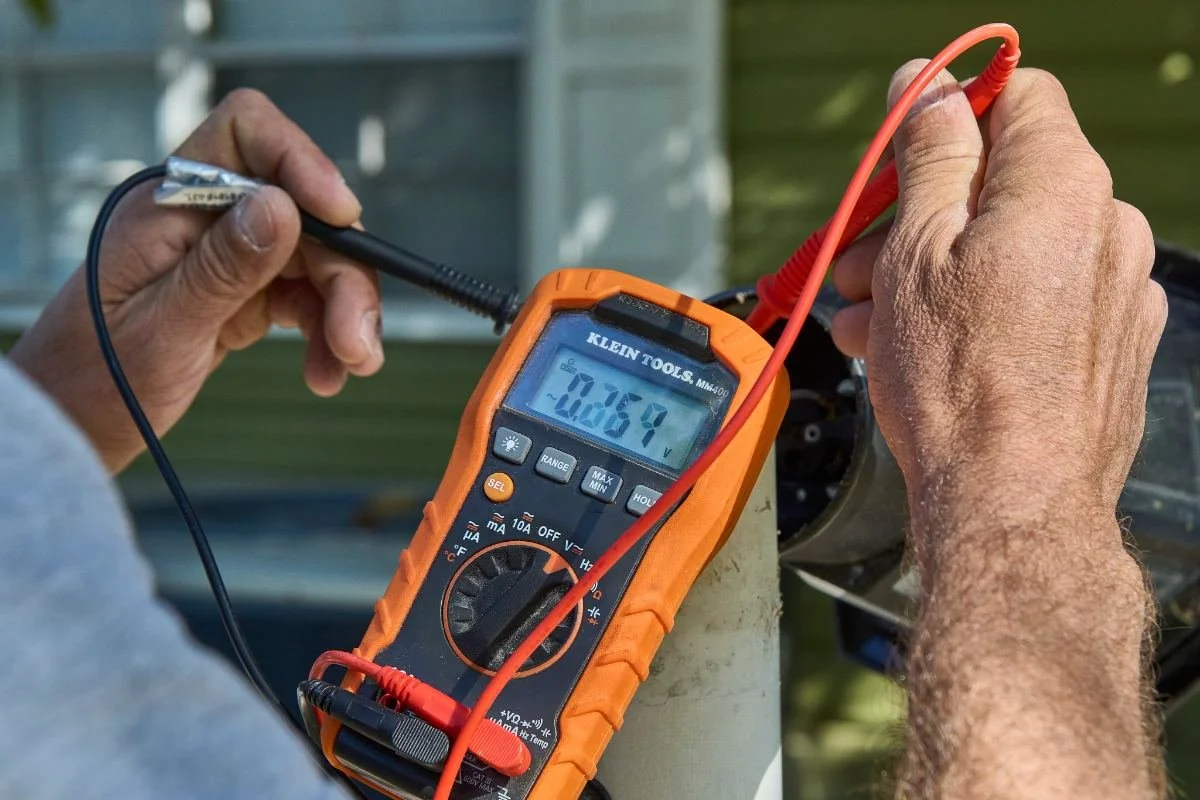
- Problems that come and go: Nuisance tripping, flicker, dead circuits that come back.
- Real instruments: Circuit tracers and insulation testing (megger) to find the fault.
- The cause, shown to you: You hear what we found, what caused it, and what the fix is.
- Licensed & Insured: Florida Certified Electrical Contractor EC13011268.
The same breaker trips every few days. The lights dim every time the air conditioning starts. An outlet works on Monday and not on Thursday. Problems like these don't show up on command, which is why people call us to find them.
Troubleshooting is one of our highest-volume jobs. It takes an experienced electrician, good instruments, patience, and careful questions, and we bring all four to homes and businesses across Citrus, Hernando, and Pasco Counties.
Call (352) 251-2795, Monday through Friday, 8 a.m. to 4 p.m., or send a request online. Calls after hours are returned the next business day.
Why problems come Back
Why a Problem Keeps Coming Back
A repair fixes something that broke. Troubleshooting finds out why something keeps failing. These are three patterns we are called about, and the causes we look for in each.
Repeat tripping
A mistake we see is resetting a tripped breaker or GFCI over and over without finding out why it tripped. Every reset puts the fault back on the circuit, and that can damage what is plugged in, the outlet or circuit itself, and the panel. A breaker that trips repeatedly is telling you something.
- An overloaded circuit, where two or three heavy loads share one breaker.
- A failing appliance or fixture that trips the circuit it is plugged into.
- Moisture or a damaged cord on a GFCI-protected circuit, or a short from a nicked wire.
- A worn breaker that trips below its rating.
- A loose connection that heats up under load.
Dimming and flicker
Callers often put it exactly this way: "My lights flicker when my AC kicks on." A brief dip when a large motor starts can be normal. Flicker that is getting worse, lights that dim across several rooms, or flicker with a warm outlet or a buzzing panel is not normal, and it tends to trace back to a connection loosening somewhere between the meter and the light.
- One fixture only: the bulb, the fixture, or a dimmer that doesn't match the lamp.
- One circuit: a loose connection at an outlet, a switch, or the breaker.
- Many rooms at once: a loose neutral or a connection at the panel or meter base.
- The whole street: the power company's side, which we can help you confirm.
Power that comes and goes
Outlets that die and come back, half the house going dark while the other half runs, or a circuit that only fails when it rains are among the hardest faults to find, because the fault has to be present to be found.
- A connection that opens when it heats up and closes again when it cools.
- Water getting into an outdoor box or a buried line.
- A loose backstabbed outlet, where the wire is pushed into a hole in the back of the device.
- Half the house out with no tripped breaker, which can mean one leg of the service is down.
How We Track it Down
How We Track Down a Problem That Won't Show Itself
-
1
1. The questions on the phone
What's not working in the house? Outlets, lights, or both? Which rooms? How long has it been out? Did you buy a new appliance, air conditioner, or pool equipment? Are you remodeling? Did you have a recent storm? The answers help point to the right circuit.
-
2
2. A log, if it comes and goes
If the problem is intermittent, we may ask you to note when it happens, what was running, and the weather. A pattern, such as every afternoon or every time it rains, points toward the cause.
-
3
3. Tracing the circuit
A circuit tracer shows which breaker feeds which outlets and lights, and where a run goes inside the walls, so we test the circuit that feeds the problem.
-
4
4. Testing the wiring itself
An insulation resistance tester, called a megger, checks a run of wire for insulation breakdown that an ordinary meter can't see, such as damage from heat, water, or a nail.
-
5
5. Finding the cause and showing you
We tell you what failed, why, and what the fix involves. If it is a straight repair, we make it with your go-ahead.
-
6
6. Checking the fix
The repaired circuit is tested. If the fault is intermittent, we'll tell you what to watch for so you know whether it's gone for good.
What Troubleshooting Covers
What a Troubleshooting Visit Covers
| Part of the job | Included | Notes |
|---|---|---|
| Phone triage before the visit | Yes | The questions above, so the right electrician comes |
| Tracing circuits and breakers | Yes | Circuit tracer; the circuits involved are identified |
| Insulation testing (megger) | Yes, where needed | For faults that ordinary meters miss |
| Testing outlets, switches, fixtures, and connections | Yes | Including backstabbed and aluminum connections |
| Repairing what we find | Yes, with your go-ahead | On the same visit where possible |
| Meter base and service connections | Yes, your side | The utility owns the meter and the lines feeding it |
| Panel replacement or rewiring | Estimate | Quoted separately in writing |

Mistakes that make a fault harder to find
- Resetting the breaker again and again until it finally holds.
- Swapping in a bigger breaker so it stops tripping. That removes the protection, not the problem.
- Unplugging everything before we arrive, when the pattern is the clue.
Simple causes we rule out on the phone
A few calls turn out to be something simpler: a GFCI outlet that tripped elsewhere in the house, an appliance failing and tripping its breaker, or an outlet controlled by a wall switch that someone turned off. We ask about these first.
We don't do appliance repair. If an appliance turns out to be the fault, we show you the circuit is good so you know where to go next.
How Troubleshooting Is Billed
How Troubleshooting Is Billed
Repair and troubleshooting visits are billed by the hour from arrival: $100 residential, $150 commercial, one-hour minimum, then half-hour increments, plus materials. No trip charge and no service fee. No hidden fees: the 3.5% surcharge on card and ACH payments is listed in our terms.
Nobody can know how long it will take to find a fault until we look, so troubleshooting is billed by the hour. Once the cause is found, the repair is done on the same visit or quoted in writing.
What shortens a troubleshooting visit
03- A log of when the problem happens and what was running.
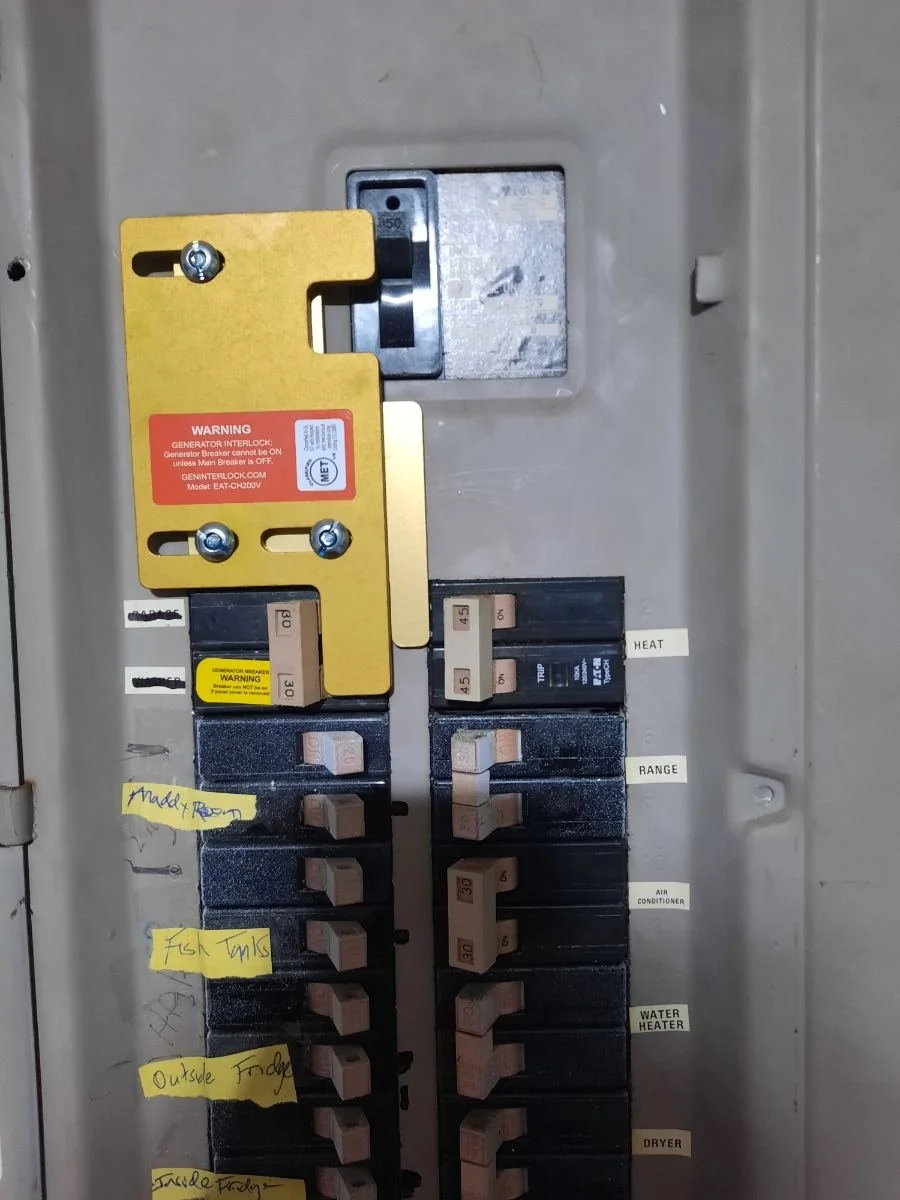
- A labeled panel, or a note of which breaker trips.
- Anything that changed recently: a new appliance, a remodel, a storm, or new pool equipment.
- Access to the panel, the attic, and the outlets involved.
Our warranty
04If something we installed fails because of our workmanship within 30 days of completion, we waive the hourly labor to put it right. Materials Kennedy Electric purchases for your job carry the manufacturer's one-year warranty. To replace defective materials we supplied, or materials damaged by storm, flood, fire, or other acts of God, we charge a reduced warranty labor rate of $50 an hour residential and $75 an hour commercial. The warranty does not cover materials not purchased by Kennedy Electric, work performed by the customer, or materials the customer purchased or damaged. Our warranty terms are printed on the estimate, the invoice, and the receipt, and the product boxes stay with you so you can register each product with its manufacturer.
Real customer stories
Faults We've Tracked Down
A breaker that kept tripping
“Contacted my go-to- electrical team to troubleshoot a circuit that constantly trips the circuit breaker. Without fail, Kennedy Electric dispatched a knowledgeable electrician to investigate the issue and resolve the problem. Turns out a bad fixture was wreaking all of the havoc. The fixture was removed and the circuit was restored to working condition. I can now rest easy. Thank you for the prompt and professional service.”
Harold Brown, Google review
A "brain teaser" pool circuit
“Kennedy replaced faulty 220 pool pump circuit including timer and disconnect. Originally installed by my uncle 30 years ago. Roy troubleshot the “brain teaser” wiring and brought everything back up to code.”
Dennis Bock, Google review
Lights that shut off at random
“Kennedy Electric installed our outdoor lighting and 2 out of 25 lights intermittently shut off for no apparent reason. Things happen, and Kennedy Electric came out the next day to troubleshoot and repair. Roy, Kevin and Mike are top-notch electricians.”
Mark McGibbon, Google review
Straight from Google, in our customers' own words.
Another electrician couldn't find the problem. Can you?
Should I leave the breaker off until you get here?
How long does troubleshooting take?
Could the problem be on the power company's side?
What does a megger show that a regular meter doesn't?
Do I need to be home while you troubleshoot?
Do you troubleshoot businesses too?
Contact us
Book Electrical Troubleshooting
Tell us what keeps happening, when it happens, and what else is running at the time. A photo of the panel helps. We'll get back to you during business hours.