


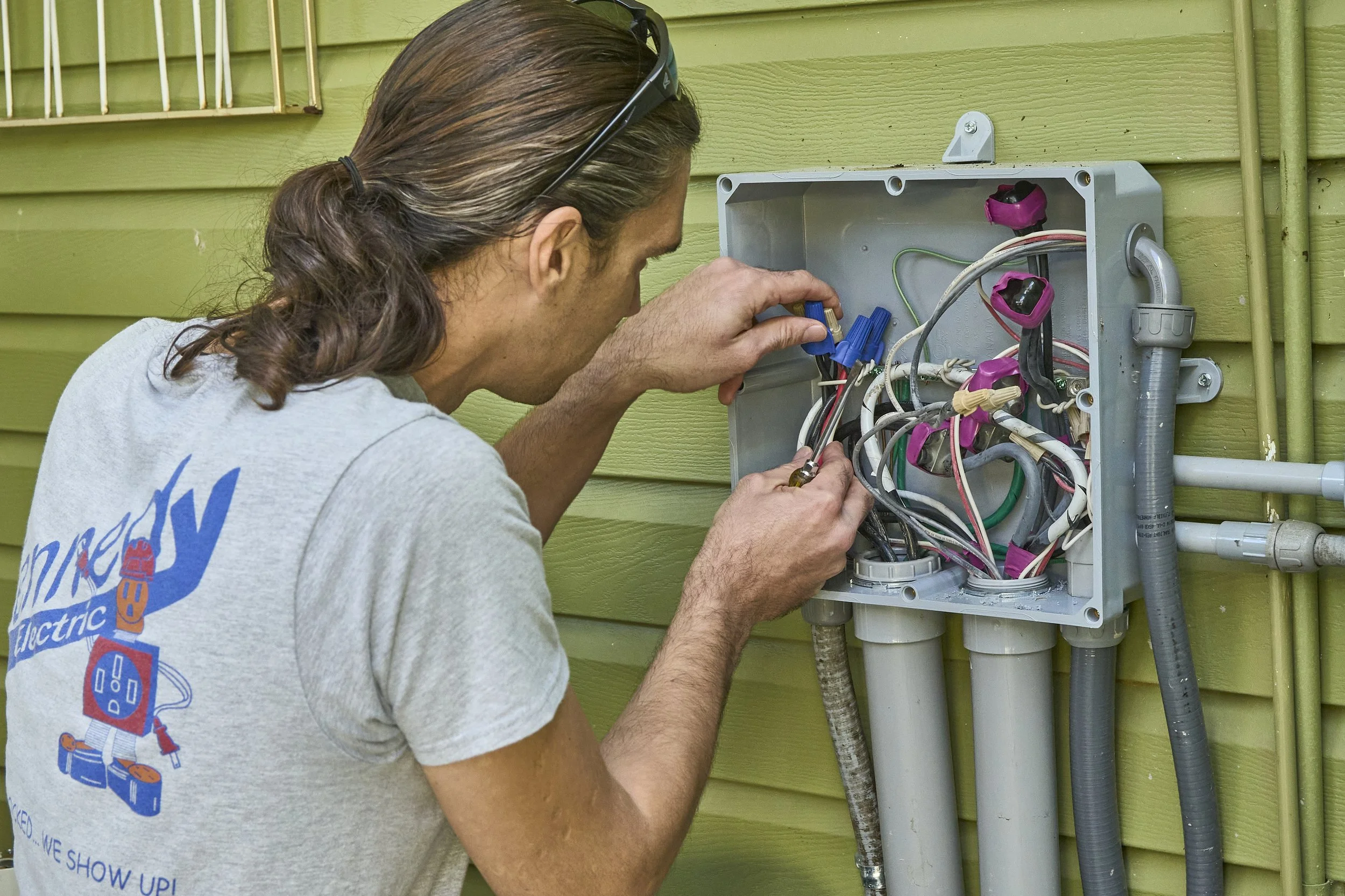
Grounding and Bonding Repair in Spring Hill, FL
Ground Rods, Clamps, and Bonding Jumpers After Changes in the Yard|Licensed & Insured, EC13011268
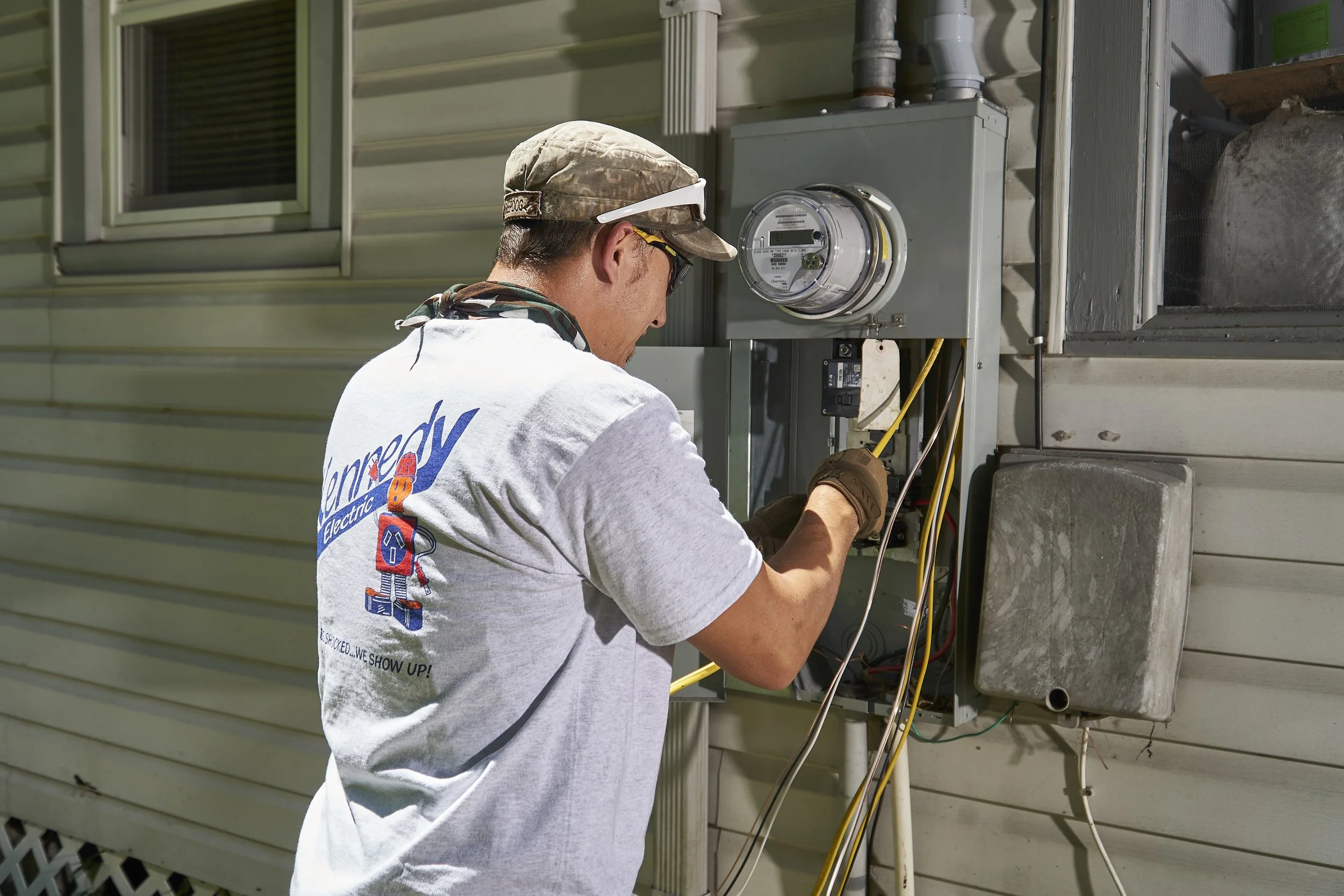
Outside by the meter, a bare copper wire runs down the wall and into the soil, where a clamp holds it to a ground rod. That connection links the house wiring to the earth, and it lives in the yard, where trenches, fence posts, settling, and long dry spells can reach it. When something changes it, there's often no sign of it inside the house.
Mention any digging, building, or inspection note near the meter.
Call (352) 251-2795, Monday through Friday, 8 a.m. to 4 p.m., or send a request online. Calls after hours are returned the next business day.
At a glance
What Soil and Age Can Do to Grounding in Spring Hill
Candler sand, one of the widespread soils on uplands in peninsular Florida, is very deep and excessively drained, with a water table deeper than 80 inches, according to the USDA's description of the series. If a lot sits on sand like that, the soil around the top of a ground rod can stay dry for long stretches, and dry sand can conduct poorly. That's why it pays to see the rod and its clamp before trusting them.
Age adds to it. Roughly 22,000 Spring Hill homes were built before 1990, by census estimates, so at many houses the clamp and the grounding wire at the meter wall have been outdoors for decades. Hernando County keeps electrical service upgrades on its list of work that still needs a permit, so when a service is upgraded, the grounding is part of that permitted and inspected job.
What we cover
Yard Changes That Reach the Grounding at a Spring Hill House
The grounding wire usually comes down the wall close to the meter and enters the soil at the rod. These are the events that tend to disturb it, and what each one can do.
A long dry spell in sandy soil
Sand that drains fast also dries fast. After weeks without rain, the sand near the surface can be dry around the rod, and a rod in dry sand makes poorer contact with the earth than the same rod in damp soil. You won't see that from the house. If your home has a single rod, or nobody knows how many it has, a dry spell is a fair reason to have it checked.
Digging near the grounding wire
Irrigation lines, landscape edging, a new fence post, or a planting bed along that side of the house all put a blade close to the rod. One slip of a shovel cuts the bare copper, a post-hole digger can strike the rod, and a clamp knocked loose ends up in the mulch, attached to nothing. Before digging along the meter wall, find where the wire meets the ground and mark it. If it's already cut or the clamp is lying loose, leave both as they are and dig somewhere else.
Ground that has settled
Where the yard beside the meter has sunk, the grounding can shift with it. At the rod, a sunken patch can pull the grounding wire tight against its clamp or draw it away from the wall, and the clamp can end up below the soil line, out of sight.
A shed or workshop that needs its own grounding
A new outbuilding changes the grounding plan. A qualifying storage shed no bigger than 120 square feet, on a lot outside a flood zone, is on Hernando's list of projects that need no building permit, but bringing power out to it is new electrical work, and that needs a permit. A detached building fed from the house takes one supply, and depending on how it's fed, it can need a grounding electrode of its own beside the building. If the shed already has a feeder, the answer is to upgrade or reuse that supply, never to run a second circuit out to it.
What we cover
Grounding and Bonding Repairs for Each Change
Some changes that reach the grounding start indoors, at the water heater or a new panel in the garage, and others out in the yard. Each repair below answers one of them.
After a plumber has been in. A bonding jumper can be left off after a water heater swap or other plumbing work. Putting it back keeps metal water or gas piping at the same voltage as the home's grounding.
After a subpanel went into the garage or a shop. Neutral and ground stay apart there, as code requires. If an earlier job joined them, the bonding inside that panel is corrected.
After years at the meter wall. A green or white crust on the rod clamp is corrosion. That clamp gives way to a new listed one, and the rod is looked at while the soil is open.
After a blade found the wire. A cut grounding wire is run again in one length and shielded where yard tools pass. A clamp knocked off the rod is swapped for a new one.
After the ground sank. A wire pulled taut is replaced with slack to spare, and a clamp that sank out of sight is uncovered and checked.
When one rod is all the house has. If the electrical code calls for more than one, a second rod is driven and tied to the first.
Pricing
Hourly Visits and Written Estimates for Grounding Fixes
Repair and troubleshooting visits are billed by the hour from arrival: $100 residential, $150 commercial, one-hour minimum, then half-hour increments, plus materials. No trip charge and no service fee. No hidden fees: the 3.5% surcharge on card and ACH payments is listed in our terms.
We don't do upfront pricing. No job has a standard price with us: each one is tailored to the property and the work you've asked for, and priced once we've seen it.
We offer free estimates on installs, upgrades, and replacements in our service area. Estimates aren't free when the job needs troubleshooting or testing to price, falls after hours or outside our service area, needs several meetings to gather information, or is new construction or a custom remodel with multi-party walk-throughs. For most jobs, estimates arrive by email by the end of the next business day, and quotes are good for 30 days.
Our warranty
03If something we installed fails because of our workmanship within 30 days of completion, we waive the hourly labor to put it right. Materials Kennedy Electric purchases for your job carry the manufacturer's one-year warranty. To replace defective materials we supplied, or materials damaged by storm, flood, fire, or other acts of God, we charge a reduced warranty labor rate of $50 an hour residential and $75 an hour commercial. The warranty does not cover materials not purchased by Kennedy Electric, work performed by the customer, or materials the customer purchased or damaged. Our warranty terms are printed on the estimate, the invoice, and the receipt, and the product boxes stay with you so you can register each product with its manufacturer.
Does a Spring Hill house from the 1980s need its grounding redone?
A home inspector wrote that the grounding wire couldn't be traced to a rod. What happens next?
Heavy rain washed sand away from the meter at our Spring Hill home, and the rod and clamp are showing. Is that a problem?
Our Spring Hill house has 200-amp service and a single ground rod. Does a service that size need two?
There's a second, thinner wire on our ground clamp from the cable company. Should it be there?
Reviews
Notes Left by Homeowners We've Helped
Straight from Google, in our customers' own words.
Request service
Tell Us What Changed in the Yard
Mention any digging, new outbuilding, or inspection note near the meter, and add a photo of the meter wall if you can. Our office will reach you during business hours.