


Three-Phase Power in Spring Hill, FL
Three-Phase Supply for Stores, Offices, and New Pads|Licensed & Insured, EC13011268
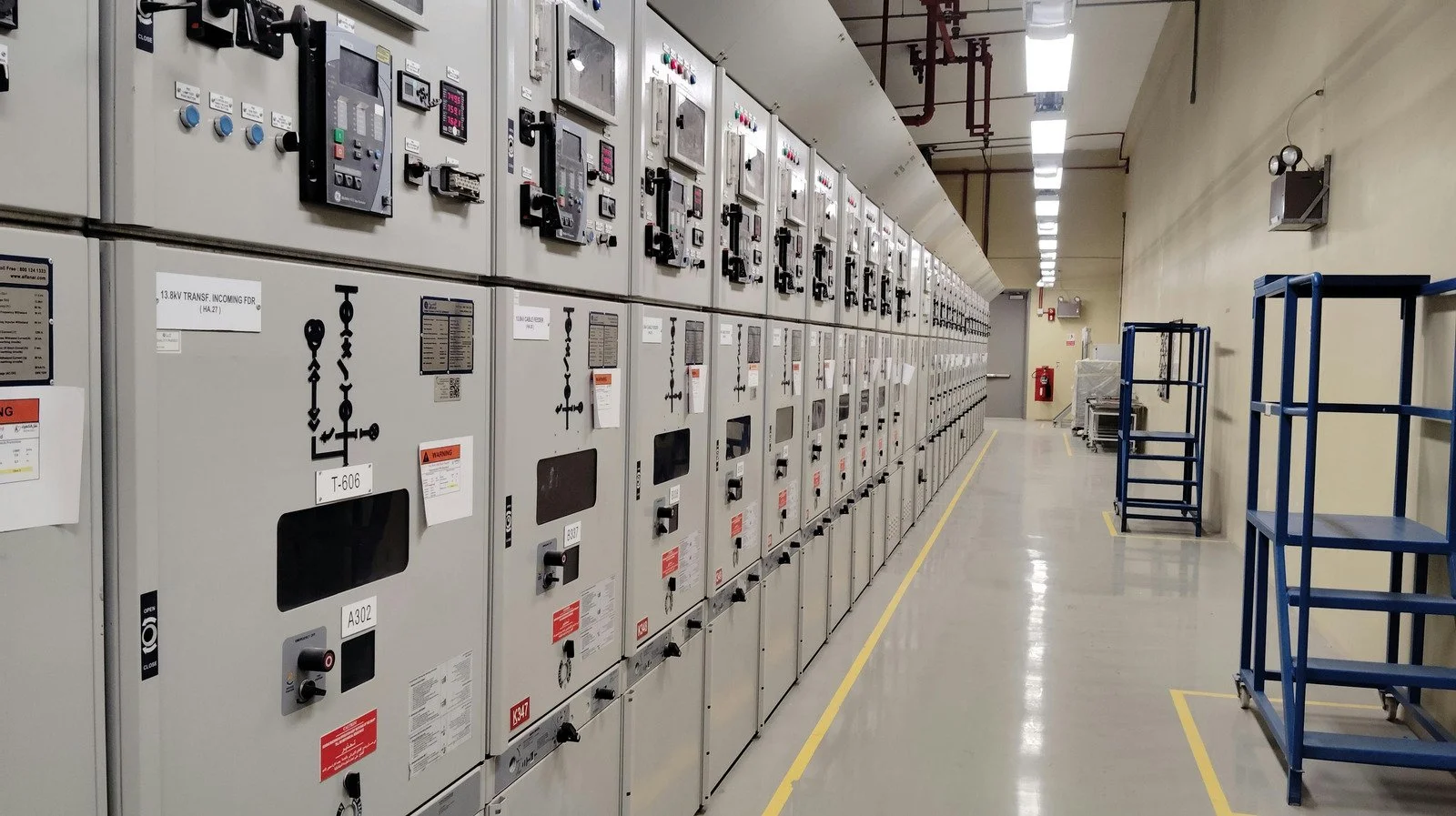
On a Spring Hill commercial property, the nearest point where all three phases are available might sit a few feet from the equipment, or nowhere on the site yet. Finding that point comes before anything is wired. From wherever it turns out to be, we run the circuit to the equipment and add whichever disconnect or three-phase panel the job calls for.
If you know the building has three-phase, mention it.
Call (352) 251-2795, Monday through Friday, 8 a.m. to 4 p.m., or send a request online. Calls after hours are returned the next business day.
At a glance
Hernando County Checkpoints for Commercial Service in Spring Hill
Hernando County requires a pre-construction meeting before construction starts on commercial development, and it won't let a commercial parcel be cleared without an approved Vertical Construction Permit for the development planned there. On a new Spring Hill pad, that puts the building's plans, electrical service included, ahead of the first bulldozer.
Hernando County also treats a service change and a new service installation as two separate types of electrical permit. A building that already has power and needs a third phase would generally fall under the first, and a pad that has never had power under the second. Saying which of the two describes the property when you call lets the permit match the job from the outset.
How it runs
Spring Hill Three-Phase Hookups, From the Meters Up
-
1
Following the suite's feed back to three phases
Where the suite's panel shows fewer than three phase conductors, its supply is followed back toward the meters until the nearest three-phase source turns up.
-
2
Inspections before the conduit is covered
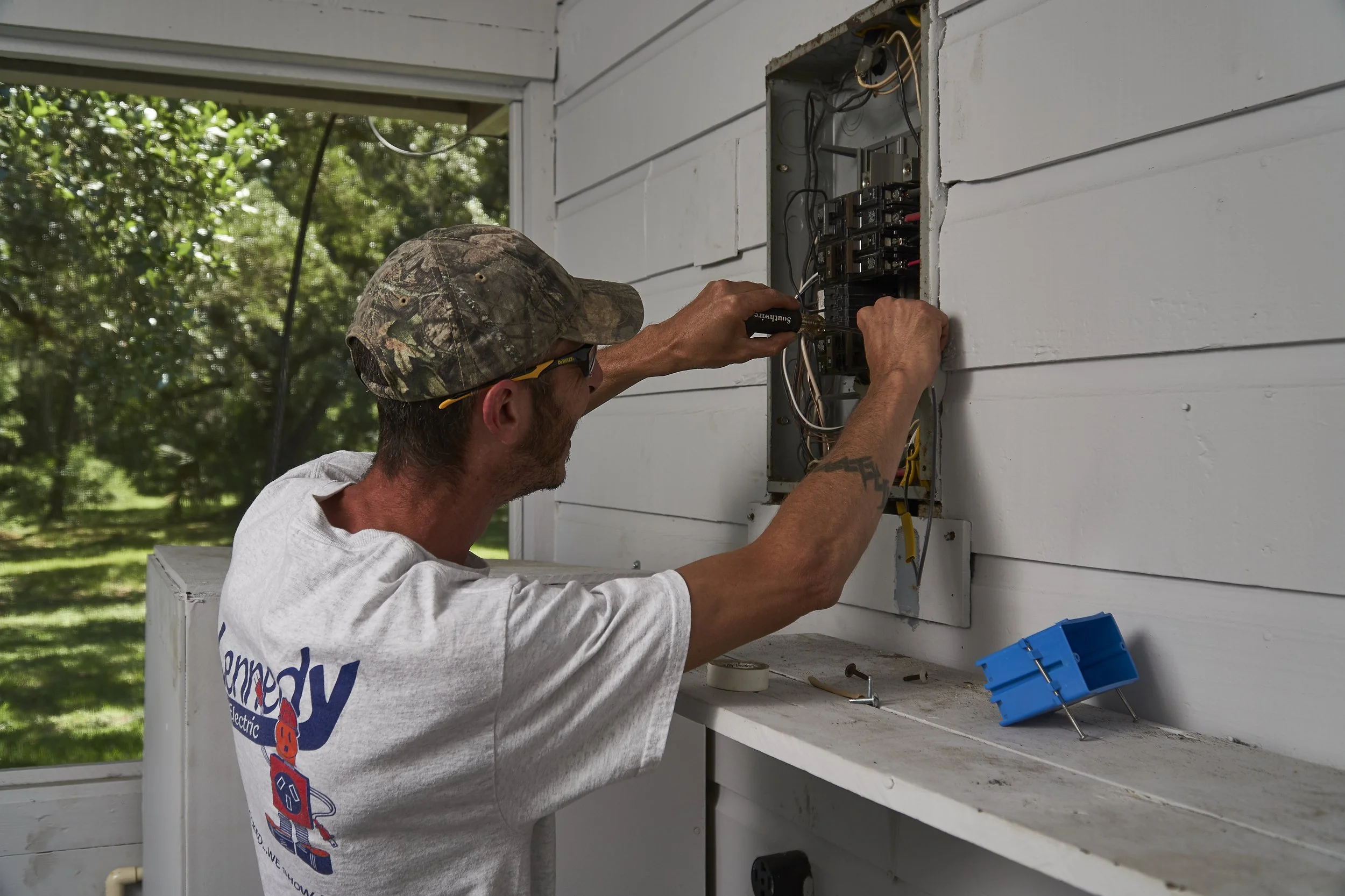
In Hernando County, a new three-phase circuit needs an electrical permit. Conduit and cable bound for a wall or a ceiling are inspected before they're covered, along with any other inspection the permit calls for.
-
3
Connecting the circuit at the unit's disconnect
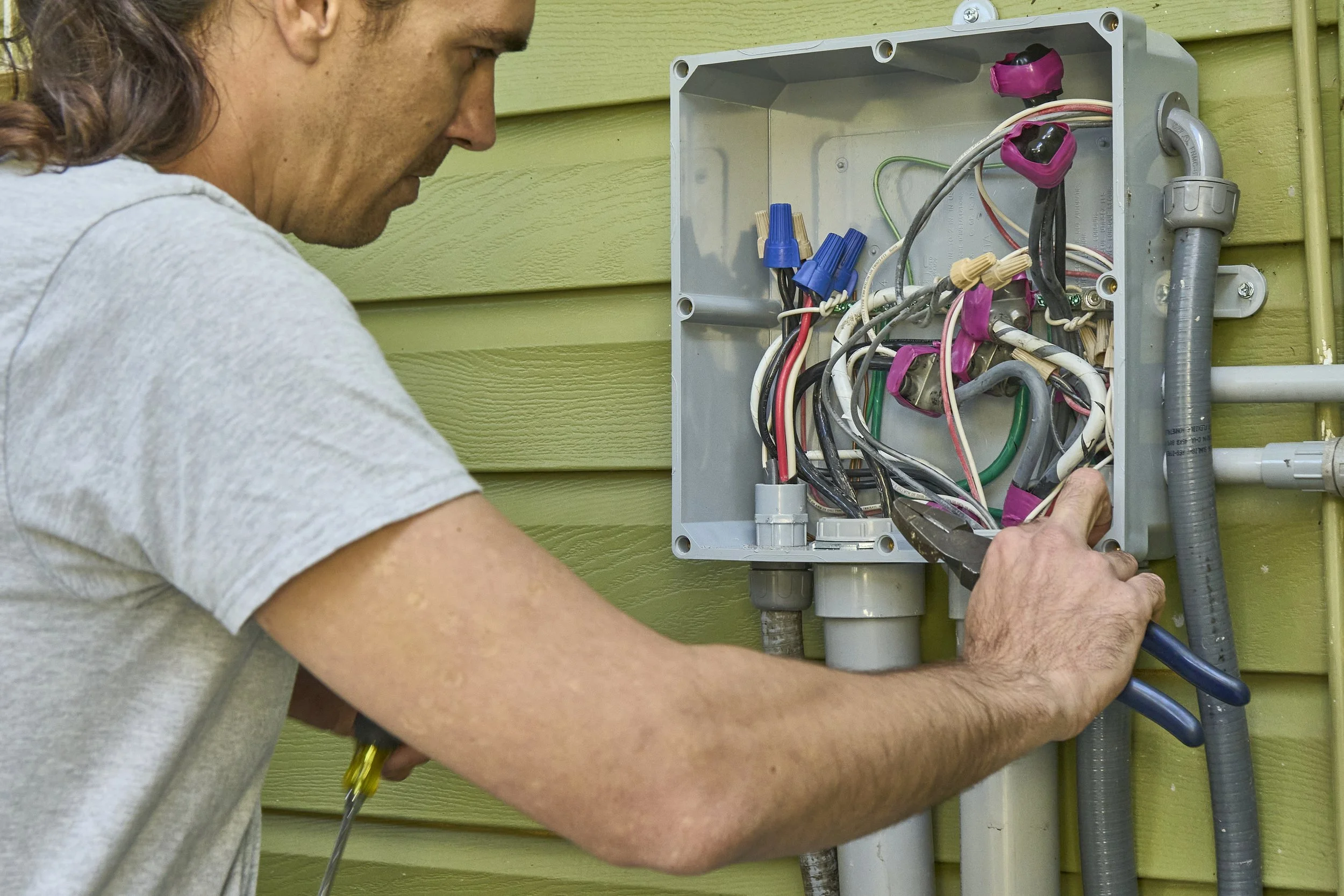
On a rooftop unit, the mechanical contractor typically sets the equipment, and the electrician brings the circuit to its disconnect and makes the connection there. The breaker in the panel and the disconnect on the roof are labeled to match, so whoever services the unit later can find its supply.
What we cover
Where the Third Phase Comes From in a Spring Hill Building
How much wiring a three-phase hookup takes follows from how far the supply has to travel to reach the equipment.
Three phases already on the suite's panel
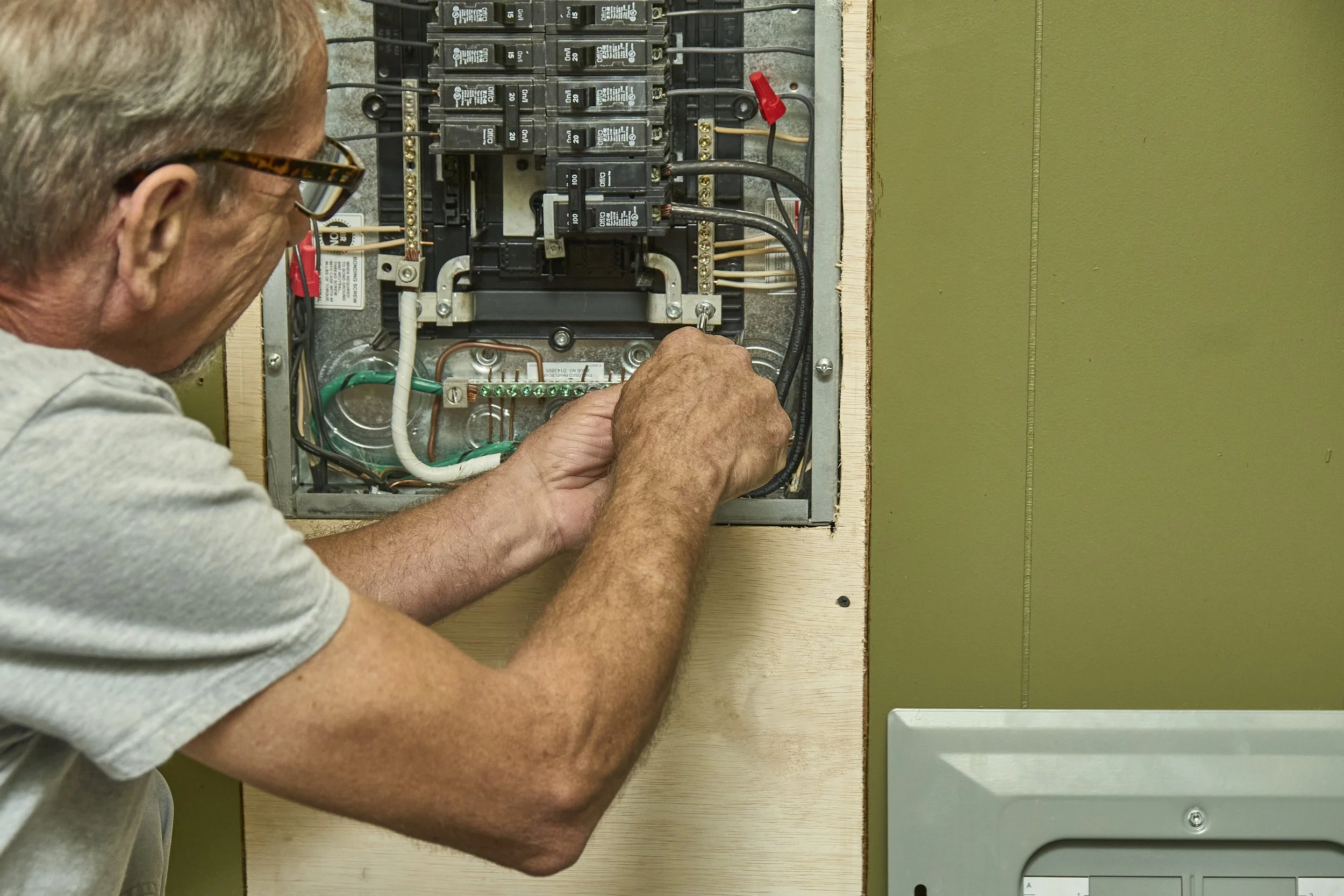
A suite fed from a three-phase panel has the supply within reach, and the new equipment needs a dedicated circuit run from that panel, sized from the nameplate, with a disconnect where the code calls for one. Three phases at the panel don't settle the capacity question, though. The suite's feeder and its main breaker set how much the panel can carry, so a load calculation shows whether the added unit fits beside everything the suite already runs.
Three-phase at the building, but not in the suite
A plaza or office building can take a three-phase service at its meters and still feed some suites with only two of the three phase conductors and a neutral, which makes those suites single-phase. Bringing the third phase in calls for a new feeder from the building's distribution equipment and, in most cases, a three-phase panel in place of the suite's existing one. The feeder is sized from the load calculation, and its route from the meter wall to the suite, across a ceiling or along the back of the building, accounts for much of the work. Because the meter wall serves every tenant, the connection to it usually waits on the property owner's approval.
A building with no three-phase service
When the service itself is single-phase, no third phase exists anywhere on the property to tap. Getting one means a service change, in which the power company brings three-phase to the site. The power company decides whether and when that happens, and we coordinate our side of the job with its crew. Inside, the existing circuits are moved onto the new three-phase panel. The lights and receptacles on them carry on as before, and each piece of single-phase equipment keeps working as long as its nameplate voltage matches what the new service delivers.
An empty pad that has no service yet
On a Spring Hill pad with no building, the service is designed from scratch instead of changed. The building's plans set its size and its phase, so a three-phase rooftop unit or other equipment named on those plans can be supplied from the start. When a shell goes up before its tenants are known, the owner decides whether three-phase comes in with the first service, which leaves a future tenant's equipment with a supply already on site.
Pricing
Three-Phase Jobs on Kennedy Electric's Usual Terms
Custom homes and large or multi-phase projects are estimated as soon as we can, or on the timeline your project sets.
Repair and troubleshooting visits are billed by the hour from arrival: $100 residential, $150 commercial, one-hour minimum, then half-hour increments, plus materials. No trip charge and no service fee. No hidden fees: the 3.5% surcharge on card and ACH payments is listed in our terms.
We don't do upfront pricing. No job has a standard price with us: each one is tailored to the property and the work you've asked for, and priced once we've seen it.
We offer free estimates on installs, upgrades, and replacements in our service area. Estimates aren't free when the job needs troubleshooting or testing to price, falls after hours or outside our service area, needs several meetings to gather information, or is new construction or a custom remodel with multi-party walk-throughs. For most jobs, estimates arrive by email by the end of the next business day, and quotes are good for 30 days.
Our warranty
04If something we installed fails because of our workmanship within 30 days of completion, we waive the hourly labor to put it right. Materials Kennedy Electric purchases for your job carry the manufacturer's one-year warranty. To replace defective materials we supplied, or materials damaged by storm, flood, fire, or other acts of God, we charge a reduced warranty labor rate of $50 an hour residential and $75 an hour commercial. The warranty does not cover materials not purchased by Kennedy Electric, work performed by the customer, or materials the customer purchased or damaged. Our warranty terms are printed on the estimate, the invoice, and the receipt, and the product boxes stay with you so you can register each product with its manufacturer.
A new three-phase unit is going on our Spring Hill roof. Does it need more than its circuit and disconnect?
The drawing for our new three-phase unit's circuit shows no neutral. Is a wire missing?
Our rooftop unit's nameplate lists an MCA and an MOP. Which one sizes the circuit?
Does a three-phase service change at our Spring Hill building replace the meter?
The disconnect beside our Spring Hill rooftop unit has rusted. Does the whole circuit have to be redone?
Reviews
Kennedy Electric in Black and White
Straight from Google, in our customers' own words.
Request service
Three-Phase Requests for Spring Hill Commercial Property
Say whether the property already has a building or is still a bare pad, and include its address. Our office will reach you during business hours.