


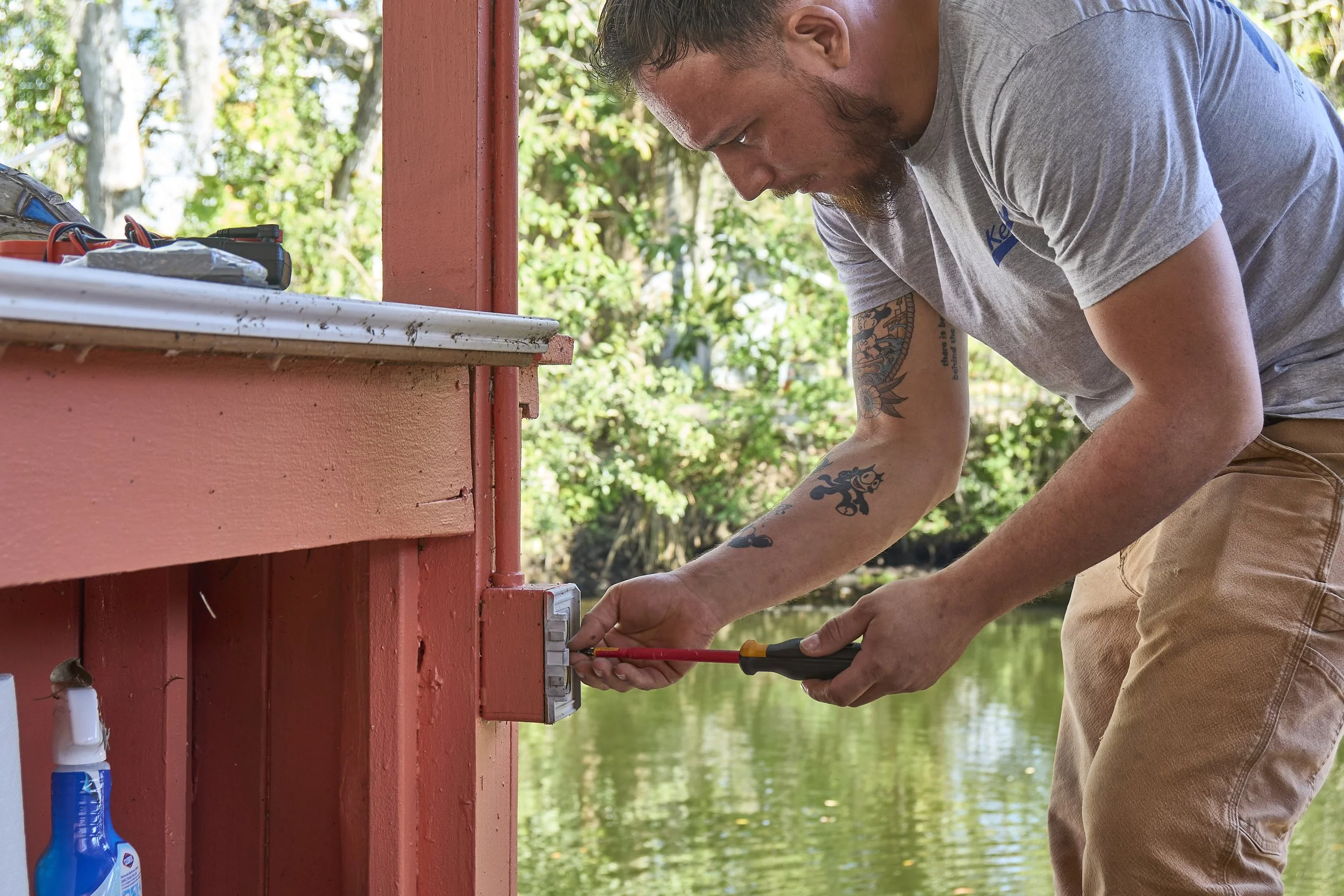
EV Charger Installation in Port Richey, FL
Chargers Planned Around Your Flood Zone|Licensed & Insured, EC13011268
Before a hurricane, the City of Port Richey asks EV owners to unplug from the charger and move the car as high as they can. A wall unit, the outlet, and the circuit that feeds them stay where they were installed, so on a Port Richey job, where those go is settled first.
Tell us your flood zone if you know it, and where the car parks.
Call (352) 251-2795, Monday through Friday, 8 a.m. to 4 p.m., or send a request online. Calls after hours are returned the next business day.
How it runs
Three Steps From Flood Map to Charger
-
1
Your zone and your elevation
The estimator starts from the zone, the base flood elevation, and where the car parks.
-
2
A route that stays high
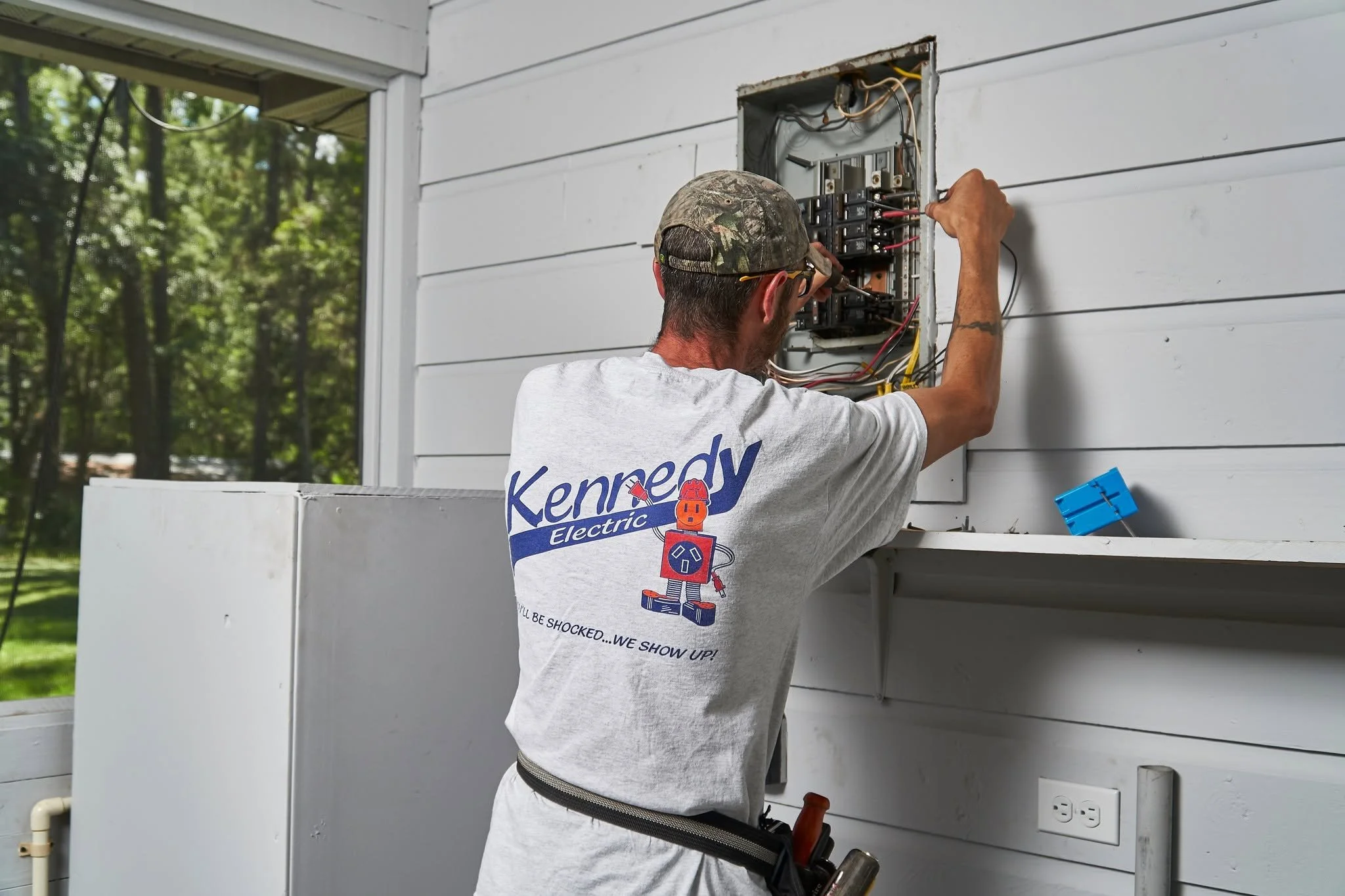
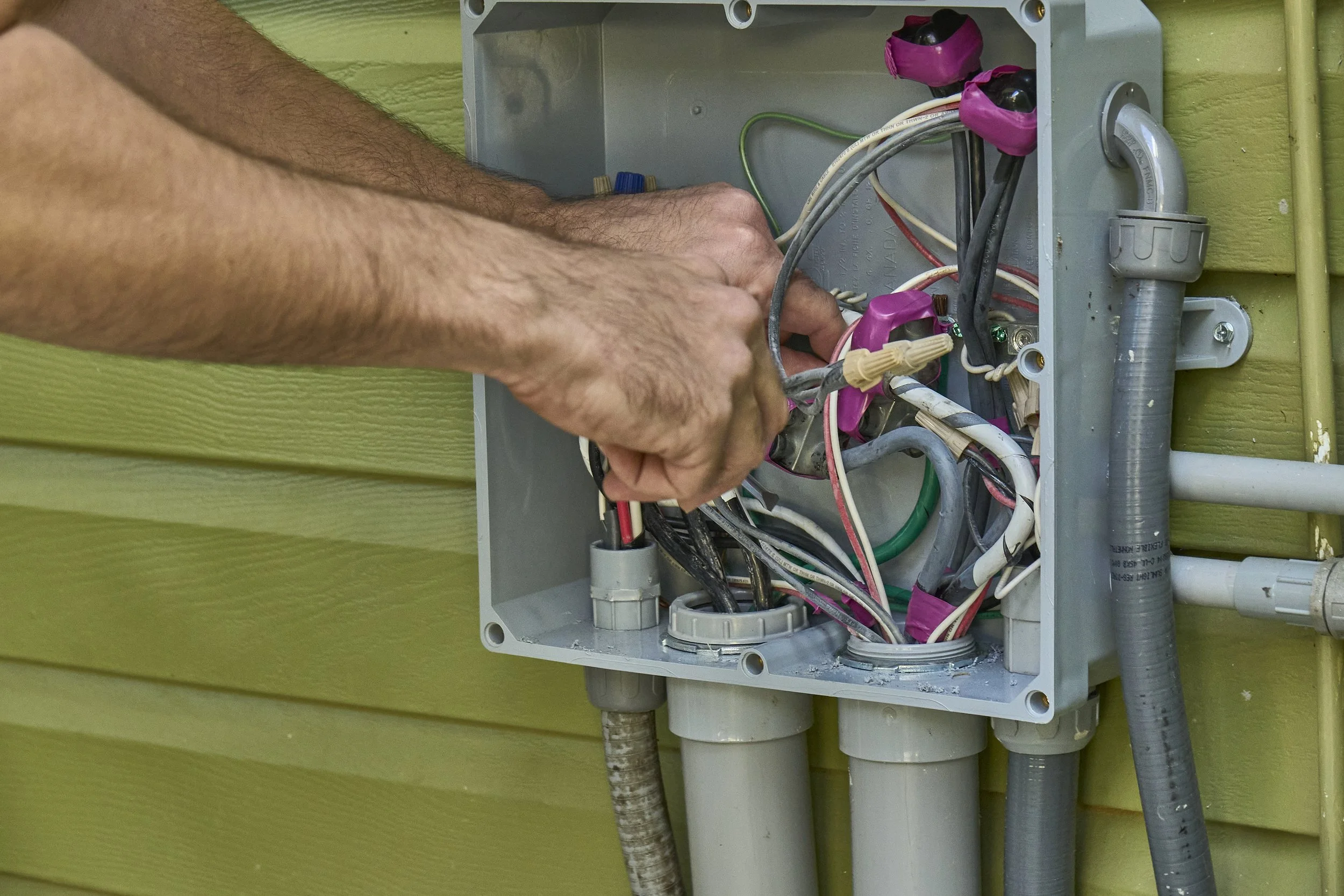
From the panel, we plan the run that keeps the circuit, the receptacle or unit, and every connection as high as the location allows. Where the garage has an attic or open ceiling above, that can mean crossing it and dropping down to the charger, so no part of the run travels along the wall near the floor.
-
3
The city permit and its inspection
A new circuit at a house within the city limits requires a City of Port Richey electrical permit and inspection. Your part is giving the inspector access.
What we cover
The Car Leaves Before a Storm, and the Charger Stays
The city's hurricane guidance gives EV owners a short list: unplug from the charging station, move the vehicle somewhere safe, as high as possible, and never drive it through floodwater.
Where water reaches the height of the outlets, the city says the wet wiring is replaced. Because a charger's run is ordinary branch wiring, the lower its outlet and its run sit on the wall, the more of it a flood can reach.
The receptacle height on a plug-in install
For a plug-in installation, the height of the 240-volt receptacle is the deciding factor. It can sit higher on the wall than an ordinary outlet as long as the charger's cord still reaches the car, and the portable unit itself can go up with the rest of your things before a storm. Putting the receptacle on the side wall nearest the car's charging port keeps the cord short enough to reach from that height.
A wall-mounted unit and its run
A hardwired charger is mounted within its maker's height range, with its cable stored on its holder, which keeps the unit and its connections up off the floor. The circuit's run from the panel can come down to it from above.
A charger outside, near salt water
The city's guidance adds that when floodwater is salt water, the risk to wiring is greater: salt water is highly corrosive and, over time, can weaken wiring until it becomes a fire hazard. A charger outside near the canals gets the same height planning as one in the garage. It's rated for outdoor use and mounted within its maker's range; the run and its fittings stay as high as the spot allows, and the conduit gets a sealed entry where it meets the unit.
What we cover
Your Flood Zone Comes Before the Wall Plan
The city lists four primary flood zones inside its limits: X, with minimal flood risk; AE, at moderate-to-high risk; AE within the Limit of Moderate Wave Action, at added risk; and VE, coastal areas with a high risk of flooding and wave action. The city points owners to Forerunner, an online tool that shows a property's flood zone and its base flood elevation.
Knowing those two things before the estimate visit tells us how much the height question matters at your address. In an AE or VE zone, the receptacle or the unit is planned as high as the charger maker's mounting range, the cable, and the parking spot allow.
Under a house raised on pilings
Under a house built or substantially improved in a VE zone, federal floodplain rules limit the enclosed space to parking, building access, and storage. For a house built or substantially improved in an AE or VE zone, Florida's building code places electrical equipment at or above the required flood elevation. Below it, equipment has to be designed and installed to keep floodwater out and resist flood loads, wiring has to meet the electrical code's rules for wet locations, and nothing is mounted on a wall built to break away in a flood.
If the car parks under the house, where the charger can go is part of the estimate visit.
Pricing
Charger Estimates After the Height Is Planned
We don't do upfront pricing. No job has a standard price with us: each one is tailored to the property and the work you've asked for, and priced once we've seen it.
We offer free estimates on installs, upgrades, and replacements in our service area. Estimates aren't free when the job needs troubleshooting or testing to price, falls after hours or outside our service area, needs several meetings to gather information, or is new construction or a custom remodel with multi-party walk-throughs. For most jobs, estimates arrive by email by the end of the next business day, and quotes are good for 30 days.
Our warranty
02If something we installed fails because of our workmanship within 30 days of completion, we waive the hourly labor to put it right. Materials Kennedy Electric purchases for your job carry the manufacturer's one-year warranty. To replace defective materials we supplied, or materials damaged by storm, flood, fire, or other acts of God, we charge a reduced warranty labor rate of $50 an hour residential and $75 an hour commercial. The warranty does not cover materials not purchased by Kennedy Electric, work performed by the customer, or materials the customer purchased or damaged. Our warranty terms are printed on the estimate, the invoice, and the receipt, and the product boxes stay with you so you can register each product with its manufacturer.
Our house is in the X zone. Does any of this apply to us?
We have an elevation certificate from when we bought the house. Is it useful?
Our address says Port Richey, but the house is outside the city. Does the flood planning still apply?
We are having the house raised. Should the charger wait until that's done?
Reviews
What Customers Wrote After Their Jobs
Straight from Google, in our customers' own words.
Request service
Send Your Address and Where the Car Parks
Add your flood zone if you've looked it up, and the charger you have in mind. Our office will reach you during business hours.