What Is a Dedicated Circuit and Why It Matters
Quick Answer: A dedicated circuit feeds exactly one appliance or outlet from its own breaker and its own wire, with nothing else sharing the run. High-draw appliances get one so they never compete for capacity, which stops nuisance trips, overheating, and voltage sag. Ranges, dryers, water heaters, HVAC, refrigerators, microwaves, and EV chargers are the common ones. Adding a dedicated circuit is panel work for a licensed electrician, not a DIY job.
A kitchen countertop is a good stand-in for how a circuit shares its load. Lay out one cutting board, and you can chop, mix, and plate in sequence without crowding. Try to run a blender, a food processor, and a stand mixer on that same board at once, and something ends up on the floor. A circuit works the same way: it has a fixed amount of room, and when too many hungry appliances crowd onto it, the breaker steps in before anything gets damaged.
What A Dedicated Circuit Actually Is
Most of the outlets in a house are wired in a shared arrangement. One breaker in the panel feeds a single wire that loops through several outlets and light fixtures across a room or two. That is efficient and completely fine for lamps, phone chargers, and a television, because those loads are small and rarely run at full tilt together.
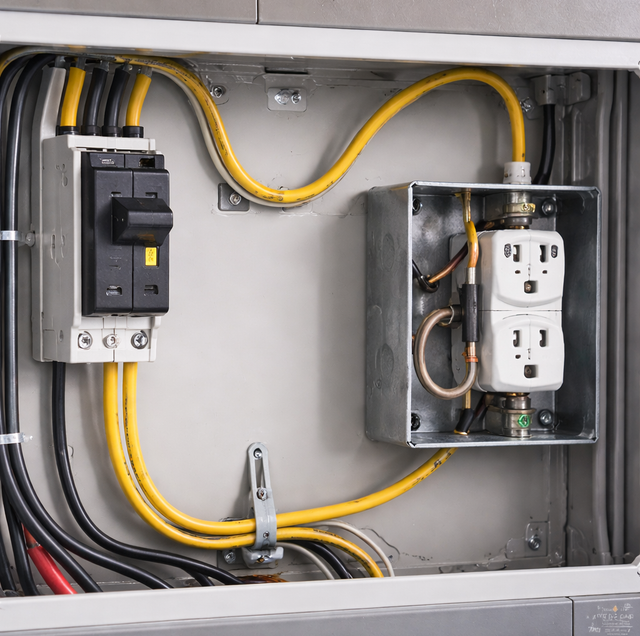
A dedicated circuit breaks that pattern on purpose. It runs one wire from a single breaker to one appliance or one outlet, and nothing else taps into it along the way. That appliance gets the circuit's full rated capacity to itself.
Shared vs. dedicated, side by side: On a shared circuit, a 15-amp breaker might feed six outlets, three ceiling lights, and a bathroom fan. The total draw of everything switched on at once has to stay under the breaker's limit. Plug a hair dryer into that bathroom while the vacuum is running down the hall, and the combined pull can exceed what the wire is rated for. The breaker trips to protect the wire from overheating.
On a dedicated circuit, that same hungry appliance sits alone. A garbage disposal on its own 15- or 20-amp line can pull hard the instant you flip the switch, and nothing else on the run is affected. No competition, no surprise trips, and no lights dimming somewhere else in the house.
The point is headroom. A big appliance that draws a lot of current, especially at startup, needs the whole circuit reserved for it so it is never fighting a toaster for the same slice of capacity.
Which Appliances Need A Dedicated Circuit
The rule of thumb: anything that draws heavy current, runs for long stretches, cycles a motor or heating element on and off, or would be a real problem if it quietly lost power. Common examples include:
- Refrigerator: Runs around the clock and cycles its compressor; a shared trip can spoil a full fridge before anyone notices.
- Microwave: Pulls a hard surge the moment it starts, enough to dim shared lights.
- Dishwasher: Combines a motor and a heating element in one cycle.
- Garbage disposal: A motor that starts under load and stalls if jammed.
- Electric range and wall oven: Among the highest draws in the home.
- Clothes dryer: Heat plus a drum motor running together.
- Electric water heater: A sustained heating load that runs on its own line.
- HVAC and furnace air handler: Heavy startup surge from the compressor and blower.
- EV charger: A long, steady high-current draw for hours at a time.
- Window air conditioner: A compressor that surges each time it kicks on.
- Sump pump: Needs guaranteed power exactly when the basement is flooding.
- Hot tub or spa: High continuous load, usually with its own protected disconnect.
- Home office or small server, and a portable space heater: A space heater alone can nearly fill a 15-amp circuit, and a server rack you cannot afford to have blink off both benefit from their own line.
A single portable space heater can nearly fill a 15-amp circuit on its own, which is why it is one of the loads most likely to need its own line even though it just plugs in like any small appliance.
Not every home wires all of these separately, and requirements depend on the appliance's rating and your existing panel. A licensed electrician confirms what your specific setup calls for.
Warning Signs A Circuit Is Overloaded
You rarely need a meter to spot a circuit that is asking for a dedicated line. The house tells you. Watch for these:
The breaker trips when two things run together: If flipping on the microwave while the coffee maker brews sends you to the panel, that circuit is carrying more than it was built for. A breaker that trips repeatedly is doing its job, not malfunctioning. Resetting it again and again without addressing the load is how wires and connections get cooked over time.
Lights dim when the AC or microwave starts: A brief dip when a big motor surges to life is normal on a shared circuit. A deep, lingering dim, or lights across the room fading every time the compressor kicks on, points to voltage drop from too much load on one run.
Outlets or cords feel warm: An outlet plate or a plug that is warm to the touch is a red flag. Warmth means resistance and heat building where it should not. A scorch mark, a burning smell, or a discolored outlet is an emergency; stop using it and call an electrician the same day.
None of these should be treated as a quirk to live with. They are early symptoms of an overloaded circuit, and the fix is usually a dedicated line for whatever appliance is straining it.
120V vs. 240V Dedicated Circuits
Dedicated circuits come in two voltages, and the appliance decides which one it needs.
A 120-volt dedicated circuit uses a single breaker and handles most large plug-in appliances: refrigerators, microwaves, dishwashers, disposals, sump pumps, and many window units. These usually land on a 15- or 20-amp breaker with a standard-looking outlet, just reserved for one device.
A 240-volt dedicated circuit uses a double-pole breaker that ties two hot legs together to deliver twice the voltage. Heavy heating and high-power appliances need it: electric ranges, ovens, dryers, water heaters, central HVAC, hot tubs, and most EV chargers. The outlets look different, with a distinct pin pattern, and the wire is sized larger to carry the load safely.
The higher voltage lets big appliances do their work while pulling less current for the same power, which keeps the wiring cooler and more efficient. Matching the voltage, breaker size, and wire gauge to the appliance is precise work, and getting any one of them wrong creates a fire risk rather than a fix.
Why Some Appliances Are Required To Have One
For certain fixed appliances, a dedicated circuit is not just good practice; electrical rules expect it. The reasoning is safety and reliability: an appliance that draws heavily or runs unattended should never be one shared toaster away from tripping.
The specific requirements depend on the appliance, its nameplate rating, and local rules that vary from place to place. A range hardwired to the panel, a water heater, and an HVAC unit each carry their own expectations. Rather than guess, a licensed electrician confirms what applies to your home and pulls the required permit so the work is inspected.
That permit and inspection matter. They are the check that the circuit was sized, wired, and connected correctly, which protects both the home and anyone who lives in it later.
Never swap in a bigger breaker to stop a nuisance trip without upsizing the wire behind it. The breaker is sized to protect that wire, and an oversized one lets the wire overheat inside the wall while the breaker never trips in time. If a circuit keeps tripping, the fix is a correctly sized dedicated line, not a larger breaker.
Adding One Is A Panel Job
Installing a dedicated circuit means opening the electrical panel, adding a breaker, and running new wire through walls or ceilings to the appliance. That is licensed-electrician work for good reason. The panel carries lethal voltage even when individual breakers are off, and the connections have to be exact.
An electrician sizes the breaker and wire to the appliance, not the other way around. Swapping in a bigger breaker to stop a nuisance trip without upsizing the wire is a genuine hazard; the wire can overheat behind a wall while the oversized breaker never trips. The load runs through more than one heating season and cooling season, so the circuit is built for year-round demand, not a single peak day.
If you are seeing repeated trips, dimming, or any warmth at an outlet, treat it as a signal to call a pro. The point of a dedicated circuit is to take one demanding appliance out of the competition entirely, so your panel stays balanced, and your wiring stays cool no matter what is running.
Frequently Asked Questions
Flip one breaker off at the panel and walk the house checking what lost power. A dedicated circuit will kill exactly one outlet or appliance and nothing else, while a shared breaker takes down a string of outlets and lights together. Appliances like the range, dryer, and water heater are usually obvious because they are hardwired or use a large specialty outlet no other device fits.
Often yes, if the panel has an open breaker slot and enough spare capacity in its total amperage rating. An electrician calculates the existing load against the panel's limit before adding anything. If the panel is already full or near its ceiling, a subpanel or a service upgrade may be needed first, which is a larger job than the circuit itself.
No, those are two different things. GFCI and AFCI are safety devices that cut power when they sense a ground fault or arcing, and they can sit on either a shared or a dedicated circuit. Dedicated refers to how many appliances share the line, not what protection is on it. A kitchen circuit can be both GFCI-protected and shared among several counter outlets at the same time.
That flicker is a small voltage sag as the compressor draws its startup surge, and LEDs show it more than old bulbs because their drivers are sensitive to voltage dips. If the fridge is sharing a circuit with those lights, moving it to a dedicated line usually clears the flicker. Persistent flickering across many fixtures can also signal a loose neutral connection, which needs a professional look right away.
No. A dedicated circuit is a single breaker feeding one appliance. A subpanel is a second smaller panel fed from the main one that distributes power to a group of circuits, often used for a garage, a workshop, or an addition. You might install a subpanel to gain room for several new dedicated circuits at once when the main panel is out of slots.
There is no single magic number, because it depends on what plugs in, not just how many receptacles exist. A common guideline puts around eight to ten general-use outlets on a 15-amp circuit, but a single space heater or window AC can fill that circuit by itself. The safe measure is total current draw staying comfortably under the breaker rating, which is exactly why heavy appliances get pulled onto their own line.
Book an electrical safety check before the next trip turns into a scorched outlet — a licensed pro sizes the right dedicated circuit for your appliance and pulls the permit. Kennedy Electric serves Brooksville, Spring Hill, and New Port Richey. License #EC13011268. Call (352) 251-2795.
