

Why Do Your Lights Dim When the AC Kicks On?
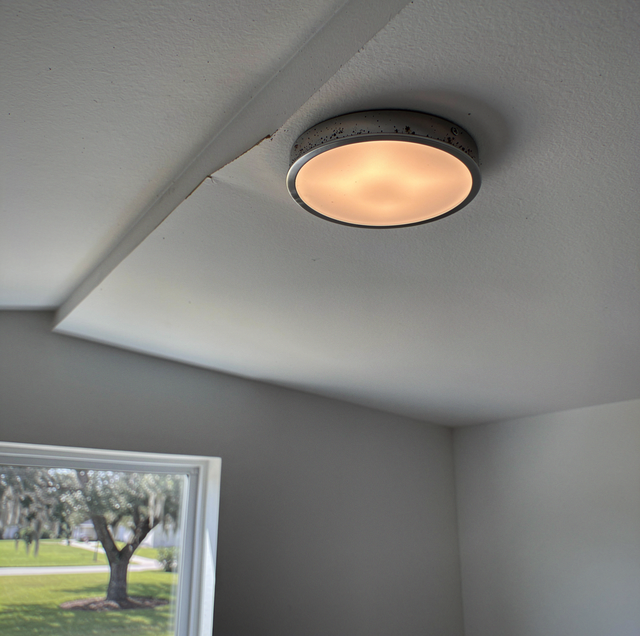
You are sitting in the living room when the thermostat clicks, and for a half-second, every light in the room dips before snapping back to full brightness. It happens fast enough that you might question whether you saw it at all, but it's real, and it's tied directly to what just happened inside your air conditioner. Most of the time, that flicker is nothing more than a motor doing what motors do. Sometimes it's the first sign that a circuit, a connection, or a panel is working harder than it should. Knowing the difference starts with understanding what actually happens the instant a compressor turns on.
What Happens the Instant a Compressor Starts
An air conditioner's compressor is a motor, and like any motor, it draws far more current to start than it does once it's running. That initial pull is called inrush current, or starting current, and it can run several times higher than the motor's normal operating draw for a fraction of a second. A compressor that draws a modest amount of current while running steadily might momentarily pull five to seven times that amount the instant it kicks on, before settling down as the motor reaches speed. Your home's wiring and panel are built to handle that spike without any damage. The dimming you notice is simply the visible side effect of that current surge moving through the system you share with your lights.
Why Starting Current Runs So High
A motor at rest has no back-EMF, the countering electrical force a spinning motor generates that naturally limits how much current it draws once moving. Until the compressor's rotor reaches speed, almost nothing opposes the current flowing into the windings, so the motor pulls as much as the circuit allows. That's true of any motor-driven appliance, not just AC units. A well pump, a large air handler blower, or a garage door opener all show the same pattern, albeit to a lesser degree. Air conditioning compressors tend to produce the most noticeable dimming because they're large motors that cycle on and off constantly through a hot stretch of weather, giving you many chances to notice the effect. High heat and humidity push a compressor to run more often and for longer stretches, which means more startup events and more opportunities for that momentary dip to show up.
How a Current Surge Shows Up as Dimmer Lights
Every circuit in your home shares a path back to the panel and, ultimately, to the utility supply feeding your property. When the compressor's motor suddenly demands a large jolt of current, that demand causes a brief, small drop in voltage across the shared wiring, which electricians call a voltage sag. Incandescent and halogen bulbs respond to even a small voltage drop by visibly dimming, since their brightness depends directly on the voltage reaching the filament. LED bulbs are less sensitive but not immune, and some flicker briefly rather than dim smoothly. The whole event typically lasts well under a second, exactly as long as it takes the compressor to reach running speed and its current draw to drop back down. If the lights recover instantly and stay steady afterward, the wiring did its job, and the sag was a normal side effect of a big motor starting.
When Momentary Dimming Is Normal
A quick, mild dip that occurs right when the AC (or another large appliance like a well pump or an electric water heater's element) switches on and clears within a second fits the pattern of ordinary starting current. It tends to be more noticeable on lights that share a circuit with the compressor's circuit or a nearby leg of the panel, and less noticeable on lights fed from a completely separate part of the panel. It also tends to show up more during the hottest, most humid stretches of the year, when the compressor cycles most often and runs the longest per cycle. None of that points to a defect. It's the expected behavior of a panel and wiring system handling a legitimate startup load the way they're designed to.
What Makes the Dimming Worse Than It Should Be
Two things turn an ordinary, brief dip into something more noticeable or more frequent: wiring that's undersized for the load it carries, and connections that have loosened over time.
Wire gauge determines how much resistance the current encounters as it flows through a circuit, and resistance is what turns a current surge into a visible voltage drop. A circuit run with wire sized correctly for its load and the distance it travels absorbs a compressor's starting current with only a small, brief sag. A circuit that's undersized for that load, whether because of the original installation or because a home's electrical demands have grown beyond what was there when the wiring was installed, shows a deeper, sometimes longer, dip every time that motor starts.
A loose connection does something similar but for a different reason. Any point where a wire meets a lug, a splice, or a breaker terminal is a potential source of added resistance if it isn't tightened to spec or has worked loose through years of heating and cooling. That extra resistance adds up exactly at the moment current demand spikes, making the dimming more pronounced, sometimes accompanied by a slight flicker instead of a smooth dip, and sometimes paired with warmth at the outlet, switch, or panel connection involved.
Signs the Dimming Has Crossed Into a Real Problem
A handful of patterns separate ordinary starting-current dimming from something worth having checked:
- The dip is deep, dark enough that you'd call it more than a flicker, rather than a brief dimming.
- Lights take more than a second or two to recover full brightness.
- The dimming happens with appliances that shouldn't draw much starting current at all, like small devices or lights on their own dedicated circuit.
- A particular outlet, switch plate, or the breaker panel itself feels warm near the time the dimming happens.
- You notice a faint burning smell, buzzing, or crackling along with the dimming.
- The dimming has gotten more noticeable over recent months rather than staying consistent.
Any single item on that list is reason enough to have a licensed electrician take a look. Several together move it from "worth mentioning" to "worth scheduling soon".
What You Can Reasonably Check Yourself
Before assuming the worst, a few observations from outside the panel help sort out what's going on. Notice whether the dimming occurs only when the AC starts or with other large appliances as well, since that tells you whether the issue is specific to one circuit or shared more broadly. Pay attention to which lights dim, since fixtures on the same circuit or the same side of the panel as the compressor will show it more than lights fed from elsewhere. Feel the switch plates and outlet covers near where the dimming happens for warmth, and listen for any buzzing or crackling that accompanies it. None of that requires opening a panel or touching wiring, and none of it should. It just gives you useful information to describe.
What an Electrician Checks During a Dimming Complaint
A licensed electrician approaches recurring or pronounced dimming as a wiring and connection question first. That typically means checking the wire gauge feeding the affected circuit against the load it's actually carrying, inspecting connections at the breaker, outlets, and any splices along that circuit for looseness or heat damage, and measuring voltage drop directly during a compressor start to see how deep the sag actually goes and how long it lasts. If the wiring is undersized for the load, running a larger conductor or moving the compressor onto its own dedicated circuit usually resolves it. If the problem traces to a loose connection, retightening or replacing that connection point solves it directly. In homes where the panel itself is older or already near its limit, the conversation sometimes shifts to whether the panel has enough capacity to handle the loads it's being asked to carry without every large motor start causing a visible flicker.
A brief, mild dip in the lights when the AC starts is close to universal, and by itself it isn't a reason for concern. It's the deeper dips, the slow recoveries, and the ones paired with heat, smell, or sound that separate a normal electrical event from a wiring or connection issue worth having a professional trace down.
Frequently Asked Questions
Yes, a brief, mild dimming at startup is common and results from the compressor's normal starting current draw. What matters more than whether it happens is how deep the dip is and how quickly the lights recover.
Lights sharing a circuit or panel leg closer to the compressor's circuit tend to show more dimming than lights fed from a separate part of the panel, since the voltage sag is strongest closest to where the surge originates.
LEDs generally respond less visibly to a brief voltage sag than incandescent or halogen bulbs, though some LED drivers can flicker rather than dim smoothly. A complete absence of visible reaction to a startup event is not unusual in LED lighting.
Adding a large motor-driven appliance, or replacing an older one with a larger unit, can increase the starting current a shared circuit experiences, making dimming more noticeable than before.
Not necessarily. Momentary dimming is a normal response to starting current and doesn't by itself indicate an overloaded panel. Deep, slow-recovering dimming across multiple circuits is a better indicator that panel capacity is worth evaluating.
A well-sized, properly connected dedicated circuit will still show a brief sag when a large motor starts, since starting current is a property of the motor itself, not a flaw in the circuit. What shouldn't happen is a deep or slow-recovering dip on a circuit built specifically for that load.
Schedule an electrical inspection — a licensed electrician can measure voltage drop at compressor start-up, check the wiring and connections on the affected circuit, and tell you plainly whether what you're seeing is normal or warrants a repair. Kennedy Electric serves Citrus, Hernando, and Pasco Counties. License #EC13011268. Call (352) 251-2795.
