

Why Your Circuit Breaker Keeps Tripping: 3 Real Causes
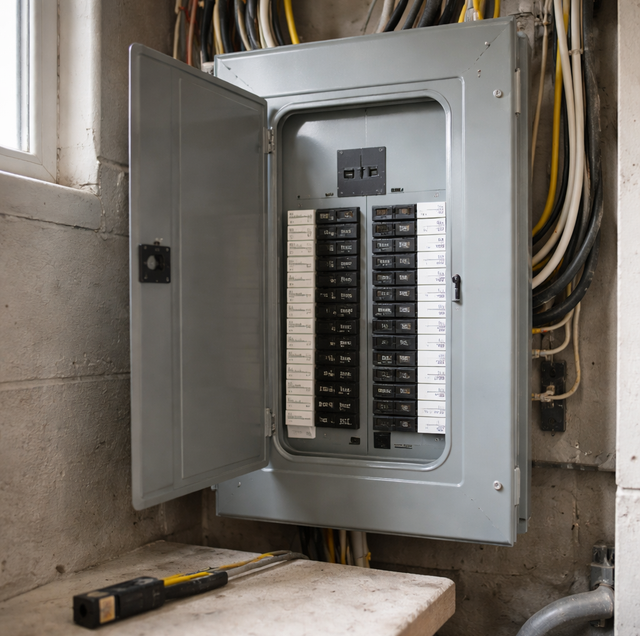
Quick Answer: A breaker trips to cut power before the wiring behind it overheats. When one keeps tripping, it is doing its job and pointing at a fault: an overloaded circuit, a short circuit, or a ground fault. The fix is finding which of the three, not forcing the breaker to stay on.
That switch in your panel snapping to the off position feels like the enemy. It killed the lights in the middle of something, or shut down half a room for no reason you can see. Reset it once and it might hold. Reset it three times in an hour and something on that circuit is wrong, because a breaker is not a random failure. It is a deliberate safety device, and a repeated trip is it telling you it has found a problem worth stopping for.
What a Breaker Actually Senses
A standard breaker watches one thing: how much current is flowing through it. Every circuit in your home is wired to carry a set amount, usually 15 or 20 amps for the outlets and lights. The breaker is sized to match that wire. When current stays under the limit, the breaker passes it through and stays quiet. When current climbs past the limit and stays there, or spikes violently for a fraction of a second, the breaker opens the circuit and cuts the power.
The reason it does this is the wire behind the wall. If you push too much current through a conductor, it heats up. Heat it enough, and the insulation around it can char, melt, or ignite inside the wall where nobody can see it. The breaker trips before that point. So the trip is not the malfunction. It is the wire's last line of defense working correctly, and the thing to chase is what pushed the current too high in the first place.
There are three things that do it, and telling them apart is most of the job.
The Three Faults Behind a Trip
Overload: Too Much on One Circuit: An overload is the friendly version. Nothing is broken. You simply asked one circuit to carry more than its wire is rated for. A space heater, a microwave, and a hair dryer all pulling from outlets that trace back to the same 15-amp breaker will add up past 15 amps, and the breaker will trip after the load has been running for a bit.
The tell is timing. An overload usually takes a moment. You turn on the last device, everything runs for thirty seconds or a few minutes, then the breaker goes. It builds heat, then reacts to the heat. Move some of those devices to outlets on a different circuit, and the problem often disappears, which is the clearest sign it was an overload and not something worse.
Short Circuit: Hot Meeting Neutral: A short circuit is faster and more serious. Inside a normal circuit, current flows out on the hot wire, and returns on the neutral wire, and the two never touch. In a short, they do touch, directly, with almost nothing to slow the current down. Current surges to a huge value in an instant, and the breaker trips immediately, often with a pop or a spark at the source.
The usual culprit is a damaged cord or a failing device: a frayed lamp wire where the copper strands have spread and crossed, a cracked plug, a motor that has broken down inside. Short circuits trip the breaker the instant you reset it or switch on the bad device. That "trips the moment I turn it on" pattern is the signature.
Ground Fault: Hot Finding Earth: A ground fault is a cousin of the short. Here the hot wire leaks its current to the grounded metal parts of the system, the bare copper ground wire, a metal box, an appliance chassis, instead of returning on the neutral. Water is the common bridge. Moisture in an outdoor outlet, a leak under a sink, or dampness in a basement box gives the current a path to ground it should never have.
Ground faults are dangerous because the escaped current can travel through a person who touches the energized metal. That is why bathrooms, kitchens, garages, and outdoor outlets are protected by special breakers or outlets built to catch exactly this leak, which the next section covers.
How to Tell Which One You Have
You can narrow it down without opening anything. Start with the reset. Flip the tripped breaker fully off, then back on.
If it will not stay on and trips again the instant you reset it with nothing changed, you are likely looking at a short circuit or a ground fault in the fixed wiring, and that is where you stop and bring in a licensed electrician.
If it resets and holds, the fault is probably tied to something you can control. Now unplug everything on that circuit, every lamp, charger, and appliance. Reset the breaker. Then plug items back in one at a time, waiting a minute between each. When the breaker trips right as you connect a particular device or right as you switch it on, that device or its cord is the short. When the breaker instead holds fine until you have several things running and only then trips, you have confirmed an overload, not a fault.
To confirm an overload, unplug everything on the circuit, reset the breaker, then plug items back in one at a time with a minute between each. A device that trips the breaker as you connect or switch it on is the fault, while a trip that comes only once several things run together is a plain overload.
GFCI and AFCI Breakers Trip for Their Own Reasons
Some breakers are smarter than the standard kind and trip on things a plain breaker ignores.
A GFCI, the ground-fault type, constantly compares the current leaving on the hot wire against the current returning on the neutral. Those two should match exactly. When even a small amount goes missing, meaning it leaked to ground, the GFCI trips in a fraction of a second. That is why a GFCI outlet in a bathroom pops when an appliance gets damp, and why one on an exterior wall can trip after rain works into the box. A GFCI is doing its job over a leak far too small to bother a normal breaker.
An AFCI, the arc-fault type, listens for the electrical signature of arcing, the tiny sputtering sparks that happen when a wire is loose, pinched, or nicked. Arcing is a leading cause of wiring fires, so AFCI protection guards bedrooms and living areas. An AFCI can trip on a genuine loose connection, and it can also nuisance-trip on certain motors and older electronics whose normal noise resembles an arc. Sorting a real arc from a nuisance is a job for someone with a meter, because a real one is a fire risk you do not want to guess about.
An Overloaded Circuit Versus a Breaker at End of Life
Breakers are mechanical, and mechanical things wear out. A breaker that has tripped hundreds of times over the years, or has cooked in a hot panel for a couple of decades, can weaken. Its internal mechanism and contacts fatigue, and it may start tripping below its rated current, or trip for no load at all.
Here is the trap: a worn breaker and an overload can look identical from the outside. Both trip under normal-seeming use. The difference is that a failing breaker trips at a load the circuit used to carry without complaint, and often trips with very little or nothing plugged in. Think of a smoke detector that has aged to the point where it shrieks at ordinary cooking steam. The alarm is broken, not lying about a fire, but you still do not silence it by pulling the battery. You test it properly. Same with a breaker: telling a tired breaker apart from a real overload takes measurement, and swapping a breaker is panel work with lethal voltage inside, so it is a licensed electrician's call, not a parts-store guess.
Never tape, wedge, or bypass a breaker to force it to stay on, and never fit a larger breaker to stop a circuit from tripping. Either move the load so the wire cannot safely carry it, or let current keep flowing, and heat builds inside the wall with no warning left. If a breaker keeps tripping, find and fix the fault or reduce the load; do not defeat the breaker.
Red Flags That Mean Stop Now
Most trips are ordinary. A few are not, and these signs mean cut the power to that circuit at the panel and call a licensed electrician before touching anything else:
- A breaker that will not reset at all. It refuses to stay on no matter what you unplug. That points to a fault in the fixed wiring, not a device.
- A warm or scorched breaker, outlet, or panel. Warmth, discoloration, or melted plastic means heat is building where it should not. Heat is exactly what the breaker exists to prevent.
- A burning or acrid plastic smell near the panel or an outlet. That is insulation cooking, and it does not get better on its own.
- Repeated trips with nothing plugged in. If the circuit trips bare, the problem is inside the walls or the panel, beyond anything you can reach or reset.
Do not tape a breaker on, wedge it, or bypass it. Doing that removes the one thing standing between a fault and a fire. And never open the panel's inner deadfront cover to poke around inside. The bus bars behind it stay energized even with individual breakers off, and the voltage there is enough to kill.
Why a Bigger Breaker Is the Wrong Fix
It is tempting to look at a 15-amp breaker that keeps tripping and think a 20-amp one would just make the annoyance stop. It would, and that is exactly the danger.
The breaker is sized to protect the wire, not to be convenient. A 15-amp circuit is built with wire rated for 15 amps. Put a 20-amp breaker on it, and you have told the safety device to allow current the wire cannot safely carry. The trips stop because the breaker no longer trips in time. The wire keeps heating past its limit, inside the wall, with no warning left. That is how a nuisance trip becomes an electrical fire.
If a circuit truly needs more capacity, the answer is a new circuit run with properly sized wire, or a dedicated circuit for the heavy appliance, both done by a licensed electrician who matches every part to the load. The breaker size always follows the wire, never the other way around.
A breaker that trips is one of the most honest devices in your home. It only speaks up when something is wrong, and the right response is to listen to it, not to silence it.
Frequently Asked Questions
Yes. A loose connection at the breaker's terminal screw or at an outlet creates resistance, and resistance under current makes heat. That heat can trip the breaker at a normal load and, worse, can produce arcing that an AFCI catches. A loose neutral in a shared box can also cause odd, intermittent trips that come and go with no pattern you can pin to any one device. This is exactly why a persistent trip with nothing obviously overloaded warrants a look inside the connections, which is licensed work.
Weather-linked trips almost always mean moisture is reaching a connection that should stay dry, usually in an outdoor outlet, a light fixture, or a box where a cable enters the house. Water bridges the hot conductor to ground, and a GFCI reads that leak and trips. A cracked outdoor cover, a failed gasket, or a light fixture that has lost its seal are common entry points. The trip is evergreen evidence of a real seal failure, not a seasonal quirk, and the seal should be repaired rather than the outlet simply reset each time.
Resetting once to see whether it holds is reasonable. Resetting repeatedly is not, and here is the line: if the breaker resets and then runs fine for hours or days, you likely cleared a one-time overload. If it trips again within minutes or seconds, stop resetting. Each forced reset on a live short or ground fault sends another surge through the fault point, adding heat where the problem already is. Two failed resets in a row are your signal to leave it off and call a professional.
Both cut power at a current limit, but a breaker is a reusable switch you flip back on, while a fuse is a one-time metal element that melts and must be physically replaced. Older homes may still have a fuse panel. The failure logic is the same: an overload or short opens the circuit, but a fuse box has its own hazard: someone can install a fuse rated higher than the wire allows, the same dangerous mistake as fitting an oversized breaker. Homes on fuse panels are often candidates for an upgrade to a modern breaker panel.
The trip itself protects appliances by cutting power fast. The concern runs the other direction: a failing appliance is often the cause, and the repeated surge-and-cut cycle of a short circuit can further damage that appliance's motor or control board. Sensitive electronics like computers and televisions dislike the abrupt loss of power a trip creates, which can corrupt data or stress a power supply over time. If one specific device keeps causing trips, retire or repair that device rather than letting it keep faulting the circuit.
There is no single magic number, because it depends on what is plugged in, not how many receptacles exist. A circuit can carry many lightly used outlets or be overwhelmed by two high-draw appliances. The practical guide is total load: a 15-amp circuit should not run continuously past roughly 80 percent of its rating, so heavy appliances like heaters, microwaves, and window units often deserve their own dedicated circuit. If ordinary use keeps tripping a circuit, the real answer is usually redistributing the load or adding a circuit, not accepting the trips.
Get to the real cause before the next trip — a licensed electrician can trace the fault safely and fix it right. Kennedy Electric serves Brooksville, Spring Hill, and New Port Richey. License #EC13011268. Call (352) 251-2795.
