

Hot Tub Breaker Keeps Tripping? 6 Real Causes
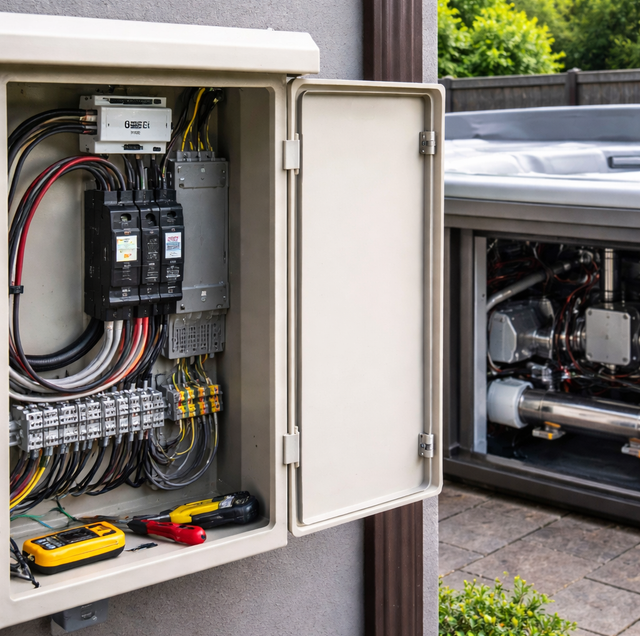
Quick Answer: A hot tub runs on a GFCI-protected circuit that cuts power the instant it detects even a tiny imbalance between the wires feeding the spa. Repeated tripping usually means current is escaping through a failed heater element, moisture or corrosion in a connection, worn pump motor windings, a faulty control pack, an aging GFCI device, or damaged wiring. Reset once, and if it trips again, stop and call a licensed electrician.
A hot tub that keeps knocking out its own breaker is a frustrating way to end a long day, and it almost always points to one thing: current leaking somewhere it should not. The circuit protecting your spa is built to notice that leak and shut everything down fast, which is exactly why it feels so unforgiving. The trip is not the malfunction. The trip is the safety system doing its job in response to a real fault upstream of it.
Why A Spa Sits On A GFCI Circuit In The First Place
Water and electricity together create one of the few household situations that can be immediately fatal, so a hot tub is required to run on a ground-fault circuit interrupter. A GFCI does something an ordinary breaker does not. A standard breaker only trips when the circuit draws too many amps, meaning it protects the wiring from overheating. A GFCI watches something far subtler: it constantly compares the current flowing out on the hot conductor against the current returning on the neutral. In a healthy circuit, those two numbers match almost perfectly.
The moment they stop matching, the GFCI assumes the missing current has found another path to ground, and the most dangerous "other path" is a person standing in wet surroundings. So it opens the circuit in a fraction of a second, long before the imbalance grows large enough to hurt anyone. The threshold is astonishingly small, roughly the current it takes to feel a shock, not to cause injury. That sensitivity is the whole point, and it is also why a spa GFCI trips on faults an ordinary appliance breaker would never notice.
Once you understand that the device is hunting for leaked current, the list of possible culprits starts to make sense. Every cause below is a different way for current to sneak off the intended path.
The Common Culprits Behind Repeated Tripping
A failed heater element leaking to ground: The heater is the single most common offender. Inside the heater assembly, an electric element sits inside a metal tube that is surrounded by spa water. Over years of heating and mineral exposure, the internal insulation that keeps the live element separated from that grounded metal sheath can break down. When it does, a small amount of current bleeds from the element straight into the water and to ground. The GFCI sees the imbalance and trips. A telltale sign is a spa that resets fine and runs on filtration, then trips the moment the heater kicks on to bring the water up to temperature.
Moisture and corrosion in a connection: Spas live outdoors in humidity, rain, and constant splash. Water finds its way into junction boxes, wire nuts, the underside of the cabinet, and around terminal connections. Even a film of damp mineral residue across two terminals gives current a low-resistance detour to ground. Corroded copper, greenish terminals, and swollen wire insulation all point this direction. Salt-system spas are especially prone because the water is mildly conductive by design, and any stray moisture readily carries current.
Worn pump motor windings: The circulation and jet pumps are sealed motors that run wet and hot. The varnish insulating the copper windings inside the motor degrades with age, heat, and moisture intrusion past a failing shaft seal. A motor that is starting to short internally will leak current to its own grounded frame. Often this kind of fault is heat-dependent: the spa runs fine cold, then trips a few minutes after a pump has warmed up and the marginal insulation expands and breaks contact.
A faulty control pack: The control pack is the sealed electronic box that houses the relays, circuit board, and terminal blocks that switch the heater and pumps. A cracked case, a leaking topside connection, or a failed component on the board can all create a leakage path. Because the control pack ties every other component together, a fault here can mimic almost any other symptom, which is one reason isolating the cause is a job for test equipment rather than guesswork.
The GFCI device itself wearing out: GFCI breakers and spa-panel GFCI units are not immortal. The internal sensing electronics and the mechanical trip mechanism both age, and frequent lightning activity and power surges accelerate that wear. A GFCI can reach a point where it trips on a phantom imbalance that is not really there, or refuses to hold even with the spa disconnected. Ruling this in or out is a specific test, and a nuisance-tripping GFCI should never be swapped for a plain breaker to "solve" the problem.
Rodent-chewed or nicked wiring: The run between the spa panel and the tub, and the flexible wiring inside the cabinet, can be damaged in ways that are easy to miss. Rodents nest in warm equipment bays and gnaw insulation. A staple driven slightly too hard during installation, a wire pinched under a panel cover, or UV-brittled insulation on an outdoor run can all expose enough copper for current to arc to ground when conditions are damp. These faults are notorious for being intermittent, showing up only when it rains or when a particular section flexes.
Tripping Immediately Versus Tripping After The Heater Runs
The timing of the trip is one of the most useful clues, and paying attention to it saves diagnostic time.
If the breaker refuses to hold at all, tripping instantly the moment you reset it even with nothing running, the fault is a hard, constant leak. That pattern points toward the GFCI device itself, a wiring fault in the feed, or moisture bridging a connection right at the panel or spa disconnect.
If the spa resets and runs the pumps and filtration happily, then trips only once the water starts heating, the heater element is the prime suspect because the fault only appears when the element is energized. And if the trip comes several minutes into a running cycle after things warm up, a heat-sensitive component like a marginal pump motor or a temperature-dependent insulation breakdown moves to the top of the list. None of this replaces proper testing, but it tells the electrician where to look first.
The timing of the trip is a useful clue that saves diagnostic time. A spa that runs fine on filtration but trips the moment the heater kicks on points to the heater element, while a trip several minutes into a running cycle points to a heat-sensitive part such as a marginal pump motor.
Never bypass the spa GFCI or swap it for an ordinary breaker to stop the tripping. That device is the one thing standing between the spa water and a lethal shock, and a GFCI that keeps tripping is a warning to act on, not a problem to eliminate. If it will not hold on a single reset, leave the spa powered down and call a licensed electrician.
What A Homeowner Can Safely Do
There is a narrow band of safe action here, and it is worth being precise about where it ends. Think of the GFCI as a smoke detector that has gone off: the right response is to find the fire, not to pull the batteries.
Reset it once: Press the reset firmly a single time. If it holds, monitor the spa and note whether it trips again and when.
Isolate the equipment if it trips again: Many spas let you turn off individual components at the topside control. Powering down the heater or a pump and seeing whether the breaker then holds can point to which piece is leaking. This is observation from outside the equipment, nothing more.
Keep the panel and the control pack closed: Do not open the spa panel, the control pack, or any junction box, and do not touch the wiring. The interior of that equipment carries voltage capable of stopping a heart, and doing so while standing near water raises the stakes further.
Do not bypass the GFCI: Replacing a tripping GFCI with an ordinary breaker, or wiring around it, removes the one device standing between the spa water and a lethal shock. A GFCI that keeps tripping is not the problem to eliminate. It is the warning to act on.
Stop after one failed reset: If the breaker will not hold on a single reset, the safe and correct move is to leave the spa powered down and call a licensed electrician.
Why Diagnosis And Repair Belong To A Licensed Electrician
Finding which of six possible faults is causing the current leak requires isolating the circuit, testing insulation resistance on the heater and motors, measuring the actual leakage the GFCI is sensing, and inspecting connections that carry lethal voltage in a wet environment. That is licensed, insured work for good reason. A qualified electrician can distinguish a failing element from a tired GFCI from a nicked feeder, replace only what is actually at fault, and verify the repair holds under load before the spa goes back into service. The result is a hot tub that runs the way it should, with the safety system intact and quietly watching, which is exactly where you want it.
Frequently Asked Questions
No, and the reason is more than inconvenience. Each trip means the GFCI is detecting current leaving the circuit, and forcing it to hold does not stop the leak; it only removes your warning. A leak that is small today can grow as insulation degrades further. The safe rule is one reset; if it will not hold, leave the spa off until it is diagnosed.
It can. A spa is supposed to be on its own dedicated circuit sized for its load, but on older or modified installations, a spa is sometimes sharing a circuit with an outdoor outlet, pool equipment, or a shed. Adding that extra draw can push a standard breaker over its amp limit and trip it on overload rather than ground fault, which is a wiring correction, not a spa repair.
Temperature swings can expose a marginal fault in either direction. In cold snaps, the heater runs far more to hold temperature, so a weak heater element trips sooner and more often. In heat and humidity, moisture intrusion and thermal expansion in motor windings show up instead. A genuine fault trips year-round; weather just changes which component reveals it first.
A GFCI device commonly serves somewhere in the range of a decade before its sensing electronics or trip mechanism start to weaken, though nearby lightning strikes and repeated power surges can cut that short considerably. Manufacturers generally suggest testing a GFCI monthly with its built-in test button, and a unit that no longer trips on that self-test, or that trips with nothing connected, has reached the end of its service life.
Not the chemicals directly, but their side effects can. Hard-water scale builds up on the heater element and its sheath, trapping heat and accelerating the internal insulation breakdown that eventually leaks to ground. Over-salted or chemically unbalanced water is more conductive, so any stray moisture at a connection carries current more easily. Good water chemistry extends element life and reduces nuisance leakage.
Not quite. Many spa installations use a separate outdoor disconnect box near the tub that contains its own GFCI, in addition to the breaker back at the main panel. If your spa has one, that outdoor unit is usually the device doing the tripping, and it is a common failure point because it sits fully exposed to weather. Knowing which device is actually opening helps an electrician target the fault faster.
Get the trip diagnosed before you lose another soak — a licensed electrician can find the fault and restore your spa safely. Kennedy Electric serves Citrus, Hernando, and Pasco Counties. License #EC13011268. Call (352) 251-2795.
