


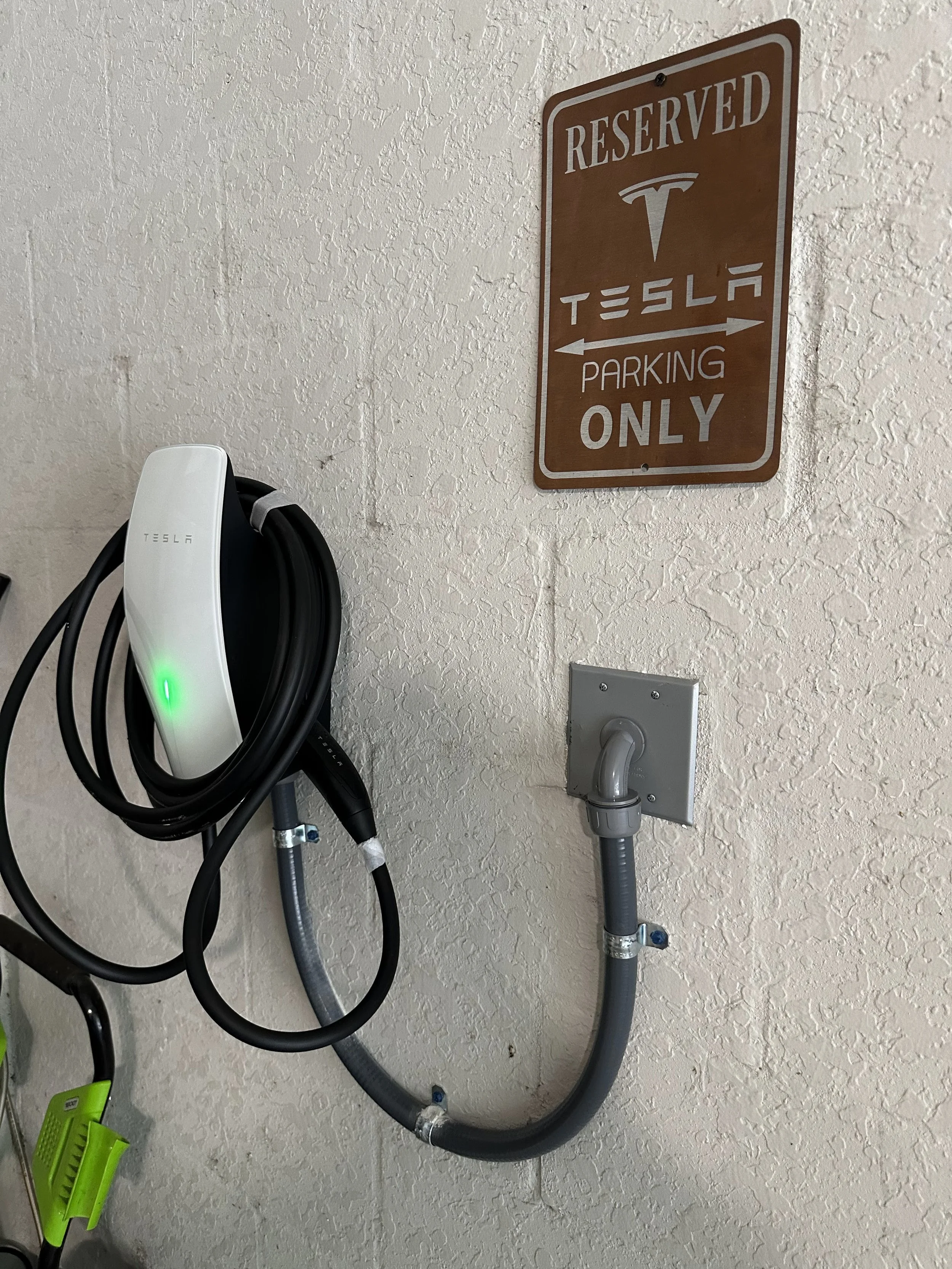
EV Charger Installation in Bayonet Point, FL
Home Level 2 Chargers for Older All-Electric Services|Licensed & Insured, EC13011268
A Level 2 charger in Bayonet Point usually goes into a house that dates from the 1970s or 1980s and also heats with electricity. So the work starts with what that house's service can still carry, and the circuit is planned from there.
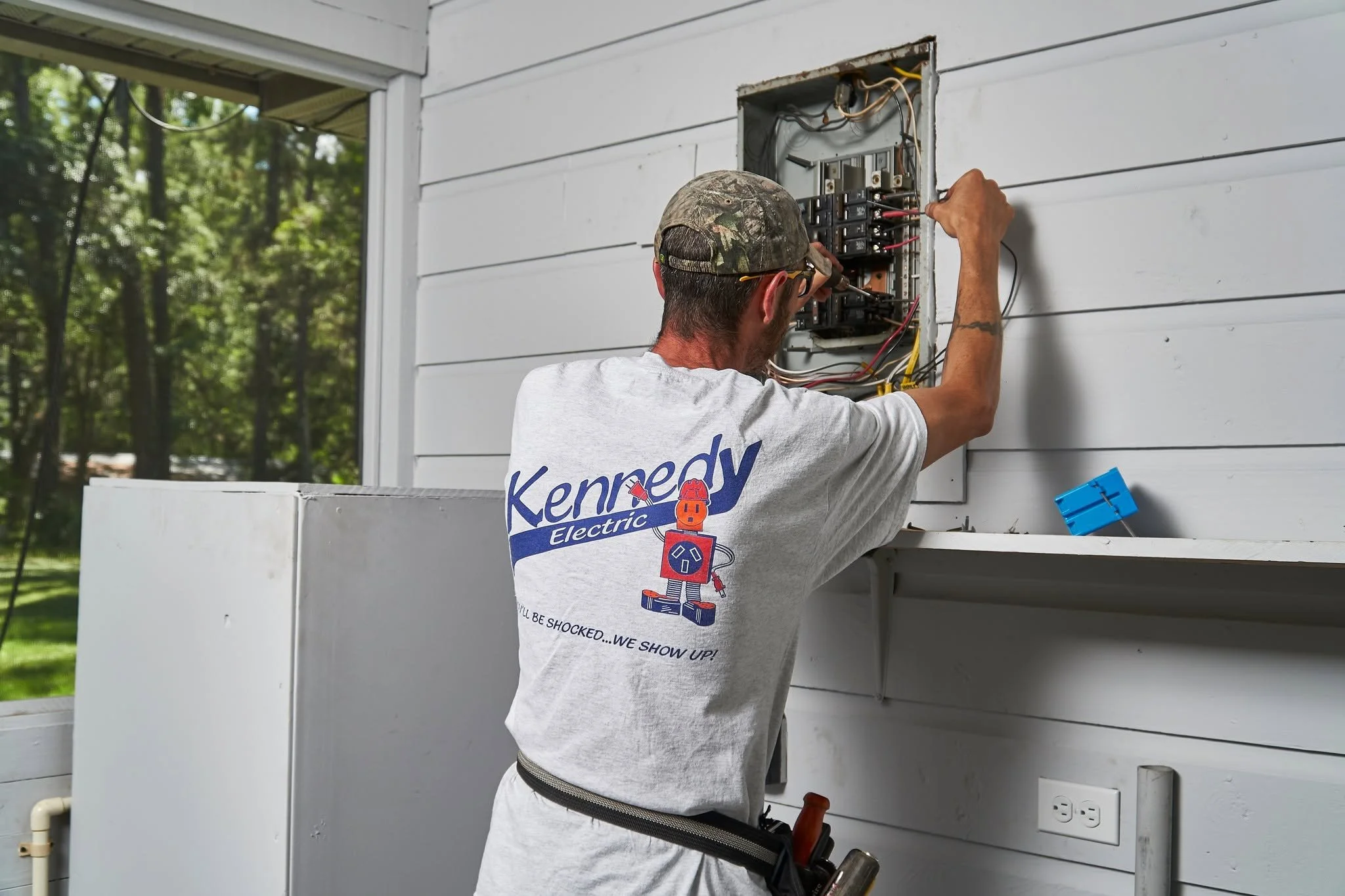
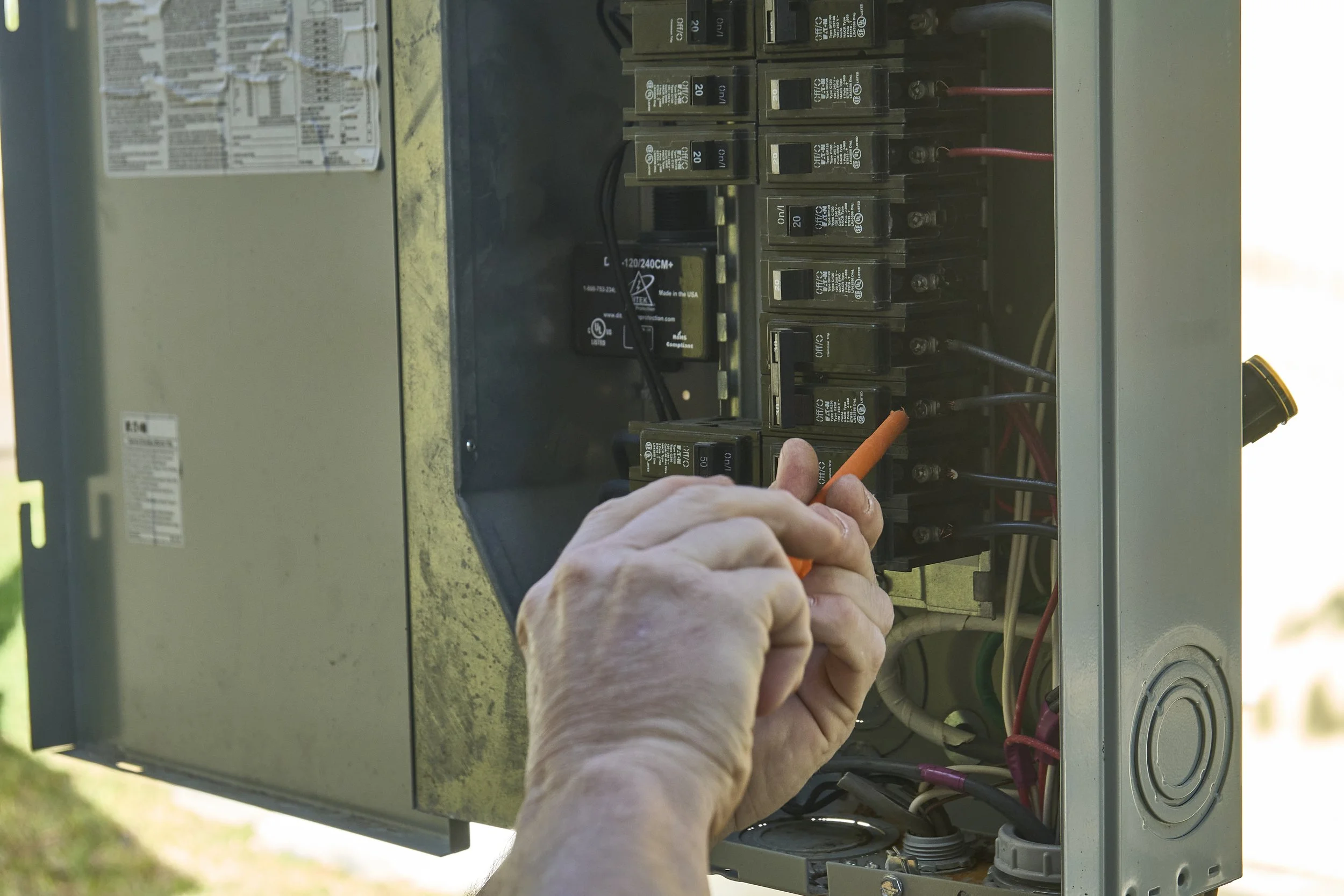
The label inside the panel door is worth a photo.
Call (352) 251-2795, Monday through Friday, 8 a.m. to 4 p.m., or send a request online. Calls after hours are returned the next business day.
At a glance
Older All-Electric Houses and Beacon Woods Rules
Most Bayonet Point houses date from the 1970s and 1980s: roughly 10,100 of about 13,500 homes, by the Census Bureau's estimates for 2020 to 2024. Unless the panel has been replaced since, the charger joins equipment sized when the house was first wired, and the load check starts from its rating. Nearly every occupied home here heats with electricity, and only about 200 of some 11,200 use utility gas. Heat strips that run on a cold morning count alongside everything else on the service, so a house with room to spare in July can be closer to its limit in January.
More than half of the occupied homes have one vehicle, so in most cases the plan is a single-charger circuit. Beacon Woods is deed-restricted, and its rules keep cars off the roads, yards, and lawns. They also call for written consent from the association's board or its Architectural Review Committee before changes to a home's exterior and before electrical wiring that may protrude through a wall goes in. By the restrictions, a charger mounted outside or wired through an outside wall waits for that consent.
How it runs
What Gets Settled Before the Wall Is Drilled
-
1
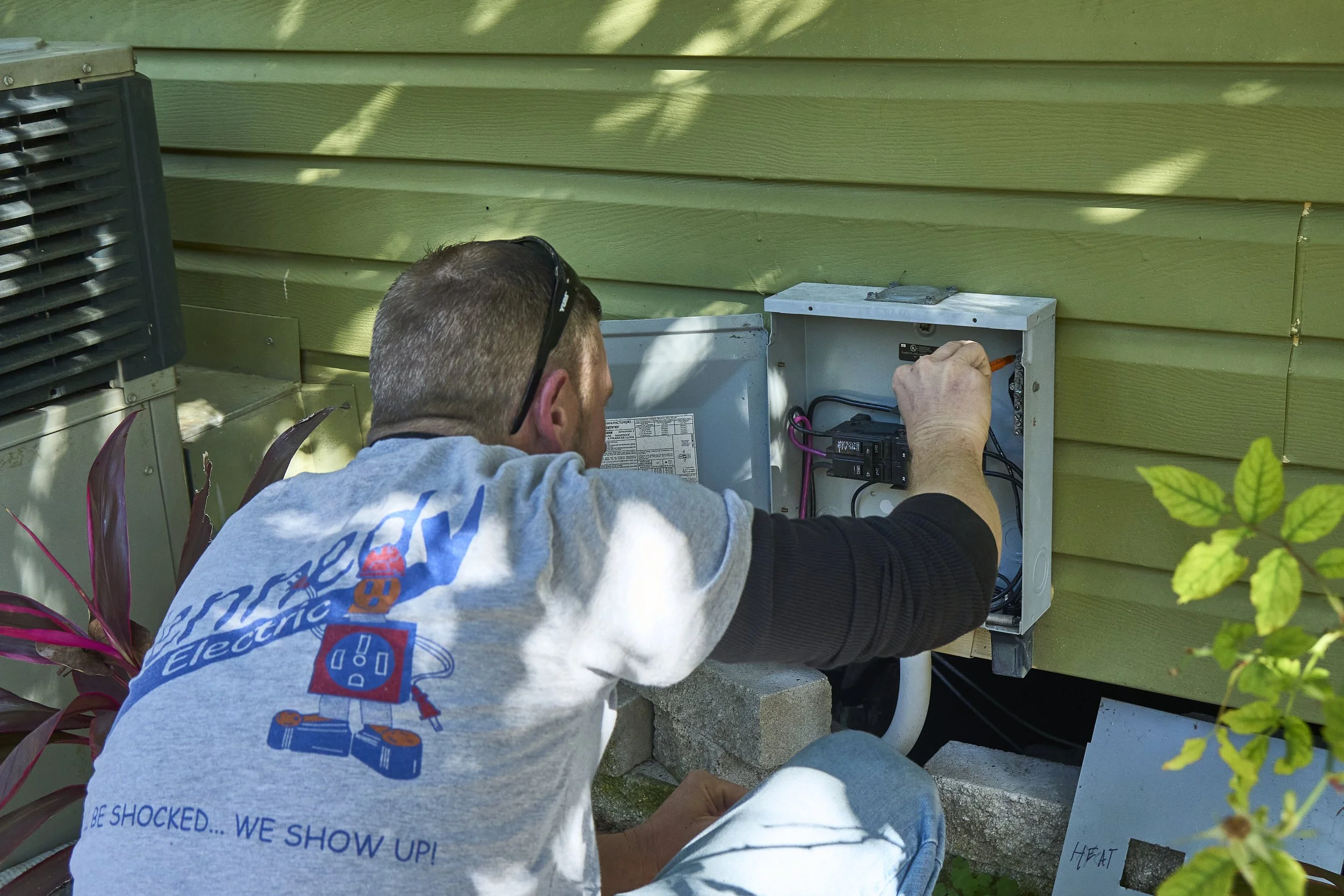
Reading the panel and the house's load
The estimator reads the main breaker's rating and the label inside the panel door, counts what the house already runs on electricity, and measures the distance to where the car is kept.
-
2
The circuit on paper
The plan settles the breaker size, the route along the garage wall or through the attic, and the receptacle or wall unit.
-
3
Consent, where the deed calls for it
In Beacon Woods, the restrictions require the lot owner to submit plans showing the exact location and dimensions of any exterior change, and the board or committee holds the work until it approves it in writing. Other communities' rules differ. Once we have consent in hand, we apply for the Pasco permit and book the inspection.
-
4
Running the new circuit
The electrician runs the circuit along the route on the estimate, mounts the receptacle or wall unit, and labels the new breaker, so you know which one in the old panel feeds the car.
What we cover
Where the Panel Stands Today
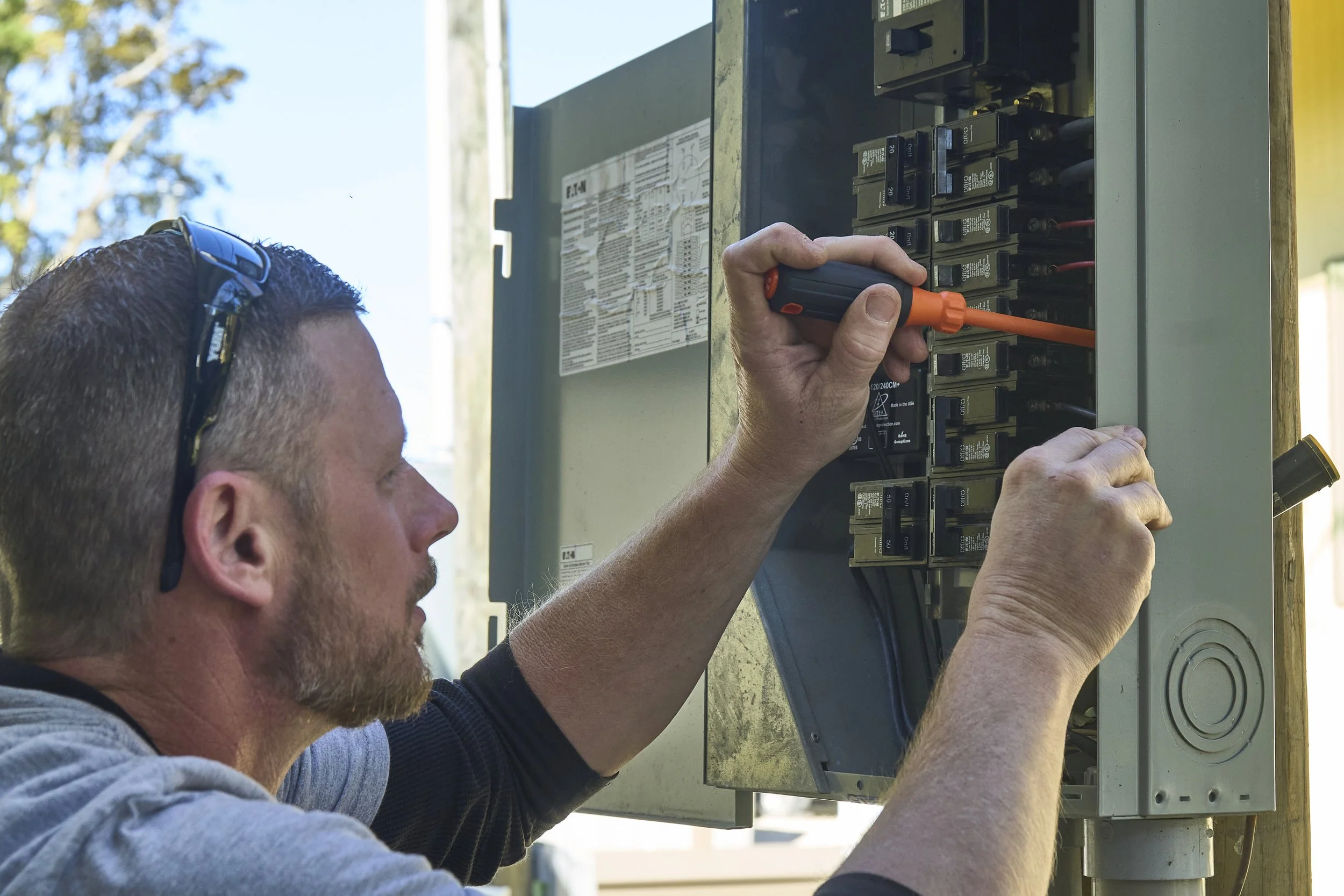
An original panel with open spaces: A charger's breaker takes two spaces. With those free, the panel's rating and condition still matter, and any sign of heat or damage at the breakers is worth settling before a new circuit is added.
An original panel with no room left: When the spaces or the rating are used up, the estimate prices the ways forward: a load-management device that shares capacity between the charger and the house, or panel work when the service itself is too small.
A panel replaced in recent years; A newer box can have spare spaces, which makes room for the charger's breaker.
A house that runs on electricity: The range, the water heater, and the rest of the house's electric load go into the count, and what is left once they are added up is what a charger can use.
The charger itself: A 14-50 receptacle on a 50-amp circuit takes a portable cord, and a hardwired wall unit can take a circuit rated as high as 60 amps. Either one gets a dedicated circuit matched to the equipment.
Pricing
What Moves a Charger Estimate Here
Custom homes and large or multi-phase projects are estimated as soon as we can, or on the timeline your project sets.
In an older house, the panel weighs heavily in the number: what it needs before a charger can join it changes the price, and so does the length of the run from the panel to the car.
We don't do upfront pricing. No job has a standard price with us: each one is tailored to the property and the work you've asked for, and priced once we've seen it.
We offer free estimates on installations, upgrades, and replacements in our service area. Estimates aren't free when the job needs troubleshooting or testing to price, falls after hours or outside our service area, needs several meetings to gather information, or is new construction or a custom remodel with multi-party walk-throughs. For most jobs, estimates arrive by email by the end of the next business day, and quotes are good for 30 days.
Our warranty
04If something we installed fails because of our workmanship within 30 days of completion, we waive the hourly labor to put it right. Materials Kennedy Electric purchases for your job carry the manufacturer's one-year warranty. To replace defective materials we supplied, or materials damaged by storm, flood, fire, or other acts of God, we charge a reduced warranty labor rate of $50 an hour residential and $75 an hour commercial. The warranty does not cover materials not purchased by Kennedy Electric, work performed by the customer, or materials the customer purchased or damaged. Our warranty terms are printed on the estimate, the invoice, and the receipt, and the product boxes stay with you so you can register each product with its manufacturer.
Our 1970s house still has its first panel. Can it carry a charger?
Our heat is electric. Will the heat strips and the charger compete on cold mornings?
The panel was replaced a few years ago. Is the house ready for a charger now?
Our mail says Hudson, but the house is in Bayonet Point. Who issues the permit?
What does the label inside our panel door tell you?
Reviews
Earlier Jobs, Told by Their Owners
Straight from Google, in our customers' own words.
Request service
Your Load Check Starts Here
Tell us the car or the charger, and whether the panel is in the garage or on an outside wall. Our office will reach you during business hours.