

Portable vs Standby Generator: Which One Actually Keeps Your Home Running?
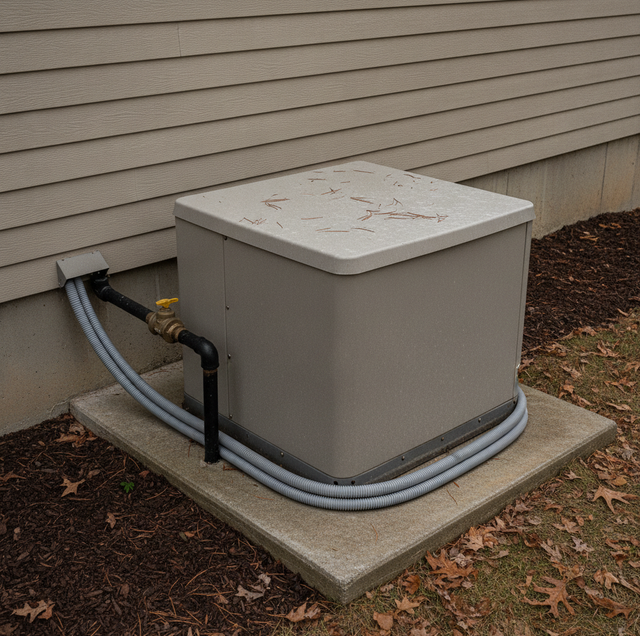
Quick Answer: A portable generator is a wheeled unit you roll out, fuel with gas or propane, and start by hand to run a few essential circuits while you are home to manage it. A standby generator is permanently installed, wired through an automatic transfer switch, and starts on its own within seconds to power the whole house for days. Portables cost less and go where you go; standby units run hands-free and handle larger loads, like a well pump or central air. The right pick comes down to how often your power fails, how long it stays out, and what has to keep running when it does.
When the lights go out and stay out, the question of the generator stops being abstract. You are standing in a dark kitchen, deciding whether the freezer full of food will make it. Both a portable and a standby generator will keep power flowing, but they do it in very different ways, and the gap between them shows up in cost, effort, output, and safety. Here is how the two compare on the things that actually matter, so you can match the machine to your home instead of the other way around.
The Basic Difference In How Each One Works
A portable generator is a self-contained engine on wheels. You store it in a shed or garage, roll it into the open when a storm knocks out the power, fill the tank, and pull-start or push-button it to life. From there, you either run heavy-gauge extension cords to individual appliances or, better, feed your electrical panel through a manual transfer switch or an interlock kit that an electrician installs. Output is modest, usually a few thousand watts, which is enough for a refrigerator, some lights, a few outlets, and maybe a window unit, but not the whole house at once.
A standby generator is a fixed appliance. It sits on a concrete or composite pad beside the house, wired permanently into your electrical system through an automatic transfer switch (ATS). It runs on natural gas from the utility line or propane from a large on-site tank. The moment it senses the grid has dropped, the ATS disconnects your house from the utility and the generator fires up on its own, typically restoring power within seconds. You do not have to be home, awake, or even aware that the power failed.
Think of it like water storage. A portable generator is a jug you carry to the sink and refill by hand when you are thirsty. A standby unit is plumbing in the wall: it is always connected, and water comes out the instant you turn the tap. One asks for your hands every time; the other just works.
How They Stack Up Side By Side
| Factor | Portable Generator | Standby Generator |
|---|---|---|
| Startup | Manual, you start it | Automatic, on within seconds |
| Output | A few thousand watts, select circuits | Whole house or a large group of circuits |
| Fuel | Gasoline or portable propane tanks | Natural gas line or large propane tank |
| Runtime | Several hours per tank, then refuel | Days on end; natural gas runs continuously |
| Cords | Extension cords or panel via interlock | None, hardwired through the ATS |
| Install | Minimal, plus a transfer switch for panel use | Pad, gas hookup, ATS, and permit |
| Noise | Louder, closer to the house | Quieter, enclosed, set at a distance |
| CO risk | High if misused indoors | None from placement, it lives outside |
Output And What Each One Can Actually Run
This is where many buyers get surprised. A portable in the few-thousand-watt range is a triage tool. It keeps the refrigerator cold, runs a handful of lights and outlets, charges phones, and maybe powers a small window air conditioner, but it makes you choose. You cannot run the fridge, the well pump, and central air off a small portable at the same time because motor-driven loads demand a large starting surge of watts that a modest unit cannot supply all at once.
A standby unit is sized to your home's real load. Depending on the model, it either backs up the entire house or a carefully selected group of circuits, and it does so without you rationing what turns on. If you have a well pump, an electric water heater, or central air conditioning that has to keep running through a multi-day outage, a standby generator is built for that job in a way a small portable is not.
Fuel, Runtime, And Refueling
Fuel is the part people underestimate. A portable burns through its tank in several hours under load, which means someone has to keep buying, storing, and pouring gasoline, often in the dark and often during exactly the storm that knocked the power out. Stored gasoline also goes stale and needs a stabilizer and rotation. Propane portables avoid the staleness problem but still need tanks swapped out.
A standby generator sidesteps the refueling treadmill. Wired to a natural gas line, it can run continuously for as long as the outage lasts, with no tanks to fill. On a large propane tank, runtime is measured in days rather than hours, and there is no midnight trip to the gas station. For a long outage, this is the single biggest practical difference between the two.
The Safety Line You Cannot Cross
Two dangers separate a safe generator setup from a deadly one, and both are worth stating plainly.
The first is carbon monoxide. A portable generator's engine produces CO, an invisible, odorless gas that kills. A portable must run only outdoors, well away from the house, with its exhaust directed away from windows, doors, and vents. Running a portable in a garage, a carport, a basement, or a partially enclosed porch has killed people, even with the door open, because CO pools faster than you would believe. This is not a cautious guideline; it is the difference between a rough night and a fatal one. Keep the unit outside, at a distance, every single time.
The second is backfeeding. Plugging a portable into a wall outlet to power the house through the circuit is one of the most dangerous mistakes a homeowner can make. It pushes electricity backward through your panel and out onto the utility lines, where it can electrocute a lineman working to restore power, and it can start a fire in your own walls when the grid comes back. The only safe way to connect a generator to your home's wiring is through a proper transfer switch or an interlock kit, installed by a licensed electrician. That hardware makes it physically impossible to feed the grid and your house at the same time. A standby generator has this protection built in through its automatic transfer switch; a portable needs it added.
Install, Noise, And Upkeep
A portable's appeal is simplicity. Buy it, store it, and it is ready, though wiring it into your panel safely still means paying an electrician once to add a transfer switch or interlock. It is louder than a standby unit and sits closer to the house while it runs. Maintenance is on you: fresh fuel, oil changes, and a test run every so often, so it actually starts when you need it.
A standby generator is a bigger project up front. It needs a pad, a fuel connection to gas or propane, the automatic transfer switch tied into your panel, and a permit with inspection. Once in, it is quieter, enclosed, and set at a code-appropriate distance from the house. It exercises itself automatically on a schedule and generally gets a professional service check periodically, so it is more of a set-it-and-rely-on-it appliance than a hands-on tool.
Matching The Generator To Your Situation
The decision usually sorts itself out once you answer a few honest questions.
How often does your power fail, and for how long? If outages are rare and brief, a portable that keeps the fridge and a few circuits alive may be all you need. If you live where storms drop the grid for a day or more at a stretch, the hands-off, days-long runtime of a standby unit earns its place.
What has to keep running? A home with a well pump, someone who depends on medical equipment, or a resident who cannot go without air conditioning in heavy heat leans hard toward standby, because those loads are exactly what a small portable struggles to carry. Storm-heavy regions where a well pump and cooling are non-negotiable are the classic case for whole-home backup.
Which fuel do you have? A house already on natural gas is a natural fit for standby. If you have propane on site or none of the above, that shapes the choice, too. And be honest about whether you will be home and willing to babysit a portable during an outage, or whether you need power to restore it while you are away or asleep.
There is no single right answer, only the right match. A portable is a capable, lower-commitment safety net. A standby unit is a permanent, automatic backbone for a house that cannot afford to go without power. Either way, the connection to your panel is not a DIY job, and getting the transfer switch or interlock done right by a licensed electrician is what keeps the whole setup safe.
Frequently Asked Questions
Rarely, and usually not all at once. Most home portables put out a few thousand watts, enough for essential circuits like the refrigerator, some lights, and a few outlets, but not the combined draw of a well pump, water heater, and central air running together. The limit is not just running watts; motor-driven appliances need a large starting-watt surge to kick on, and a small portable can only supply that for one or two loads at a time. Sizing the unit to a short list of must-run circuits, rather than the whole panel, is how portables are meant to be used.
No, and it is one of the deadliest generator mistakes there is. Feeding power in through a wall outlet, called backfeeding, sends electricity backward through your panel and onto the utility lines outside, where it can electrocute a lineman working to restore service. It also bypasses your breakers' protection and can ignite a fire when grid power returns. The only safe connection to your home's wiring is through a manual transfer switch or an interlock kit installed by a licensed electrician, which physically prevents your generator and the grid from ever being live on the same wires.
An automatic transfer switch, or ATS, is the brain that makes a standby generator hands-free. It constantly monitors the utility feed, and when it detects that grid power has dropped, it electrically disconnects your house from the utility, signals the generator to start, and then connects your home to the generator, usually within seconds. When the grid returns, it reverses the sequence: it moves your house back to utility power and tells the generator to cool down and shut off. Because the switch physically isolates the two power sources, it also prevents any backfeed onto the utility lines.
A portable is limited by whatever tank it carries. On gasoline, it typically runs several hours before refueling, and on a common 20-pound propane cylinder, it manages roughly 8 to 10 hours at about half load, less if you lean on it harder. Either way, a long outage means repeatedly buying, storing, and swapping fuel, and stored gasoline degrades and needs a stabilizer if it sits. A standby generator on a natural gas line has no tank to run dry: it draws straight from the utility supply and runs indefinitely for the length of the outage. On a large on-site propane tank, a standby's runtime is measured in days rather than hours. That is the practical dividing line for anyone facing multi-day outages.
Outdoors only, and farther from the house than most people assume. The manufacturer and carbon monoxide safety guidance recommend keeping the unit at least 20 feet from the house, with the exhaust pointed away from any window, door, or vent, so fumes cannot be drawn indoors. A portable engine exhausts carbon monoxide, an invisible, odorless gas that has killed people even in garages and carports with the door open, because it pools and drifts back inside. Never run one in a garage, even with the door open, and never in a basement, porch, or enclosed space under any circumstances. A carbon monoxide alarm inside the home adds a second layer of protection.
For a well pump or life-supporting medical equipment, a standby generator is the safer match in most cases. A well pump is a motor with a heavy starting-watt surge that can overwhelm a small portable, especially if you also need to run other essentials at the same time. Medical equipment demands power that returns on its own and remains stable during a long outage, which is exactly what a standby unit's automatic transfer switch and continuous fuel supply provide. If a portable is the only option, it has to be sized deliberately for the pump's or device's starting and running watts, and someone has to be present to fuel and manage it throughout.
Schedule a free estimate for a transfer switch or whole-home standby install — get your backup power set up safely and to code by a licensed electrician. Kennedy Electric serves Citrus, Hernando, and Pasco Counties. License #EC13011268. Call (352) 251-2795.
