

What Should a Panel Upgrade Quote Include?
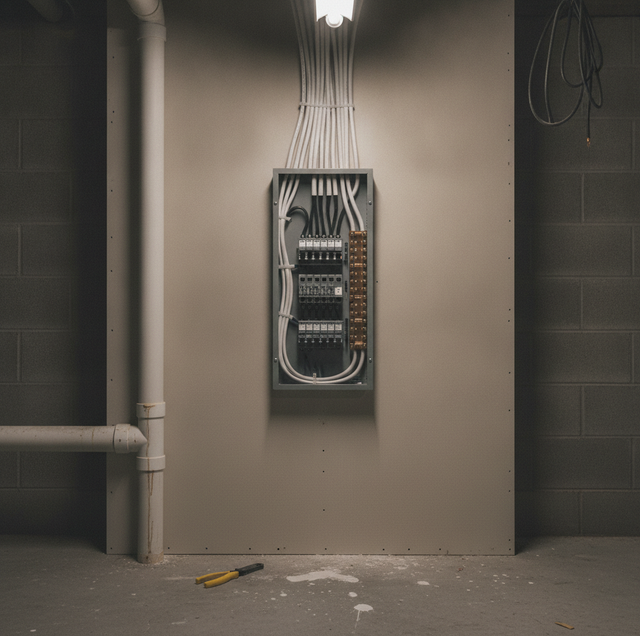
You have a couple of quotes in hand for upgrading your electrical panel, and they are hard to compare because one is a single number and the other is a page of line items. That gap is exactly the problem. A panel upgrade is a major electrical job, and a quote that leaves things vague is where surprises and change-order charges come from later. Knowing what a complete quote should spell out lets you compare bids fairly and hire with confidence.
A good quote is not just a price; it is a description of the whole scope of work. Here is what it should cover.
Why a Detailed Quote Protects You
A panel upgrade touches the heart of your home's electrical system, and it involves more than swapping a box on the wall. There are the panel itself, service capacity, permits and inspections, grounding, the meter, and the labor to tie it all together safely. When a quote lumps all of that into one number, you have no way to know what is included and what will become an add-on halfway through. A detailed, itemized quote is your protection: it defines exactly what you are buying, makes two bids truly comparable, and leaves far less room for surprise charges. So the level of detail is itself a sign of how a contractor works.
What a Complete Quote Spells Out
A thorough panel upgrade quote should identify each of these pieces.
| Line item | What it should specify |
|---|---|
| The panel and capacity | The brand and the service size, such as 100 or 200 amps |
| Permits and inspection | That the permit is pulled and an inspection is included |
| Breakers | New breakers, and any specialty ones like AFCI or GFCI |
| Grounding and bonding | Bringing grounding up to current safety standards |
| Meter and service | Any meter base or service-entrance work needed |
| Labor and timeline | The labor scope and how long the work will take |
| Cleanup and warranty | Debris removal and the workmanship warranty |
The service capacity matters most because it defines what you are actually getting: upgrading to a 200-amp panel is a very different job from staying at 100. Permits and inspection should be explicitly included, since a panel upgrade legally requires them, and a quote that omits them either has not accounted for the cost or is skipping a step you do not want skipped. Grounding and bonding brought up to current standards, any meter or service-entrance work, the breakers themselves, and the workmanship warranty all belong on the page. If a quote does not mention these, ask whether they are part of the job and whether they are written down.
Questions to Ask About a Vague Quote
When a quote is thin, a few direct questions usually reveal whether the low number is a deal or a gap. Ask whether the permit and inspection are included. Ask what service size, or amperage, the price is based on. Ask whether grounding will be brought up to the current code and whether any meter or service work is needed. Ask what the workmanship warranty is and whether cleanup is included. The answers either fill in the missing detail or expose that the cheaper bid left things out that the other included. A contractor who answers these clearly and puts them in writing is the one you can trust with the work.
Why the Local Conditions Belong in the Conversation
In a region with frequent lightning and storms, a panel upgrade is also the right time to discuss protection that fits the environment, and a good quote or conversation should bring it up. Whole-home surge protection installed at the panel guards your electronics against surges from lightning and grid events that can be sent through the wiring, and it is far easier to add during an upgrade than after. If you are also considering a generator or storm readiness, the panel work is where that groundwork gets laid. None of this has to be in the base quote, but a contractor who understands the local storm exposure will bring it up, and that awareness is part of hiring the right one here.
Frequently Asked Questions
A complete quote should name who pulls the permit and who coordinates the utility disconnect and reconnect, because a service upgrade means the power company has to physically pull the meter or drop the service so the panel can be replaced, then re-energize it after the inspection passes. That scheduling sits between the electrician, the permit office, and the utility, and a vague quote often leaves it unsaid, which is where a one-day job stretches into several with the power off. Ask whether the contractor arranges the disconnect and reconnect or expects you to call the utility yourself.
Often, because the cheaper one left something out. A single low number may not include permits, grounding upgrades, meter work, or a warranty that the more detailed quote covers, so the two are not really comparing the same job. Asking each contractor what their price includes usually reveals whether the low bid is a genuine deal or a gap you would pay for later.
Because the inspection has to happen with the work exposed, and the utility has to be there to cut and restore power. The typical sequence is: utility disconnect, panel replacement, an inspection while the wiring and grounding are still visible, then utility reconnect only after the inspector signs off. If the inspector flags something, the reconnect waits until it is corrected and re-inspected. A quote that promises same-day completion without accounting for the inspection window and the utility's scheduling is glossing over the part most likely to add a day.
It depends on your home's electrical demand, but many homes upgrade to a 200-amp panel to comfortably handle modern loads and future additions like an EV charger or added circuits, where older homes often have 100 amps or less. The right size is determined by the electrician based on your usage and plans, and the quote should state which capacity the price covers.
Bringing an older service up to current standards often means more than reconnecting the existing ground. It commonly adds driven ground rods (often two, spaced apart) with a continuous grounding-electrode conductor back to the panel, plus a bond to the metal water pipe where the water line enters, so the whole system shares a single reference. Many older homes were grounded only to a single point or to plumbing that has since been broken by plastic repairs, which no longer qualify. A quote should say whether new rods and the water-pipe bond are included or whether it assumes the old grounding passes as-is.
Often, yes, and it can surprise homeowners. When circuits are moved to a new panel, current code frequently requires arc-fault (AFCI) protection on many living-area circuits and ground-fault (GFCI) protection on kitchen, bath, garage, and outdoor circuits, so plain breakers are replaced with these protective types. They cost more than standard breakers and change the breaker count, which is one reason two quotes can differ. Ask whether the price includes the AFCI and GFCI breakers and the upgrade triggers, and note that a whole-home surge device at the panel is a separate add-on worth raising at the same time.
A Clear Quote Is Part of the Work
A panel upgrade quote should read like a description of the job, not just a price: the panel and its capacity, permits and inspection, breakers, grounding, meter work, labor, cleanup, and warranty. The detail is what lets you compare bids fairly, avoid surprise charges, and gauge how a contractor operates. Ask the direct questions when a quote is thin, and factor in local storm protection while you are at it, and you will hire the upgrade with your eyes open.
If you are weighing panel upgrade bids and want a clear, itemized quote, we will walk you through exactly what the job includes. Kennedy Electric serves Citrus, Hernando, and Pasco Counties. License #EC13011268. Call (352) 251-2795.
