

Generator Maintenance Checklist: Keep Your Backup Power Ready
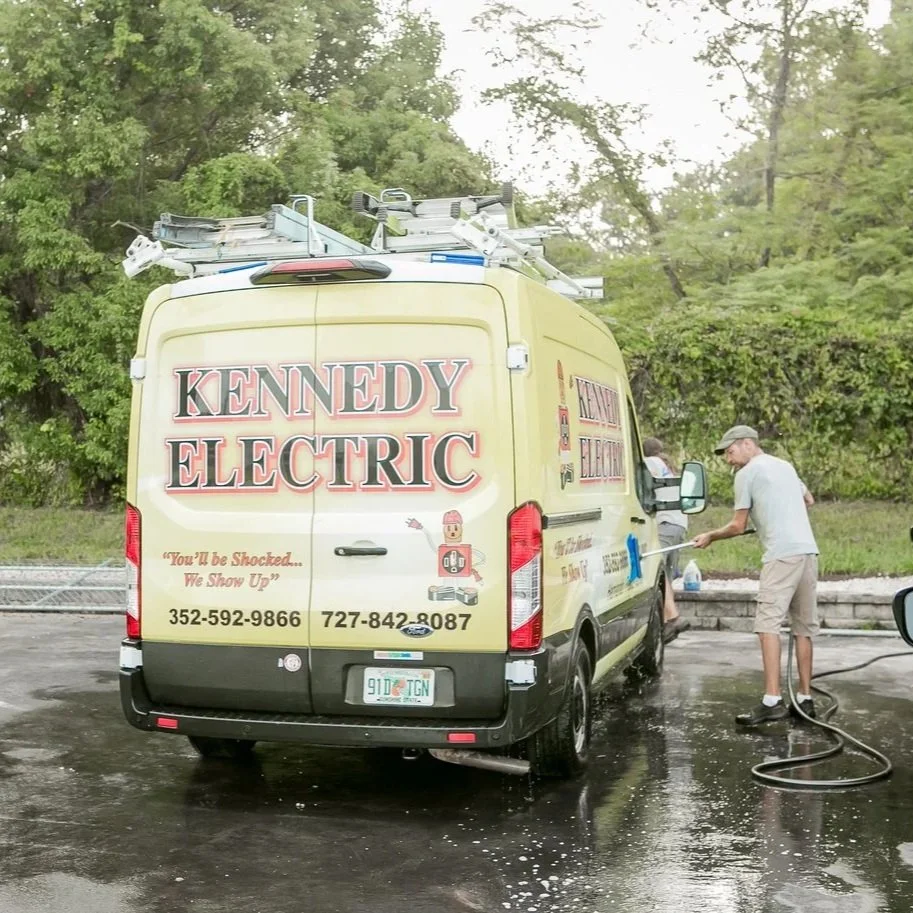
Kennedy Electric service van being washed, representing professional generator maintenance and reliable electrical service preparation before storm season.
Why does the generator always act up when the power actually goes out?
That question usually comes up when the house is already dark, the air feels sticky, and the fridge has gone quiet. Plenty of Florida homeowners only think about generator maintenance after a storm rolls through and the backup power fails to start, leading to spoiled food, rising indoor temperatures, constant noise from failed attempts, and that sharp frustration of realizing the safety net was never really ready.
Florida homes rely on backup power for more than convenience. Humidity rises quickly, medical equipment needs steady power, and outages rarely come at a convenient time. A generator that sits quietly outside for months can feel like a solved problem, right up until the moment it refuses to run or shuts down mid-use. That gap between expectation and reality is where most generator problems live.
The Mistake Of Treating A Generator Like A “Set It And Forget It” Appliance
A common homeowner belief goes something like this: the generator was installed, tested once, and then parked until the next outage. Many people assume a generator behaves like a fire extinguisher, untouched for years but magically perfect when needed. In Florida, heat, humidity, salt air, insects, and long periods of inactivity all work against that assumption.
Generators are mechanical systems with engines, fuel systems, batteries, and electronics. Every one of those components changes over time, even when the unit is not running. Fuel degrades, oil absorbs moisture, batteries lose charge, and seals dry out. Homeowners often misunderstand inactivity as safety, when inactivity is often the cause of failure. A generator that never runs is more likely to fail than one exercised regularly.
Ignoring routine generator maintenance leads to a gradual buildup of risk. The unit may start but run roughly, produce unstable power, or shut itself down under load. Those problems rarely appear during calm weather when testing feels optional. They show up during outages when the stakes are higher, and options are limited. Florida electricians see this pattern constantly, especially after hurricane season, when systems are finally pushed to the limit.
Why Generator Maintenance Feels Optional Until It Is Not
Generator maintenance often slides down the priority list because nothing appears broken. The unit sits quietly, the transfer switch never activates, and life goes on. Homeowners mistake silence for readiness. In reality, silence usually means nothing has been checked.
Many people searching “do generators need maintenance if they never run” are reacting to a nagging doubt rather than visible damage. That doubt is justified. Oil breaks down over time, even without engine hours. Gasoline absorbs moisture and forms varnish. Diesel grows microbial contamination in humid environments. Propane regulators stick. Batteries lose capacity faster in Florida heat.
The misunderstanding matters because generators are emergency equipment. Unlike everyday appliances, failure rarely offers a second chance. When backup power fails during an outage, repair crews may be unavailable, parts may be delayed, and weather conditions may make service risky. The cost of delayed maintenance shows up as lost comfort, lost food, lost medication stability, and days of unnecessary stress.
The Core Generator Maintenance Checklist Most Homes Miss
A generator maintenance checklist exists to catch problems before they pile up. Homeowners often focus solely on oil changes, missing other components that quietly determine whether the unit will actually run.
Oil and filters deserve attention, but oil condition matters more than mileage alone. Moisture contamination is common in Florida due to humidity and temperature swings. Old oil loses its protective properties, allowing internal corrosion. Air filters clog with insects, pollen, and dust, restricting airflow and causing overheating during extended runtime.
Fuel systems create even more confusion. Gasoline generators need fuel stabilizers and periodic replacement. Diesel systems need inspection for microbial growth and water separation. Propane systems require regulator checks and hose inspections. Each fuel type fails in different ways, and homeowners often apply assumptions from cars or lawn equipment.
Batteries are another overlooked point. Generator batteries do not behave like car batteries. They sit on a float charge for long periods and degrade faster in heat. A weak battery may pass a casual voltage check but fail under starting load. Many “generator won’t start after power outage” searches trace back to a battery that aged quietly in the background.
Why Exercise Runs Are Not Just A Formality
Running a generator monthly feels unnecessary to many homeowners. The engine is loud, the process feels disruptive, and skipping it seems harmless. Exercise runs are not about noise or habit. They keep seals lubricated, burn off moisture, recharge batteries properly, and confirm that the system responds when called.
During exercise, electricians listen for irregular sounds, watch voltage stability, and monitor exhaust behavior. Homeowners may notice nothing wrong, but subtle issues often show early signs during these runs. Skipping exercise allows small problems to remain hidden until the generator is forced into long, stressful operation.
Florida conditions make exercise even more critical. Heat causes expansion and contraction, which affect gaskets and seals. Humidity encourages condensation inside engines and electrical enclosures. Exercise helps counteract those effects. Without it, internal corrosion accelerates, increasing the likelihood of failures during extended outages.
The False Economy Of Skipping Professional Inspections
Many homeowners believe basic generator maintenance is entirely DIY. Checking oil and running the unit feels sufficient. Professional inspections are sometimes dismissed as upsells rather than preventive care. That belief overlooks what trained electricians actually look for.
A licensed electrician evaluates transfer switches, load balance, grounding integrity, and control board diagnostics. These elements determine whether power transfers safely and smoothly during an outage. A generator can run perfectly yet fail to connect to the home due to switch or control issues.
Electrical connections loosen over time due to vibration and thermal cycling. Florida storms introduce power surges that stress components even when the generator is idle. Ignoring these risks can lead to partial power, tripped breakers, or damage to sensitive electronics during switchover. Shortcuts feel cheaper until the cost shows up as repairs or replacement after a preventable failure.
Seasonal Timing And Why Florida Changes The Rules
Generator maintenance timing matters. Many homeowners search “when should generator maintenance be done” only after storm forecasts appear. That timing is already late. Hurricane season, summer heat waves, and afternoon thunderstorms all strain electrical systems.
Florida generators face year-round exposure. Salt air near coastal areas accelerates corrosion. Afternoon rains introduce moisture into enclosures. High temperatures reduce battery lifespan and stress electronics. Waiting for a specific season misses the point. Maintenance needs to stay ahead of conditions, not chase them.
Older generators face compounding wear. Materials used a decade ago may not tolerate modern usage patterns or extended outages. Control boards and sensors evolve, and outdated assumptions about longevity can leave homeowners unprepared. Regular evaluation helps adjust expectations and identify when parts or upgrades make sense.
What Happens When Small Generator Issues Are Ignored
Small issues rarely stay small in generator systems. A dirty air filter causes overheating. Overheating accelerates oil breakdown. Oil breakdown increases engine wear. Wear leads to power instability or shutdown. Each step builds quietly over time.
Fuel issues create similar chains. Contaminated fuel clogs injectors. Clogged injectors cause rough running. Rough running stresses electrical components. Electrical stress damages sensitive home electronics during switchover. The original problem might have cost very little to address early.
Homeowners often say, “It worked fine last time,” as a form of reassurance. That phrase hides the reality that conditions change. Longer outages, higher loads from added appliances, and aging components all shift performance thresholds. Maintenance is about adjusting to those shifts rather than assuming yesterday’s performance predicts tomorrow’s reliability.
Why A Generator Maintenance Checklist Should Be Customized
No two homes use backup power the same way. A household running medical equipment, refrigeration, and air conditioning places different demands on a generator than a home that runs only lights and outlets. A checklist that ignores load realities leaves blind spots.
Electricians tailor maintenance by evaluating actual usage patterns. Load testing under realistic conditions reveals weaknesses that idle checks miss. Transfer timing, voltage regulation, and frequency stability matter more as loads increase. Homeowners searching “is my generator big enough” often discover size was never the real issue. Maintenance and configuration were.
Environmental factors also shape the checklist. Inland Florida homes face different corrosion risks than coastal properties. Standby generators differ from portable units in maintenance needs. A one-size checklist overlooks those distinctions and encourages false confidence.
Living With A Generator Should Not Feel Like Guesswork
Backup power is supposed to reduce anxiety, not add another layer of uncertainty. When generator maintenance is treated casually, homeowners live with a nagging doubt every time clouds gather. That doubt comes from not knowing whether the system is actually ready.
Clear maintenance habits replace that uncertainty with confidence. Knowing oil condition, battery health, fuel quality, and transfer functionality removes guesswork. Regular attention turns the generator from a hopeful backup into a reliable system.
Many Florida homeowners eventually realize that maintenance is not about checking boxes. It is about aligning expectations with reality. Generators are mechanical partners in protecting comfort, safety, and routine. They need attention that matches their role.
Electricians who see the aftermath of failed backup systems often wish homeowners understood that earlier. Companies like Kennedy Electric spend much of their time correcting assumptions formed years earlier, after small maintenance decisions quietly compounded into major failures.
FAQs – Generator Services in Florida
Most residential generators benefit from professional service at least once per year, with homeowner checks performed more frequently. Florida heat and humidity accelerate wear, making regular inspections more important than in milder climates.
Yes. Fuel degradation, battery aging, moisture buildup, and corrosion occur even when a generator sits idle. Infrequent use often increases failure risk rather than reducing it.
Common causes include weak batteries, degraded fuel, clogged filters, transfer switch issues, and lack of exercise runs. Many failures trace back to problems that were invisible during idle periods.
Basic checks like visual inspections and exercise runs are helpful, but electrical components, load testing, and transfer switch evaluations require professional training to assess safely and accurately.
Transfer switch problems, control board faults, or wiring issues often prevent power from reaching the home even when the generator itself runs. These issues usually require professional diagnosis.
