How to Prepare Your Electrical System for Florida Storm Season
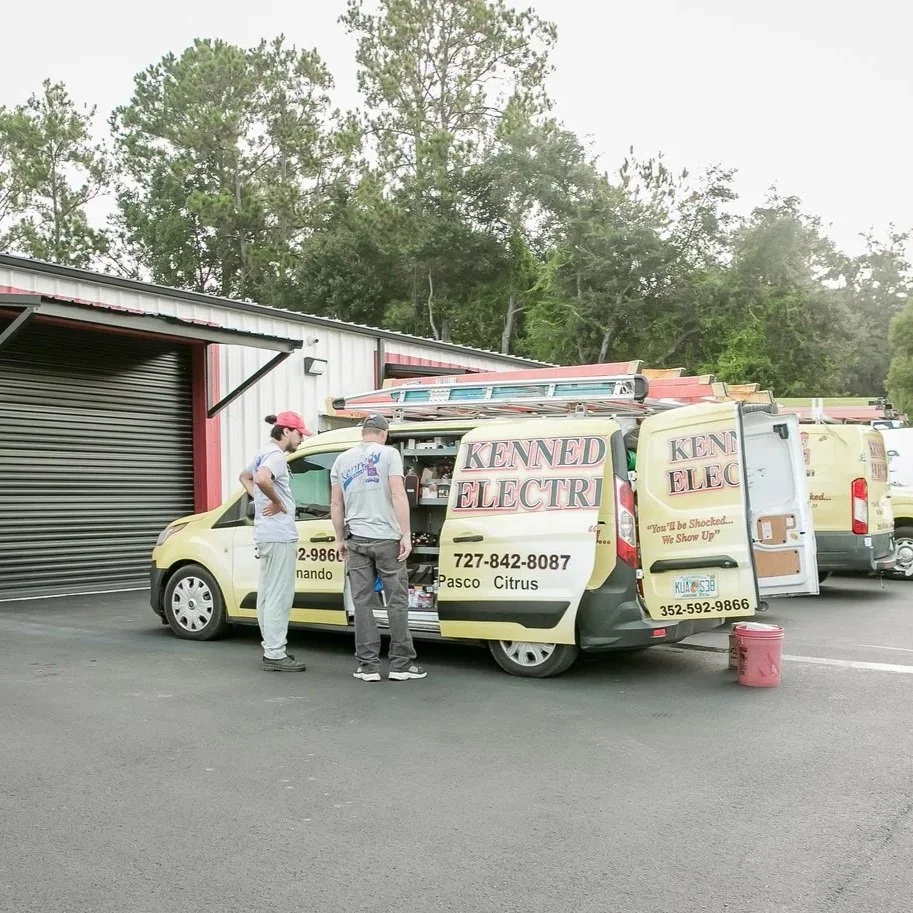
Kennedy Electric technicians preparing service van outside warehouse, highlighting organized storm season electrical inspections and reliable residential service readiness.
Every time the wind picks up, the lights flicker, and the whole house feels one surge away from going dark.
That moment usually hits at night, with rain hammering the windows, appliances humming strangely, and the uneasy feeling that something inside the walls is not ready for what Florida weather is about to throw at it.
Storm season brings a very specific kind of stress for Florida homeowners. Power interruptions, buzzing panels, tripping breakers, and half-working outlets create daily frustration long before an outage becomes official. Many people start searching for how to prepare an electrical system for Florida's storm season after experiencing repeated flickers, unexplained shutdowns, or the constant worry that the next storm might finally cause real damage.
Why Florida Storms Expose Electrical Weak Points So Quickly
Florida storms are not just heavier rain events. High winds, rapid pressure changes, intense lightning activity, and saturated ground all combine to stress residential electrical systems in ways that milder climates never see. Electrical components age faster here, even in homes that feel relatively new.
Moisture plays a major role. Humidity seeps into outdoor connections, meter bases, and service entrances. Over time, that moisture accelerates corrosion inside panels and junctions. Corroded connections create resistance, resistance creates heat, and heat creates instability. Homeowners often misinterpret flickering lights as a utility problem when the real issue lies within their own electrical system.
Wind adds another layer of stress. Overhead service lines sway, conduit shifts slightly, and mounting hardware loosens incrementally with every storm. Those small movements compound year after year. By the time a homeowner searches “why do my lights flicker during storms,” the system has already been under strain for a long time.
The Common Mistake Of Assuming The Panel Is Fine Because Breakers Are Not Tripping
One of the most widespread homeowner assumptions is that an electrical panel must be healthy if breakers rarely trip. Breakers respond only to specific conditions, not to gradual deterioration. Panels can look intact, stay quiet, and still pose serious risks during storm season.
Older panels often suffer from internal corrosion that remains invisible without the removal of covers and inspection. Florida humidity accelerates oxidation on bus bars and breaker connections. Corrosion increases resistance, which raises operating temperatures. During heavy electrical demand caused by storms, that heat becomes more pronounced.
Many homeowners searching for “is my electrical panel safe for storms?” expect a clear yes-or-no answer. Reality lives in between. Panels age differently based on load, environment, and installation quality. A panel that functions normally during calm weather may struggle when voltage fluctuates, loads shift rapidly, or moisture levels spike. Ignoring that nuance leads to unpleasant surprises during outages or restorations.
Surge Protection Is More Than Just Plug-In Power Strips
Lightning activity in Florida is relentless. Power surges during storms damage electronics quietly, sometimes instantly, and sometimes slowly. Many homeowners believe surge protection means a power strip under the desk. That belief leaves most of the home exposed.
Whole-home surge protection works at the panel level, intercepting voltage spikes before they spread through branch circuits. Without it, sensitive devices absorb repeated microsurges, which shorten their lifespan. Televisions, HVAC controls, smart appliances, and charging stations suffer cumulative damage that shows up months later.
Homeowners often search “do I need whole home surge protection in Florida” after repeatedly replacing electronics. The misunderstanding lies in scale. Plug-in protectors only guard items connected directly to them. Surges enter through multiple paths, including cable lines, phone lines, and even grounding systems. Storm season amplifies these risks, making comprehensive protection far more relevant than many realize.
Grounding And Bonding Are Quiet Heroes During Storms
Grounding and bonding rarely cross a homeowner’s mind until something goes wrong. These systems provide a safe path for excess electrical energy, especially during lightning events and utility fluctuations. When grounding is inadequate or outdated, electricity seeks alternate paths through appliances, wiring, and even structural components.
Florida soil conditions complicate grounding effectiveness. Sandy soil, high water tables, and corrosion-prone environments all reduce grounding performance over time. Ground rods corrode, clamps loosen, and bonding connections degrade quietly.
People searching “what does electrical grounding do during storms” often expect a simple explanation. The practical answer is protection through redirection. Proper grounding directs dangerous energy away from the home. Poor grounding allows energy to roam. Over the years, that roaming energy has damaged systems incrementally and increased shock and fire risk during severe weather.
Why Outdoor Electrical Components Take The First Hit
Outdoor outlets, lighting circuits, pool equipment, and disconnects are constantly exposed to the elements in Florida. Storm season accelerates wear that already exists. Water intrusion through cracked covers or aging seals introduces corrosion directly into conductors and terminals.
Many homeowners assume outdoor electrical components are fully weatherproof by default. In reality, weather-resistant ratings assume proper installation and maintenance. UV exposure degrades plastics. Gaskets compress and fail. Insects nest inside enclosures. Moisture follows.
Searching for “why does my outdoor outlet stop working after rain” often leads people to temporary fixes. Resetting GFCIs without addressing moisture sources allows repeated failures. Over time, corrosion spreads back toward the interior circuits. Storm season magnifies these issues, turning minor outdoor problems into broader system concerns.
Transfer Equipment And Backup Power Readiness
Storm season preparation often includes generators or battery backup systems. Homeowners focus heavily on the equipment itself and overlook the electrical infrastructure supporting it. Transfer switches, interlock kits, and dedicated circuits determine whether backup power behaves safely and predictably.
Improper or outdated transfer equipment creates dangerous conditions. Backfeeding risks utility workers and neighbors. Inadequate load management causes frequent shutdowns or damaged appliances. Florida storms frequently cause extended outages, making backup power usage longer and more demanding than expected.
Searches like “is my house ready for generator power” reflect uncertainty. Readiness depends on proper load calculations, secure connections, and clear separation between utility and backup sources. Electrical systems not evaluated with backup power in mind often struggle under storm-driven usage patterns.
The Shortcut Mentality That Creates Bigger Problems Later
Storm preparation can sometimes turn into a checklist of quick fixes. Replace a breaker, add a power strip, reset a GFCI, and hope for the best. Those shortcuts feel productive but often bypass root causes.
Electrical systems operate as integrated networks. Fixing one symptom without understanding the broader system shifts stress elsewhere. Upgrading a single breaker without addressing the panel condition or grounding does not reduce overall risk. Adding surge protection without proper bonding limits its effectiveness.
Homeowners searching “cheap ways to protect my house during storms” often underestimate long-term costs. Repeated small failures add up to appliance replacements, nuisance outages, and safety concerns. Correct practices focus on system health rather than isolated components.
Aging Homes Face Compounding Storm Risks
Many Florida homes were built decades ago, before current electrical demands existed. Air conditioning loads, home offices, electric vehicle chargers, and smart devices all strain wiring that was never designed for such use.
Storm season exposes these mismatches. Voltage drops during storms push older wiring closer to failure thresholds. Insulation degrades faster in heat. Connections loosen after years of thermal cycling.
Searches like “is old wiring safe during storms” often come from homeowners noticing new problems in familiar homes. Aging does not always show itself clearly. Electrical systems age quietly until stress reveals weaknesses. Florida storms provide that stress repeatedly.
Why Professional Inspections Catch What Homeowners Miss
Electrical inspections before storm season identify issues invisible to casual observation. Electricians evaluate torque on connections, thermal signatures, grounding integrity, and load distribution. These factors determine how a system behaves under storm conditions.
Many homeowners believe inspections only find obvious code violations. In practice, inspections reveal subtle warning signs. Slight discoloration, heat patterns, or corrosion levels signal future failure. Addressing those signs early reduces storm-related disruptions.
Electricians with local experience understand Florida-specific stressors. Kennedy Electric, for example, regularly encounters corrosion patterns, surge damage, and grounding failures unique to the region. That experience shapes recommendations grounded in reality rather than generic advice.
Living Through Storm Season Without Constant Electrical Anxiety
Preparing an electrical system for the Florida storm season is about reducing uncertainty. Homeowners want confidence that lights will stay on when possible and systems will behave predictably when they cannot.
Preparation removes the constant edge of listening for flickers, watching breakers, and wondering whether the next storm will cause damage. Electrical systems that receive attention perform more consistently under stress.
Storms will always bring inconvenience. Electrical preparation determines whether that inconvenience remains manageable or becomes overwhelming. Thoughtful preparation aligns expectations with reality and turns storm season from a source of dread into a navigable part of Florida living.
FAQs – Generator Services in Florida
Signs of readiness include stable power during heavy weather, properly functioning surge protection, secure grounding, and a panel free from corrosion or overheating. An inspection provides clarity beyond visible symptoms.
Flickering often comes from loose connections, aging panels, or utility voltage fluctuations interacting with weakened internal wiring. Storm conditions amplify existing weaknesses rather than creating new ones.
Whole-home surge protection reduces cumulative damage from frequent lightning activity and utility surges common in Florida. Plug-in devices alone do not protect the entire electrical system.
Repeated surges, moisture intrusion, and overheating can degrade wiring insulation over time. Damage may not be immediate but can surface as failures months later.
Older homes often benefit from panel evaluations, grounding updates, and load assessments to address increased electrical demand and aging infrastructure.
