


Parking Lot Lighting in Bayonet Point, FL
Lot Poles Repaired and Reheaded, With the Lot Line in Mind|Licensed & Insured, EC13011268
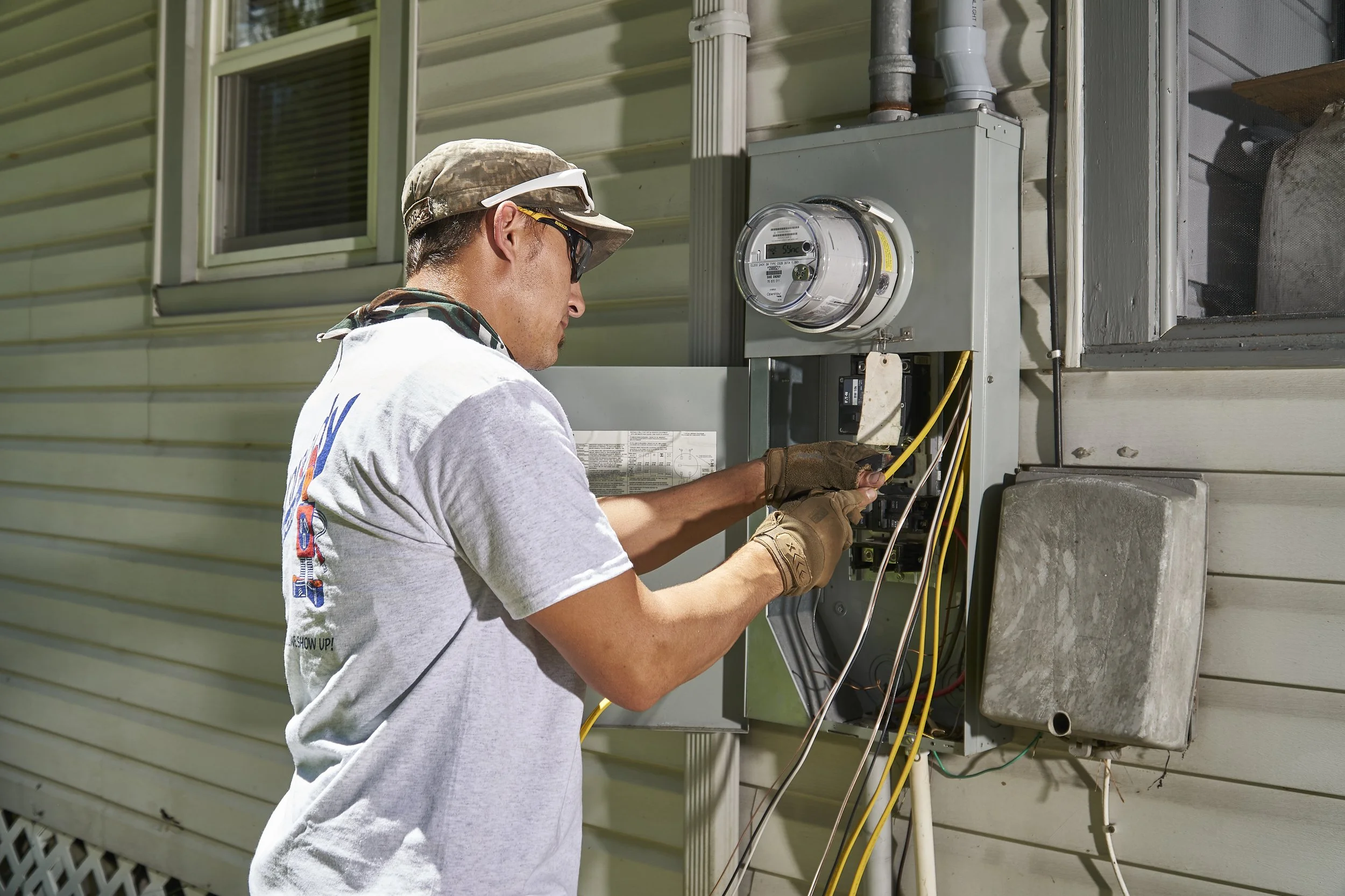
A Bayonet Point lot is judged twice: by the people parking on it, and by the property on the other side of its edge, where Pasco can limit the light that crosses over. Kennedy Electric repairs lot pole lights and fits LED heads on plaza, office, apartment, and condo lots, working from each head outward.
Mark the dark poles on a photo, and note which edges of the lot face homes.
Call (352) 251-2795, Monday through Friday, 8 a.m. to 4 p.m., or send a request online.
At a glance
Pasco's Limits on Light That Leaves a Lot
On a Bayonet Point lot, much of what the county's lighting rule weighs is the light that lands next door. Pasco County adds up everything a property's outdoor lighting casts onto another property, including the light sources themselves and reflections off site features, and caps it at 0.2 foot-candles on property with an outdoor lighting protected area. Along a street right-of-way, the cap is 1.5 foot-candles. Every outdoor fixture is also to have full oblique shielding, so the lamp itself never shines straight onto that kind of neighboring property.
Bayonet Point is densely built: all of its roughly 26,700 residents in the 2020 count lived in urban areas, on under six square miles of land. Some 600 of its homes stand in buildings of 50 units or more, and more than 2,600, by census estimates, in buildings of at least two units, so apartment and condo lots sit among the plazas along State Road 52 and US 19. On lots like these, an edge that faces homes is common, and if the property beyond it has an outdoor lighting protected area, that edge is where the county's 0.2 foot-candle cap applies.
How it runs
How the Lot Work Is Laid Out
-
1
Every edge labeled
A site plan, an aerial printout, or a phone photo of the lot is enough. Write along each edge what lies past it, whether homes, a street, or another business, and circle the poles that are giving trouble. A pole bearing a power company's tag or number may belong to that company, and the repair is the company's responsibility.
-
2
Traced from the head down
On a failed pole, the search starts at the head and works back along the feed: the lamp and its ballast or driver, the splices in the pole base, the buried run, and finally the photocell or timer and the contactor and breaker that switch the lot.
-
3
Left set for dusk
Work happens Monday through Friday, during business hours, and the controls are left set to bring the lot on at dusk.
What we cover
How Far a Pole's Light Travels
At the head: A failed head is repaired part by part, and one past saving gives way to an LED head sized to the arm or pole top it hangs from.
Around the light source: Heads whose lamp or diodes show from the side or above are swapped for shielded heads or fitted with the maker's shield, so the source itself is kept out of direct view of the next property.
Over the aisles: Heads shielded and aimed down at the pavement, so drivers looking for a space or watching for a curb aren't looking into a lamp. The county's glare rule designates parking lots as driving areas where light sources require shields, so drivers can see what's around them up to 16 feet high.
At the lot line: The poles along an edge that faces homes, where a head's output and spread are what the neighbors see, and where a pole can be reheaded on its own.
Toward the road: Frontage poles along US 19, State Road 52, or a side street, where the light crossing onto the right-of-way answers to the county's 1.5 foot-candle cap, along with any building lights aimed the same way.
Pricing
Each Lot Priced on Its Own Poles
Custom homes and large or multi-phase projects are estimated as soon as we can, or on the timeline your project sets.
Repair and troubleshooting visits are billed by the hour from arrival: $100 residential, $150 commercial, one-hour minimum, then half-hour increments, plus materials. No trip charge and no service fee. No hidden fees: the 3.5% surcharge on card and ACH payments is listed in our terms.
We don't do upfront pricing. No job has a standard price with us: each one is tailored to the property and the work you've asked for, and priced once we've seen it.
We offer free estimates on installs, upgrades, and replacements in our service area. Estimates aren't free when the job needs troubleshooting or testing to price, falls after hours or outside our service area, needs several meetings to gather information, or is new construction or a custom remodel with multi-party walk-throughs. For most jobs, estimates arrive by email by the end of the next business day, and quotes are good for 30 days.
Our warranty
04If something we installed fails because of our workmanship within 30 days of completion, we waive the hourly labor to put it right. Materials Kennedy Electric purchases for your job carry the manufacturer's one-year warranty. To replace defective materials we supplied, or materials damaged by storm, flood, fire, or other acts of God, we charge a reduced warranty labor rate of $50 an hour residential and $75 an hour commercial. The warranty does not cover materials not purchased by Kennedy Electric, work performed by the customer, or materials the customer purchased or damaged. Our warranty terms are printed on the estimate, the invoice, and the receipt, and the product boxes stay with you so you can register each product with its manufacturer.
Our Bayonet Point apartment complex has houses behind the back row of parking. Which poles matter most?
We painted our plaza on State Road 52 white. Could that change how much light reaches the homes behind it?
We want to add two poles at the far end of our lot. Is that a permit job?
A neighbor says one of our lot lights shines into their bedroom. Where do you start?
Our plaza on US 19 stays open all day. Can the work happen while customers are parking?
Reviews
Heard Back From Commercial Jobs
Straight from Google, in our customers' own words.
Request service
A Sketch of the Lot Is the Best Start
Tell us the property, how many poles are dark, and which edges of the lot face homes or a street. Our office will reach you during business hours.