

Dimmer Switch Buzzing or Getting Warm? What It Means
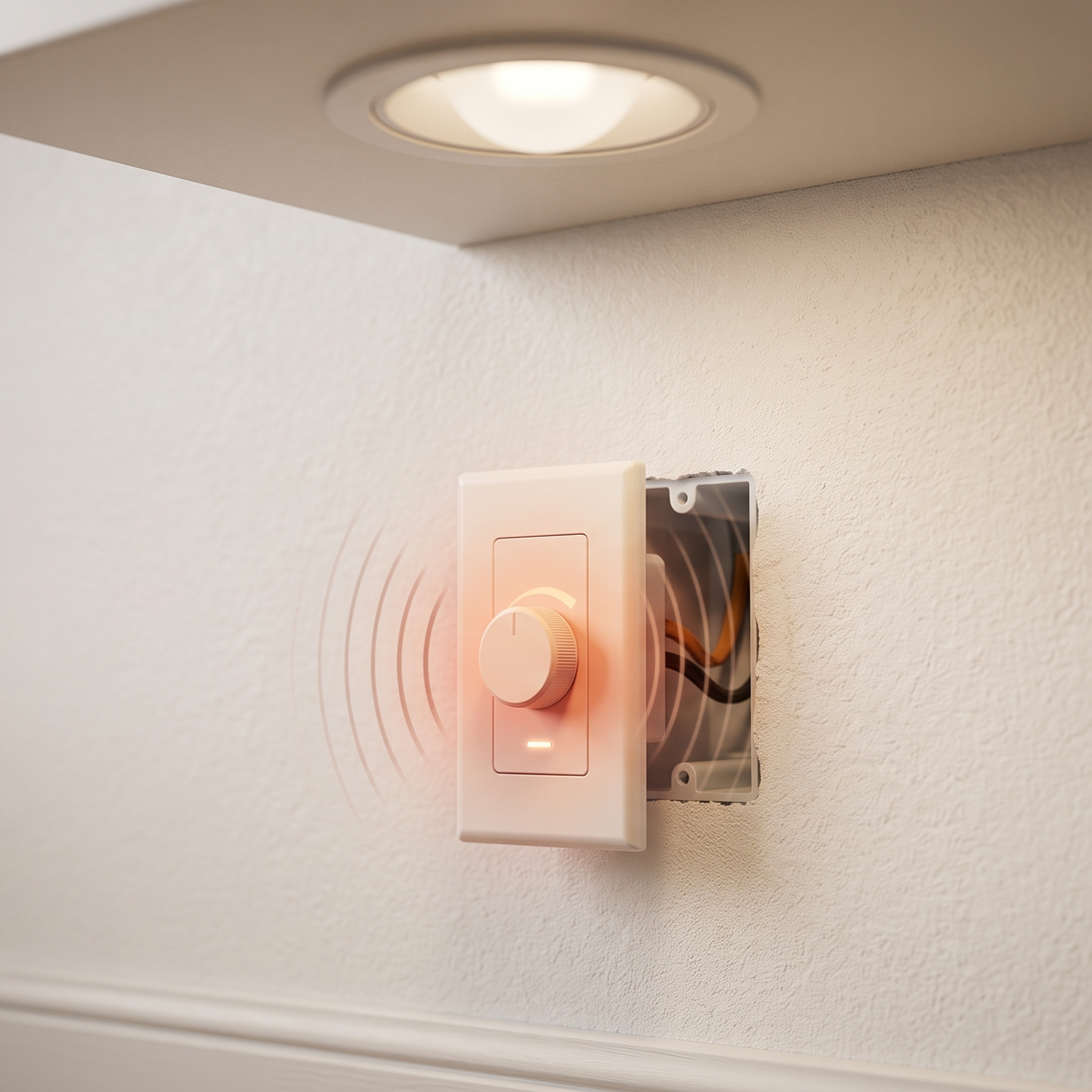
Quick Answer: A dimmer switch running slightly warm is normal — dimmers shed a little heat as they control the light. But a dimmer that buzzes loudly, gets hot to the touch, or both usually means a problem: it's overloaded beyond its wattage rating, it's controlling bulbs (often LEDs) it isn't compatible with, or there's a loose or faulty wiring connection. Buzzing bulbs can also be the bulbs themselves. Real heat or loud buzzing is worth addressing, since it can be a safety issue.
A dimmer switch is the one device on your wall that's supposed to be a little warm, which makes it tricky to know when to worry. The honest answer: a faint warmth is fine, but a switch that's truly hot or buzzing audibly is telling you something is off. The usual culprits are a short, checkable list — and because heat and electricity together can be a safety matter, it's worth knowing which side of "normal" you're on.
Why a Dimmer Gets Warm at All
A dimmer doesn't just turn power down like a volume knob, removing energy — it rapidly switches the power on and off many times a second to reduce the light output, and that process generates a small amount of heat in the switch. So a dimmer that's slightly warm to the touch during normal use is behaving exactly as designed. The bigger the load it's controlling, the warmer it tends to run. The line to watch is between "slightly warm" and "uncomfortably hot" because real heat indicates a problem.
When Warmth or Buzzing Means a Problem
It's Overloaded
Every dimmer has a maximum wattage rating — the total bulb wattage it can safely control. If the fixtures on that dimmer exceed its rating, the switch is overloaded, which can make it run hot and pose a fire risk. This is more common than people expect on a dimmer running a big fixture or a bank of lights. The fix is either reducing the load or installing a dimmer rated for it.
Incompatible LED Bulbs
This is now one of the most common causes of buzzing. Many older dimmers were designed for incandescent bulbs and don't play well with LEDs, which can cause an audible hum or buzz — sometimes from the switch, sometimes from the bulbs. The fix is usually pairing dimmable LED bulbs with an LED-compatible dimmer designed to work together. Using non-dimmable bulbs on a dimmer also causes problems.
Loose or Faulty Wiring
A loose wire connection at the switch creates resistance, and resistance generates heat — this is a classic cause of a switch that's truly hot, and it's a real safety concern because loose connections can arc. A failing dimmer itself can do the same. Heat from a wiring problem isn't something to live with; it needs to be checked.
The Bulbs Are Buzzing
Sometimes the buzz isn't the switch at all — it's the bulbs vibrating, especially cheaper LEDs or the filament in certain bulbs reacting to the dimming. Swapping to better-quality, dimmer-compatible bulbs often silences it.
| What you notice | Likely cause | What to do |
|---|---|---|
| Slightly warm, no buzz | Normal dimmer operation | Nothing — this is expected |
| Buzzing from switch or bulbs | Incompatible/non-dimmable LEDs | Use dimmable LEDs + LED-rated dimmer |
| Hot to the touch | Overload or loose wiring | Reduce load; have wiring checked |
| Hot with a burning smell | Wiring fault or failing dimmer | Shut off the circuit; call an electrician |
| Flickering plus buzzing | Bulb/dimmer mismatch | Match compatible bulbs and dimmer |
What to Do, and When to Call
Start with the easy checks. If the dimmer only buzzes, try matching the bulbs and dimmer — use dimmable, LED-compatible bulbs with an LED-rated dimmer, since the mismatch is the most common cause of humming today. Add up the wattage of everything on that dimmer and compare it to the switch's rating to rule out an overload. Quality bulbs often cure a buzz on their own.
But heat is different from noise. A dimmer that's hot to the touch — not just warm — or that buzzes along with any burning smell, discoloration, or flickering points toward an overload or a wiring problem, and that's a safety issue. Turn off the circuit and have an electrician check it. Loose connections and overloaded switches can arc and overheat, so genuine heat is never something to ignore or work around. When in doubt between "normal warm" and "too hot," that's exactly the kind of thing an electrician can confirm quickly. As a rule of thumb, if you can't comfortably keep your hand on the switch plate, it's running hotter than it should and deserves a look.
Frequently Asked Questions
Yes, a little. Dimmers work by rapidly switching the power on and off to reduce light output, and that generates a small amount of heat, so a dimmer that's slightly warm during normal use is behaving as designed. The concern is when it's hot to the touch rather than just warm — real heat points to an overload or a wiring problem that should be checked.
Most often because of incompatible bulbs. Many dimmers, especially older ones made for incandescent bulbs, hum or buzz when paired with LEDs they aren't designed for — and the buzz can come from the switch or the bulbs. The fix is using dimmable, LED-compatible bulbs with an LED-rated dimmer. An overloaded dimmer or a wiring issue can also cause buzzing, so check those if matching bulbs doesn't help.
A dimmer that's truly hot to the touch — not just warm — can be, because it usually means an overload or a loose wiring connection, and both generate heat that can become a fire risk. A burning smell, discoloration, or buzzing with the heat makes it more urgent. Turn off the circuit and have an electrician check it. Slight warmth is normal; real heat is not.
Using non-dimmable bulbs on a dimmer, or bulbs that aren't compatible with it, causes buzzing, flickering, and poor performance, and the mismatch reduces system efficiency. While it may not instantly damage the dimmer, it's not how the equipment is meant to be used, and it can shorten the life of both. Matching dimmable, compatible bulbs to an appropriate dimmer is the right approach.
If the buzz is solved by switching to compatible bulbs, that's an easy, safe fix. Replacing the dimmer itself involves working with wiring, and if there's any heat, a burning smell, or you're unsure about the wiring, it's safer to have an electrician do it — especially since a hot switch can indicate a loose connection that needs proper attention. When heat or wiring is involved, that's the point to call a pro.
Know the Line Between Warm and Hot
A dimmer is allowed to run a little warm — that's just how it works. The signals to act on are a loud buzz, which usually means incompatible bulbs and an easy fix, and real heat, which points to an overload or wiring problem and is a safety matter. Match your bulbs and dimmer first, check the wattage load, and if the switch is truly hot or smells off, shut the circuit and bring in an electrician. Knowing that line keeps a minor annoyance from becoming a hazard.
Dimmer switch buzzing or running hot? — Get it checked and corrected safely before it becomes a hazard. Kennedy Electric serves Citrus, Hernando, and Pasco Counties. License #EC13011268. Call (352) 251-2795.
