Which Appliances Use the Most Electricity in Your Home?
Why does the electric bill keep climbing even though nothing “new” is running in the house? Standing in a Florida kitchen at night, with the AC humming, the lights low, and the meter still spinning, feels like the house is quietly stealing money.
Most homeowners start searching for this question after months of frustration with rising bills that never seem to match their daily habits. The shock usually comes when opening the power bill after a normal month and realizing it jumped again without warning. That moment often happens while walking past an appliance that runs quietly in the background, wondering how something barely noticed every day could be costing so much. When the real energy hogs in a home go misunderstood or ignored, homeowners end up paying for electricity they never feel, never hear, and never consciously use.
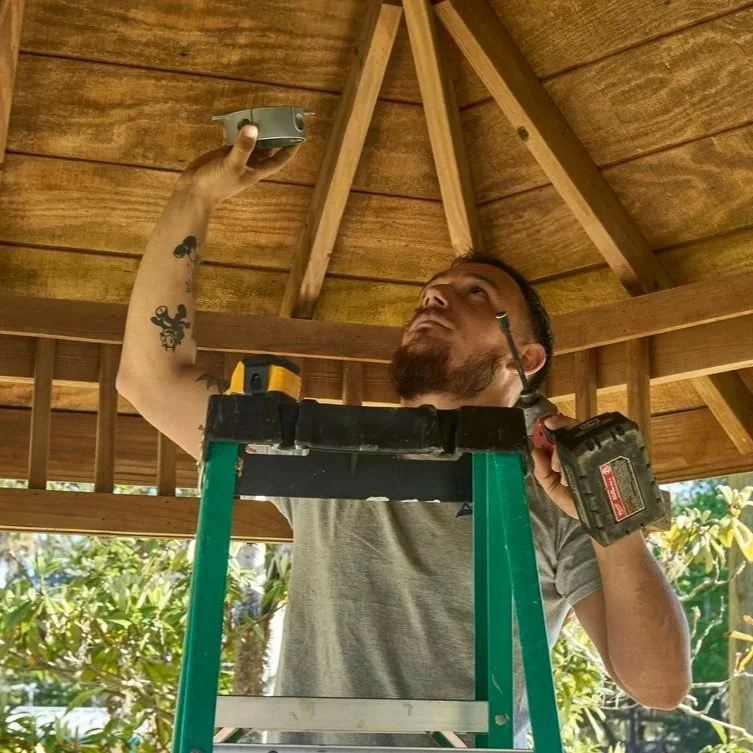
Electrician installing outdoor lighting while homeowners evaluate appliances and systems contributing to unexpectedly high electricity bills throughout the home.
Why Is My Electric Bill So High When We Barely Change Anything?
One of the most common frustrations homeowners express sounds exactly like something typed into a search bar late at night. Why is my electric bill so high when nothing has changed? In Florida homes, the answer usually lies in appliances that run automatically, cycle frequently, or work harder due to heat and humidity. These appliances rarely announce themselves as problems. They keep doing their job while quietly pulling power every hour of the day.
Electricity usage is less about what feels active and more about what runs consistently. Appliances tied to temperature control, water heating, and food storage never really turn off. Florida’s climate makes those systems work harder and longer than homeowners expect. The misunderstanding comes from assuming occasional use equals low cost. In reality, appliances that cycle all day, even briefly, often consume more electricity than items used heavily but infrequently. Ignoring that distinction leads to constant billing surprises and a lack of a clear improvement plan.
Air Conditioning Is the Obvious Culprit Everyone Underestimates
Air conditioning almost always tops the list for electricity use in Florida homes, yet many homeowners still underestimate how much power it pulls. Central AC systems run longer due to heat, humidity, and poor insulation in older homes. Even efficient systems consume large amounts of electricity simply because they cycle so often.
The issue goes deeper than thermostat settings. Duct leaks, dirty coils, aging motors, and poor airflow force systems to run harder than designed. Homeowners often assume their AC is efficient because it still cools the house. Cooling alone does not reflect energy efficiency. Over time, minor inefficiencies add up to major electrical demand. AC systems often mask problems elsewhere in the home, such as appliances that add excess heat or humidity. That hidden interaction keeps bills high even when homeowners feel like they are doing everything right.
Water Heaters Quietly Drain Power All Day
Water heaters surprise many homeowners when electricity usage is broken down. Electric water heaters cycle throughout the day to maintain temperature, not just when hot water is used. In Florida, higher incoming water temperatures reduce demand slightly, but frequent use still adds up quickly.
Long showers, laundry, dishwashing, and even hand washing trigger reheating cycles. Older tanks lose heat faster, which means more frequent cycling. Tank size also plays a role. Oversized tanks waste energy reheating water that sits unused. Homeowners often assume water-heating costs only appear during visible use, but standby losses account for a large share of consumption. Over years of ownership, water heaters quietly rank near the top of energy usage without ever drawing attention to themselves.
Refrigerators and Freezers Never Get a Break
Refrigerators and freezers run constantly, which places them among the highest electricity users in any home. In Florida, ambient temperatures push compressors to work harder, especially in garages or poorly ventilated kitchens. Older units draw significantly more power than modern designs, even if they still keep food cold.
Homeowners often overlook these appliances because they feel essential and unchangeable. The misunderstanding comes from assuming newer means efficient and cold means working properly. Dirty coils, poor door seals, and overloaded compartments increase run times. Secondary refrigerators in garages quietly double the load. Over time, that constant cycling adds up to a major portion of monthly electricity use. Ignoring refrigerator efficiency keeps energy costs locked in year after year.
Clothes Dryers Add Heat and Cost in One Cycle
Clothes dryers create a double hit for Florida homes. Electric dryers draw high current while running and dump heat into the home if venting falls short. Longer drying times caused by humidity increase electricity usage further. Many homeowners notice the laundry room feels like a sauna but never connect that discomfort to the power bill.
Dryers run intermittently, which makes them easy to underestimate. A few loads a week seem harmless. Over months, those cycles add significant energy demand. Poor venting, clogged ducts, and outdated machines extend run times. That extra heat forces air conditioning systems to compensate, increasing electricity usage elsewhere. Dryers become part of a chain reaction that raises bills far beyond the laundry room.
Electric Ovens and Ranges Spike Usage Fast
Electric ovens and ranges may consume significant power even during short periods of use. Preheating alone draws heavy current. In Florida homes, cooking heat also raises indoor temperatures, triggering additional cooling demand.
Homeowners often focus on how often they cook rather than how appliances draw power. One long baking session can use as much electricity as several hours of smaller appliances combined. Glass cooktops and older elements retain heat inefficiently, extending power draw. While not constant users, ovens create noticeable spikes that contribute to higher monthly bills. Over time, frequent cooking habits translate directly into electrical costs that homeowners rarely calculate.
Dishwashers Feel Efficient but Still Add Up
Modern dishwashers market their efficiency, leading many homeowners to assume they use minimal electricity. While they use less water, heating that water still consumes power. Heated dry cycles add even more demand. In Florida, homes often have high humidity, leading homeowners to rely on heated drying rather than air drying.
Dishwashers run less often than refrigerators or AC systems, but each cycle uses a meaningful amount of electricity. Older models lack advanced insulation and efficient heating elements. Running partial loads wastes energy. Over time, dishwashers contribute more to electricity usage than homeowners expect, especially in larger households.
Pool Pumps Are a Florida-Specific Energy Drain
Pool pumps deserve special attention in Florida homes. Many run daily for long periods, often longer than necessary. Older single-speed pumps consume large amounts of electricity continuously. Homeowners frequently inherit pump schedules from previous owners without questioning them.
Because pool equipment often sits outdoors, electricity usage feels disconnected from daily living spaces. That separation leads to neglect. Over months, pool pumps can rival air conditioning systems in electricity consumption. Misunderstanding run times and pump efficiency locks homeowners into unnecessary expenses. Pool ownership without energy awareness becomes one of the most expensive hidden electricity drains in Florida.
The Common Mistake of Blaming Small Devices
Homeowners often blame phone chargers, lights, and small electronics for high electricity bills. Those items feel visible and numerous, making them easy targets. In reality, they consume very little power compared to major appliances.
The mistake comes from focusing on quantity rather than demand. One air conditioning system can use more electricity than dozens of small devices combined. Turning off lights saves pennies compared to addressing appliance efficiency. This misplaced focus keeps homeowners frustrated while the real energy hogs continue operating unchanged. Understanding scale matters more than counting outlets.
Why Aging Appliances Cost More Every Year
Appliances rarely fail suddenly. Efficiency declines gradually, which makes rising electricity usage hard to notice. Motors wear, seals degrade, and insulation breaks down. Appliances still function, but they draw more power to do the same job.
Florida heat accelerates aging. Components work harder year-round. Homeowners often delay replacement because appliances appear fine. Over time, electrical demand creeps upward without warning signs. Aging appliances silently inflate utility bills while homeowners chase phantom causes. Recognizing that performance and efficiency are not the same prevents years of unnecessary expense.
How Electrical Systems Amplify Appliance Usage
Electrical panels, wiring, and circuits influence how efficiently appliances operate. Loose connections, undersized wiring, and outdated panels increase resistance. That resistance turns into wasted energy and heat.
Homeowners rarely consider the electrical system itself when calculating energy usage. Appliances connected to stressed circuits draw power less efficiently. Over time, that inefficiency compounds across multiple devices. Electricians often find that improving electrical infrastructure reduces energy waste even without replacing appliances. Ignoring the system that powers appliances limits efforts to control electricity costs.
Why Florida Homes Feel the Impact More
Florida homes face unique challenges that magnify electricity usage. Heat, humidity, and long cooling seasons put appliances under greater strain. Garages house refrigerators and freezers not designed for high temperatures. Pool equipment runs year-round. Air conditioning operates daily.
These factors turn average appliance usage into above-average electricity consumption. Homeowners moving from cooler climates often feel shocked by bills without understanding why. Appliance choices that work elsewhere may struggle in Florida conditions. Adjusting expectations and awareness to local realities helps homeowners regain control over energy costs.
What Homeowners Get Wrong About Energy Efficiency
Many homeowners assume energy efficiency comes only from buying new appliances. Efficiency also comes from usage habits, maintenance, and system compatibility. High-efficiency appliances still waste energy when poorly installed or neglected.
The outdated belief that newer equals cheaper leads to disappointment. Without addressing ventilation, electrical capacity, and run times, even the best appliances underperform. Homeowners who focus only on labels miss the bigger picture. True efficiency requires understanding how appliances interact with the home as a system.
FAQs
Air conditioning systems usually consume the most electricity due to long run times and high demand. Heat and humidity force systems to work harder, making cooling the dominant energy expense for most Florida homeowners.
Older appliances often use significantly more electricity because components wear down over time. Declining efficiency means motors and heating elements draw more power to deliver the same performance.
Unplugging small electronics saves very little compared to addressing major appliances. The largest savings come from improving the efficiency and use of systems such as air conditioning, water heating, and refrigeration.
Garage refrigerators work harder in hot environments, which can cause compressors to run longer. That increased runtime significantly increases electricity usage compared to indoor placement.
Electrical problems, such as loose connections or undersized wiring, increase resistance and waste energy. Appliances connected to stressed circuits often draw more power than necessary over time.
