
What Should a Commercial Electrical Maintenance Visit Cover?
Many business owners judge their electrical system the way they judge a car: if it starts every morning, nothing is wrong. That assumption is precisely the gap a scheduled maintenance visit exists to close. Lights staying on and breakers staying put are not reliable proof your system is fine between visits, no matter how carefully you listen: they are usually the last thing to fail, not the first sign something is wrong.
A maintenance visit is not a walkthrough, and it is not a repair call. It is a scheduled check of the panel, breakers, wiring, and the outlets and switches an electrician can test, aimed at catching failures before they grow. It should cover your whole system, not just the part that broke.
What a Commercial Maintenance Visit Actually Covers
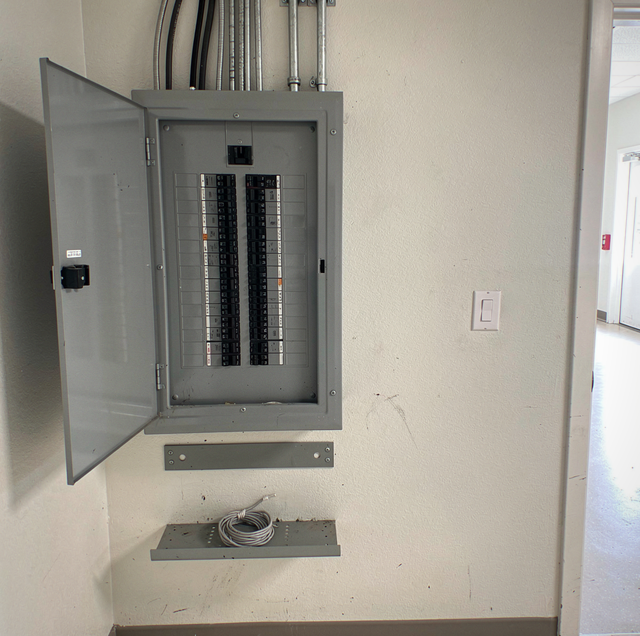
A commercial maintenance visit is built around the same short list every time: the panel, the breakers, the wiring, and the outlets and switches that are used daily. That scope typically includes testing meters, wiring, outlets, wall switches, and circuit breakers to confirm the whole system is in good working order and every connection is secure. None of that is a repair by itself. It is closer to a scheduled physical: a set of checks designed to catch a loose connection or a failing part while it is still small enough to fix on the spot, well before it turns into unplanned downtime.
That distinction matters because installation, repair, and maintenance are treated as three separate services, not three names for the same visit. An installation puts new equipment in. A repair addresses something that has already failed. A maintenance visit is scheduled ahead of either one, on a system that is currently working, specifically so nothing on that list gets the chance to fail without warning. If you only call an electrician after something breaks, you are skipping the single visit built to catch it first.
The Five Warning Signs a Visit Is Meant to Catch
Between scheduled visits, a commercial electrical system usually gives some notice before something fails outright. The table below lists the signs to watch for and what each one commonly indicates.
| Warning Sign | What It Commonly Means |
|---|---|
| Frequent power surges | Equipment cycling hard, a failing surge device, or utility-side voltage swings reaching the panel |
| Flickering or dimming lights | A loose connection, an overloaded circuit, or a breaker feeding more than it should |
| Breaker trips or power outages | A circuit carrying more load than it is rated for, or a breaker nearing the end of its service life |
| Hot outlets or switches | A loose or corroded connection generating heat at the point of contact |
| Old or outdated systems | Wiring, breakers, or a panel that predate the loads a modern business now runs |
None of these signs is proof of an emergency on its own, and that is the trap. A single flicker or one warm outlet is easy to explain away as an old building or a hot day, and a business can go months treating each one as its own small event before they add up to the same underlying cause. A maintenance visit puts them side by side before that happens.
What Heats Up Enough to Justify a Same-Week Call?
Not every warning sign carries the same urgency, and heat is the one that moves fastest. A breaker that trips once and resets, or a light that dims for a second when the air conditioner kicks on, can usually wait for the next scheduled visit. A hot outlet, a warm switch plate, or a breaker that trips repeatedly in the same day belongs in a different category: heat at a connection means current is meeting resistance somewhere it should not, and that resistance only gets worse between now and the next visit.
A hot outlet, a scorched plate, or breakers that trip repeatedly between visits can turn into a fire in an occupied building, so cut power at the breaker and call a licensed electrician before it's used again.
The other four signs from that list are worth flagging for the next visit, not an emergency call. Heat is the exception worth interrupting the schedule for, because a connection that generates heat between visits is no longer a maintenance item. It has already crossed into the kind of finding a visit exists to prevent, not just record.
How the Testing Portion of a Visit Works
The testing itself follows the same short list described in the first section, just in far more depth. An electrician checks the meter base and service entrance, traces the wiring for any damage or degraded insulation, tests outlets and wall switches for proper function and correct grounding, exercises every breaker to confirm each one trips and holds correctly, and runs a thermal imaging scan across the panel to catch a hot spot building at a lug or splice before it is warm enough to notice by hand. None of those checks takes long or looks dramatic while it is happening. Run together, they are the reason a loose lug or a corroded splice gets found on a schedule, not during an outage a casual walkthrough would have missed.
Testing also produces a record, not just a verbal all-clear. A written account of what was checked, what passed, and what needs attention gives a business something to act on immediately and something to compare against the next visit, so a slowly worsening reading gets treated as a pattern, not new information every time it shows up.
That written record matters even more the second and third time a technician walks the same building, because a small change between visits, a connection running slightly warmer or a breaker resetting a fraction faster, only means something once there is a prior reading to measure it against.
Where Code Compliance Fits Into the Visit
A maintenance visit also touches code compliance, though it is worth being precise. Commercial electrical work is generally expected to meet recognized national electrical code standards, and a visit is one of the few opportunities to confirm that an aging system still does, rather than simply assume it does because nothing has changed since the last time someone looked. That confirmation is a check against a standard, not a legal opinion, and the electrician doing the visit is not the one who decides whether a given building is in or out of compliance for permit or insurance purposes.
Separately, any job that requires a permit, such as a panel replacement, carries its own inspection tied to that specific work. A routine maintenance visit is not that inspection and does not replace it. The two exist for different reasons: one clears a specific job with the local permitting office, and the other checks a system that is already in service for wear nobody would otherwise notice until it failed.
How Often a Commercial Property Should Schedule One
How often a visit makes sense depends more on how hard the system works than on the calendar. A property running long hours, carrying a heavier load, or already showing one or two of the warning signs above should check in more often than a property with light, predictable use. Older systems installed before today's loads are worth watching most closely.
A Maintenance Visit Is Not the Same as a Repair Call
From the outside, a maintenance visit and a repair call can look identical: the same electrician's truck, the same panel getting opened, the same kind of testing equipment coming out of the same bag. The difference is in what triggered the visit and what it gets measured against. A repair call starts because something has already failed and stops once that one thing is fixed. A maintenance visit starts on a schedule, on a system that is currently working, and gets measured against the full list: panel, breakers, wiring, outlets, and switches, not just the one part that happens to be broken.
Knowing which one you are booking changes what to expect. A repair call is scoped around a single fault and ends when that fault is fixed. A maintenance visit is scoped around the whole system, and its real value shows up months later, in the fire, the outage, or the failed inspection that never happened because a small warning sign got caught on schedule, not after something broke. Call it what it is up front, and both sides know what the visit is actually for.
Frequently Asked Questions
Rarely as part of your first trip. A maintenance visit is scoped to inspect and test, and most findings get written up so you can choose what to fix and when. An urgent item, like a connection generating heat, is the exception: it gets flagged immediately rather than saved for your next stop.
It depends on the number of panels, not your square footage. A single-panel office might take under two hours, while a building with several tenant panels, a larger service, or older wiring takes noticeably longer, because each panel, each breaker, and each accessible outlet on that list gets tested on its own, so you can trust your result.
No, and the two are not interchangeable. A permitted job, like a panel replacement, carries its own inspection tied to that specific work and closes out once your work passes. A maintenance visit occurs on your system, which has already passed its own inspections long ago and is now simply in service, checking wear and drift on equipment you rely on every day.
Most of it, yes. Visual checks, meter readings, and testing of individual outlets and switches can be performed during your hours with minimal disruption to customers or staff. Testing inside your panel may require a short window without power, since breakers are exercised one at a time. A good electrician will tell you which circuits it affects before starting, so you can plan around it.
A written summary of what was tested, what passed, and what needs follow-up, with enough detail to compare against your next visit, not just start from scratch each time. That record is also useful beyond your electrical system itself: it gives you something concrete to hand to an insurer, a landlord, or a fire marshal who asks whether your system has been maintained, without anyone having to interpret the code on the spot.
A finding in that urgent category moves the visit out of routine and changes what happens for the rest of the day onsite. An electrician who finds something like that will usually shut down your already affected circuit on the spot rather than wait for a scheduled repair, and will tell you plainly why it needs to stay off until it is fixed. You do not need to understand your wiring to act on that finding: treat it like any other safety recall on your property, note which circuit is affected, and get your repair scheduled before that circuit goes back into use, not after.
Schedule a commercial electrical maintenance visit before a warning sign becomes a shutdown — our licensed electricians test your commercial panel, breakers, wiring, outlets, and switches, document every finding, and flag anything that cannot wait for the next scheduled check. Kennedy Electric serves Citrus, Hernando, and Pasco Counties. License #EC13011268. Call (352) 251-2795.
