Understanding Line vs. Load Wiring in Your Home
Why did that outlet stop working after someone replaced it, and why does the breaker keep tripping even though nothing new was added? Florida homeowners hit this wall when a simple electrical swap turns into flickering lights, dead outlets, or that uneasy feeling that something is wrong behind the wall.
Line vs. load wiring confusion creates daily frustration because power issues start showing up where everything used to work fine. An outlet replacement, a GFCI swap, or a small DIY fix suddenly causes half a room to go dead or protection to stop working. Many homeowners delay addressing the problem because power still works in some places, but that delay often leads to repeated outages, safety concerns, and the nagging worry that electricity is flowing where it shouldn't.
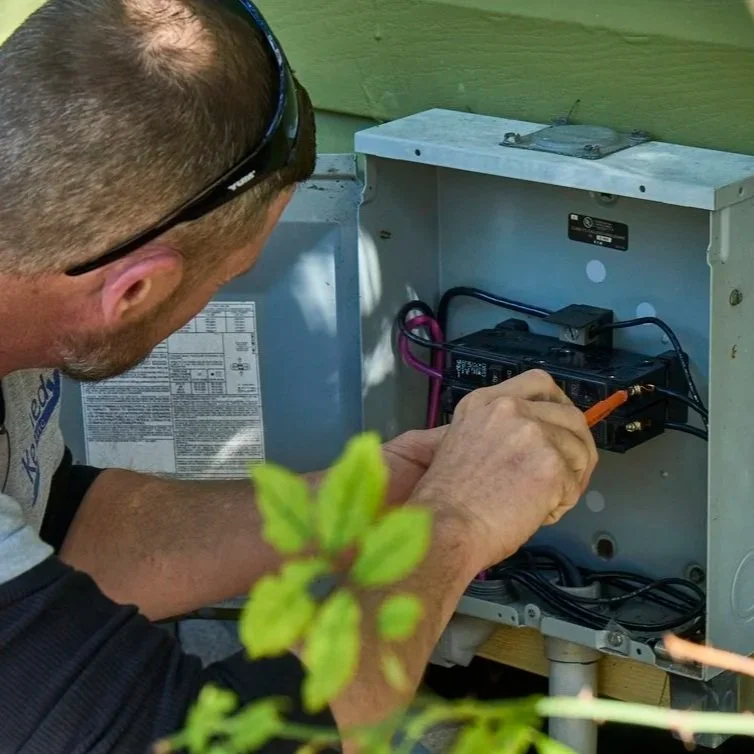
Electrician connecting line and load wiring inside outdoor electrical box to ensure proper GFCI protection and safe power distribution.
Why Line And Load Wiring Confuses So Many Homeowners
Line and load wiring sounds like electrician language that should not matter to homeowners, yet it affects how electricity flows through nearly every outlet and device. Line refers to the wires that bring power from the electrical panel, while load refers to the wires that carry power onward to other outlets or fixtures. That distinction matters because mixing them up disrupts how circuits behave.
Homeowners often assume all wires at an outlet do the same job. Color coding helps, but placement matters as much as color. Florida homes with multiple outlets chained together rely heavily on correct line and load connections. When those wires get reversed, power may still appear present, but safety features and downstream devices stop functioning properly. That misunderstanding turns small projects into lingering electrical problems.
Why Homeowners Run Into Line Vs Load Issues During Simple Projects
Line and load issues most commonly surface during outlet or GFCI replacements. Homeowners expect a one-for-one swap, assuming wires go back where they came from. Without understanding which wires feed power and which pass it along, connections get mixed.
Florida homeowners frequently attempt to swap outlets in kitchens, bathrooms, garages, or outdoor areas where GFCIs are common. Those locations almost always involve load wiring feeding additional outlets. A reversed connection may still power the first outlet, giving a false sense of success. Downstream outlets lose protection or power entirely, creating confusion days or weeks later when a problem finally shows up.
What Line Wiring Actually Does In Your Electrical System
Line wiring delivers electricity directly from the breaker panel to a device. That power source drives everything else on the circuit. Line wires represent the starting point of electrical flow for that segment of the system.
Homeowners often misunderstand line wiring because it feels invisible. Power arrives quietly and continuously, so it gets taken for granted. When line wiring is connected incorrectly, devices may not receive stable power. In Florida homes, unstable power manifests as flickering lights, inconsistent outlet behavior, or tripped breakers during heavy use. Understanding which wires are live helps homeowners see where power truly begins rather than guessing based on outlet location.
What Load Wiring Does And Why It Matters So Much
Load wiring carries electricity from one device to the next along the circuit. Outlets, switches, and fixtures often pass power forward, allowing multiple locations to share a breaker. That shared path depends on correct load connections.
Homeowners often assume load wiring only matters for advanced setups. In reality, most rooms contain outlets wired in series. A mistake at one outlet affects everything downstream. Florida homes with open layouts and extended circuits rely heavily on load wiring to distribute power efficiently. When load wiring is disconnected or miswired, entire sections of a room lose power unexpectedly.
Why GFCI Outlets Depend On Correct Line And Load Connections
GFCI outlets highlight line vs. load confusion more than any other device. These outlets protect downstream locations from ground faults, but only when wired correctly. Line terminals feed power into the GFCI, while load terminals send protected power outward.
Homeowners often wire all wires to the same terminals, assuming symmetry. That shortcut turns off downstream protection or causes the GFCI to trip repeatedly. Florida building codes require GFCI protection in moisture-prone areas, making proper wiring especially important. Miswired GFCIs create a dangerous illusion of safety, where protection appears to be present but fails when needed most.
Why Power Sometimes Works Even When Wiring Is Wrong
One of the most confusing aspects of line vs. load mistakes is that power still works even when the mistake occurs. An outlet may still deliver electricity even when wired incorrectly, leading homeowners to believe everything is fine.
Electricity follows available paths, even imperfect ones. A miswired outlet may energize itself while cutting off downstream devices or bypassing protective features. Florida homeowners frequently discover issues weeks later when another outlet fails, or a GFCI does not trip during a test. Working power does not mean correct wiring, which is why these mistakes linger unnoticed.
Common Homeowner Assumptions That Cause Line Vs Load Errors
A common assumption is that wire colors alone dictate placement. While color matters, identifying which cable brings power and which continues the circuit matters just as much. Another assumption involves thinking newer outlets are foolproof. Many modern devices label lines and loads clearly, but those labels only help if homeowners understand what they mean.
Florida homes often contain mixed wiring styles from past renovations. Homeowners assume consistency across outlets, only to discover variations that complicate replacements. Treating each outlet as identical leads to repeated mistakes that compound frustration.
Why Older Homes Are More Vulnerable To Line And Load Confusion
Older homes often feature wiring layouts that do not match modern expectations. Circuits may feed multiple rooms or change direction unexpectedly. Without documentation, homeowners rely on guesswork.
Florida homes built decades ago often underwent partial updates without full rewiring. Those piecemeal changes introduce complexity. Line and load identification becomes harder when cables enter boxes from multiple directions. That complexity increases the chance of incorrect connections during even simple updates.
How Line Vs Load Mistakes Affect Safety Over Time
Safety issues from line vs. load mistakes develop gradually. Downstream outlets may lose GFCI protection without obvious signs. Faults go undetected until moisture or wear triggers a shock or trip.
Heat buildup also becomes a concern when wiring paths change unintentionally. Electricity flowing through unintended routes stresses connections. Florida humidity accelerates corrosion, increasing resistance at miswired points. Over time, small mistakes create conditions that elevate risk beyond the original project.
Why Seasonal Demand Makes Wiring Accuracy More Important
Electrical demand spikes during Florida summers. Air conditioning systems, dehumidifiers, and pool equipment increase load on circuits. Wiring errors that stayed hidden during mild weather reveal themselves under stress.
Line and load confusion becomes more noticeable when circuits approach capacity. Breakers trip unexpectedly, or outlets fail intermittently. Seasonal timing often leads homeowners to believe appliances are failing when wiring errors are the real culprit.
How Electricians Identify Line And Load Correctly
Electricians use testing tools to identify power sources before making connections. Voltage testers, circuit tracers, and experience help determine which wires feed power and which carry it onward.
Professionals also evaluate the broader circuit, not just the device being replaced. That system-wide perspective prevents isolated fixes that create new problems elsewhere. Florida electricians encounter line vs. load issues regularly during service calls that started as simple outlet replacements.
Why Trial And Error Wiring Creates Bigger Problems
Some homeowners rely on trial and error, swapping wires until power returns. That approach risks damaging devices or bypassing safety features. Electricity responds instantly, but consequences build over time.
Repeated swapping stresses terminals and wires. Each attempt increases wear and loosens connections. Florida homes already face environmental stress, so unnecessary handling accelerates deterioration. Understanding the difference between line and load eliminates guesswork and reduces repeated disruptions.
Why Documentation Helps Prevent Future Confusion
Documenting wiring layouts helps homeowners avoid repeating mistakes. Notes, photos, or diagrams provide clarity during future projects. Many homeowners skip documentation because everything works once finished.
Months or years later, that lack of records creates confusion when another outlet needs attention. Florida homes evolve as families add devices and modify spaces. Clear documentation preserves understanding even as systems change.
Why Line Vs Load Understanding Reduces Daily Frustration
Electrical problems disrupt daily routines in subtle ways. Outlets stop working, appliances behave oddly, and homeowners lose confidence in their systems. Understanding line vs. load restores control by turning mystery into knowledge.
When homeowners understand how power flows, troubleshooting becomes logical rather than stressful. Small projects stay small instead of snowballing into larger issues. That confidence improves decision-making and reduces hesitation around necessary maintenance.
Why Professional Insight Often Saves Time And Stress
Electricians approach line vs. load issues with context built from years of experience. Patterns emerge that homeowners rarely see on their own. That insight helps resolve issues efficiently without unnecessary trial.
Kennedy Electric often encounters homes where confusion between line and load causes repeated service interruptions. Clear explanations during repairs help homeowners avoid similar problems in the future. Knowledge shared at the right moment prevents frustration long after the visit ends.
FAQs
Line wiring brings power from the electrical panel to a device, while load wiring carries power onward to other outlets or fixtures. Mixing them up disrupts how circuits function and affects safety features.
A GFCI only protects downstream outlets when load wires connect correctly. Miswiring prevents protection from extending beyond the first outlet, even if power appears normal.
Incorrect wiring can change how electricity flows, leading to unexpected load patterns and breaker trips. These trips often appear random without understanding the wiring error.
Electricity finds available paths even when the wiring is incorrect. Power presence does not guarantee proper protection or stable performance throughout the circuit.
Simple identification can be done carefully, but uncertainty increases risk. Professional evaluation provides clarity and prevents small mistakes from becoming larger problems.
