Main Bonding Jumper: What It Is and Why It Matters
Why does the breaker panel look fine, but everything still feels a little sketchy every time the AC kicks on? If you have ever stood in a Florida garage listening to a panel hum during a storm and thought “that cannot be right,” you are already closer to the problem than most homeowners.
A lot of Florida homeowners end up searching this topic after months or years of small, irritating electrical weirdness that never quite adds up. Lights dim when appliances start, breakers trip without a clear reason, or a mild tingle shows up when touching metal fixtures. The frustration usually starts in a very specific moment, like grabbing a washer lid with wet hands or hearing a faint buzz from the panel during a thunderstorm, and wondering why a house that passed inspection still feels off. When the underlying issue gets misunderstood or ignored, those small moments can turn into higher repair costs, damaged equipment, or real safety risks that do not announce themselves loudly until something fails.
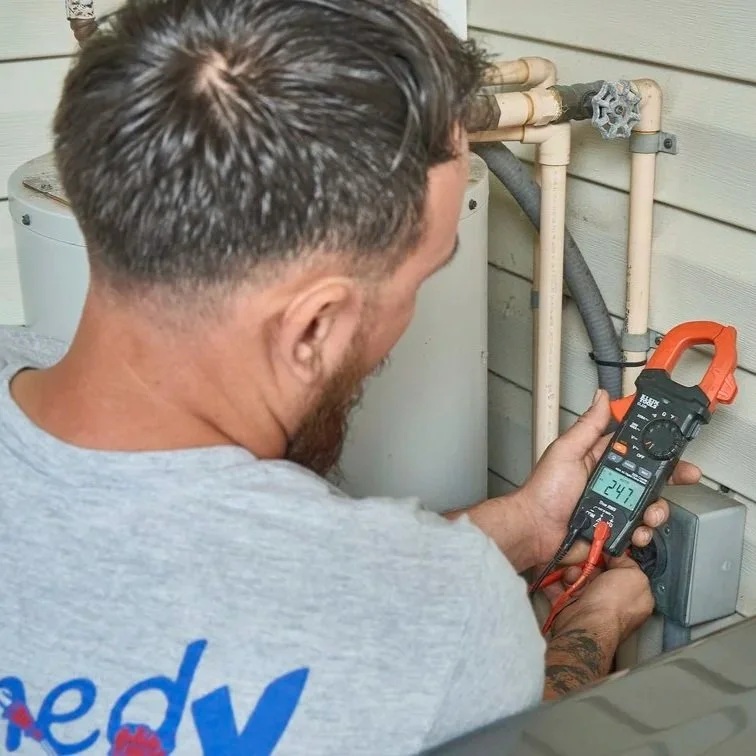
Electrician testing service bonding connection to ensure proper neutral and grounding relationship for safe residential electrical system operation.
The One Wire Nobody Thinks About Until Something Feels Wrong
The main bonding jumper is one of those electrical components most homeowners never hear about until an electrician points at it and says, “This is the problem.” It is a short but critical connection inside the main service equipment that ties the grounded conductor, commonly called neutral, to the grounding system. In plain terms, it creates a single reference point so electricity knows exactly where to go when something goes wrong. Homeowners often assume the ground rods outside or the green wires inside outlets handle all grounding needs. Still, the bonding jumper is what makes that entire safety system act as a coordinated network rather than scattered parts.
The misunderstanding usually comes from the fact that the main bonding jumper does nothing visible on a day-to-day basis. It does not power lights or appliances, and it does not trip breakers during normal use. Its role only becomes apparent during abnormal conditions, such as lightning activity, utility faults, or internal equipment failures. In Florida, where moisture, salt air, and frequent storms put electrical systems under constant stress, that role matters more than most people realize. When the bonding jumper is missing, loose, incorrectly sized, or installed in the wrong location, stray voltage can travel through the home's metal parts rather than safely returning to the source. Over time, that can lead to corrosion, nuisance tripping, damaged electronics, or a lingering sense that the electrical system never feels fully stable.
Why “My House Is Grounded” Is Often a False Sense of Security
One of the most common homeowner assumptions is that having ground rods automatically means the home is properly protected. Ground rods are important, but they are only part of the system. Without the main bonding jumper correctly tying neutral and ground together at the service equipment, those rods cannot perform their intended function. Homeowners often hear phrases like “it’s grounded” during inspections or renovations and assume that covers everything, without realizing that bonding and grounding are related but not interchangeable concepts.
The practical problem with this misunderstanding shows up in subtle ways first. Appliances may behave unpredictably, especially sensitive electronics like computers, HVAC control boards, or smart home systems. In Florida homes, where humidity already stresses electrical components, improper bonding can accelerate wear without any single dramatic failure. Over time, small voltage differences build between metal parts, which can cause tingling sensations, premature equipment failure, or repeated breaker issues that never fully resolve. Many homeowners spend money replacing outlets, breakers, or even appliances without realizing the root issue lives quietly inside the main panel. The longer the false sense of security persists, the more likely it becomes that the eventual fix will involve more than a simple adjustment.
Why Florida Homes Feel the Effects Sooner Than Others
Florida electrical systems live in a harsher environment than many parts of the country. High humidity, salt exposure near the coast, and frequent lightning activity all increase the importance of a properly installed main bonding jumper. Moisture intrusion alone can cause corrosion at connection points, increasing resistance and interfering with the flow of fault current. When bonding is already compromised or misunderstood, those environmental factors amplify the risks.
Homeowners often notice problems after heavy storms or during peak summer usage when air conditioning systems run constantly. The system is under maximum load, and any bonding weakness becomes more apparent. A loose or improperly sized bonding jumper may not cause immediate failure, but it can allow voltage to appear on metal enclosures, conduit, or plumbing. That leads to those uneasy moments when touching something feels wrong but not obviously dangerous. Over time, repeated exposure to these conditions increases the likelihood of damaged equipment and unsafe conditions. Florida homeowners frequently assume storm-related electrical issues are unavoidable when, in reality, many are worsened by bonding issues that were never corrected during the original installation or later upgrades.
The DIY Myth That Bonding Is Just Another Wire
Some homeowners and even inexperienced installers treat the main bonding jumper as a minor detail, assuming any wire will do the job. That shortcut often comes from outdated beliefs or incomplete advice found online. The bonding jumper must be correctly sized, properly connected, and installed in the correct location, depending on whether the panel is service equipment or a subpanel. Mixing up those roles is a common mistake that creates serious safety issues.
When homeowners assume bonding is interchangeable or optional, the long-term consequences tend to compound quietly. Incorrect bonding can create parallel paths for neutral current, allowing electricity to flow along unintended routes, such as metal conduit or plumbing. That can create heat buildup, corrosion, and unpredictable breaker behavior. Over time, those conditions make troubleshooting harder and repairs more expensive. Electricians often encounter panels where bonding was modified during renovations without understanding the original design. The system may still work in a basic sense, but it no longer behaves safely under stress. The longer that condition persists, the greater the risk accumulates, especially on properties with pools, outdoor kitchens, or metal structures common in Florida.
What Happens When the Main Bonding Jumper Is Missing or Incorrect
When the main bonding jumper is missing or installed incorrectly, the electrical system loses its single point of reference. Fault current may not return to the source efficiently, which prevents breakers from tripping when they should. That delay increases the risk of shock and equipment damage. Homeowners often misinterpret the symptoms, focusing on individual outlets or circuits rather than the system as a whole.
The effects usually show up gradually. Breakers may trip inconsistently or not trip at all during minor faults. Metal parts may carry small amounts of voltage, creating discomfort rather than immediate danger. Over time, sensitive electronics experience shortened lifespans, and corrosion accelerates at connection points. In Florida homes, where electrical systems already fight moisture and heat, these issues surface sooner. Ignoring them allows small problems to grow into system-wide failures that require more invasive repairs. Many homeowners only discover the bonding issue after a major event, like storm damage or a failed inspection during a sale, when correcting it becomes more urgent and disruptive.
Why Older Homes and Renovated Panels Are Especially Vulnerable
Homes built decades ago often used electrical standards that no longer match modern expectations. Even when those systems were compliant at the time, later renovations can unintentionally create bonding problems. Panel upgrades, generator installations, solar additions, or remodels often introduce new grounding paths without properly addressing the main bonding jumper. Homeowners assume newer equipment automatically improves safety, but mixing old and new systems without a clear bonding strategy can make things worse.
The misunderstanding matters because modern electrical loads are heavier and more sensitive than those of the past. Florida homes now rely on advanced HVAC systems, electronics, and backup power solutions that demand stable grounding and bonding. When those systems operate on an improperly bonded service, the risks increase quietly. Over time, homeowners experience more frequent service calls and unexplained electrical behavior. Correcting bonding issues early during renovations prevents those headaches, but many people do not know to ask about it. Electricians like Kennedy Electric often encounter bonding problems during unrelated service calls, revealing issues that have existed unnoticed for years.
Why Waiting for a Problem Is the Most Expensive Approach
Electrical bonding rarely announces itself with dramatic failures right away. That leads many homeowners to delay addressing concerns until something clearly breaks. The problem with waiting is that bonding issues tend to damage multiple components slowly. By the time a serious symptom appears, other parts of the system may already be compromised.
In Florida, timing plays a role as well. Storm seasons, aging infrastructure, and increasing electrical demand all place additional stress on homes. A bonding issue that seemed minor during mild weather can become a serious hazard during a lightning-heavy summer. Homeowners who address bonding proactively avoid repeated service calls and unpredictable failures. Those who wait often end up replacing equipment that was never truly at fault. Understanding how the main bonding jumper fits into the larger system helps homeowners make informed decisions rather than react to emergencies.
FAQs
A main bonding jumper is a conductor inside the main service equipment that connects the neutral conductor to the grounding system. It is typically located in the main breaker panel or meter enclosure, not in subpanels, and its placement depends on the service configuration.
The main bonding jumper allows fault current to return to the source quickly so breakers can trip when something goes wrong. Without it, electricity may travel through unintended metal parts of the home, increasing the risk of shocks and equipment damage over time.
Yes, a home can have ground rods and grounded outlets, but still lack proper bonding. Grounding and bonding work together, and missing or incorrect bonding prevents the grounding system from functioning as intended during faults.
Many older Florida homes benefit from bonding evaluations, especially if their electrical systems have been modified over the years. Changes like panel upgrades, generators, or remodels often introduce bonding issues that were not addressed at the time.
Homeowners usually cannot tell by visual inspection alone. A qualified electrician evaluates the service equipment, conductor sizing, and connections to confirm whether the main bonding jumper is properly installed and functioning as intended.
