How to Map and Label Your Electrical Panel for Easy Troubleshooting
Why does every breaker flip except the one labeled kitchen when the kitchen goes dark? Florida homeowners get fed up fast when the panel labels feel like a guessing game, and every outage turns into a trial-and-error game with the lights off.
Standing in front of an electrical panel that makes no sense is a specific kind of household frustration. Power goes out in one room, someone mutters under their breath, and suddenly the garage panel becomes a stress point rather than a solution. Homeowners delay mapping and labeling their electrical panel because everything technically still works most days, but the cost shows up in wasted time, repeated breaker resets, accidental shutoffs, and that constant irritation of not knowing which switch controls what in their own home.
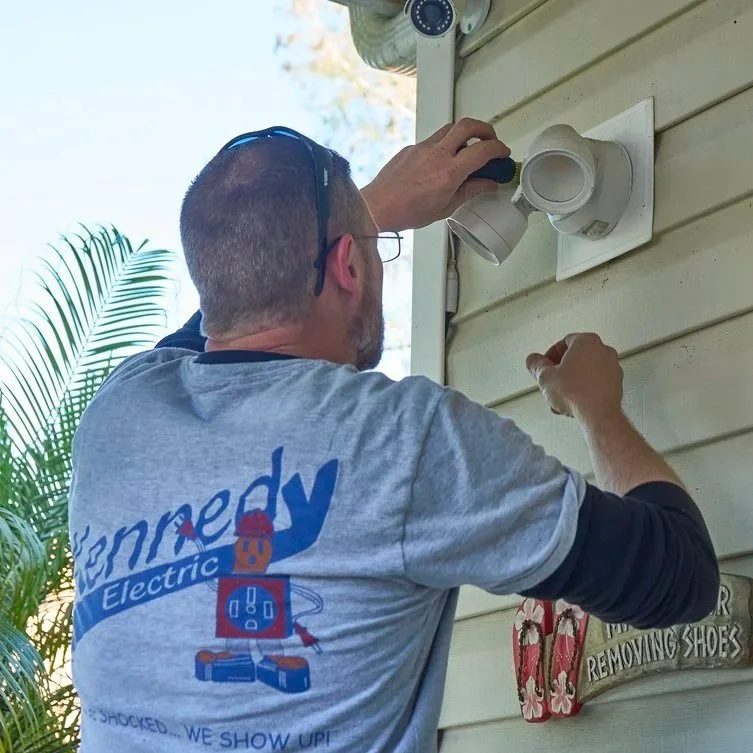
Electrician installing exterior security light while homeowners improve panel labeling to simplify troubleshooting and reduce electrical confusion during outages.
Why Most Electrical Panels Are Poorly Labeled Or Not Labeled At All
Many homeowners assume electrical panels arrive labeled correctly from the start, but that is rarely the case. In reality, panel labels are often written quickly during construction, inconsistently updated during remodels, or guessed at during past repairs. Over time, rooms change, circuits get extended, and new appliances get added without updating the panel directory. The result is a panel that technically functions but no longer reflects how electricity actually flows through the house.
Florida homes are especially prone to label drift because of additions, enclosed patios, garage conversions, and outdoor features added years later. Someone installs a mini fridge in the garage, a freezer in the laundry room, or a pool pump outside, and the panel never gets updated. When a breaker trips, homeowners flip switches unthinkingly, sometimes cutting power to unrelated areas. That confusion turns minor electrical issues into drawn-out, annoying events that interrupt daily routines.
Why Homeowners Put Off Mapping Their Electrical Panel
Mapping an electrical panel sounds simple, but many homeowners hesitate because it feels tedious or technical. The assumption is that panel work falls within the electrician's territory, so people avoid it unless something breaks. That delay creates a false sense of security, leading homeowners to react to problems rather than prevent them ahead of time.
Another reason people delay panel mapping is the fear of making a mistake. Homeowners worry about turning off the wrong breaker, resetting clocks, or interrupting someone working from home. Florida households often juggle busy schedules, so nobody wants to be responsible for knocking out power unexpectedly. Ironically, not knowing which breaker controls what increases the chance of accidental shutoffs during an emergency or quick fix.
What Mapping An Electrical Panel Actually Means
Mapping an electrical panel means identifying exactly which breaker controls each outlet, light, appliance, or fixed system in the home. It goes beyond vague labels like 'bedroom' or 'lights' and focuses on accuracy. A properly mapped panel tells a homeowner where power originates and where it stops when a breaker is switched off.
Homeowners often misunderstand mapping as a one-time task that only matters during renovations. In reality, panel mapping supports everyday troubleshooting. When an outlet stops working, a mapped panel lets someone isolate the circuit quickly. When a breaker trips, homeowners know which areas lost power and why. Mapping turns the panel from a mystery box into a practical tool that supports safe, efficient decision-making.
Why Correct Panel Mapping Matters During Electrical Problems
Electrical problems rarely happen at convenient times. Breakers trip during storms, late dinners, or early mornings before work. When homeowners know exactly which breaker controls which area, response time improves and stress drops. Instead of guessing, someone can flip the correct breaker, assess the situation, and decide whether the issue is isolated or part of a larger problem.
Incorrect or vague labels cause homeowners to misdiagnose issues. Someone may assume power is restored when only part of a circuit is active. That confusion can hide problems like loose connections or failing outlets. In Florida homes where humidity and heat already stress electrical systems, clarity becomes even more important. Knowing the correct circuit path helps spot patterns instead of chasing symptoms.
Common Homeowner Mistakes When Labeling Panels
A common mistake is labeling breakers based on assumptions instead of testing. Homeowners often write labels after flipping breakers once and checking a single light or outlet. That shortcut creates partial accuracy that falls apart later. Circuits often feed multiple rooms, outlets, or fixtures, especially in older Florida homes.
Another mistake involves using broad labels that feel helpful but lack precision. Writing a living room or hallway sounds organized, but fails during troubleshooting. When part of the living room goes dark while the other stays on, vague labels create more confusion. Effective labeling requires patience and thorough testing, not just neat handwriting.
How To Map An Electrical Panel Without Making It Complicated
Mapping a panel does not require advanced tools, but it does require a methodical approach. Homeowners start by turning on lights, plugging in radios or lamps, and working room by room. One person stays at the panel while another checks which devices lose power when a breaker is turned off.
Taking notes during the process matters more than speed. Writing down every outlet, light, and appliance tied to a breaker builds an accurate picture. Florida homes with outdoor outlets, garages, and detached structures need extra attention because those circuits often surprise homeowners. Slowing down during mapping saves time later when problems arise unexpectedly.
Why Older Homes Are Harder To Map Accurately
Older homes often have circuits that were extended multiple times without clear documentation. Rooms added decades later might share circuits with original spaces. That overlap confuses homeowners who expect one breaker per room.
Florida homes built before modern electrical standards frequently show creative wiring paths designed to save materials. While functional, those layouts make mapping more complex. Homeowners discover outlets in different rooms tied together or exterior outlets sharing power with indoor lights. Mapping reveals those realities and helps homeowners avoid assumptions that lead to frustration.
Why Panel Labels Should Reflect Use, Not Room Names
Labeling breakers by function rather than by room names improves clarity. Instead of bedroom one, labels like 'bedroom north outlets' or 'hallway lighting circuit' provide actionable information. Functional labels help homeowners isolate specific issues without cutting power unnecessarily.
Florida homes with shared circuits benefit from functional descriptions because spaces often blend. Open floor plans, combined kitchen and living areas, and converted rooms blur boundaries. Describing what the circuit powers instead of where it goes improves accuracy and usefulness over time.
Why Seasonal Demand Makes Panel Mapping More Valuable
Electrical demand changes with seasons, especially in Florida. Air conditioning systems run longer, pool equipment cycles more often, and outdoor lighting is used more during certain months. Mapping helps homeowners understand which circuits carry heavier loads during peak seasons.
When a breaker trips during a hot afternoon, knowing the circuit path helps identify whether the cause relates to cooling equipment, kitchen appliances, or shared outlets. Seasonal patterns become clearer when the panel map reflects reality. That awareness helps homeowners adjust their usage rather than repeatedly resetting breakers without understanding why.
How Poor Labeling Leads To Repeated Breaker Trips
Repeated breaker trips frustrate homeowners because the cause feels random. Poor labeling can hide the real source of overload or fault. Someone resets the wrong breaker or assumes a circuit is unrelated, allowing the problem to persist.
Accurate mapping shows when multiple devices share a circuit unexpectedly. Florida households often add portable appliances during heat waves, increasing the load on already-stressed circuits. Knowing which outlets belong together helps homeowners distribute usage and reduce nuisance trips.
Why Emergency Situations Make Panel Mapping Critical
Electrical emergencies require quick action. Smells, sparks, or unusual sounds demand immediate response. When homeowners know exactly which breaker controls the affected area, power can be cut quickly without guessing.
In Florida storm conditions, quick panel access matters. Water intrusion, lightning-related issues, and power surges create scenarios where speed reduces damage. A mapped and labeled panel turns a chaotic moment into a controlled response. That confidence matters when safety is on the line.
Why Mapping Helps Electricians Diagnose Problems Faster
Electricians benefit when homeowners understand their panels. Clear labels reduce diagnostic time and allow professionals to focus on solving the problem rather than deciphering circuit paths. Accurate mapping provides a head start during service visits.
Kennedy Electric often encounters panels with outdated or misleading labels that slow down troubleshooting. When homeowners invest time in mapping, service calls become more efficient and targeted. That collaboration improves outcomes without adding confusion or unnecessary work.
Why Panels Should Be Updated After Any Electrical Change
Any electrical change affects the panel map. New appliances, remodeled rooms, or added outlets alter circuit behavior. Homeowners often forget to update labels after changes, allowing inaccuracies to creep back in.
Florida homes evolve constantly as families adapt spaces for work, storage, or recreation. Keeping the panel map current preserves its value. Treating mapping as a living document rather than a one-time task prevents frustration from returning years later.
Why Clear Labels Reduce Daily Household Stress
Daily stress comes from small interruptions that stack up. Power outages, guessing games, and unnecessary shutoffs chip away at patience. Clear panel labels remove one recurring source of irritation from household life.
When homeowners feel confident navigating their panel, electrical issues feel manageable rather than overwhelming. That confidence supports better decisions and calmer responses. Knowing which breaker to flip becomes a simple matter rather than a tense moment.
FAQs
Mapping an electrical panel helps homeowners quickly identify which breaker controls each part of the home. Clear mapping reduces guesswork during outages, speeds up troubleshooting, and lowers frustration when power issues occur unexpectedly.
Panel labels should be reviewed anytime electrical work is done or new appliances are added. Periodic updates keep labels accurate as homes change over time and prevent confusion later.
Homeowners can map panels safely by flipping breakers and observing which lights or outlets lose power. Care and patience matter, and stopping if anything feels unsafe is always the right choice.
Many homes were wired to share circuits across rooms to reduce material and labor costs. Mapping reveals the shared paths, so homeowners understand how power flows rather than relying on assumptions.
Inaccurate labels usually mean circuits were modified without updates. Creating a fresh map from scratch provides clarity and helps identify previously hidden patterns.
