How to Choose the Right Generator for Your Florida Home (Portable vs. Standby)
The power always cuts out right when the house is already hot, the fridge is full, and someone is mid-shower, wondering why the fan just died. Every Florida homeowner has had that moment of standing in a quiet, sticky house thinking, “Why does everyone else seem prepared except me?”
Florida storms do not politely knock out power for an hour and leave. They shut down daily routines, spoil food, knock out garage door openers, and turn simple habits into stressful workarounds. Choosing the wrong generator often makes those moments worse, not better, because the frustration usually shows up only after the lights go out.
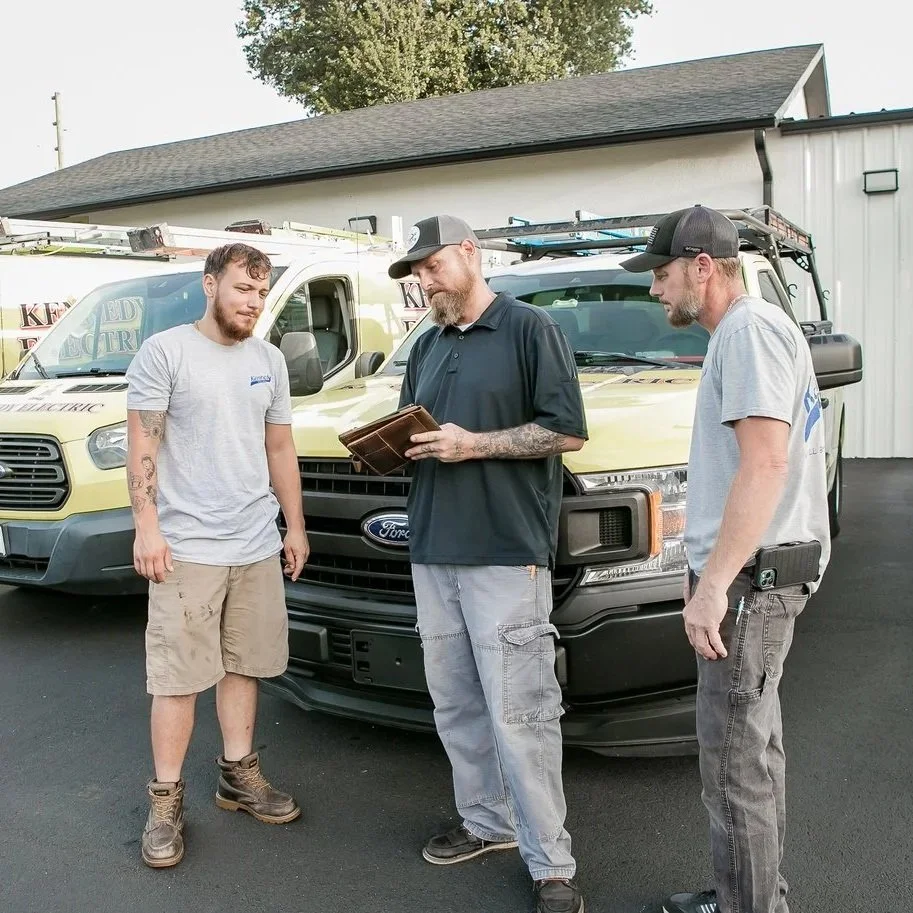
Three electricians reviewing generator planning beside service trucks, discussing standby versus portable power solutions for residential outage preparedness.
Portable vs. Standby Generators Sounds Simple Until It Is Your House
Portable generators are often talked about as a quick fix. Grab one, roll it out, plug things in, and ride out the outage. That idea sounds good until a storm hits at night, rain blows sideways, and cords run through cracked doors as humidity pours in. Many Florida homeowners buy portable units, believing that flexibility equals simplicity, but the lived experience often feels chaotic and half-baked.
Standby generators feel like a bigger decision because they are permanent and connected directly to the electrical system. That permanence scares people who worry about cost or commitment. What often gets missed is how much mental effort disappears once the system handles outages automatically. No dragging equipment, no guessing what can run, no choosing between air conditioning and keeping the fridge cold. For homes where outages are frequent, the difference shows up in stress levels more than wattage numbers.
Why Florida Homes Put Generators Under Different Pressure
Florida homes face conditions that quietly affect how generators perform. Heat, humidity, salt air near the coast, and sudden storm-driven outages put electrical systems under stress that cooler regions never see. A generator that seems oversized on paper may struggle to keep up when it's fighting heat while powering essential systems like air conditioning, refrigeration, and garage door openers during long outages.
Another factor homeowners overlook involves how homes are actually used during outages. People shelter inside more during storms. Doors stay closed. Families cluster in central rooms. Systems that seem nonessential during normal days suddenly matter a lot when power is gone. Internet routers, security systems, sump pumps, and garage door openers often get forgotten until they stop working and create safety or access problems at the worst possible time.
The Common Mistake of Sizing a Generator Around Best-Case Scenarios
One of the most common homeowner mistakes is sizing a generator based on what feels reasonable rather than on what actually happens during outages. People list a few appliances and assume everything else can wait. That assumption breaks down fast in Florida heat. Air conditioning loads spike. Refrigerators cycle harder. Freezers try to recover. Garage door openers get used more often because families move cars during storms or outages.
Underestimating load can cause generators to trip, struggle, or force homeowners to juggle power priorities constantly. Over time, that stress shortens equipment life and increases maintenance issues. Electricians see this pattern repeatedly after hurricane seasons, when homeowners ask why their generators feel weaker than expected. The issue rarely comes from poor equipment. The issue stems from planning based on optimism rather than reality.
Portable Generators And The Hidden Work Nobody Mentions
Portable generators require active management. Fuel storage, safe placement, cord routing, load balancing, and carbon monoxide safety are the homeowner's responsibility. During calm weather, that feels manageable. During a storm or after a long workday, it feels exhausting. Florida's humidity adds another layer by making fuel storage and engine maintenance more demanding than people expect.
Noise also becomes a real factor. Portable units running for hours can turn a quiet house into a constant background hum. Neighbors hear it. Sleep gets disrupted. Windows stay shut for safety and comfort, trapping heat inside. Over several outages, that irritation compounds. Many homeowners later admit they used their portable generator less than they planned because the hassle outweighed the benefits.
Standby Generators And The Assumption They Are Always Overkill
Standby generators carry a reputation for being excessive or only for large homes. That belief persists even as modern homes rely more on electrical systems for daily life. Security cameras, smart thermostats, electric vehicle chargers, and garage door openers all quietly increase reliance on a consistent power supply. When outages hit, those systems fail together.
A standby generator responds automatically and restores power without homeowner involvement. That reliability changes how outages feel emotionally. Instead of scrambling, people stay focused on weather safety and family comfort. Over time, homeowners often describe the system as something they forget about until neighbors mention the outage. That difference matters in Florida, where storms and grid interruptions are not rare events.
Why Transfer Switches Are Where Things Go Wrong
Transfer switches sit at the center of safe generator operation, yet many homeowners misunderstand their role. A transfer switch prevents backfeeding power into utility lines and manages which circuits receive power during outages. Skipping proper installation or relying on temporary setups introduces serious safety risks and limits generator performance.
Electricians frequently encounter homes where portable generators were used without proper transfer equipment. The result includes damaged appliances, tripped breakers, and unsafe wiring conditions. With standby generators, professionally installed transfer switches allow circuits like refrigeration, lighting, and garage door openers to operate normally without manual intervention. That predictability removes a major source of stress during outages.
The Florida Heat Factor Nobody Plans For
Heat changes everything during outages. Air conditioning loads dominate generator demand, yet many homeowners underestimate how essential cooling becomes during prolonged outages. Fans alone rarely cut it once humidity climbs. Portable generators often cannot support central air systems, forcing families to retreat into limited cooled spaces or endure uncomfortable conditions.
Standby generators can be sized to handle HVAC loads properly, but only when planning accounts for real-world use. Electricians consider starting loads, run times, and cycling patterns that differ from normal grid operation. Ignoring those factors leads to systems that technically work but never feel sufficient. Florida homes demand planning that treats cooling as a core need, not a luxury.
Where Garage Door Openers Fit Into Generator Planning
Garage door openers rarely make the initial list when homeowners think about generator loads. During outages, access matters. Storm debris, evacuations, and emergency errands make vehicle access critical. A garage door stuck shut becomes more than an inconvenience. It becomes a safety issue.
Including garage door openers in generator planning avoids awkward workarounds and manual releases during stressful moments. Electricians often recommend placing these circuits on priority lists alongside lighting and refrigeration. That approach keeps daily movement normal even when the rest of the neighborhood is dark.
Fuel Choices And The Florida Reality
Fuel type plays a bigger role in Florida than many homeowners realize. Gasoline-powered portable generators depend on fuel availability during emergencies. After major storms, gas shortages are common. Lines stretch for hours. Fuel storage becomes a challenge in heat and humidity.
Standby generators typically run on natural gas or propane. Natural gas offers continuity as long as service remains intact. Propane provides long-term storage stability when properly maintained. Choosing fuel involves balancing availability, storage space, and local infrastructure. Electricians guide homeowners through these tradeoffs based on neighborhood conditions and past outage patterns.
Maintenance Is Where Cheap Choices Get Expensive
Generators that sit unused for months still require maintenance. Portable units demand regular testing, fuel rotation, and cleaning. Neglect shows up during the one moment the generator is needed most. Standby systems include automatic exercise cycles that keep components ready, but professional inspections still matter.
Skipping maintenance often leads to failures blamed on equipment quality rather than neglect. Florida humidity accelerates corrosion and wear. Electricians routinely service generators that could have avoided breakdowns with consistent upkeep. Long-term reliability depends more on maintenance habits than brand names.
Why Electrical Panels Often Limit Generator Performance
Electrical panels shape what a generator can realistically support. Older panels may lack space for transfer equipment or proper load management. Homes with outdated wiring face limitations that no generator can magically fix. Addressing those constraints sometimes becomes part of generator planning.
Electricians assess panel capacity, circuit layout, and future expansion needs before recommending generator solutions. That process prevents homeowners from investing in equipment that outgrows the electrical system. Planning prevents frustration later when additional loads, such as electric vehicles or upgraded HVAC systems, are added.
Cost Comparisons That Miss The Bigger Picture
Homeowners often compare generator options solely by upfront price. That narrow view ignores the long-term costs of fuel, maintenance, repairs, and replacement. Portable generators appear cheaper until repeated outages reveal their limitations and ongoing expenses. Standby generators require a higher initial investment but often cost less per outage over time.
Electricians help homeowners evaluate costs through the lens of lived experience. How often do outages occur? How long do they last? How disruptive they feel. Financial decisions make more sense when tied to real household patterns rather than sticker prices.
How Professional Planning Changes The Outcome
Choosing the right generator involves more than selecting equipment. Professional planning considers home layout, electrical loads, family routines, and regional risks. Electricians bring experience from seeing systems fail in real conditions, not just in theory.
Kennedy Electric works with Florida homeowners to align generator choices with how homes actually function during outages. That perspective reduces regret and improves satisfaction long after installation. The goal stays focused on restoring normal life, not just restoring power.
FAQs – Generator Services in Florida
The best choice depends on how often outages occur, how long they last, and which systems matter most during those times. Homes experiencing frequent or extended outages often benefit from standby generators, while occasional outages may justify portable options with proper planning.
Some generators can support air conditioning, but capacity and starting loads matter. Standby generators are more commonly sized to handle HVAC systems, while portable units usually struggle unless cooling needs are limited to small spaces.
Florida heat and humidity increase wear on generator components. Regular inspections, exercise cycles, and professional servicing help prevent corrosion, fuel issues, and unexpected failures during outages.
Garage door openers can run on generators when included in the planned circuit load. Proper transfer switch installation ensures safe operation and reliable access during outages.
Standby generators require professional installation to meet electrical codes and operate safely. Licensed electricians handle transfer switches, panel integration, and load calculations that protect both the home and utility workers.
