Generator Sizing Guide: What Size Generator Do You Need?
The power drops, the generator fires up, and somehow the house still feels half dead. The AC wheezes, the lights dim, and the garage door stares back at you like it refuses to move.
Most Florida homeowners start questioning their generator choice right then, standing in a hot house, wondering how something that costs good money still cannot keep life normal. Generator sizing errors do not appear on the receipt. They show up when the outage drags on and every small inconvenience stacks into real frustration.
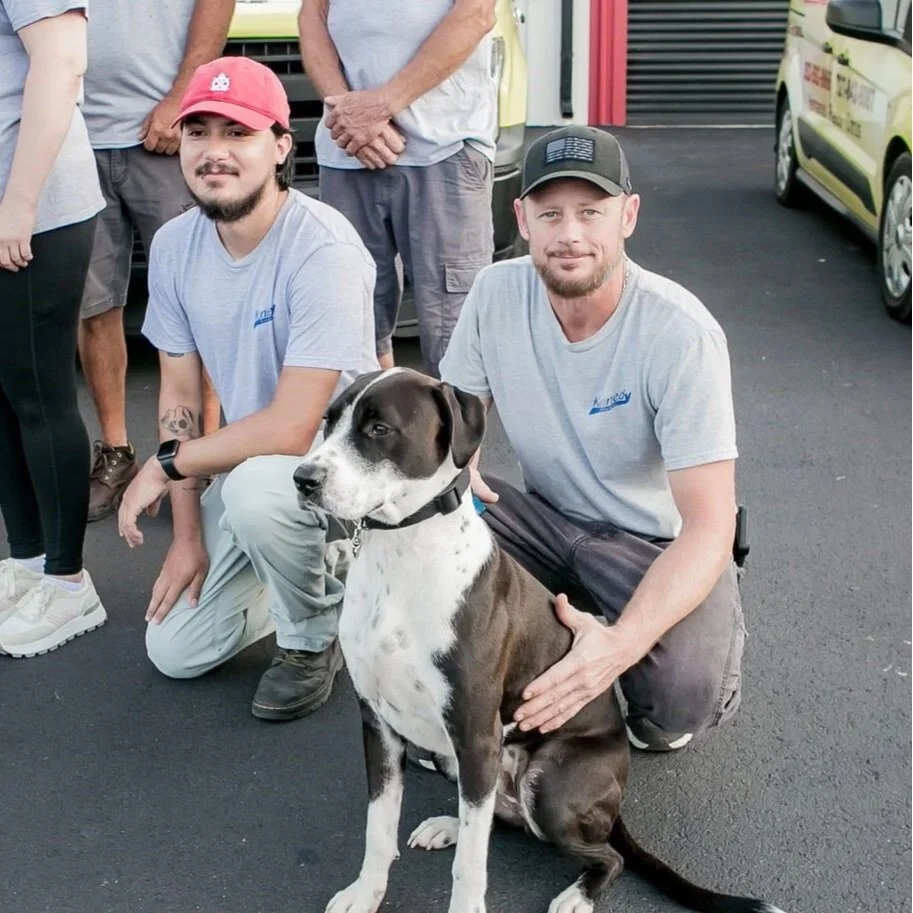
Electricians kneeling beside company vehicles with dog, representing trusted residential generator sizing and professional electrical service team.
Why Generator Sizing Feels Obvious Until It Is Your House
Generator sizing feels like a math problem until real life gets involved. Homeowners often assume adding up a few appliance labels gives a clear answer. That approach works on paper but fails the moment an outage changes how the house operates. Air conditioning runs longer, refrigerators cycle harder, and systems that rarely overlap suddenly demand power simultaneously.
Florida homes magnify the problem because heat and humidity push electrical systems beyond their normal operating range. Motors draw higher current, cooling equipment fights harder, and comfort systems that feel optional on normal days become nonnegotiable during outages. Many homeowners expect generators to behave like utility power, delivering smooth electricity without protest. In reality, generators respond instantly to load changes, and undersizing shows up as tripped breakers, stalled equipment, and unstable performance that feels worse than no generator at all.
What size generator do I need for my house in Florida
That question is typed into search bars every storm season, often after a homeowner has already felt burned by a bad experience. The answer has very little to do with square footage alone. Two Florida homes with identical layouts can need dramatically different generator capacities based on cooling systems, appliance age, insulation quality, and daily habits.
Central air conditioning often drives generator sizing decisions more than any other system. Add electric water heaters, freezers, pool pumps, or workshop tools, and demand climbs fast. Many households also rely on powered garage access, security systems, and home offices that suddenly feel essential when the grid goes down. Generator sizing starts with understanding how the home behaves during stress, not how it looks during a walkthrough.
The Common Homeowner Mistake of Chasing Running Watts
One of the most common generator sizing mistakes comes from focusing only on running wattage. Homeowners list appliances, add numbers, and assume the total tells the full story. Motors do not care about running wattage when they start. Air conditioners, refrigerators, well pumps, and garage door motors all demand significantly more power during startup.
That misunderstanding matters because startup loads often overlap during outages. The AC kicks on while the fridge is already running, and the garage door opens. The generator sees a sudden surge it was never sized to handle. The result may appear as dimming lights, tripped breakers, or a generator shutting down. Over time, repeated strain shortens equipment life and damages connected systems, creating long-term costs that rarely get blamed on sizing errors but almost always trace back to them.
Why Florida Heat Punishes Borderline Generator Choices
Heat changes everything about electrical performance. Components draw more current, insulation degrades faster, and cooling systems cycle more aggressively. A generator that barely handles demand during mild weather can struggle badly during a Florida summer outage.
Homeowners often notice the problem at night when the house seems quiet but the generator still labors. The AC compressor starts, dehumidification runs, and refrigerators recover from frequent door openings. Those overlapping demands push the generator past its comfort zone. Without proper capacity, the system responds by shedding loads or shutting down completely. The frustration feels constant because the generator never quite catches up with the house’s needs.
Portable Generators And the Flexibility Myth
Portable generators appeal to homeowners because they promise control. Plug in what matters most, rotate loads, and manage power manually. That idea feels reasonable until the outage lasts longer than expected. Managing extension cords, listening for overload alarms, and constantly deciding what can stay powered becomes exhausting.
Most portable generators cannot support whole-house cooling, forcing homeowners to compromise comfort during Florida's heat. Turning systems on and off increases startup events, which actually worsens overload problems. Add humidity, fuel storage concerns, and engine heat buildup, and performance often degrades over time. Portable generators work best for limited, predictable loads, not for maintaining a normal household during extended outages.
What Homeowners Miss About Standby Generator Sizing
Standby generators remove the need for manual decision-making by integrating directly into the electrical system. Power transfers automatically, and the house expects everything to work as usual. That convenience raises the stakes for proper sizing. Any miscalculation shows up immediately.
Correct standby generator sizing accounts for both running and startup loads across essential circuits. Electricians evaluate how systems interact rather than looking at appliances in isolation. Florida homeowners who choose standby generators usually want outages to fade into the background. That expectation only holds when the generator can handle real demand without strain.
Why Electrical Panels Quietly Control Generator Performance
Electrical panels shape how power flows through a home during outages. Older panels may lack space for transfer equipment or group circuits, limiting flexibility. Those constraints affect which loads can run together, regardless of generator size.
Generator sizing that ignores panel layout leads to systems that technically function but feel restrictive. Homeowners discover certain combinations do not work, even with a larger generator. Electricians assess panel capacity and circuit distribution as part of generator planning to avoid those surprises. Addressing panel limitations upfront prevents ongoing frustration when outages hit.
The Budget Shortcut That Comes Back Later
Many homeowners size generators solely on budget, assuming compromises will be manageable. That shortcut almost always shows its flaws during the first serious outage. Saving upfront costs often leads to daily inconveniences whenever the power goes out.
Over time, dissatisfaction pushes homeowners toward upgrades or replacements sooner than expected. Electricians frequently remove generators that are only a few years old because they never met household needs. Long-term costs rise when sizing decisions prioritize price over realistic performance, especially in Florida’s demanding conditions.
Garage Access Gets Forgotten Until It Becomes a Problem
Garage access becomes critical during outages, especially during storms. Evacuations, emergency errands, and cleanup all depend on reliable entry and exit. Garage door systems draw noticeable startup power, particularly when paired with lighting and security equipment.
Many homeowners forget to include garage access when sizing a generator. Manual releases exist, but become inconvenient and sometimes unsafe during repeated use. Proper sizing keeps garage systems operating normally, reducing stress during already difficult moments. That reliability often feels far more important in hindsight than homeowners expect at the planning stage.
Fuel Choice Influences Real Generator Output
Generator output varies based on fuel type and conditions. Gasoline engines lose efficiency as fuel ages and temperatures rise. Propane and natural gas systems offer steadier performance but still require proper sizing to handle peak demand.
Florida’s climate adds moisture and corrosion to the mix, accelerating wear when maintenance slips. Generator performance degrades faster under those conditions. Electricians factor in fuel behavior and environmental conditions when sizing systems to maintain stable output during extended outages.
Seasonal Demand Peaks Most People Overlook
Electrical demand shifts throughout the year, and Florida’s hurricane season aligns with peak cooling demand. Homes that feel manageable during mild weather can overwhelm generators during summer outages.
Sizing based on average conditions fails when extreme conditions occur. Electricians plan around peak demand because outages rarely happen at convenient times. Planning for worst-case scenarios prevents systems from failing when homeowners need them most.
Why Professional Load Calculations Change Generator Outcomes
Homeowners often assume load calculations are just formal paperwork or a way to justify larger equipment. In reality, load calculations reveal how a house truly behaves when power disappears. Electricians measure actual current draw, evaluate startup surges, and observe how systems overlap during normal routines. That process exposes hidden demand that appliance labels never show.
Florida homes frequently surprise homeowners during these evaluations. Cooling systems draw more power than expected, older appliances pull inefficient loads, and multiple motors start together during routine moments. Without professional analysis, generator sizing relies on guesses that fail under stress. Accurate load calculations turn generator planning into a predictable system rather than a trial-and-error gamble that only gets tested when the lights go out.
The False Comfort of Oversizing Without a Plan
Some homeowners try to avoid undersizing by simply buying the largest generator they can afford. That approach creates its own problems. Oversized generators can short-cycle, burn fuel inefficiently, and struggle to maintain stable output under lighter loads. The assumption that bigger always means better ignores how generators actually operate.
Without proper load management and panel planning, oversized generators still fail to deliver smooth performance. Circuits may remain inaccessible, voltage regulation can suffer, and maintenance costs can unnecessarily rise. Electricians design generator systems around balance, not brute force. Proper sizing aligns generator output with real demand, protecting equipment while delivering consistent power during outages.
How Aging Electrical Systems Change Generator Needs
Electrical systems age quietly. Wiring insulation breaks down, connections loosen, and efficiency drops over decades. Homes built years ago often draw more power to perform the same tasks they once handled easily. Generator sizing that ignores system age risks underestimating real demand.
Florida’s climate accelerates that aging process. Heat, humidity, and salt exposure wear components faster than many homeowners expect. Electricians factor in system age when planning generators to avoid sizing based on outdated assumptions. Accounting for aging infrastructure prevents surprises when generators face loads heavier than predicted.
FAQs – Generator Services in Florida
Repeated tripping, dimming lights, slow starts, and the inability to run multiple systems together usually indicate undersizing. These problems often appear during peak demand rather than light use.
Square footage alone does not determine generator size. Cooling systems, appliance types, electrical layout, and daily habits have a much greater impact on sizing needs.
Undersized generators can produce unstable voltage, which can stress motors and electronics over time. Proper sizing helps maintain consistent power and reduces long-term damage risk.
Future upgrades, such as electric vehicles, HVAC replacements, or additional appliances, should be considered during sizing. Planning prevents early replacement or costly upgrades later.
Professional sizing accounts for startup loads, aging systems, timing factors, and panel limitations. That process avoids common mistakes that lead to unreliable performance during outages.
