Hardwired vs Plug-In EV Charger: Which Should You Install?
Quick Answer: A plug-in EV charger connects to a dedicated outlet and can be unplugged and taken with you, which makes it flexible and easy to swap or replace. A hardwired charger is permanently wired into the home's electrical system, which allows higher power levels, suits outdoor and harsh conditions better, and removes the outlet as a potential weak point. Plug-in is convenient and portable; hardwired is robust and can support the fastest home charging. The right choice depends on how much charging speed you need, whether the unit is indoors or out, and whether you value portability or maximum performance. Both require a dedicated circuit installed by an electrician.
Setting up home charging for an electric vehicle comes down to a choice between two installation styles: a charger that plugs into a dedicated outlet, or one that's wired directly into your home's electrical system. Both deliver fast home charging, but they differ in flexibility, power potential, and durability — and the better fit depends on your situation.
How Each Setup Works
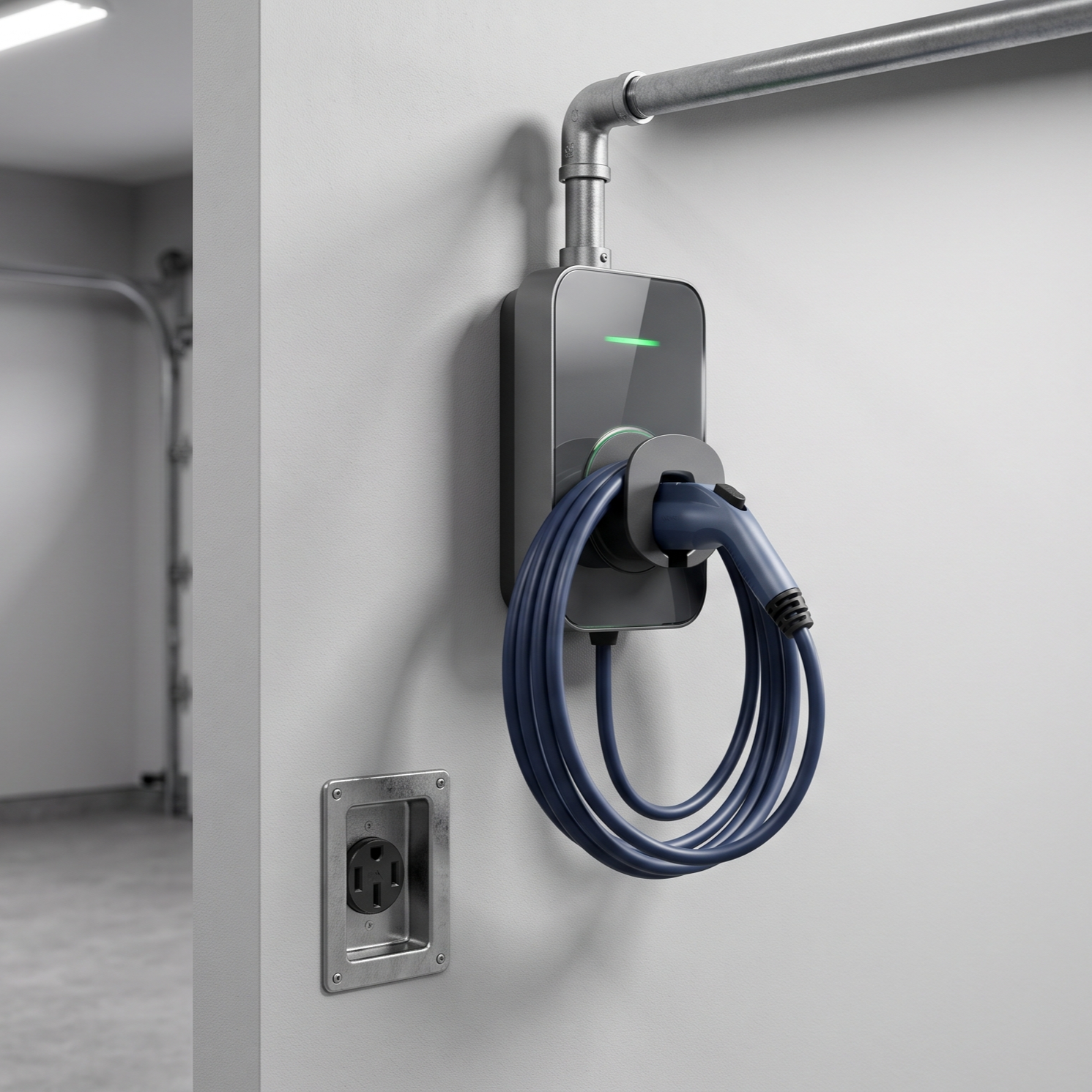
A plug-in (or "plug-connected") charger has a cord and plug that goes into a dedicated high-capacity outlet, much like a large appliance. The charger hangs on the wall, but it can be unplugged and removed. Installing one means putting in the proper dedicated outlet and circuit.
A hardwired charger has no plug — its wiring connects permanently into the home's electrical system through a dedicated circuit. It's a fixed installation, intended to stay where it's mounted. Both setups need a dedicated circuit sized for the charger; the difference is whether that circuit terminates in an outlet or directly into the unit.
Flexibility and Portability
This is where plug-in shines. Because it unplugs, a plug-in charger is easy to remove if you move homes, simple to swap out if you upgrade to a newer model, and quick to replace if the unit ever fails — you disconnect one and plug in another without rewiring. That convenience appeals to renters, anyone who expects to move, and people who like the option to change equipment easily.
A hardwired charger trades that portability for permanence. Removing or replacing it means an electrician disconnecting and reconnecting the wiring, so it's less convenient to change. For someone settled in their home who wants a permanent, integrated setup, that permanence isn't a downside.
| Factor | Plug-In | Hardwired |
|---|---|---|
| Portability | Unplugs and moves with you | Fixed installation |
| Replacing the unit | Easy — unplug and swap | Needs an electrician |
| Power potential | Limited by outlet rating | Can support higher levels |
| Outdoor/harsh conditions | Outlet adds an exposure point | Sealed, better suited |
| Best for | Renters, movers, easy swaps | Settled homes, max charging |
Power and Performance
If you want the fastest possible home charging, hardwired has the edge. Plug-in chargers are limited by the outlet rating they connect to, which caps their power. Hardwired installations can support higher amperage levels, allowing the quickest home charging speeds for vehicles that can accept them. For a household with a long daily commute or a vehicle that benefits from faster charging, that higher ceiling can matter. For everyday overnight charging, a plug-in unit is often more than fast enough.
Durability and Conditions
Where the charger lives affects the choice, too. An outlet is another connection point, and in outdoor or harsh environments — heat, humidity, salt air, dust — that connection can become a weak spot over time if not properly rated and protected. A hardwired unit removes the outlet from the equation, with a sealed, permanent connection that holds up better in tough conditions. For an outdoor installation in a demanding climate, hardwired is often the more durable choice; for a sheltered garage, a properly installed plug-in unit does fine.
Think about your timeline in the home. If you might move or expect to upgrade your charger as EV technology evolves, the portability of a plug-in unit is valuable. If you're settled and want the fastest, most permanent setup — especially outdoors — hardwired is usually the better long-term fit.
Why Either Way Needs an Electrician
Both options require a dedicated circuit sized correctly for the charger's load, and that circuit ties into your electrical panel. Depending on your panel's available capacity, an EV charger may also require a panel evaluation or upgrade to handle the additional draw safely. An electrician determines whether your service can support the charger, installs the dedicated circuit and the correct outlet or wiring, and ensures the work is properly permitted and inspected. Because an EV charger is a substantial, continuous load, correct installation is essential for safety and reliable charging.
Frequently Asked Questions
Neither is universally better — they suit different needs. Plug-in chargers are portable and easy to swap or replace, which is great for renters and movers. Hardwired chargers can support higher power levels and hold up better outdoors, which suits settled homeowners who want maximum charging speed and a permanent setup. Your priorities and situation decide.
Up to a point. A plug-in charger is limited by the outlet’s rating, which caps its power. A hardwired charger can be set up for higher amperage and, with it, faster charging for vehicles that accept it. For typical overnight charging, plug-in is usually fast enough; for the highest home charging speeds, hardwired has the advantage.
Yes. Both a plug-in and a hardwired EV charger require a dedicated circuit sized for the charger's load, running from the electrical panel. The difference is whether that circuit ends in a dedicated outlet (plug-in) or connects directly to the unit (hardwired). Either way, it's a significant circuit that an electrician should install.
Often, yes. An outlet is an extra connection point that can be a weak spot outdoors, where heat, humidity, salt air, and dust take a toll over time. A hardwired charger has a sealed, permanent connection with no outlet exposed to the elements, which tends to hold up better in harsh outdoor conditions when installed properly.
It depends on your panel's available capacity. An EV charger is a large, continuous load, and if your service is already near its limit, you may need a panel evaluation or upgrade to add it safely. An electrician checks your capacity first and advises whether your existing panel can handle the charger or needs upgrading.
It's not a recommended DIY project. An EV charger requires a properly sized dedicated circuit tied into your panel, a correct outlet or wiring connections, and compliance with safety standards and permitting. Given the high continuous load involved, a licensed electrician should handle the installation to ensure it's safe, reliable, and inspected. It's also worth thinking about placement and cable length before installation day. Where the charger sits relative to where you park, which side the vehicle's charge port is on, and how far the cable needs to reach all affect how convenient daily charging will be. A few minutes of planning the location up front avoids a charger that works fine electrically but is awkward to use every day, and it lets the electrician route the circuit cleanly the first time. Getting both the electrical sizing and the physical placement right at the same time is what makes a home charging setup something you stop thinking about, because it simply works every night without fuss.
Match the Charger to Your Situation
A plug-in EV charger offers portability and easy swaps; a hardwired charger offers higher power potential and durability, especially outdoors. Decide based on whether you value flexibility or maximum, permanent performance, and where the unit will live. Either way, the install needs a properly sized dedicated circuit — and possibly a panel check — so an electrician sets it up safely for years of reliable charging.
Ready to set up home EV charging? — Get your panel evaluated and the right charger installed on a safe, dedicated circuit. Kennedy Electric serves Citrus, Hernando, and Pasco Counties. License #EC13011268. Call (352) 251-2795.
