

Can You Be Liable for Unlicensed Electrical Work in Florida?
Why does a small electrical job suddenly feel risky the moment someone mentions “liability”? You fix one outlet or hire a cheap handyman, and now you are wondering if that decision could come back to bite you hard.
Most homeowners search this topic after a jolt of anxiety, not curiosity. A neighbor mentions fines. An inspector flags work during a sale. An insurance company asks who did the electrical repairs after a problem. The moment usually happens in a very real place, like standing in the garage looking at a panel someone else worked on, or staring at an inspection report, wondering if a shortcut just turned into a legal problem. When unlicensed electrical work gets misunderstood or brushed off in Florida, homeowners can face financial responsibility, denied insurance claims, and serious legal exposure they never expected.
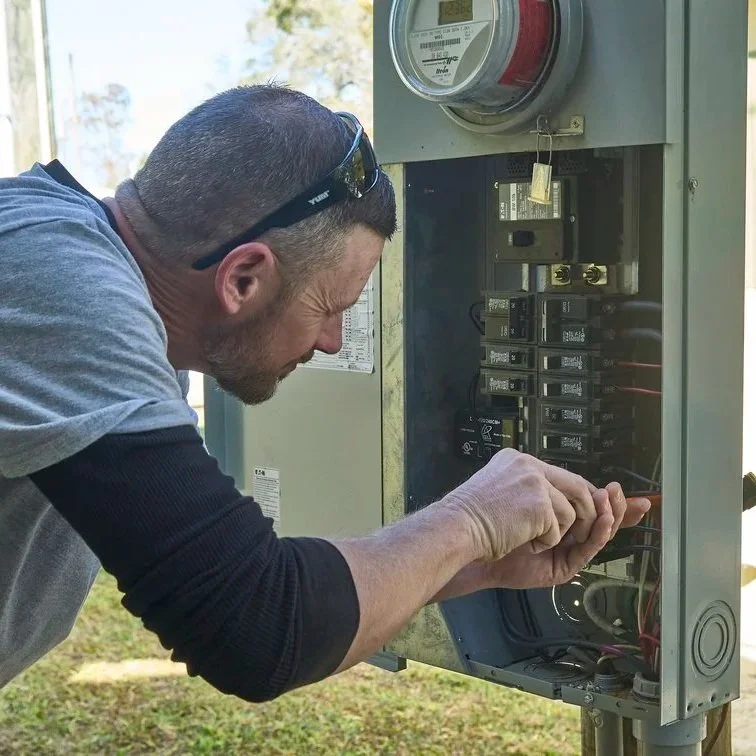
Licensed electrician servicing exterior electrical meter panel, ensuring compliant installation, safe connections, and protecting homeowners from liability risks.
Why Unlicensed Electrical Work Happens So Often in Florida
Unlicensed electrical work is common in Florida for reasons that feel practical at the time. Homes need frequent repairs. Costs matter. Homeowners get told that a job is “minor” or “not a big deal.” A handyman offers to help. A friend says they know what they are doing. The work gets done quietly, and everything appears fine.
Florida’s housing stock includes a huge mix of older homes, rentals, vacation properties, and quick renovations. That environment creates pressure to move fast and keep costs down. Electrical work often feels less visible than plumbing or structural changes, so it gets treated casually. Outlets still work. Lights turn on. Nothing seems wrong.
The problem is that Florida law treats electrical work very differently from what homeowners expect. Licensing exists to protect safety, but it also defines responsibility. When work is done without proper licensing, the liability does not disappear just because the job “worked.” It often shifts directly onto the homeowner.
The Common Mistake of Thinking Liability Only Applies to Contractors
One of the biggest misconceptions homeowners have is that liability only applies to the person who performed the unlicensed work. That assumption feels logical, but Florida law does not work that way.
Homeowners can be held responsible for unlicensed electrical work performed on their property, especially if they knowingly hired someone without proper credentials or allowed the work to happen. Even if the homeowner did not fully understand licensing requirements, responsibility may still fall on them as the property owner.
That misunderstanding becomes painful when something goes wrong. Electrical fires, shock injuries, equipment damage, or failed inspections often trigger deeper investigation. At that point, who performed the work matters a lot. If the work was unlicensed, liability questions start landing squarely on the homeowner, not just the person who held the tools.
What Counts as Unlicensed Electrical Work in Florida
Many homeowners underestimate how much electrical work requires a license in Florida. Swapping light fixtures or replacing outlets may seem harmless, but the scope matters. Altering wiring, adding circuits, modifying panels, installing major equipment, or performing work beyond simple like-for-like replacements often requires a licensed electrician.
Hiring a handyman does not automatically make work legal. Even skilled individuals cannot legally perform electrical work that requires licensing unless they hold the proper credentials. Verbal assurances like “I’ve done this for years” or “I do this all the time” do not override Florida licensing laws.
DIY work also falls into this category. Homeowners are allowed to perform certain work on their own primary residence, but that does not remove responsibility. If DIY work causes damage, fails inspection, or violates code, the homeowner still carries the consequences. Unlicensed does not just mean someone else did the work. It means the work was done without the required legal authority.
How Liability Shows Up in Real Life
Liability for unlicensed electrical work rarely shows up immediately. It surfaces later, often at the worst possible time. A home sale inspection flags noncompliant work. An insurance claim gets denied after an electrical fire. A tenant or guest gets injured. A renovation uncovers unsafe wiring.
When those situations arise, documentation becomes critical. Permits, licenses, and inspection records protect homeowners. Without them, responsibility becomes difficult to shift elsewhere. Insurance companies often investigate electrical causes closely, and unlicensed work gives them grounds to limit or deny coverage.
Homeowners are often shocked to learn that insurance policies may exclude damage caused by unpermitted or unlicensed work. That means repairs, rebuilding costs, and liability claims can fall entirely on the homeowner, even if they did not personally perform the work.
Why Insurance Companies Care So Much About Licensing
Insurance companies are not just looking for reasons to deny claims. They assess risk. Licensed electrical work reduces risk by adhering to standards, conducting inspections, and ensuring accountability.
Unlicensed work removes those safeguards. There is no regulatory oversight, no inspection trail, and no professional liability coverage attached to the work. From an insurance perspective, that represents an unknown risk.
In Florida, where electrical failures can lead to significant fire damage due to heat and humidity, insurers scrutinize electrical causes closely. If an investigation traces damage back to unlicensed work, coverage may be reduced or denied. Homeowners then face repairs and potential liability out of pocket.
That risk often surprises homeowners because nothing seemed wrong before the incident. Liability does not depend on intent or good faith. It depends on compliance and documentation.
The Shortcut Trap That Creates Legal Exposure
Many cases of unlicensed electrical work start as shortcuts. A homeowner wants to save money. A project feels small. A timeline feels tight. Someone offers to help cheaply and quickly.
Those shortcuts often work until they do not. Electrical systems fail quietly and unpredictably. Problems may not show up for years. When they do, the cost of fixing the shortcut often far exceeds what proper licensed work would have cost initially.
Florida law treats shortcuts harshly because the consequences can be severe. Fires, injuries, and property damage affect not just homeowners but neighbors and communities. Licensing exists to prevent those outcomes. Skipping it transfers risk directly to the homeowner.
Why Liability Does Not Disappear When You Sell the Home
Some homeowners assume liability disappears once a home is sold. That assumption can be dangerous. If unlicensed work was not disclosed and later causes damage or injury, sellers may face legal claims even after the sale.
Real estate transactions rely heavily on disclosure and inspection. If unlicensed work is discovered later and linked to misrepresentation or omission, liability questions can reopen. Even if the homeowner did not perform the work personally, knowledge or reasonable awareness can matter.
This is why unlicensed work often becomes a problem during home sales. Buyers, inspectors, and lenders scrutinize electrical systems closely. Fixing unlicensed work after the fact often requires opening walls, replacing components, and obtaining retroactive permits where possible.
DIY Work and Liability Are Not the Same Thing
DIY electrical work carries its own set of risks. Florida allows homeowners to perform some work on their own residence, but that does not remove liability. DIY work must still meet code and pass inspection where required.
If DIY work causes damage, injury, or fails inspection, the homeowner bears full responsibility. There is no contractor insurance to fall back on. There is no licensing board to pursue for remediation.
Many homeowners assume DIY work is safer legally because they are working on their own home. In reality, it concentrates liability rather than reducing it. Proper permits, inspections, and code adherence remain essential protections.
Why Florida Takes Electrical Licensing Seriously
Florida’s enforcement of electrical licensing reflects real-world risk. Heat, storms, lightning, and high electrical demand create conditions that quickly escalate failures.
Electrical licensing creates accountability. Licensed electricians carry insurance, stay up to date on code changes, and submit work for inspection. That structure protects homeowners, insurers, and the public.
When unlicensed work bypasses that system, risk increases for everyone involved. Florida law imposes responsibility on property owners who allow or commission such work. That approach discourages shortcuts and reinforces safety standards.
How Licensed Electrical Work Protects Homeowners
Licensed electrical work protects homeowners in multiple ways beyond safety. It creates a paper trail. Permits and inspections document compliance. Contractor insurance provides coverage if something goes wrong.
That protection matters during insurance claims, home sales, and disputes. Licensed work transfers risk appropriately rather than leaving homeowners exposed.
Companies like Kennedy Electric operate within this framework because it protects clients in the long term. Proper licensing is not just a formality. It is a shield against liability that homeowners often do not realize they need until it is too late.
What Homeowners Should Do If They Suspect Unlicensed Work
Homeowners who suspect unlicensed electrical work should not ignore it. The risk does not go away with time. Evaluation by a licensed electrician helps identify issues early.
In many cases, unlicensed work can be corrected and brought into compliance before it causes damage or becomes a legal issue. Addressing problems proactively costs less than reacting after an incident. Understanding where liability lies allows homeowners to make informed decisions rather than hope problems stay hidden.
Living With Confidence Instead of Worry
Homes should feel safe, not legally stressful. Liability questions create anxiety because they threaten finances and security.
Knowing how Florida treats unlicensed electrical work allows homeowners to protect themselves. Licensed work, permits, and inspections are not red tape. They are safeguards. When electrical work is done properly, homeowners sleep better knowing responsibility is shared appropriately and risks are managed instead of ignored.
FAQs
Homeowners can face fines, required corrections, or legal consequences if unlicensed electrical work is discovered, especially when permits or inspections were required.
Hiring a handyman does not protect homeowners if the work requires a licensed electrician, and liability may still fall on the property owner.
Insurance coverage may be reduced or denied if damage is traced back to unlicensed or unpermitted electrical work.
Homeowners may perform limited work on their own primary residence, but permits, inspections, and code compliance are still required.
Having a licensed electrician evaluate and correct the work is the best way to reduce risk and bring the system into compliance.
