
Buzzing in the Breaker Panel: Normal Hum or Warning Sign?
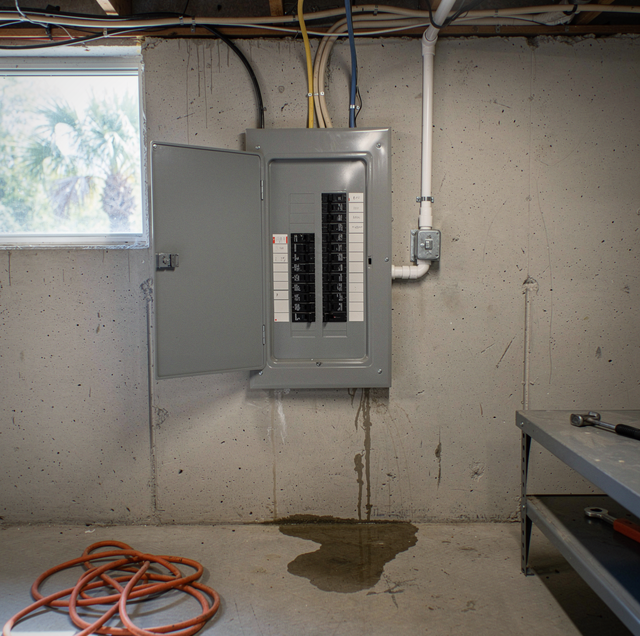
Every breaker panel makes some sound. Current moving through metal, the small mechanical parts inside each breaker, and any low-voltage device wired near the box all vibrate at twice the frequency of household current, about 120 times a second, the whole time your home has power. That baseline hum is normal, and most homeowners never notice it. A buzz is louder, less even, and usually traceable to one spot in the box. Telling the two apart decides whether you can let the sound go or whether it's time to pick up the phone.
What Normal Panel Noise Sounds Like
A panel's baseline hum comes from a few sources working at once. The main breaker, and often several branch breakers, contain small electromagnets that vibrate slightly at twice the frequency of household current. If a doorbell chime unit, an intercom system, or a low-voltage lighting control lives inside or near the panel, that adds its own steady hum on top. None of it changes pitch when an appliance switches on, and none of it grows louder over days or weeks. It stays quiet enough that you'd have to stand within a few feet of the panel, in a quiet room, to notice it at all. If that's the sound you're hearing, the panel is doing exactly what it was built to do.
What Turns a Hum into a Buzz
A buzz reads differently than a hum, and the difference is usually obvious once you know to listen for it. Instead of a flat, even tone, a buzz tends to crackle, flutter, or sizzle. It often gets louder when a specific appliance runs, such as the air handler or the range, and it may be tied to a single breaker rather than the panel as a whole. Some homeowners describe it as a light frying sound, others as a low electrical growl that wasn't there a few months earlier. Any noise that changes with what's running in the house, or that has gotten more noticeable over time, has moved past the baseline hum and into territory worth checking out.
Loose Lugs and Weak Connections
Every wire entering a panel terminates at a lug, a metal clamp tightened to hold that wire firmly against the breaker or bus bar. That connection gets set once during installation, but it doesn't always stay put. Panels heat and cool with every cycle of current running through them, and that thermal cycling, repeated across years of use, can work a connection loose a fraction of a turn at a time. A loose lug forces current to cross a slightly wider gap than it should, and that gap generates both heat and the crackling or buzzing sound you're hearing. Loose connections are among the most common reasons a panel buzzes, and they're also one of the fixes an electrician can often make without replacing major components, using a torque wrench to reset each connection to the manufacturer's specification.
Worn or Failing Breakers
A breaker is a mechanical device, built around a switch, a bimetallic strip that responds to sustained overload, and an electromagnet that trips instantly on a short circuit. Every time it trips and gets reset, and every year it sits carrying current, the internal contacts wear a little more. A worn breaker can start to hum or buzz as current arcs slightly across contacts that no longer close as cleanly as they did when new. This kind of buzzing usually stays confined to one breaker rather than spreading across the panel, and it tends to get louder or more erratic in the weeks before that breaker fails outright.
Arcing and Overloaded Circuits
Arcing occurs when current jumps across a small gap rather than flowing through a solid connection, whether a loose lug, worn breaker contacts, or damaged wire insulation causes that gap. It produces real heat, a distinct crackling or sizzling sound, and over time it leaves physical damage behind: pitted metal, discoloration, even small scorch marks. An overloaded circuit, one asked to carry more current than its rating allows, makes all of this worse. It keeps a breaker running hot and closer to its trip point for longer stretches, which accelerates wear on the same contacts that are already prone to buzzing.
Signs the Buzzing Has Become a Warning
Not every buzz means an emergency, but a handful of signs move a panel from something to watch to something to call about today:
- A burning or hot-plastic smell near the panel, even a faint one.
- The panel's outer cover feeling warm to the touch, when it normally sits at room temperature.
- Lights that flicker or dim in a pattern that matches the buzzing.
- Discoloration, soot, or scorch marks visible on the panel's exterior or around the breakers.
- Buzzing that has grown louder, more frequent, or spread to more than one breaker over the past few weeks.
Any one of these, paired with a buzz that wasn't there before, is a reason to stop watching and start calling.
What You Can Safely Check From Outside the Panel
There's a real limit to how far you should take this on your own, and that limit is the panel cover. Everything useful you can learn about a buzzing panel can be observed from outside it:
- Listen for whether the sound is steady and even, or changes in pitch and volume.
- Notice whether it lines up with a specific appliance, like the AC or dryer, switching on.
- Smell the air near the panel for anything like burning plastic or hot wire insulation.
- Hold the back of your hand near the cover, close but not touching, to sense whether it's giving off heat. If you feel warmth or smell anything burning, stay away from the panel and call.
- Watch whether nearby lights flicker or dim when the buzzing happens.
That's the full extent of a safe check you can run yourself. None of it requires touching anything inside the enclosure, and none of it should.
Why the Panel Cover Stays Closed
A breaker panel carries dangerous voltage even when the main breaker is switched off. The service conductors and the line-side lugs feeding the main breaker remain energized as long as the outside meter is connected, which it almost always is. Switching the main off does not make them safe. Diagnosing a buzz correctly means identifying exactly which connection, breaker, or section of bus bar is causing it, work that calls for insulated tools, meters rated for the job, and training in how to test a live panel without becoming part of the circuit. Removing the cover to look inside, even briefly, puts you next to exposed conductors that can arc, shock, or burn without warning. That risk is exactly why the safe move for a homeowner stops at the outside of the box.
What an Electrician Checks During a Panel Repair
A licensed electrician walks into a buzzing-panel call with tools that go past what a homeowner can safely use. A thermal imaging camera detects heat radiating from the panel's surface, which can narrow down where to look before the cover comes off. Once it's open, it pinpoints the hot connection directly. Once inside, the check usually includes testing each breaker's connection torque against the panel manufacturer's specifications, inspecting the bus bar for pitting or discoloration that indicates past arcing, and testing individual breakers under load to see whether one has begun to fail. A loose lug gets retightened. A worn breaker gets swapped for a new one. If the panel itself shows widespread corrosion, an outdated design, or damage affecting multiple components rather than a single isolated part, the conversation shifts from repair to a panel upgrade.
A panel that hums quietly and steadily is doing normal work. A panel that buzzes, crackles, or grows louder over time is telling you something changed inside it: a loosening connection, a breaker wearing out, or current arcing somewhere it shouldn't. You can listen, smell, and watch for warning signs from outside the panel. Diagnosing and fixing what's actually happening inside is the job of someone trained to open that cover safely.
Frequently Asked Questions
Usually not. An electrician can switch off the main breaker to de-energize the branch breakers and the bus bar, leaving the diagnosis to trained hands, but the service conductors and line-side lugs remain live regardless. Most of the inspection, torque-testing connections, and checking breakers under load happens with the panel's main off and proper precautions taken around the parts that can't be shut down from inside the house.
Buzzing that comes from the whole panel, or that shifts location over time, more often points toward the bus bar or main lugs than toward a single breaker's terminal connection or worn contacts. That distinction matters because it changes where an electrician starts looking first.
Metal expands and contracts as it heats and cools, so a panel can sound very slightly different on a hot afternoon than it does on a cool morning even when nothing is actually wrong. Normal temperature-driven variation stays subtle and doesn't come with heat, smell, or visible damage. A change that's loud, persistent, or paired with any warning sign isn't explained by weather alone.
Flipping a breaker off and back on is something homeowners do safely all the time, but it doesn't address whatever is actually causing the buzz, and resetting a breaker that's arcing or overheating can momentarily quiet the sound while the wear behind it keeps progressing. If a breaker buzzes, the safer move is to leave it as is and have it checked instead of cycling it repeatedly.
Yes. A newly installed panel can buzz if a connection wasn't torqued to the correct specification during installation, or if a breaker has a factory defect that only shows up once it's carrying a real load. A fresh installation isn't immune to loose connections; it simply hasn't gone through the years of thermal cycling that gradually work an older connection loose.
There's no fixed timeline, since the pace depends on what's actually causing the sound. A single loose lug might buzz for months with no other symptoms, while active arcing near flammable material can ignite within hours. That unpredictability is exactly why any new buzzing, especially if paired with heat or smell, is worth having checked promptly instead of timed against a calendar.
Schedule a panel inspection — a licensed electrician traces the source of the buzzing, checks breaker connections and bus bar condition, and tells you plainly whether a repair or a full panel upgrade is the right next step. Kennedy Electric serves Citrus, Hernando, and Pasco Counties. License #EC13011268. Call (352) 251-2795.