

Overloaded Circuits: Signs, Dangers, and How to Fix Them
Why does one breaker always trip when nothing “extra” is even running? The house feels like it is constantly one light switch away from going dark.
Most homeowners start looking up overloaded circuits after living through that irritation for far too long. The coffee maker shuts off when the microwave starts. The living room lights dim every evening. Half the garage outlets suddenly stop working in the middle of a project. In Florida homes, where air conditioning, pool equipment, and everyday appliances all compete for power, overloaded circuits quickly turn into daily frustration. People begin changing habits, unplugging things, or quietly worrying about whether something more serious is going on behind the walls.
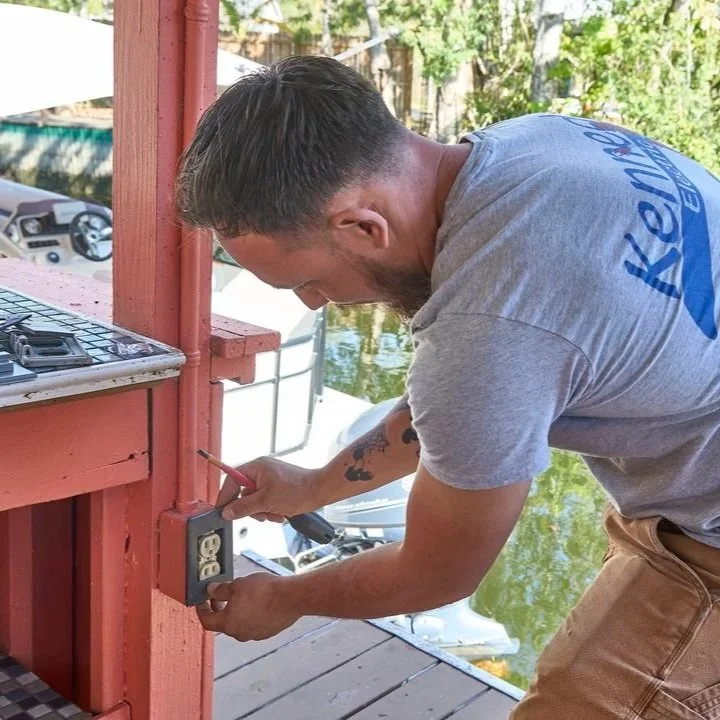
Electrician repairing outdoor outlet wiring to resolve overloaded circuit issues, improving safe power access and preventing breaker trips.
When Overloaded Circuits Start Running Your Routine
Overloaded circuits are rarely subtle once they settle in. They show up in small but persistent ways that disrupt how a home functions. Breakers trip repeatedly, often on the same circuit. Lights flicker when larger appliances kick on. Outlets feel unreliable, especially in kitchens, garages, and laundry areas where multiple devices are used together. Homeowners often describe the house as feeling tired or stretched thin, even if everything technically still works most of the time.
An overloaded circuit occurs when too much electrical demand is placed on a single circuit, exceeding its safe design limits. Every circuit has a limit, based on wire size, breaker rating, and how the system was originally laid out. When modern usage exceeds that limit, the breaker trips to stop overheating and damage. That safety feature protects the home, but repeated tripping signals a deeper problem.
In many Florida homes, overloaded circuits develop slowly. New appliances get added. Garage freezers appear. Outdoor kitchens and pool systems go in. Home offices quietly stack up monitors, printers, and chargers. The electrical system stays the same while demand increases. Over time, the margin disappears, and the circuit starts complaining in ways homeowners can no longer ignore.
The Mistake Of Assuming One Bad Outlet Is To Blame
A common homeowner mistake is focusing on the last thing plugged in. The new air fryer gets blamed. The garage fridge becomes suspicious. Someone swaps outlets or avoids one plug entirely, thinking the problem lives there. While outlets can fail, overloaded circuits usually affect everything connected to them, not just one location.
That misunderstanding matters because it delays proper fixes. Avoiding one outlet does not reduce the circuit's overall electrical load. It simply shifts usage around. The same wires still carry too much current when multiple devices run. Over time, heat builds up inside walls and junction boxes that homeowners cannot see.
Another outdated assumption is that newer homes do not experience overloaded circuits. While older homes face a higher risk due to outdated layouts, newer homes can still suffer overload when circuits serve more devices than intended. Builders often design to minimum standards, not future lifestyle changes. Ignoring the broader circuit design allows overload conditions to persist and worsen quietly.
What Overloaded Circuits Are Actually Doing Inside Your Walls
Overloaded circuits generate excess heat. Heat builds along the wiring, at connection points, and inside breakers. Electrical insulation degrades more rapidly when subjected to repeated heating cycles. Connections loosen slightly as materials expand and contract. Over time, resistance increases, which creates even more heat under the same load.
Homeowners rarely see these changes directly. Walls hide wiring. Panels sit closed. Everything appears fine until something fails or smells wrong. Breakers that trip often weaken internally, losing their ability to respond accurately. Wiring insulation becomes brittle. Outlets discolor or loosen. These changes raise the risk of electrical fires, especially when overload conditions persist for years.
Understanding overloaded circuits requires viewing them as ongoing stressors rather than isolated incidents. Each overload episode adds wear. Each reset pushes the system a little further. Fixing the problem early stops that cycle before hidden damage becomes visible or dangerous.
Why Florida Homes Are Especially Prone To Circuit Overload
Florida homes experience electrical demand patterns that push circuits to the limit. Air conditioning systems run frequently and draw significant current. Pool pumps, heaters, and outdoor lighting add a steady load. High humidity leads to dehumidifiers and ventilation equipment running longer than expected.
Seasonal overlap amplifies the issue. Summer afternoons combine cooling demand with cooking, laundry, and entertainment use. Homes that feel fine in winter suddenly struggle under peak summer loads. Homeowners experience nuisance breaker trips that seem weather-related, even though the real issue is circuit capacity being exceeded.
Aging neighborhoods add another factor. Many Florida homes were built before modern electrical usage became standard. Circuits that once served lighting now feed multiple outlets packed with electronics. Kitchens and garages often lack sufficient dedicated circuits for today’s appliances. Overloaded circuits thrive where electrical layouts no longer match real life.
Why Breakers Tripping Is A Warning, Not A Quirk
Many homeowners treat breaker trips as minor inconveniences. Flip the switch. Move on. That habit creates a false sense of normalcy. Breakers trip because they detect unsafe conditions. Repeated tripping means the circuit repeatedly reaches unsafe levels.
Every trip produces heat within the breaker and wiring. That heat weakens components and reduces reliability. Over time, breakers may fail to trip when they should or trip too late. Wiring insulation deteriorates gradually. Connection points loosen. These changes increase fire risk without providing obvious warning signs.
Overloaded circuits do not always announce themselves dramatically. Sometimes the signs stay subtle for years. Recognizing breaker trips as warnings shifts the homeowner's mindset from annoyance to awareness. Electrical systems communicate through behavior. Ignoring those signals allows problems to grow quietly.
How DIY Workarounds Make Overloaded Circuits Worse
When overloaded circuits cause problems, homeowners often respond with workarounds. Power strips appear. Extension cords run across rooms. Appliances get moved to different outlets. While these steps feel practical, they rarely reduce electrical load and often increase risk.
Power strips concentrate multiple devices onto a single outlet, which can worsen overload conditions. Extension cords add resistance and heat, especially when used long-term. Moving appliances around does not change how much current the circuit carries when devices run simultaneously.
True fixes address circuit design and capacity, not outlet convenience. Electricians evaluate which devices share circuits, how loads overlap, and where demand peaks. Without that analysis, DIY solutions shuffle stress around rather than removing it. Overloaded circuits demand structural solutions, not behavioral ones.
What Fixing Overloaded Circuits Actually Involves
Fixing overloaded circuits starts with understanding demand. Electricians identify which circuits carry heavy loads and which remain underused. They examine how appliances interact and where peak demand occurs. Sometimes the solution involves redistributing outlets across circuits to balance usage.
In other cases, adding dedicated circuits solves the problem. High-demand appliances like microwaves, refrigerators, garage equipment, or pool systems often benefit from their own circuits. That separation prevents overlap that pushes shared circuits beyond their limits.
Some homes require panel adjustments or upgrades when existing capacity cannot support current demand. That decision depends on overall service size, circuit layout, and future needs. The goal is not to add capacity unthinkingly, but to align electrical infrastructure with how the home actually operates day to day.
Why Timing Makes Overloaded Circuits More Urgent
Overloaded circuits rarely improve on their own. Wear compounds. Demand increases. Seasonal usage intensifies. Homes that tolerate overload in mild seasons struggle under peak conditions. Florida summers reveal electrical weaknesses that winter masks.
Aging components also matter. Wiring insulation, breakers, and outlets degrade over time. Circuits that once handled borderline loads become more vulnerable as materials age. Small issues become bigger ones without intervention.
Addressing overloaded circuits sooner reduces risk and disruption. Waiting until failure forces rushed decisions and limits options. Proactive fixes preserve comfort and safety while protecting the electrical system from accelerated wear.
How Overloaded Circuits Affect Daily Comfort And Confidence
Electrical problems change how homeowners use their homes. People avoid running appliances together. Garages become unusable for tools or chargers. Kitchens feel cramped by electrical limitations. These adjustments represent lost convenience and growing frustration.
There is also a mental burden. Homeowners worry about what might trip next. Guests get warned. Certain rooms feel unreliable. That tension undermines confidence in the home itself.
Resolving overloaded circuits restores normalcy. Appliances run together without issue. Lights stay steady. Breakers stop tripping. The electrical system fades back into the background where it belongs. That reliability supports peace of mind as much as technical safety.
Why Professional Evaluation Matters
Overloaded circuits require trained evaluation because their symptoms overlap with those of other electrical issues. Flickering lights could signal loose connections. Tripping breakers could indicate faulty components. Distinguishing overload from other risks requires experience.
Electricians examine wiring size, breaker ratings, load patterns, and panel condition together. They consider how the home has evolved. In Florida, professionals often encounter homes where small changes accumulate into major overload problems.
Companies like Kennedy Electric regularly see homeowners surprised by how simple some fixes can be once the true cause becomes clear. Correcting overloaded circuits often involves targeted improvements rather than sweeping changes. That clarity saves time, money, and frustration.
Why Overloaded Circuits Are A Safety Issue, Not Just An Inconvenience
Electrical overload is one of the most common causes of residential electrical fires. Heat buildup inside walls and junction boxes ignites surrounding materials when insulation fails. Fires often start quietly and spread before detection.
Homeowners may never connect small electrical annoyances to serious risk. Overloaded circuits blur the line between normal behavior and unsafe conditions. Recognizing overload as a safety concern shifts priorities from tolerance to correction.
Electrical systems are designed with safety margins. Overload erodes those margins. Restoring them protects both property and occupants. Addressing overloaded circuits represents responsible home care, not overreaction.
FAQs
Frequent breaker trips, flickering lights, warm outlets, and appliances struggling when used together often indicate overloaded circuits. These signs usually affect the same areas repeatedly rather than appearing randomly.
Breakers reduce risk by shutting off power, but repeated overload still causes heat and wear over time. Persistent overload conditions increase fire risk even when breakers function as designed.
Newer homes can still experience overloaded circuits when usage patterns exceed the original design. Added appliances, home offices, and outdoor equipment often push circuits beyond their intended load.
Power strips do not reduce electrical load and often worsen overload by concentrating devices. True fixes involve adjusting circuit design or capacity rather than adding accessories.
Professional evaluation is recommended when breaker trips repeat, electrical issues affect daily routines, or new high-demand equipment is added. Early assessment prevents damage and safety risks.
