

Bathroom Electrical Safety Tips Every Homeowner Should Follow
Why does my bathroom outlet keep tripping every time I use the hair dryer? And why do I feel nervous plugging anything in when the counter is still damp?
You step out of the shower, the mirror is fogged up, the exhaust fan is humming, and you reach for your hair dryer. The outlet clicks off again. Now, half the bathroom is dark, the clock has been reset, and you are standing there, barefoot on tile, wondering if something is wrong behind the wall. That daily inconvenience is often the first warning sign. Bathroom electrical safety is not just about avoiding annoyance. It is about preventing shock, fire risk, and long-term wiring damage in one of the most moisture-heavy rooms in your home.
As an electrician working in Florida homes, I can tell you that bathrooms are among the most common places for electrical problems to surface. Heat, humidity, water, and high-draw appliances all collide in a small space. Following bathroom electrical safety tips protects both your family and your home’s wiring.
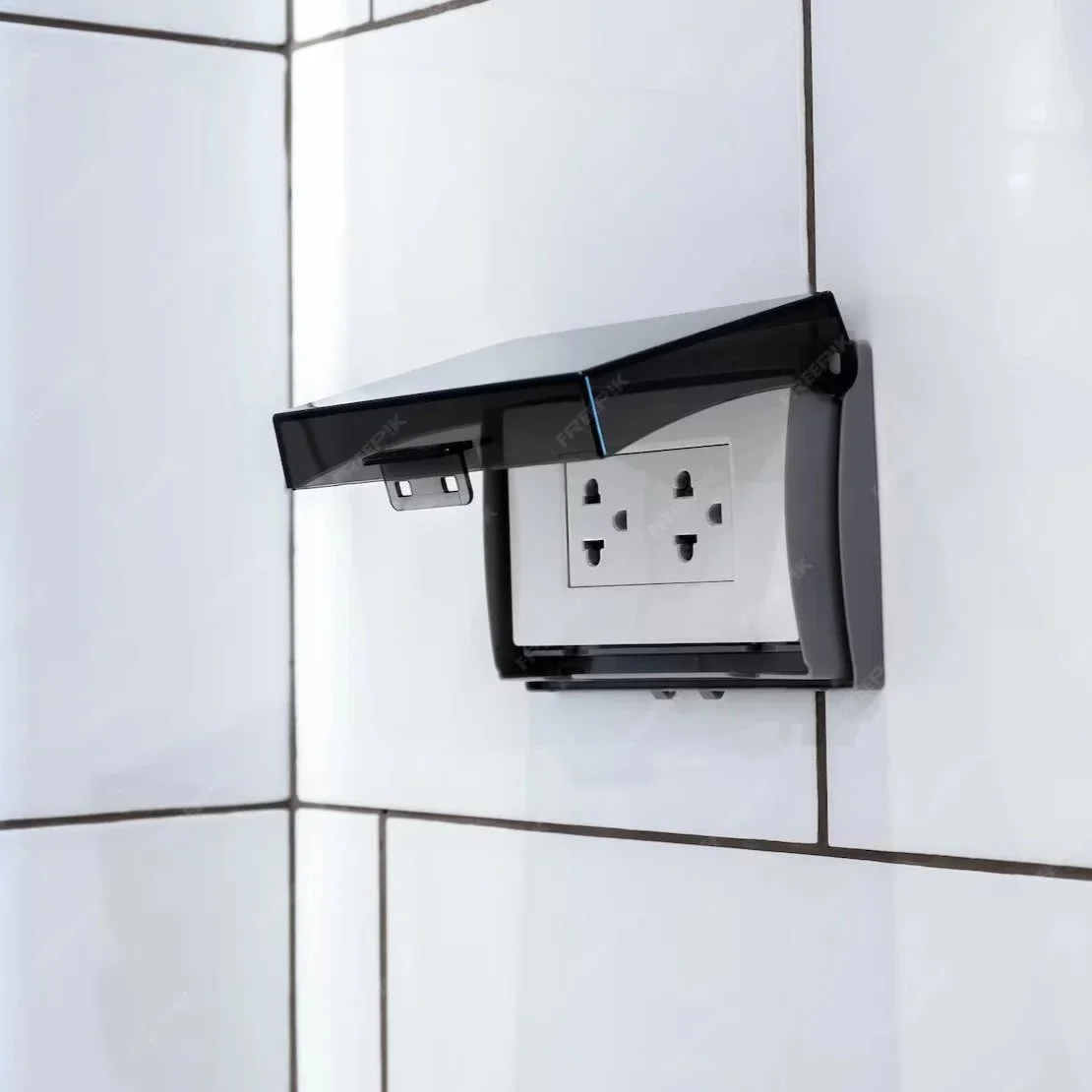
Water resistant bathroom outlet with protective cover demonstrating safe electrical installation for wet areas reducing shock risk and moisture exposure.
Why Bathrooms Are Naturally High-Risk Areas
Electricity and water do not mix. That statement sounds obvious, but the mechanics behind it matter. Water lowers the body’s electrical resistance. When your skin is wet, or you are standing on a damp tile floor, your body becomes a more effective path for electricity to travel.
Florida homes experience high humidity year-round. Even without visible water on the counter, moisture lingers in the air after showers. Steam settles inside outlet boxes, light fixtures, and exhaust fans. Over time, that moisture can contribute to corrosion at electrical connections.
Add high-wattage devices like hair dryers, curling irons, and space heaters, and you create a demanding environment. Appliances that draw significant current generate heat. Heat combined with moisture increases stress on wiring and connections. Understanding why bathrooms present an elevated risk helps homeowners take safety measures seriously rather than treating them as optional upgrades.
The Critical Role Of GFCI Protection
Ground fault circuit interrupter (GFCI) outlets are among the most important bathroom electrical safety features. A GFCI monitors the balance of current between hot and neutral wires. If it detects an imbalance that suggests electricity is flowing through an unintended path, possibly through a person, it shuts off power in milliseconds.
Florida building codes require GFCI protection in bathrooms. However, older homes may lack proper coverage, or the installed devices may have aged beyond reliable operation. Homeowners often focus on the inconvenience of a GFCI that trips, especially when using hair dryers.
Frequent tripping is not random. It usually signals a ground fault, a wiring issue, or a device drawing more current than the circuit can comfortably handle. Replacing a GFCI outlet with a standard outlet to stop the tripping removes a major layer of protection. Correct practice involves diagnosing why the device trips rather than eliminating the protection altogether.
Why Does My Bathroom Outlet Keep Tripping?
Many homeowners search “Why does my bathroom outlet keep tripping?” after repeated interruptions. In most cases, the outlet is part of a GFCI-protected circuit. The trip indicates a current imbalance.
Moisture intrusion is a common cause. Steam from showers can accumulate in outlet boxes over time, especially when ventilation is poor. Loose wiring connections behind the outlet can also create small leakage currents. Even a slightly damaged hair dryer cord can contribute to an imbalance.
Another possibility involves overloaded circuits. Some bathrooms share circuits with adjacent rooms. Running a hair dryer while other devices operate elsewhere on the same circuit may push the total load toward the breaker limit. When the breaker or GFCI reacts, homeowners often blame the outlet. Investigating the broader circuit layout helps identify whether the issue stems from wiring, moisture, or excessive demand.
Avoiding Extension Cords And Power Strips In Bathrooms
One of the most common bathroom electrical safety mistakes involves extension cords and power strips. Counters rarely have as many outlets as modern families need. People plug in hair tools, electric toothbrush chargers, night lights, and phone chargers simultaneously.
Extension cords introduce additional connection points. In a damp environment, those connections become potential shock hazards. Power strips are often not rated for bathroom use, especially near sinks. If water splashes or steam accumulates inside the strip, the risk of shock increases significantly.
Permanent solutions involve installing additional GFCI-protected outlets where needed. While extension cords feel convenient, they are temporary devices not designed for ongoing use in high-moisture areas. Reducing reliance on portable wiring improves both safety and reliability.
Lighting, Exhaust Fans, And Moisture Control
Bathroom electrical safety extends beyond outlets. Lighting fixtures and exhaust fans play important roles. Proper ventilation reduces humidity buildup, which in turn reduces corrosion at electrical connections.
Exhaust fans should be vented to the exterior, not into attics. Improper venting traps moisture in enclosed spaces, affecting wiring above ceilings. Over time, condensation can accumulate on conductors and fixtures, leading to deterioration.
Light fixtures rated for damp locations should be installed in areas exposed to high moisture. Using fixtures not designed for bathroom conditions increases the risk of corrosion and electrical failure. Matching equipment ratings to environmental conditions protects long-term performance.
The Hidden Risk Of Loose Or Warm Outlets
Outlets that feel warm to the touch or have loose plugs should never be ignored. Loose connections create resistance. Resistance produces heat. Heat degrades insulation and can lead to arcing behind the wall.
Bathroom outlets experience frequent use and plug cycles. Repeated insertion and removal of hair dryer plugs can loosen internal contact springs. Over time, the plug may fit less securely. That loose fit increases the chance of sparking or small arcs.
If you notice discoloration on outlet plates or smell faint burning odors, those are warning signs. Addressing them early prevents larger issues. Replacing worn receptacles and tightening wiring connections improves both shock protection and fire safety.
Common False Assumption: It’s Just A Small Bathroom
A common outdated belief is that small bathrooms pose minimal electrical risk because they have fewer devices. In reality, limited space often means outlets and water sources are closer together. That proximity increases exposure risk.
Some homeowners assume that because guests rarely use their bathroom, it does not require updated protection. Electrical safety does not depend on frequency of use. A single incident involving water and electricity can have severe consequences.
Proper GFCI protection, adequate ventilation, and well-maintained outlets matter regardless of room size. Dismissing safety measures based on square footage creates unnecessary vulnerability.
Children And Bathroom Electrical Safety
Bathrooms are frequent sites of family routines. Children may plug in night lights, experiment with switches, or leave devices near sinks. Childproof outlet covers provide an extra layer of protection in homes with young children.
Education plays a key role. Teaching children not to touch electrical devices with wet hands and to keep appliances away from water reduces accidental exposure. Clear rules about unplugging devices after use reinforce good habits.
Even older children and teenagers may underestimate risk. Using hair tools near running sinks or placing charging devices on damp counters can be dangerous. Reinforcing simple safety practices prevents avoidable accidents.
Seasonal Humidity And Florida Conditions
Florida’s climate keeps bathroom electrical systems under constant stress. High ambient humidity persists even when showers are not running. Ongoing moisture exposure accelerates corrosion in outlet boxes and fixtures.
Storm season can introduce power surges that affect bathroom circuits and the rest of the home. Whole home surge protection adds resilience against unexpected voltage spikes. While not exclusive to bathrooms, surge protection benefits every circuit, including those serving high moisture areas.
Compounding wear means small vulnerabilities become more pronounced over time. Annual inspection of GFCI devices and periodic testing using built-in test buttons confirm that protective features remain functional.
Professional Evaluation And Long-Term Protection
Bathroom electrical safety tips are most effective when paired with a professional evaluation. Electrical panels, grounding systems, and circuit layouts influence how bathroom circuits behave.
At Kennedy Electric, we often assess whether bathrooms share circuits with other rooms, verify proper wire sizing, and confirm GFCI functionality. Small upgrades, such as replacing aging devices or adding dedicated circuits for high-draw appliances, can significantly improve performance.
Electrical safety is not about reacting to emergencies. It is about anticipating stress points and strengthening them before failure occurs. Bathrooms deserve attention because of their unique combination of water, heat, and frequent appliance use.
FAQs
Bathrooms require GFCI outlets because water and electricity are frequently in proximity. GFCI devices detect imbalances in current that may indicate electricity flowing through a person and shut off power quickly. That rapid response greatly reduces the risk of serious electric shock.
Replacing a GFCI outlet with a standard outlet removes a critical safety feature and is not recommended. Frequent tripping usually signals an underlying issue such as moisture intrusion or wiring problems. Identifying and correcting the cause maintains protection without compromising safety.
Power strips are generally not designed for high-moisture environments. Using them near sinks or damp countertops increases the risk of shock and fire. Installing additional properly rated GFCI outlets is a safer long-term solution.
Testing bathroom GFCI outlets monthly using the built-in test button confirms they function properly. If the outlet fails to trip or does not reset correctly, replacement is necessary. Regular testing supports ongoing electrical safety.
A warm outlet may indicate loose connections or excessive load. Stop using the outlet and have it inspected by a licensed electrician. Addressing the issue promptly reduces the risk of electrical shock and fire.
