
Why Is My Light Switch Hot? Causes And When To Worry
Why is my light switch warm every time I turn it on? And why does it feel even hotter after the lights have been on for a while?
You flip the switch in the hallway or bathroom, and your finger lingers for a second too long because it feels warmer than it should. Now you are wondering if it is just Florida heat, normal electrical behavior, or something that could turn into a fire hazard behind your walls.
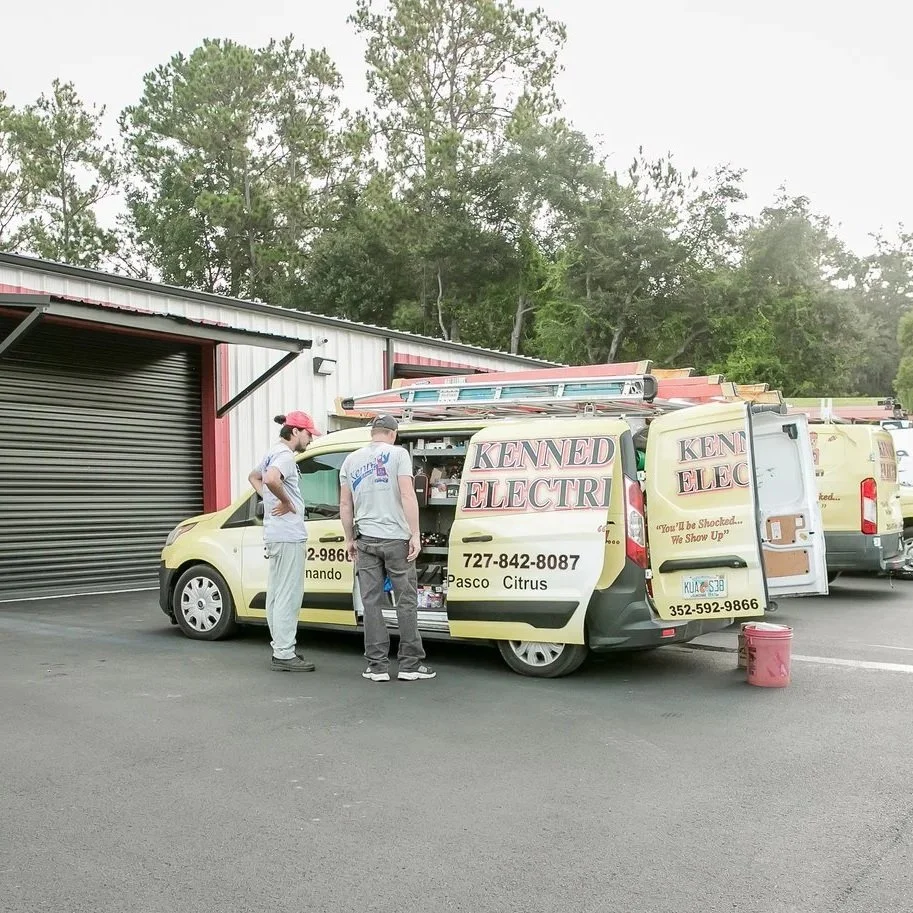
Kennedy Electric technicians preparing service vans before residential inspection highlighting professional evaluation of overheating light switches wiring load concerns.
When Warm Is Normal And When It Is Not
A slightly warm light switch is not always a sign of danger. Electrical current flowing through a switch generates a small amount of heat. That is basic physics. If you are controlling several recessed lights or a bathroom vanity with multiple bulbs, you may notice some mild warmth.
The key difference lies in how warm it feels. A switch that is barely warm to the touch, especially after being on for a while, can fall within normal limits. A switch that feels hot, uncomfortable to keep your finger on, or warmer than other switches in the house deserves attention. In Florida homes, ambient heat can make everything feel warmer, especially during long summer afternoons when air conditioning runs constantly. However, environmental warmth should not make one specific switch noticeably hotter than others. If a switch stands out every time you touch it, that is your cue to investigate further.
Loose Wiring Connections Behind The Plate
One of the most common reasons a light switch feels hot is a loose wiring connection inside the electrical box. Electricity flows through metal conductors. When connections are tight, current passes smoothly. When connections loosen, resistance increases. Resistance creates heat.
Over time, screws holding wires in place can loosen due to thermal expansion and contraction. Florida’s climate intensifies that cycle. Air conditioning systems cycle on and off throughout the day. Attic temperatures rise and fall. Those shifts subtly affect wiring. A loose connection at the switch terminal can cause arcing or partial disconnection, generating heat behind the plate.
That heat can build gradually. You might not notice it at first. As resistance increases, the switch becomes warmer with each use. Ignoring a loose connection allows heat to damage insulation and possibly scorch the box. Addressing it early prevents a small issue from becoming a larger safety concern.
Overloaded Lighting Circuits
If you are searching “why is my light switch hot,” you may not realize how much load that switch controls. Many older Florida homes were wired when lighting loads were smaller. Modern renovations often add recessed lighting, decorative fixtures, and brighter bulbs.
If a single switch controls multiple high-wattage fixtures, the electrical load passing through that device may approach or exceed its rating. Standard switches are rated for specific amperage. When that rating is pushed too far, internal components heat up. The switch may still function, but the extra strain shortens its lifespan.
Dimmer switches add another variable. Dimmers inherently produce more heat because they regulate voltage rather than simply opening and closing a circuit. That is why many dimmers feel warm during operation. However, excessive heat may indicate that the dimmer is controlling more wattage than it was designed to handle. Upgrading to a properly rated dimmer or redistributing lighting loads across multiple switches can resolve the issue.
Backstab Connections And Aging Components
Just like outlets, switches can be wired using push-in connectors known as backstab connections. These connections are fast to install but may loosen over time. As contact weakens, resistance builds. Heat follows.
Aging switches themselves can also fail internally. Springs, contact points, and plastic housings degrade after years of use. Each time you flip a switch, internal contacts make and break a connection. After thousands of cycles, wear accumulates. A worn switch may still operate normally but generate more heat due to internal inefficiencies.
Florida homes built in the 1980s and 1990s often still have original switches. Decades of use combined with high humidity and sustained air conditioning demand create ideal conditions for component fatigue. Replacing aging switches proactively during renovations or electrical upgrades reduces the chance of overheating and sudden failure.
The Common Mistake Of Ignoring The Warning Sign
A hot light switch is not something to brush off. Many homeowners assume it is normal because the lights still turn on and off. That assumption delays action.
Heat behind a switch plate is often invisible. Drywall and insulation conceal what is happening
inside the box. If a connection continues overheating, insulation around conductors can degrade. Arcing may occur. In worst-case scenarios, it can ignite nearby combustible materials. Most electrical fires do not start with dramatic sparks. They begin with small, persistent heat sources that go unnoticed.
Treating a warm switch as a minor annoyance can allow the problem to grow. Electrical systems give subtle warning signs before major failures. Warmth, faint buzzing sounds, or slight discoloration around the plate are early indicators. Addressing those signs promptly is far easier and less disruptive than dealing with smoke damage later.
High-Wattage Bulbs And Fixture Changes
Lighting upgrades sometimes create unintended consequences. Replacing older bulbs with higher-wattage options or adding additional fixtures to an existing circuit increases the load on the switch.
Even switching to certain LED fixtures can introduce complications if incompatible dimmers are used. Some LED drivers interact poorly with older dimmers, creating excess heat in the switch. Homeowners often focus on brightness and aesthetics without considering electrical compatibility.
In Florida, where lighting remains on for long periods during evening hours, sustained load matters. A switch that controls outdoor floodlights or landscape lighting may remain active for hours every night. If that switch is not rated for the combined wattage of the upgraded fixtures, it can gradually overheat. Reviewing fixture wattage and switch ratings during lighting changes helps prevent this issue.
Moisture And Corrosion In Florida Homes
Florida’s humidity affects more than just comfort. Moisture can seep into electrical boxes, especially in bathrooms, garages, and exterior walls. Corrosion forms on terminals and contact points. Corroded connections increase resistance and generate heat.
A switch located near a frequently used shower or exterior door may be exposed to more moisture than you realize. Over time, that exposure degrades metal surfaces. Even small amounts of corrosion can affect conductivity.
Homes near the coast face additional challenges from salt air. Salt accelerates corrosion on exposed metal components. While most switches are enclosed, small gaps and repeated humidity cycles still allow gradual deterioration. Replacing corroded components and improving ventilation in moisture-prone areas helps maintain safe operation.
When To Worry Immediately
Certain signs demand prompt attention. If the switch plate feels hot enough that you cannot comfortably keep your finger on it, turn off the circuit at the breaker. If you notice a burning smell, discoloration, or crackling sounds, stop using that switch immediately.
A switch that sparks visibly when flipped also warrants immediate inspection. While a tiny internal spark can be normal during switching, visible sparks outside the device are not. Persistent buzzing may indicate arcing inside the box.
Electrical safety depends on acting early. At Kennedy Electric, we evaluate the entire circuit, not just the switch. Checking wire gauge, load distribution, and panel condition provides a complete picture. Sometimes the solution is as simple as tightening a connection. Other times, redistributing load or upgrading components provides a longer-term fix.
Preventative Steps And Peace Of Mind
Routine electrical inspections reduce surprises. If your home is more than fifteen or twenty years old and has not had a recent electrical evaluation, it may benefit from one. Switches, outlets, and panels age quietly.
During renovations or lighting upgrades, consider replacing old switches proactively. Modern switches with updated materials and tighter terminal designs handle loads more effectively. Upgrading dimmers to models compatible with LED lighting improves efficiency and reduces heat.
Living in Florida means your electrical system works hard year-round. Air conditioning, lighting, and outdoor equipment place consistent demand on circuits. Paying attention to small changes, like a warm light switch, protects your home and reduces the anxiety of wondering whether something behind the wall is getting worse.
FAQs
A slightly warm switch can be normal, especially if it controls multiple lights or uses a dimmer. If it becomes noticeably hot or warmer than other switches, further evaluation is recommended.
Yes, dimmer switches naturally produce more heat because they regulate voltage. However, excessive warmth may indicate that the dimmer is overloaded or incompatible with the lighting fixtures.
It can be if it is caused by loose wiring, overload, or internal failure. Persistent overheating increases fire risk and should be addressed promptly.
High humidity and salt air can contribute to corrosion inside electrical boxes, increasing resistance and heat over time.
If a switch is aging, warm to the touch, or part of a larger lighting upgrade, replacement is often a practical step to improve safety and reliability.
