Why 3-Prong Outlets Are Safer (and When to Upgrade Your 2-Prong Outlets)
Why does that old outlet feel wrong every time you plug something in, like you are rolling the dice in your own living room? You stand there holding a charger, noticing the plug wobble, wondering why half the house still looks like it belongs to a different decade, and feeling that low, nagging frustration that maybe you are ignoring something you should not.
That moment usually hits when an outlet refuses to hold a plug, sparks slightly, or forces you to hunt for an adapter to use everyday electronics. The inconvenience feels small until it stacks up into a daily annoyance, rising concern, and the sense that your home is quietly behind the times. Many homeowners search this topic because they are tired of fighting their outlets and uneasy about what those older two-prong receptacles might mean for safety, especially as modern devices push older systems harder than ever.
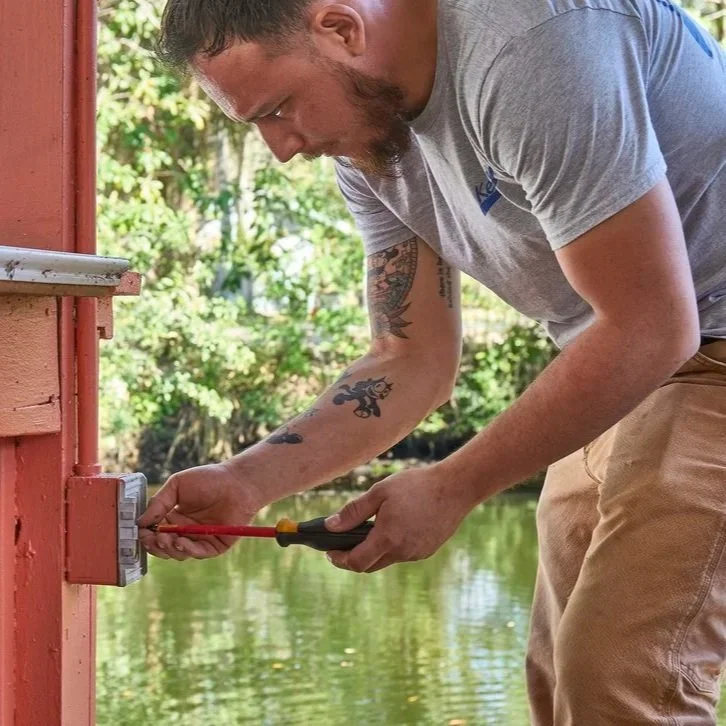
Electrician replacing exterior outlet box, upgrading two prong receptacle to grounded connection for safer modern electrical use around homes.
Why Are There Still 2-Prong Outlets In My House?
Many homeowners ask why there are still two-prong outlets in homes that otherwise feel updated. The short answer is age, but the real explanation runs deeper. Two-prong outlets were standard in homes built before grounding became common practice. At the time, electrical demand was lower, appliances were simpler, and safety standards reflected the technology of the era. Houses wired decades ago were not designed for today’s constant load of electronics, chargers, and sensitive devices.
The misunderstanding arises when homeowners assume that age alone makes something unsafe, or, worse, that age matters at all. A two-prong outlet might still deliver power, which leads people to believe it is functioning as intended. What gets overlooked is that electrical systems evolve to address risks that were once invisible or accepted. Grounding was introduced to manage fault current safely, reduce shock risk, and protect equipment. Without it, electricity has fewer controlled paths when something goes wrong. Over time, that gap between old design and modern use becomes more than just inconvenient. It becomes a growing safety concern as electrical demand increases in Florida homes filled with electronics and climate control systems.
What Makes 3-Prong Outlets Safer In Real Life?
Three-prong outlets add a grounding path that fundamentally changes how electricity behaves during a fault. The third prong provides a direct path for stray current to return to the panel and into the ground safely. That path reduces the chance of electricity flowing through a person, a device casing, or unintended materials. In practical terms, it reduces the risk of electrical shocks and the likelihood of electrical fires caused by equipment faults.
Homeowners often misunderstand grounding as something that only matters during extreme failures. In reality, small faults happen more often than people realize. Insulation breaks down. Internal components loosen. Moisture finds its way into connections, especially in Florida’s humid environment. A grounded outlet manages those moments quietly, often without the homeowner ever noticing. Without grounding, the system relies on luck and limited insulation. Over time, that reliance leads to damaged electronics, tripped breakers, or unsettling sensations when touching appliances. Three-prong outlets are safer because they anticipate failure rather than react after something goes wrong.
The Common Assumption That Adapters Solve The Problem
Many homeowners rely on two- or three-prong adapters and assume the problem is solved. Adapters are a simple fix because devices turn on and everything appears normal. The missing piece is that most adapters do not create a true ground. They allow the plug to fit, but they do not provide the safety function that the third prong represents.
The danger in that assumption is subtle. Adapters hide the issue rather than address it. They encourage heavier use of outlets that were never designed for modern loads. Over time, that leads to overheated connections, damaged cords, and increased shock risk. Homeowners often notice these issues as flickering power, buzzing sounds, or warm plugs. Those signs get dismissed as quirks of an old house until something finally fails.
In Florida homes, adapters also increase risk during storms or power fluctuations. Without proper grounding, surges have fewer safe paths to ground, which can damage electronics throughout the home. The frustration comes from feeling like the house fights back against modern life. Adapters might feel convenient, but they often prolong problems that would be better solved directly.
When Should You Upgrade 2-Prong Outlets?
Many homeowners type searches like 'when should I upgrade two-prong outlets?' or 'do I need to replace old outlets if they still work?' The honest answer depends on use, condition, and plans, not just age. Two-prong outlets serving low-demand areas might appear fine, but appearances can deceive; what is happening behind the wall is not always obvious.
Upgrading becomes especially important when outlets are loose, cracked, warm, or unable to hold plugs securely. Those signs indicate wear that increases risk regardless of grounding. Another key moment is when homeowners add modern appliances, office equipment, or entertainment systems. Increased load magnifies weaknesses in older wiring. Florida homes that rely heavily on air conditioning, dehumidifiers, and electronics place constant demand on circuits that may already be strained.
Timing matters because electrical issues rarely improve on their own. Wear compounds. Connections loosen further. Insulation continues to age. Upgrading outlets as part of a broader evaluation prevents the cycle of temporary fixes and daily frustration. It also creates a more predictable and comfortable home environment where homeowners are not constantly second-guessing their electrical system.
Why Replacing Outlets Is Not Always As Simple As It Sounds
A common homeowner mistake is assuming that swapping a two-prong outlet for a three-prong outlet automatically creates safety. Without a grounding conductor present, a three-prong outlet can give a false sense of protection. Homeowners often believe the visible change solves the problem, unaware that the grounding function may not actually exist.
Electrical systems require continuity and proper connections to function safely. Installing a three-prong outlet on an ungrounded circuit does not add grounding. It changes the shape of the receptacle without changing the system behind it. That misunderstanding matters because it encourages heavier use and riskier assumptions. Over time, devices rely on grounding that is not there, increasing the chance of damage or shock during faults.
Correct upgrades may involve adding grounding conductors, using GFCI protection where appropriate, or updating circuits at the panel. These decisions depend on the home’s wiring layout, age, and usage patterns. An experienced electrician views the system as a whole rather than treating outlets as isolated parts. That perspective helps homeowners avoid upgrades that look modern but fail to deliver real safety.
How Florida Homes Add Extra Complexity To Outlet Upgrades
Florida’s climate introduces challenges that make outlet safety more pressing. Heat and humidity accelerate corrosion and insulation breakdown inside walls and boxes. Salt air in coastal areas worsens metal degradation even indoors. These conditions shorten the lifespan of older electrical components and reduce tolerance for shortcuts.
Many Florida homes were built during periods of rapid development, sometimes with cost-saving wiring methods that met standards at the time but leave little margin today. Homeowners might notice outlets that feel brittle, discolored, or unreliable long before they fail. These signs often appear during peak cooling seasons when electrical demand rises sharply.
Upgrading outlets in Florida often reveals broader system needs. Circuits that once handled light loads now support multiple devices running continuously. Without proper grounding and protection, the system operates under constant stress. Addressing outlets within this context helps prevent the cycle of small fixes followed by recurring issues that disrupt daily life and create ongoing worry.
Why Grounding Protects More Than Just People
Grounding is often framed as personal safety, but it also protects devices and the electrical system itself. Modern electronics rely on stable power and safe fault paths. Without grounding, sensitive components absorb stress that grounding would otherwise redirect. Over time, that stress shortens device lifespan and leads to unexplained failures.
Homeowners often experience this as chargers that stop working, appliances that behave inconsistently, or electronics that fail during storms. The frustration builds when replacements become frequent and expensive. Many people never connect those failures to outlet grounding, assuming electronics are simply less durable than they used to be.
Three-prong outlets help stabilize the relationship between devices and the electrical system. Grounding reduces electrical noise and manages faults quietly. That protection becomes increasingly valuable as homes fill with smart devices, networking equipment, and continuously operating electronics. The benefit extends beyond safety into reliability and peace of mind.
Why Electrical Shortcuts Cost More Over Time
Many homeowners delay outlet upgrades because everything technically works. That delay feels reasonable until small problems accumulate into a daily inconvenience. Loose plugs require constant adjustment. Adapters clutter outlets and furniture. Breakers trip unpredictably. Each issue alone feels manageable, but together they create ongoing frustration.
Shortcuts often appear cheaper upfront but cost more in repairs, replacements, and stress. Improperly grounded outlets increase the risk of equipment damage and electrical faults that require larger repairs later. Homeowners may also face limitations when selling or renovating, as outdated electrical systems raise concerns during inspections.
Working with a professional electrician like Kennedy Electric allows homeowners to address these issues deliberately instead of reactively. The focus shifts from patching problems to improving system performance and safety over time. That approach reduces surprises and helps homes keep pace with modern living without constant worry.
FAQs
Two-prong outlets can still deliver power, but they lack the grounding that helps manage electrical faults safely. The risk increases as devices and electrical demand increase, making older outlets less forgiving over time.
Replacing the outlet face without adding proper grounding does not create true safety. A three-prong outlet on an ungrounded circuit can be misleading and may not provide the protection homeowners expect.
GFCI outlets protect against shock by shutting off power when an imbalance is detected, but they do not provide grounding for equipment protection. They address specific risks but do not fully replace grounded circuits.
Older outlets often lose tension over time, causing plugs to sit loosely. Loose connections increase heat and risk, signaling that replacement or evaluation is overdue.
Upgrading outlets improves safety, reliability, and daily convenience even without renovations. Addressing outdated outlets reduces ongoing frustration and prepares the home for modern electrical use.
