

When and Why to Upgrade to 200-Amp or 220-Volt Service
Why does the house feel like it panics every time too many things run at once? Turning on the dryer should not feel like a gamble that knocks half the house offline.
Most homeowners start wondering about upgrading to 200-amp or 220-volt service after hitting that wall of daily frustration. The AC kicks on, and the lights dip. The oven runs, and the garage outlet suddenly dies. A new appliance gets installed, and everything else feels more fragile than before. In Florida homes, especially, where cooling systems, pool equipment, and modern electronics all pull hard on the electrical system, delayed upgrades show up as constant inconvenience, rising stress, and the quiet worry that the house is falling behind modern demands.
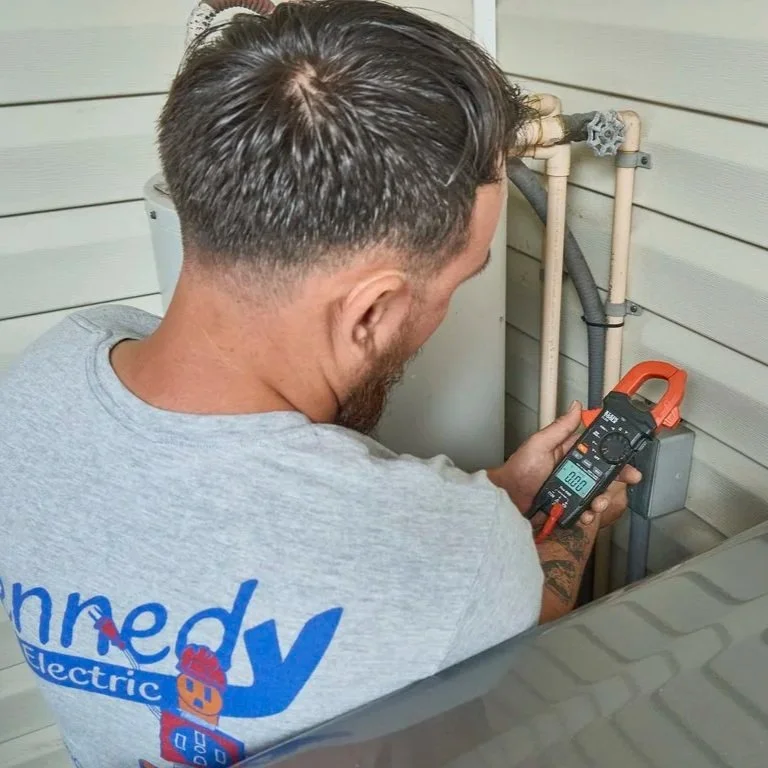
Electrician measuring electrical load near service equipment, assessing need for 200 amp upgrade and improved home power capacity.
Why Your Electrical System Suddenly Feels “Maxed Out”
Homes rarely announce electrical limits politely. Instead, they start behaving differently. Breakers trip more often. Lights flicker when major appliances start. Certain outlets stop cooperating during peak usage. Homeowners describe the feeling as the house being tired or stretched thin, even though nothing looks obviously broken. That sensation usually points to a service size that no longer matches the home's use.
Electrical service size determines how much power the home can safely draw at one time. Older homes often operate on 100-amp service, which once handled lighting and a few basic appliances just fine. Modern households run central air, electric ranges, multiple refrigerators, pool pumps, home offices, entertainment systems, and sometimes electric vehicle chargers. All of that adds up quickly. When total demand approaches the service limit, the system starts pushing back.
Florida homes feel this pressure more quickly due to the climate and lifestyle. Long cooling seasons mean air conditioning runs frequently and aggressively. Humidity control equipment works overtime. Outdoor living spaces add electrical demand that older service designs never anticipated. Upgrading to 200-amp or 220-volt service becomes less about improvement and more about restoring normal, reliable function.
The Common Belief That “It Still Works, So It’s Fine”
One of the most common homeowner mistakes is assuming that electrical systems only need attention when they fail. As long as power comes back after flipping a breaker, many people assume everything is acceptable. That belief ignores how electrical systems age and how close they can operate to their limits for years before something serious happens.
When a service is undersized, the system experiences repeated stress. Breakers trip more often. Voltage fluctuates. Wiring heats and cools repeatedly under load. Those conditions accelerate wear on components hidden behind walls and inside panels. Appliances experience inconsistent power, which shortens their lifespan even if they still function.
Upgrading to 200-amp or 220-volt service addresses these issues at the root. Rather than forcing an aging system to keep up, the upgrade provides breathing room. That extra capacity stabilizes power delivery, reduces strain, and supports modern usage without constant negotiation. Waiting until failure often leads to rushed decisions, limited options, and higher costs than planning.
What 200-Amp And 220-Volt Service Actually Means
Homeowners often hear 200-amp and 220-volt service used interchangeably, which can create confusion. They describe related but different aspects of electrical capacity. Amperage refers to the amount of electrical current the service can deliver. Voltage is the electrical pressure that pushes current through the system.
Most modern homes already use both 120-volt and 220-volt circuits. Standard outlets deliver 120 volts, while large appliances like dryers, ovens, and HVAC systems use 220 volts. Upgrading service typically increases amperage capacity while maintaining access to both voltage levels. A 200-amp service allows more total electrical demand to operate safely at once.
Homeowners misunderstand this distinction and assume a voltage upgrade alone fixes capacity issues. In reality, insufficient amperage is the primary cause of residential overload problems. Electricians evaluate service size, panel condition, load distribution, and appliance demand together. The upgrade process aligns all those elements so voltage and amperage support modern living reliably.
Why Florida Homes Outgrow Their Electrical Service Faster
Florida homes experience unique electrical pressure during extended high-demand seasons. Air conditioning systems draw heavy current for long periods, not just short bursts. Pool pumps and heaters add a steady electrical load that runs daily. Outdoor lighting and fans extend usage into evenings and weekends.
Seasonal overlap compounds the issue. Summer afternoons bring peak cooling demand while families cook, do laundry, and use entertainment systems. Homes that feel fine during mild weather suddenly struggle under full load. Breaker trips and flickering lights occur predictably during hot months, confusing homeowners who blame the weather rather than capacity.
Aging neighborhoods add another layer. Many Florida homes were built before modern electrical usage became standard. Panels and service sizes reflect outdated expectations. Over time, homeowners add equipment without adjusting infrastructure. Upgrading to 200-amp service brings those homes back into alignment with current realities rather than forcing outdated systems to stretch further.
Why Adding One More Appliance Pushes Everything Over The Edge
Homeowners often describe a tipping point. Everything seemed manageable until one more thing arrived. A garage freezer. A new AC unit. An electric vehicle charger. Suddenly, the system feels unstable. That experience highlights how electrical services operate with margins.
Electrical systems function comfortably when demand stays below capacity. As appliances accumulate, that margin shrinks. When one new load pushes demand past the limit, problems appear immediately. That sudden change feels dramatic, even though the system was already close to the edge.
Upgrading to 200-amp or 220-volt service restores that margin. Instead of constantly operating near maximum capacity, the system gains room to breathe. That flexibility allows appliances to start smoothly, circuits to remain stable, and homeowners to stop juggling usage to keep power flowing.
The Shortcut Fixes That Create Bigger Problems Later
When electrical issues arise, homeowners often try quick fixes. They avoid running certain appliances together. They add power strips. They move equipment between outlets. These adjustments feel practical, but they treat symptoms rather than causes.
Power strips concentrate demand without increasing capacity. Extension cords introduce resistance and heat. Avoiding simultaneous use does not change the underlying service limitation. Over time, these workarounds increase risk while delaying necessary upgrades.
Proper practice involves matching service capacity to real usage. Electricians evaluate total demand, circuit layout, and future needs. Upgrading service resolves the root issue rather than asking homeowners to live around limitations. Cheaper shortcuts may defer costs, but they often increase long-term costs and risks.
How Undersized Service Affects Appliance Performance And Lifespan
Electrical service limitations do more than trip breakers. They affect how appliances operate internally. Motors experience harder starts when the voltage dips. Control boards receive inconsistent power. Heating elements cycle unevenly. These conditions shorten lifespan without an obvious warning.
Homeowners often replace appliances, assuming failure was unavoidable. In reality, unstable power contributes to early wear. Upgrading service stabilizes electrical delivery, allowing appliances to operate within intended parameters. That stability protects investments and reduces the need for unexpected replacements.
HVAC systems benefit especially from adequate service capacity. Smooth starts and consistent voltage reduce mechanical stress. In Florida homes where cooling systems run frequently, that protection matters over the long term.
When Upgrading Service Becomes A Safety Issue
Electrical systems designed for lower demand become safety risks when pushed beyond their limits consistently. Overheating occurs inside panels, wiring, and connection points. Insulation degrades. Breakers weaken. Fire risk increases gradually rather than suddenly.
Many residential electrical fires trace back to overloaded or undersized services. Homeowners rarely connect small annoyances to serious hazards, but the connection exists. Upgrading to 200-amp service reduces stress throughout the system, lowering heat buildup and improving overall safety margins.
Safety upgrades rarely feel urgent until something goes wrong. Recognizing capacity limits early reframes upgrades as preventive care rather than emergency response. That mindset protects both property and occupants.
Why Timing Matters For Electrical Service Upgrades
Electrical upgrades work best when planned. Renovations, additions, and equipment upgrades provide ideal opportunities to address service size. Coordinating improvements reduces disruption and avoids rework.
Florida homeowners planning pool installations, HVAC replacements, or electric vehicle chargers benefit from evaluating service capacity early. Doing so prevents last-minute surprises and allows upgrades to integrate smoothly with other projects.
Waiting until the system fails limits options. Emergency upgrades cost more, disrupt routines, and create stress. Planning preserves control and confidence throughout the process.
What Electricians Look At Before Recommending An Upgrade
Electricians do not recommend service upgrades casually. They evaluate panel condition, service size, load calculations, circuit distribution, and usage patterns. They consider future needs alongside current demand.
Some homes benefit from circuit reconfiguration rather than full upgrades. Others clearly exceed capacity and require additional amperage. Professional evaluation identifies the most effective solution rather than defaulting to the largest option.
In Florida, electricians frequently encounter homes where small improvements postponed necessary upgrades for years. Companies like Kennedy Electric often help homeowners determine whether an upgrade is an immediate necessity or strategic planning for future comfort.
How 200-Amp Service Changes Daily Living
Upgrading to 200-amp service changes how a home feels. Appliances run together without hesitation. Lights stay steady. Breakers stop tripping. Homeowners regain freedom to use their space fully.
Garages serve as functional storage for tools, chargers, and equipment. Kitchens support modern cooking without coordination. Outdoor living spaces operate alongside indoor comfort. Electrical systems fade back into the background, where they belong.
That shift reduces daily frustration and mental load. Homeowners stop worrying about what they can run. The house supports life rather than dictating it.
FAQs
Frequent breaker trips, flickering lights, limited ability to run appliances together, or plans to add major electrical equipment often indicate the need for a service upgrade. An electrician can confirm through load evaluation.
220-volt service refers to the voltage used by large appliances, while 200-amp service refers to total electrical capacity. Most upgrades increase amperage while supporting both 120-volt and 220-volt circuits.
Upgrading service does not reduce energy use directly, but it stabilizes power delivery. Appliances often operate more efficiently and reliably when they have adequate capacity.
Many older Florida homes are served by outdated service sizes that struggle to meet modern demand. Upgrades often improve safety, reliability, and comfort in these properties.
The best time is before persistent problems appear, especially during renovations or equipment upgrades. Early planning avoids disruption and supports long-term reliability.
