
What Is Electrical Load Balancing and Why Does Your Home Need It?
Why do the lights dim every time the AC kicks on, like the house is sighing in defeat? Something inside the walls is fighting for power, and it has been doing it longer than anyone wants to admit.
Most homeowners start researching electrical load balancing after an event like that. It might be the microwave tripping the breaker again, or the garage freezer and washer refusing to run at the same time, or the uneasy feeling that the panel sounds busier than it should. In Florida homes, especially, where air conditioning runs hard and long, power struggles tend to show up as daily frustration. Rooms feel unreliable. Appliances feel temperamental. People start rearranging habits to keep the lights on, which is a quiet but real loss of comfort inside a home that is supposed to work without constant babysitting.
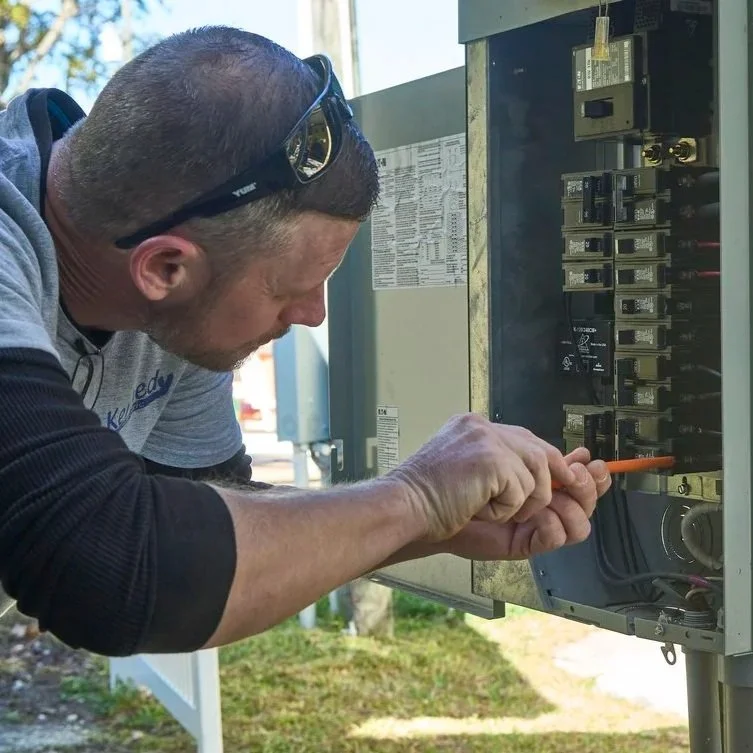
Electrician adjusting breaker panel circuits to improve electrical load balancing, reducing overload risks and stabilizing household power distribution.
When Electrical Load Balancing Becomes A Daily Irritation
Electrical load balancing sounds like a technical concept, but most homeowners feel it long before they know the term. It shows up as flickering lights, breakers that trip without warning, outlets that feel weaker than others, or certain rooms that always seem to struggle when multiple devices run together. Homeowners often assume those signs mean aging wiring or a single faulty appliance, but the underlying issue is usually how power is distributed throughout the electrical system.
Every home has a finite amount of electrical capacity. The panel divides that capacity across circuits, and each circuit feeds specific outlets, lights, or equipment. Electrical load balancing is the practice of spreading electrical demand evenly across circuits so that no single path is overloaded while others remain underused. When load balancing is disabled, some circuits experience excessive demand while others experience very little, leading to instability, nuisance shutdowns, and unnecessary wear on components.
In Florida, the problem gets amplified by the climate and lifestyle. Central air systems draw heavy power during long cooling seasons. Pool equipment, outdoor kitchens, garage refrigerators, and home offices add even more strain. Homes built years ago were not designed for today’s electrical habits. When power demand quietly outgrows the way circuits were originally arranged, the system starts pushing back. Electrical load balancing addresses that mismatch, but many homeowners do not realize that imbalance is the root cause of their daily electrical annoyances.
Why “The Breaker Just Trips Sometimes” Is A Dangerous Assumption
One of the most common homeowner mistakes is treating tripped breakers as normal behavior. Many people grow accustomed to flipping a switch back on and moving forward, especially if the power comes right back on. That mindset overlooks why breakers trip in the first place. Breakers trip because a circuit is carrying more electrical load than it can safely handle, and repeatedly resetting them does not solve the imbalance creating the overload.
Electrical load balancing matters because an imbalance increases heat within wiring and breakers. Heat degrades insulation, weakens connection points, and accelerates failure over time. A breaker that trips often is not just annoying. It signals stress within the system. Ignoring that signal allows wear to compound quietly behind walls and inside panels, where problems are harder to detect and more expensive to fix later.
Another outdated belief is that upgrading appliances alone will solve electrical issues. Homeowners replace an older AC unit or refrigerator expecting smoother performance, but if the circuits feeding those appliances remain poorly balanced, the system still struggles. Newer appliances may even draw power differently, worsening the imbalance rather than relieving it. Electrical load balancing looks at the whole picture rather than chasing individual symptoms, which is why it plays such a critical role in long-term electrical reliability.
What Electrical Load Balancing Actually Means Inside Your Panel
Electrical load balancing involves evaluating how electrical demand is distributed across all circuits in the panel and adjusting that distribution to reduce stress. Electricians assess which circuits carry heavy loads, which ones remain lightly used, and how major systems like HVAC, water heaters, and kitchen appliances interact when running simultaneously. The goal is to spread demand so no single leg or circuit bears more than its share.
Most residential electrical panels receive power through two hot legs. Ideally, the electrical load is balanced between those legs. When an imbalance occurs, one leg carries significantly more demand than the other, leading to voltage fluctuations, uneven wear, and performance issues throughout the home. Electricians correct this by relocating circuits, adjusting breaker placement, or redesigning how specific loads are assigned.
Homeowners often misunderstand electrical load balancing because the work does not always involve replacing visible components. Sometimes the fix is to rearrange breakers rather than install new ones. Sometimes it involves separating appliances that were incorrectly grouped onto the same circuit decades ago. These adjustments may seem subtle, but their impact on system stability and daily comfort can be dramatic, especially in homes that feel electrically fragile during peak usage.
Why Florida Homes Feel Electrical Stress Faster Than Expected
Florida homes face unique electrical challenges, making load balancing especially relevant. Extended cooling seasons place constant demand on air conditioning systems, which are often the largest electrical load in the home. Add humidity-control equipment, pool pumps, outdoor lighting, and electrical systems, and they operate near their limits for much of the year.
Seasonal usage patterns also play a role. During summer months, families stay indoors more, electronics run longer, and kitchen appliances work harder. Homes that seemed fine during mild seasons suddenly show electrical strain when everything runs at once. That timing confuses homeowners, who may blame weather or utility issues rather than recognizing an internal imbalance.
Older Florida homes present additional challenges. Many were built when electrical usage expectations were far lower. Kitchens had fewer appliances. Home offices did not exist. Garages were not packed with chargers and freezers. Electrical load balancing allows these homes to adapt to modern demands without always requiring full panel replacement, which is why experienced electricians often evaluate balance before recommending major upgrades.
How Poor Load Balancing Shortens Equipment Lifespan
Electrical imbalance does more than cause inconvenience. It quietly shortens the lifespan of appliances and system components. Motors in HVAC systems, refrigerators, and pool pumps operate less efficiently when the voltage fluctuates. Control boards experience stress when power delivery is inconsistent. Even lighting systems suffer reduced life when subjected to repeated dips and surges.
Homeowners often replace appliances assuming failure was unavoidable, without realizing the electrical environment contributed to premature wear. Over time, the cost of repeated replacements far exceeds the cost of correcting the underlying imbalance. Electrical load balancing stabilizes power delivery, enabling predictable operation and reducing mechanical and electronic stress throughout the home.
Panels and breakers also suffer when the imbalance persists. Breakers that frequently trip weaken internally. Bus bars experience uneven heating. Connection points loosen gradually. These issues accumulate silently until a more serious failure occurs. Addressing load balancing early protects not only appliances but also the electrical backbone of the home.
Why DIY Electrical Fixes Miss The Real Problem
When electrical problems arise, homeowners sometimes attempt surface level fixes. Extension cords appear. Power strips multiply. Certain appliances get unplugged when others run. While these workarounds may reduce immediate annoyance, they often mask deeper imbalance issues and introduce new risks.
Power strips and extension cords do not reduce load. They shift it. Overloaded circuits remain overloaded, and additional connection points increase resistance and heat. Homeowners may feel temporarily relieved when lights stop flickering, but the system remains under strain. Electrical load balancing requires access to the panel, knowledge of circuit demand, and an understanding of how loads interact dynamically, which goes far beyond casual fixes.
Professional electricians approach load balancing methodically. They measure loads, analyze usage patterns, and anticipate future demand rather than reacting only to current complaints. That perspective enables solutions that restore reliability rather than chasing symptoms. In many Florida homes, electricians from companies like Kennedy Electric encounter panels where decades of small changes created imbalance that no single DIY fix could ever address.
When Load Balancing Is Enough And When It Is Not
Electrical load balancing solves many issues, but it is not a cure-all. Some homes truly outgrow their electrical capacity. When total demand exceeds what the service can safely supply, balancing alone cannot compensate. However, load balancing often delays or reduces the need for major upgrades by better utilizing existing capacity.
Homeowners frequently assume that panel replacement is the first step when problems arise. In reality, many panels function well once circuits are properly distributed. Balancing identifies whether the issue is uneven usage or insufficient capacity. That distinction matters because it prevents unnecessary expense and disruption.
Timing also matters. Homes adding electric vehicle chargers, additional HVAC systems, or major renovations should evaluate load balancing early. Doing so allows electricians to plan circuit layouts that support growth without repeating mistakes. Ignoring balance until after problems appear usually limits options and increases costs.
How Electrical Load Balancing Improves Daily Comfort
One of the most overlooked benefits of electrical load balancing is its improvement of everyday comfort. Lights remain steady. Appliances operate without hesitation. HVAC systems start smoothly without dimming rooms. Homeowners stop adjusting behavior around their electrical system and return to expecting it to work quietly in the background.
That comfort extends to peace of mind. Knowing the system is operating within safe limits reduces worry about hidden risks. Electrical systems should feel boring. When homeowners stop noticing their electrical system, that is often a sign that it is properly balanced and doing its job without complaint.
FAQs
Common signs include flickering lights, frequent breaker trips, outlets that feel weak, or appliances that struggle when used together. These symptoms often indicate uneven power distribution rather than individual equipment failure, especially in homes with high electrical demand.
Electrical load balancing can significantly reduce breaker trips by more evenly distributing demand across circuits. While it cannot compensate for insufficient service capacity, it addresses many overload situations caused by poor circuit distribution.
Electrical load balancing and panel upgrades serve different purposes. Load balancing rearranges existing circuits to improve performance, while a panel upgrade increases total capacity. Many homes benefit from balancing before considering a full upgrade.
Electrical load balancing does not directly lower energy consumption, but it can improve efficiency and reduce equipment strain. Appliances and systems often operate more smoothly when power delivery is stable, which supports consistent performance.
Electrical load balancing should be evaluated when electrical issues arise, after major renovations, or when adding significant new loads, such as EV chargers or additional HVAC equipment. Periodic evaluation helps keep the system aligned with changing household demands.
