What Does a Warm Outlet Mean? When to Worry
Why is that outlet warm again when nothing heavy is even plugged in? Florida homeowners notice it brushing a hand past the wall or unplugging a charger, and suddenly wonder how long it has been like that.
A warm outlet triggers a very specific kind of unease because it feels subtle but wrong. Power still works, lights are on, and nothing looks broken, yet something feels off in a way that is hard to ignore. Many homeowners hesitate to act because the outlet is not hot and nothing dramatic is happening, but that delay often leads to repeated frustration, anxious checking, and the quiet fear that something hidden inside the wall is getting worse over time.
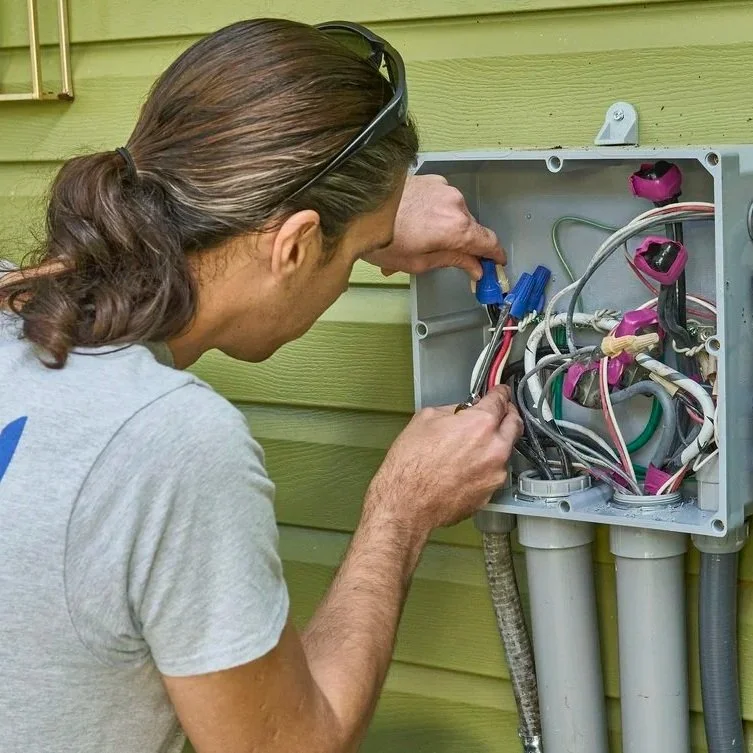
Electrician tightening outlet wiring connections inside exterior electrical box to prevent resistance heat buildup and ensure safe electrical performance.
Why A Warm Outlet Feels Easy To Dismiss At First
A warm outlet rarely causes immediate failure, which makes it easy to brush off. Homeowners touch the faceplate, feel mild heat, and assume it must be normal electrical behavior. Power runs through outlets constantly, so warmth might come with the territory. That assumption keeps people from digging deeper until the problem becomes more noticeable.
Florida homes make this confusion worse because ambient temperatures are already high. When the house feels warm, a slightly warm outlet blends into the background. Homeowners often assume heat comes from the weather or nearby appliances. Over time, repeated exposure to that warmth becomes familiar instead of alarming, even though the underlying cause may be slowly deteriorating wiring or connections that need attention.
What A Warm Outlet Actually Indicates Inside The Wall
Outlets should not generate noticeable heat during normal operation. Warmth usually means electricity is encountering resistance somewhere along the circuit. Resistance forces electrical energy to convert to heat rather than allowing it to flow smoothly to devices. That heat often originates at loose connections, worn terminals, or damaged wiring behind the outlet.
Homeowners commonly misunderstand resistance as an abstract concept with little practical impact. In reality, resistance concentrates heat at specific points, often where wires connect to the outlet. Over time, those hot spots worsen as metal expands and contracts. Florida humidity accelerates corrosion at those connection points, further increasing resistance. A warm outlet often represents an early warning rather than a harmless quirk.
The Most Common Causes Of Warm Outlets In Homes
Loose wiring connections rank among the most frequent causes of warm outlets. Over time, screws loosen, wires shift, and contact surfaces degrade. Electricity flowing through a partially loose connection creates friction, producing heat.
Another common cause involves worn or aging outlets. Plastic housings and internal components degrade over time, especially in homes with frequent plug and unplug activity. Florida homes with high appliance use experience more wear at outlets that power hair dryers, space heaters, or kitchen devices. Extension cords and power strips add strain when used long-term, creating additional resistance that heats outlet components beyond what they were designed to handle.
Why Homeowners Often Blame Appliances Instead
When an outlet feels warm, homeowners usually suspect whatever is plugged into it. Chargers, lamps, and small appliances take the blame because they feel like the most obvious source. While faulty appliances can contribute, the outlet itself often remains the real issue.
Blaming appliances delays investigation into wiring conditions. Homeowners unplug devices and wait to see if the outlet cools down. Sometimes it does, which reinforces the belief that the problem was external. That temporary relief hides the fact that internal connections remain compromised. Once another device gets plugged in, the cycle repeats. The frustration builds as homeowners feel unsure what can safely stay plugged in and what cannot.
Why Warm Outlets Are More Concerning In Florida Homes
Florida electrical systems operate under challenging conditions year-round. Heat causes materials to expand, while humidity introduces moisture into electrical boxes and wall cavities. Those factors work together to degrade connections faster than in cooler, drier climates.
Garages, patios, laundry rooms, and kitchens experience the highest risk. Outdoor air infiltration, condensation, and heavy appliance use create an environment that causes outlets to age quickly. A warm outlet in these spaces often points to a combination of environmental stress and electrical load. Ignoring that combination increases the chance of progressive damage that becomes more expensive and disruptive later.
When Warm Becomes Hot And Why Timing Matters
Warmth is the early stage of a problem that can escalate. As resistance increases, heat builds faster and spreads to surrounding materials. Outlet housings may discolor, crack, or emit odors as temperatures rise. Breakers may begin tripping more frequently as wiring heats up under load.
Timing plays a role because heat-related issues worsen during peak usage periods. Florida summers push electrical systems harder as air conditioners cycle continuously. A marginal connection that stayed warm during mild weather may become dangerously hot during high demand. Homeowners often notice problems during the worst possible moments when systems are already strained.
Why Resetting Breakers Does Not Fix Warm Outlets
Breakers protect circuits from overloads and faults, but they do not correct resistance issues at outlets. Homeowners sometimes reset breakers, hoping the warmth will go away. That action restores power but leaves the heat source untouched.
Repeated resets allow damage to continue behind the wall. Wires may slowly char the insulation or loosen further. Breakers only trip when thresholds are exceeded, not when heat is building slowly. Understanding that difference helps homeowners recognize that warmth signals a problem that needs inspection rather than repeated resets.
Common Homeowner Mistakes That Make Warm Outlets Worse
One common mistake is using higher-wattage devices on outlets that were never intended to handle sustained loads. Portable heaters, air fryers, and large chargers draw more current than basic outlets can comfortably support when connections are less than perfect.
Another mistake is ignoring outlets that intermittently work. Flickering power, loose plugs, or outlets that only work when cords are wiggled often accompany warmth. Homeowners tolerate these quirks because power eventually returns. Over time, that tolerance allows damage to progress quietly. Warm outlets rarely improve on their own without addressing the underlying cause.
Why Outlet Warmth Affects More Than One Location
A warm outlet sometimes reflects issues upstream in the circuit. Problems at junction boxes, switches, or panel connections can cause heat to appear at outlets farther along the wiring path. Homeowners may replace one outlet only to feel warmth return days later.
Florida homes with older wiring layouts often have multiple outlets tied to the same circuit. One compromised connection can affect several locations. Mapping patterns of warmth helps identify whether the issue is isolated or systemic. Without that awareness, homeowners treat symptoms rather than address root causes.
Why Older Homes Face Higher Warm Outlet Risk
Older homes frequently use wiring methods and outlet designs that age poorly. Aluminum wiring, older copper alloys, and outdated outlet terminals degrade faster under modern electrical demand. Many Florida homes built decades ago were never designed to handle today’s appliance loads.
Remodels sometimes compound the problem. Adding outlets without upgrading wiring spreads demand across aging circuits. Warm outlets are becoming more common as systems stretch beyond their original design limits. Recognizing age-related factors helps homeowners understand why problems appear even without obvious misuse.
How Electricians Evaluate Warm Outlets Properly
Electricians approach warm outlets by examining more than the faceplate. Testing involves checking wire connections, measuring load, and inspecting surrounding components. Heat marks, corrosion, and insulation damage reveal patterns that homeowners cannot see from the surface.
Evaluations also include looking at how the circuit is used daily. Appliances, power strips, and seasonal demand all factor into why heat builds. Proper diagnosis addresses both the immediate outlet condition and contributing factors. That thorough approach prevents recurrence instead of offering short-lived relief.
Why Waiting Can Turn Minor Issues Into Major Repairs
Heat accelerates deterioration. Materials exposed to heat break down faster, further increasing resistance. That feedback loop turns small issues into significant repairs over time. What began as a warm outlet can evolve into damaged wiring that requires wall access.
Florida homeowners often delay action because nothing dramatic happens at first. Months or years later, repairs involve more disruption and cost. Addressing warmth early keeps fixes focused and contained rather than widespread. Awareness changes outcomes even before any tools come out.
How Warm Outlets Create Daily Household Stress
Living with a warm outlet creates subtle stress. Homeowners hesitate to use certain plugs, rearrange routines, or constantly check temperatures. That mental load adds to daily frustration even when the power technically works.
Uncertainty undermines confidence in the home. Electrical systems feel unpredictable when basic components behave strangely. Clear explanations and timely repairs restore peace of mind by removing doubt. Knowing what warmth means allows homeowners to act with clarity instead of worry.
Why Professional Perspective Matters For Outlet Issues
Electricians see warm outlets as part of a larger pattern, not isolated events. Experience reveals how small signs connect to broader system behavior. That perspective helps distinguish between harmless warmth from heavy temporary use and ongoing issues that require correction.
Kennedy Electric often explains outlet warmth during service calls because understanding reduces fear and improves decisions. Florida homeowners benefit when explanations focus on what is happening now and what could happen later without exaggeration. Knowledge turns concern into informed action.
FAQs
A warm outlet usually indicates resistance at a connection point. While it may not be immediately dangerous, it signals a condition that should be evaluated before it worsens.
Warmth can become a fire risk if left unaddressed. Heat buildup damages insulation and connections over time, increasing the chance of arcing or ignition.
High-demand devices increase current flow and can amplify existing issues. The outlet may heat up faster if the connections are already loose or worn.
Reducing use helps limit heat buildup temporarily, but the underlying issue remains. Having the outlet inspected provides clarity and long-term relief.
Not always. Sometimes tightening connections or correcting wiring resolves the issue. Replacement becomes necessary when components show wear or damage.
