Why does my house smell like something’s burning when nothing is on fire? I swear I just saw a little puff of smoke come from that outlet.
You walk into the kitchen, catch a faint burning smell, and freeze. It is not strong enough to set off alarms, but it is there. Maybe you touch the wall plate, and it feels warm. Maybe a breaker tripped earlier, and you brushed it off. That moment of uncertainty is what drives most homeowners to start searching. Burnt electrical wires are not just an inconvenience. They can lead to damaged appliances, rising electric bills, and, in worst cases, electrical fires that start quietly inside walls.
As an electrician working in Florida homes, I have seen how small wiring issues turn into big repairs when ignored. Understanding what causes burnt electrical wires and how to prevent them starts with knowing what is happening behind the drywall.
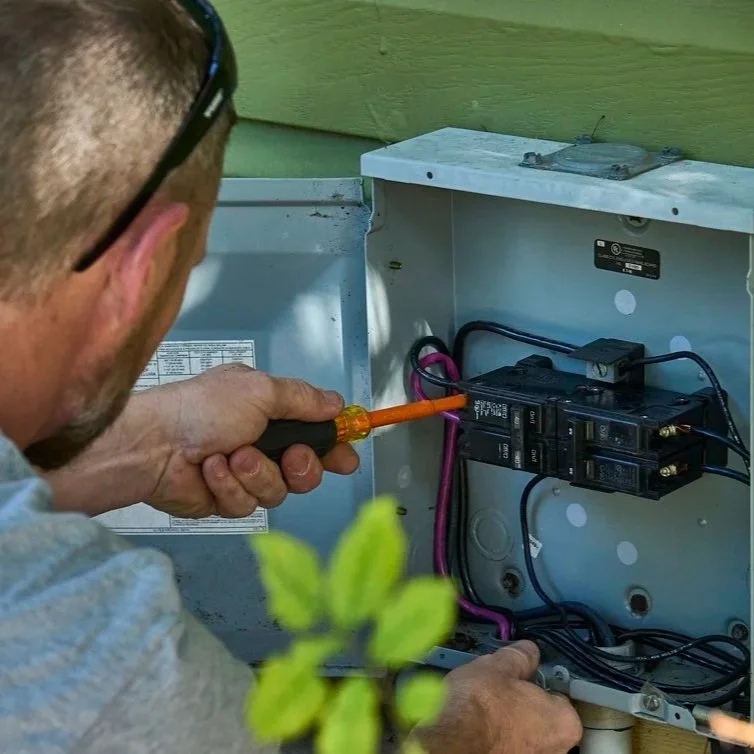
Electrician inspecting residential electrical panel to diagnose overheating circuits and burnt wiring issues caused by overloads and loose connections safely.
Overloaded Circuits And The Heat You Never See
One of the most common causes of burnt electrical wires is circuit overload. Every wire in your home is rated to carry a certain amount of current. When too many devices pull power through the same circuit, the wire heats up. That heat builds gradually. You do not see it, but insulation around the wire begins to degrade over time.
Florida homes today use far more electricity than homes built thirty or forty years ago. Kitchen counters are packed with appliances. Home offices run multiple monitors and equipment all day. Garages have refrigerators, freezers, and power tools. When these loads stack onto circuits that were never upgraded, wires operate close to their limits for hours at a time.
Heat is the enemy of wiring. As insulation softens and breaks down, bare copper can become exposed. That exposure increases the chance of arcing or short circuits. Many homeowners assume a breaker will always trip before damage occurs. Breakers protect against extreme overloads, but smaller sustained overloads can slowly cook wiring without immediately tripping the protection. Prevention starts with evaluating load demands and redistributing or upgrading circuits where needed.
Loose Connections And The Silent Spark Problem
Another major cause of burnt electrical wires is loose connections. Electricity flows best through tight, secure connections. When a wire is not firmly attached to a breaker, outlet, or switch, resistance increases. Resistance produces heat. Heat leads to damage.
Homeowners often experience symptoms such as flickering lights or warm outlets. Some ignore those signs because everything still “works.” Behind the scenes, small arcs can form at loose connections. Arcing generates intense localized heat that can char insulation and discolor copper conductors.
Over time, repeated heating and cooling cycles make the connection even looser. That cycle compounds the problem. In Florida’s humid environment, corrosion can also affect connections, especially in garages or exterior panels. Corrosion increases resistance and increases the risk of overheating. Addressing loose connections early prevents progressive damage that can spread deeper into the wiring system.
Why Do Electrical Wires Burn In The Wall?
Many homeowners type “Why do electrical wires burn in the wall?” after noticing a burning smell but seeing no visible damage. Wires burn in walls when heat accumulates faster than it can dissipate. That heat often comes from overload, poor connections, or damaged insulation.
Inside a wall cavity, airflow is limited. Wires bundled together amplify the effect. When one conductor overheats, nearby wires absorb some of that heat. If insulation deteriorates enough, arcing can occur between conductors or to grounded metal components. Arcing produces extreme temperatures in a fraction of a second.
Burnt wiring in walls may not immediately cause flames, but it weakens the electrical system. Insulation becomes brittle. Conductors oxidize. Future faults become more likely. Preventing that scenario involves professional inspection when warning signs appear rather than waiting for visible sparks or smoke.
The Common Homeowner Mistake Of Upsizing Breakers
One outdated belief that still circulates is that if a breaker trips, the breaker is the problem. Some homeowners replace a 15-amp breaker with a 20-amp breaker, hoping it will stop nuisance tripping. That shortcut creates a serious risk.
Breakers are sized to protect the wiring. A 15-amp circuit typically uses 14-gauge wire. Installing a 20-amp breaker allows more current to flow than the wire is designed to handle. Instead of tripping early, the circuit now allows overheating to continue longer. Wires can burn before the breaker reacts.
I have opened panels in Florida homes where previous owners made that exact change. Insulation inside the wall showed signs of heat damage due to the protection being effectively removed. Correct practice involves identifying why the breaker trips. Often, the solution is to add a new circuit or reduce the load, not increase the breaker size. Understanding that distinction prevents burnt electrical wires and larger repair costs later.
Aging Wiring And Material Degradation Over Time
Wiring does not last forever. In older Florida homes, insulation types vary. Some early materials become brittle with age. Sun exposure on exterior runs, attic heat, and decades of expansion and contraction take a toll.
As insulation cracks, copper conductors may become partially exposed. That exposure increases the risk of short circuits or contact with grounded surfaces. Even without visible cracks, older insulation can lose its heat resistance properties. A load that once operated safely may now push aged wiring closer to failure.
Florida’s climate accelerates aging. Attics routinely reach high temperatures during summer. Garages without climate control stay warm for much of the year. Electrical components operating in those spaces face ongoing stress. Regular inspections of older systems allow homeowners to address deteriorating wiring before it becomes burnt wiring hidden behind walls.
Short Circuits And Direct Contact Between Conductors
Short circuits are another primary cause of burnt electrical wires. A short occurs when a hot conductor contacts a neutral or ground conductor directly. That contact allows a large surge of current to flow instantly. Breakers are designed to trip quickly in those cases, but the brief surge can still create significant heat.
Short circuits may result from damaged insulation, nails driven into walls during renovations, or pests chewing through wiring. Florida homes sometimes experience rodent activity in attics. Rodents can strip insulation from wires, leaving them vulnerable to contact and arcing.
When a short circuit happens repeatedly, even with breaker protection, wires near the fault can become scorched. Insulation melts. Copper darkens. Prevention involves protecting wiring during renovations, sealing entry points to limit pest entry, and addressing breaker trips promptly rather than resetting them repeatedly without investigation.
Why Does My Outlet Smell Like Burning Plastic?
A frequent search phrase is “Why does my outlet smell like burning plastic?” That odor often signals overheating at the receptacle connection. When plugs fit loosely or wires are poorly secured behind the outlet, resistance increases. Plastic components inside the receptacle can begin to melt.
Backstabbed connections, where wires are pushed into spring clips rather than secured under screws, are particularly prone to loosening over time. As the connection weakens, arcing and heat increase. Burnt electrical wires behind outlets are commonly traced back to poor terminations.
Homeowners sometimes replace the outlet without checking the wiring condition. If the wire itself has been heat-damaged, simply installing a new receptacle does not solve the deeper issue. Cutting back damaged wire and making secure screw terminal connections reduces future risk. Small details in installation quality matter greatly in long-term performance.
Seasonal Demand And Compounding Wear In Florida
Florida homes experience high electrical demand year-round, especially during air conditioning use. High overall system load increases panel temperatures and conductor temperatures across circuits. While a microwave or space heater may operate seasonally in other states, Florida systems often run near peak conditions for extended periods.
Seasonal storms also contribute. Power surges during lightning events can stress wiring and connections. Even if surge protectors absorb most of the energy, minor damage can accumulate at weak points. Over time, repeated stress reduces the margin of safety in wiring.
Compounding wear means small issues add up. A slightly loose connection, combined with an elevated ambient temperature and a high load, can cause a conductor to overheat. Addressing wiring health before peak summer demand reduces the chance of burnt electrical wires appearing during the hottest months.
Preventing Burnt Electrical Wires With Proactive Upgrades
Preventing burnt electrical wires is less about dramatic fixes and more about steady maintenance and smart upgrades. Evaluating your electrical load compared to your panel capacity is a strong starting point. Many Florida homeowners add appliances over time without reconsidering their service size.
Upgrading panels, adding dedicated circuits for high-draw appliances, and replacing aging wiring components restore balance to the system. High-quality terminations and properly torqued connections reduce resistance and heat buildup. Even something as simple as replacing worn outlets can lower the risk.
At Kennedy Electric, we focus on identifying stress points before failure occurs. We check for signs of discoloration at breakers, warm connections, and uneven load distribution. Electrical systems are dynamic. As your home evolves, the wiring must support those changes safely. Preventive attention protects both property and peace of mind.
FAQs
Replacing every outlet is rarely necessary. Installing USB-C or combination outlets in high-use areas like bedrooms and kitchens usually provides the best balance of convenience and cost.
USB-C outlets generally support higher power delivery and faster charging, making them more future-ready. However, USB-A still works well for older devices and lower-demand charging needs.
Some USB-C outlets with higher wattage ratings can charge lightweight laptops, but not all models support that level of power. Checking product specifications is important before installation.
USB outlets draw a small amount of standby power even when not actively charging devices. The overall impact on energy usage is minimal in most homes.
Quality USB outlets installed properly perform well in Florida’s climate. Professional installation and the selection of reputable products support safe operation over time.