Water Damage and Your Electrical System: When to Call an Electrician
Why does the house still feel wrong even after the water is gone and everything looks dry? You flip a switch and hesitate, wondering if you are about to make a bad situation worse.
Most homeowners start searching for water damage and their electrical system after realizing that the cleanup did not bring peace of mind. Floors dry, walls get patched, but outlets feel suspicious, and breakers act differently than before. In Florida homes, where heavy rain, plumbing leaks, and flooding are common, water damage often leaves behind electrical problems that do not announce themselves clearly. Waiting too long to address them leads to daily frustration, rising repair costs, and a constant low-level fear that something unseen is still compromised.
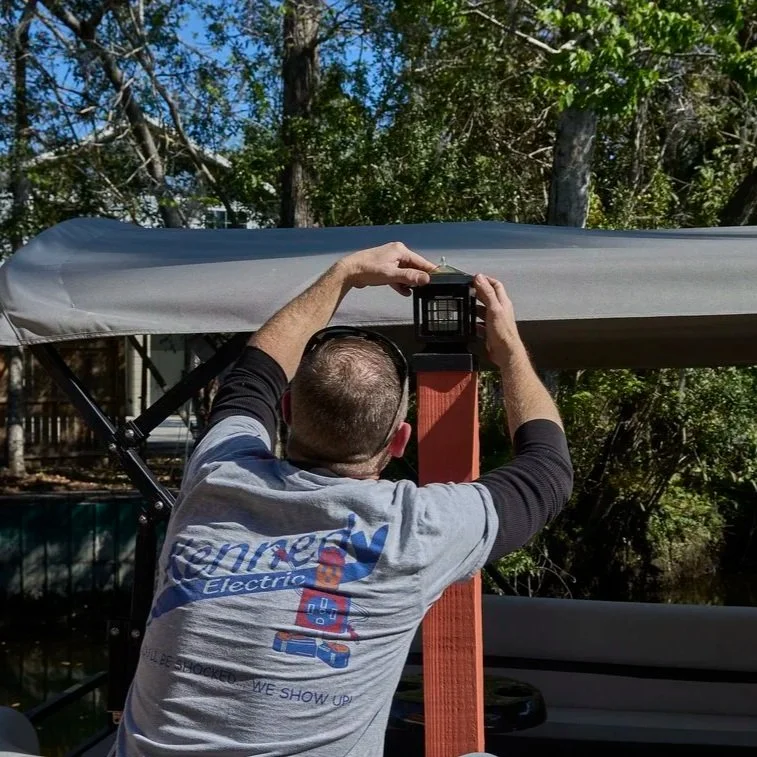
Electrician installing exterior lighting after water exposure, ensuring wiring, outlets, and connections remain safe following residential water damage.
Why Water Damage Changes Electrical Systems Even After Drying
Water damage affects electrical systems in ways that are easy to underestimate. Electricity depends on clean, dry connections and intact insulation to behave predictably. When water enters the picture, even briefly, it disrupts that balance. Moisture carries minerals, dirt, and contaminants into outlets, wiring, panels, and junction boxes. Those contaminants do not simply disappear when surfaces dry.
Corrosion begins almost immediately after water exposure. Metal contacts start oxidizing. Springs and clamps inside devices lose tension. Insulation absorbs moisture and becomes less effective over time. Even after power is restored and everything appears functional, the electrical system no longer behaves the same internally.
Homeowners often assume that visible drying equals recovery. That misunderstanding matters because water damage creates progressive electrical issues. The system may work for weeks or months before problems surface. Flickering lights, unexplained breaker trips, or burning smells appear later, long after the original water event fades from memory. Water damage and your electrical system remain connected long after the mess is gone.
The Common Mistake Of Waiting For A Clear Failure
One of the most common homeowner mistakes after water damage is waiting for something obvious to fail. People expect sparks, smoke, or total power loss before taking action. Electrical damage caused by water rarely presents that way.
Instead, systems degrade quietly. Breakers trip occasionally. Certain outlets feel unreliable. Appliances behave inconsistently. These signs feel minor at first, easy to ignore while focusing on other repairs. Over time, those minor issues become persistent problems that disrupt daily routines.
That delay matters because electrical systems do not self-heal. Corrosion spreads. Insulation degrades. Connections loosen. By the time failure becomes obvious, damage often extends beyond one component. Calling an electrician early after water damage limits how far problems spread and reduces the scope of repair. Waiting allows damage to compound invisibly.
How Water Reaches Electrical Components Inside Homes
Water does not need to flood an entire home to damage electrical systems. Plumbing leaks, roof failures, appliance overflows, and poor drainage all introduce moisture into areas where wiring lives. Outlets near floors, kitchens, bathrooms, garages, and laundry rooms face a higher exposure risk.
Water travels along wiring paths. It enters wall cavities through small openings and settles inside junction boxes. Gravity pulls moisture downward, often toward panels or low-mounted devices. Even minor leaks can drip long enough to saturate insulation and wiring jackets.
Florida humidity makes matters worse. Moisture lingers longer, slowing drying and supporting corrosion. Homeowners may stop noticing dampness while electrical components remain compromised. Understanding how water moves through a home helps explain why electrical problems appear far from the original leak.
What Happens Inside Panels After Water Exposure
Electrical panels can sustain significant damage from water exposure, even when flooding appears limited. Panels contain breakers, bus bars, and connection points that rely on precise contact. Water introduces corrosion, altering how these components behave.
Breakers exposed to moisture may still flip on and off manually, giving the impression they work. Internally, corrosion affects their ability to trip accurately under load. That means dangerous conditions may go undetected. Bus bars suffer increased resistance, which creates heat during normal operation.
Panels exposed to water often become unstable over time rather than failing immediately. Heat buildup accelerates wear. Connections loosen. Breakers misbehave. Electrical problems appear unpredictable. Water damage and your electrical system intersect most critically at the panel, making inspection essential after any exposure.
Why Wiring Inside Walls Is Especially Vulnerable
Wiring hidden behind walls often escapes attention after water damage. Homeowners focus on visible repairs, such as flooring and drywall. Wiring remains untouched, even though it absorbed moisture during the event.
Modern wiring insulation resists brief moisture but not prolonged exposure. Water seeps into tiny imperfections and carries contaminants that cling to insulation. Over time, insulation becomes brittle or compromised. That increases the risk of shorts, ground faults, and overheating.
Delayed failure is common. Wiring may function normally until temperature changes, electrical load increases, or insulation degrades further. Problems appear months later, confusing homeowners who no longer associate them with the original water damage. Electricians often trace these issues back to earlier exposure that was never addressed.
Why Outlets And Switches Are High Risk After Water Damage
Outlets and switches sit exactly where water damage often reaches first. These devices contain exposed metal contacts and springs that require clean surfaces to operate safely. Water contamination leaves residue inside, even after drying.
When electricity flows through contaminated contacts, arcing can occur. Arcing produces intense heat inside electrical boxes. That heat damages surrounding materials and increases fire risk. Outlets exposed to water often feel loose, look discolored, or provide inconsistent power.
Homeowners sometimes replace visible covers while leaving internal components untouched. That cosmetic fix hides damage without correcting it. Water damage and your electrical system remain linked until compromised outlets and switches get properly evaluated and replaced.
How Appliances Hide Electrical Damage After Water Exposure
Appliances exposed to water often create confusion. Some fail immediately and get replaced. Others appear fine and continue running, leading homeowners to assume no damage occurred. Unfortunately, partial exposure creates hidden electrical issues.
Many appliances contain control boards, motors, and sensors mounted low to the ground. Water reaches these components during leaks or flooding. Corrosion affects internal connections and circuitry. Appliances may run inconsistently, draw uneven current, or misread signals.
These problems show up later as unexpected shutdowns, rising energy bills, or premature failure. Repair attempts often fail because underlying corrosion remains. Electricians and appliance technicians frequently recommend replacement after water exposure because reliability rarely returns in the long term.
Why Florida Homes Face Ongoing Water-Related Electrical Risks
Florida homes face unique water-related electrical risks due to climate and geography. Heavy rain, hurricanes, plumbing stress, and high humidity create frequent exposure opportunities. Even homes that avoid major flooding often experience smaller water events.
Salt exposure in coastal areas accelerates corrosion aggressively. Inland flooding still carries minerals and organic matter that damage electrical components. High humidity slows drying and allows corrosion to continue long after leaks stop.
Repeated exposure compounds damage. Each event weakens components further, even if the water seems minor. Homeowners underestimate cumulative effects because damage does not reset between incidents. Water damage and your electrical system remain intertwined in Florida homes more than many realize.
The Shortcut Repairs That Lead To Bigger Problems
After water damage, homeowners face pressure to move forward quickly. Repairs pile up. Budgets stretch thin. Electrical shortcuts become tempting. Drying and reusing panels. Ignoring outlets that seem fine. Delaying inspections.
These shortcuts create long-term problems. Electrical systems compromised by water do not recover fully. Temporary restoration hides damage while allowing it to spread. Over time, failures become more severe and expensive.
Correct practice involves identifying and replacing affected components. That approach may feel disruptive upfront, but it prevents cascading failures. Electricians often see homes where early shortcuts led to repeated repairs and escalating risk. Addressing electrical damage properly once reduces total cost and stress.
When To Call An Electrician After Water Damage
Calling an electrician becomes critical whenever water comes into contact with electrical components. That includes flooding, plumbing leaks near outlets, roof leaks above wiring, appliance overflows, or standing water near panels.
Unusual electrical behavior after water exposure also signals the need for evaluation. Flickering lights, burning smells, frequent breaker trips, warm outlets, or appliance malfunctions point to hidden damage. Even if power works, these signs indicate compromised components.
Electricians assess panels, breakers, outlets, switches, wiring paths, and connected equipment. They identify which components have experienced exposure and which require replacement. Water damage and your electrical system require professional evaluation because hidden risks are impossible to diagnose visually.
Why Delayed Electrical Inspections Still Matter
Some homeowners miss inspections immediately after water damage and regret it later. Electrical problems appear weeks or months afterward, long after cleanup ends. These delayed issues feel random and frustrating.
Delayed inspections still provide value. Electricians can trace failures back to water exposure and prevent escalation. Even if power has been restored for months, underlying damage may continue progressing.
Water damage creates a long tail of risk. Electrical systems degrade gradually after exposure. Calling an electrician later still reduces danger and limits further damage. Ignoring symptoms because time passed only allows problems to worsen.
How Electricians Evaluate Water-Damaged Electrical Systems
Electricians approach water-damaged systems with caution and experience. They inspect components that appear functional and test those that homeowners assume are safe. Flood and leak damage patterns repeat across homes.
Professionals know which components cannot be trusted after exposure. They recognize corrosion indicators that homeowners miss. In Florida, electricians routinely encounter homes where water damage was underestimated initially.
Companies like Kennedy Electric often see the downstream effects of skipped inspections. Addressing compromised components early prevents repeat visits and larger repairs later. Experience matters when water damage hides behind walls.
FAQs
Even small amounts of water can damage outlets, wiring, and panels if moisture reaches electrical components. Prolonged dampness increases risk even without visible flooding.
Electrical components can suffer hidden corrosion and insulation damage, leading to delayed hazards. Functioning power does not guarantee safety after water exposure.
Panels exposed to water often require replacement because corrosion affects breakers and internal connections, even if the panel appears operational.
Outlets and switches exposed to water are typically considered compromised due to internal contamination and increased fire risk.
Corrosion and insulation breakdown progress over time. Components may work initially before failing later as deterioration continues.
