
USB-A Vs. USB-C Outlets: Which Should You Install?
Why does every new device I buy suddenly stop working in the outlet I just upgraded? And why am I still hunting for the “right” charging block in my own house?
You finally upgraded a few outlets to include USB ports, felt proud of cleaning up the countertop clutter, and now your new phone cable doesn't fit the port in the wall. That daily frustration adds up. Instead of simplifying your space, you are back to adapters, loose cords, and wasted time digging through drawers. For Florida homeowners trying to modernize their homes without creating more inconvenience, choosing between USB-A and USB-C outlets feels more complicated than it should.
As an electrician working in Florida homes every week, I get asked this question constantly. USB-A vs. USB-C outlets sounds like a tech debate, but in reality, it is a practical decision about how you live in your house and how long you want that upgrade to stay relevant.
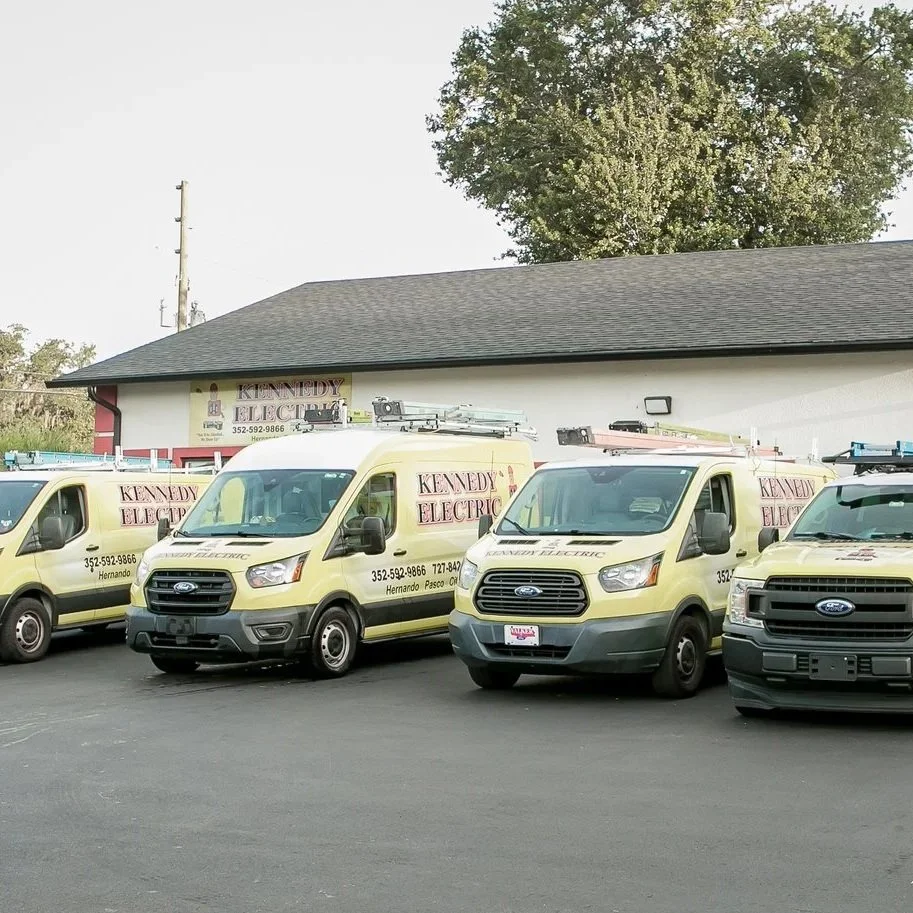
Kennedy Electric service fleet outside facility representing professional installation of modern USB charging outlets supporting evolving home technology needs.
Understanding What USB-A And USB-C Actually Are
USB-A is the rectangular port most people recognize. It has been around for decades and has become the standard charging connection for phones, tablets, and countless other devices. If you picture a traditional USB cable, the larger flat end that plugs into a charging block is USB-A.
USB-C is newer. It has a smaller, oval-shaped connector that plugs in either direction. That reversible design alone solved one of the most annoying everyday problems: flipping a cable over three times before it fits.
The key difference goes beyond shape. USB-C supports higher power delivery and faster data transfer. Many modern smartphones, laptops, and tablets now use USB-C for charging because it can handle greater wattage safely and efficiently.
Why Homeowners Are Suddenly Asking About USB-C
A few years ago, almost every USB outlet installed in homes featured USB-A ports. At the time, that made sense. Most devices relied on USB-A charging blocks.
Now, many new phones and even some laptops come with USB-C cables and sometimes without a traditional USB-A block at all. Homeowners search “Should I install USB-C outlets?” after realizing their new device does not match the port in their wall.
Florida homes often have multiple generations under one roof. Parents might still use older USB-A cables, while teenagers or college students come home with USB-C devices. That mix creates confusion when upgrading wall outlets.
How USB Charging Outlets Work In Your Wall
Both USB-A and USB-C outlets replace a standard wall receptacle and connect to your existing electrical wiring. Inside the outlet, built-in electronics convert 120-volt household current into low-voltage direct current suitable for charging devices.
From the outside, they look similar to standard outlets with added USB ports. From the inside, they contain transformers and control circuitry. That means they generate heat and require proper installation, especially in Florida’s warm, humid climate.
Because they are active devices, quality matters; cheaper models may not deliver consistent power or may degrade faster under regular use.
The Speed Question Everyone Cares About
“Will USB-C outlets charge faster?” That is usually the first practical concern.
In most cases, yes. USB-C outlets often support higher power output, allowing compatible devices to charge more quickly. However, charging speed depends on both the outlet’s rating and the device’s internal charging system.
If you install a basic USB-C outlet with limited wattage, it may not deliver true fast charging for high-demand devices like laptops. Higher-end models support power delivery standards that safely handle higher wattage.
USB-A outlets typically offer lower amperage. They charge phones and other small devices effectively, but they may not support rapid charging features found in newer devices.
The Common Mistake Of Only Thinking About Today
One of the biggest homeowner mistakes I see is upgrading based only on the devices currently in the house. A family might install several USB-A outlets because all their cables fit that style today.
Two years later, half the devices have transitioned to USB-C. Suddenly, those newly installed outlets feel outdated. That leads to more adapters and renewed frustration.
Technology trends strongly favor USB-C moving forward. Many manufacturers have already shifted to USB-C as the standard. Installing only USB-A outlets may limit long-term flexibility.
Mixing Ports For Practical Flexibility
In many Florida homes, the best solution is not choosing one over the other, but installing outlets with both USB-A and USB-C ports.
Combination models allow older cables to work while accommodating newer devices. In shared spaces like kitchens or family rooms, that versatility reduces arguments over who gets which port.
Bedrooms may benefit from USB-C if newer phones dominate. Guest rooms may still lean on USB-A if visitors bring a mix of charging cables. Strategic placement matters more than a one-size-fits-all approach.
Are USB-C Outlets Safe for Higher Power Devices?
Safety questions come up often, especially when homeowners hear that USB-C can deliver more power.
Properly rated USB-C outlets are designed to handle higher wattage safely. They communicate with connected devices to regulate power flow. That communication prevents overcharging and overheating.
Installation quality remains critical. Loose wiring behind any outlet can cause overheating. In Florida homes, where humidity and temperature fluctuations already stress electrical systems, professional installation protects long-term performance.
At Kennedy Electric, we treat USB outlets like any other electrical device. Secure connections, appropriate box size, and proper load considerations all matter.
Do USB Outlets Replace Traditional Plugs?
USB-A and USB-C outlets still include standard receptacles. They do not replace traditional plug slots. That means your lamps, coffee makers, and vacuum cleaners still function normally.
Homeowners sometimes worry that adding USB ports reduces available space for appliances. Modern models are designed to maintain full receptacle function while adding charging capability.
Upgrading to USB outlets does not increase circuit capacity. They share the same branch circuit as the original outlet. If a circuit is already near its limit, addressing load balance may be necessary before adding multiple USB charging points.
Florida Homes And Charging Habits
Florida’s lifestyle influences charging habits. With frequent indoor time during summer heat or storm season, devices stay in constant use. Phones stream media, tablets entertain kids, and smart home hubs remain plugged in around the clock.
In households with remote workers or students, reliable charging becomes essential. USB-C outlets better support higher-demand devices like tablets and lightweight laptops.
Coastal humidity also plays a role. Choosing high-quality outlets with durable internal components helps ensure longevity in environments where moisture can degrade electronics.
Cost Versus Longevity
USB-A outlets often cost slightly less than USB-C or combination models. However, the price difference is usually modest compared to the overall installation cost.
When evaluating value, think in terms of longevity. USB-C aligns with current and future device trends. Installing a slightly more expensive outlet now may prevent the need for another upgrade later.
Homeowners focused only on immediate savings sometimes choose the cheaper option and regret it within a few years. Balancing upfront cost with long-term practicality typically produces better satisfaction.
When USB-A Still Makes Sense
USB-A still serves a purpose. Many devices, including older Bluetooth speakers, portable chargers, and legacy electronics, rely on USB-A cables.
In garages, workshops, or areas where older equipment dominates, USB-A may remain sufficient. Not every space requires the latest charging standard.
Evaluating how each room functions helps determine the appropriate port type. Bedrooms for teenagers with new phones may prioritize USB-C. Utility spaces may not need it.
The Clean Countertop Factor
Homeowners often underestimate how much visual clutter affects daily comfort. Counters filled with charging blocks and power strips feel messy and chaotic.
Upgrading to USB outlets simplifies surfaces. That visual improvement contributes to a calmer, more organized space. For many homeowners, reducing that everyday irritation makes the upgrade worthwhile.
Rather than adapters sticking out at awkward angles, cables plug directly into the wall. Less strain on receptacles also reduces wear over time.
So, Which Should You Install?
If you want the most future-ready option, USB-C or a combination of USB-A and USB-C outlets provides the greatest flexibility. They accommodate evolving technology and support faster charging where available.
If your household still relies heavily on older cables and you are not planning device upgrades soon, USB-A may suffice in certain rooms.
Most Florida homeowners benefit from a mixed strategy. Install combination outlets in high-use areas and consider USB-C in rooms with newer devices. That balanced approach supports both current needs and future changes without unnecessary expense.
FAQs
Replacing every outlet is rarely necessary. Installing USB-C or combination outlets in high-use areas like bedrooms and kitchens usually provides the best balance of convenience and cost.
USB-C outlets generally support higher power delivery and faster charging, making them more future-ready. However, USB-A still works well for older devices and lower-demand charging needs.
Some USB-C outlets with higher wattage ratings can charge lightweight laptops, but not all models support that level of power. Checking product specifications is important before installation.
USB outlets draw a small amount of standby power even when not actively charging devices. The overall impact on energy usage is minimal in most homes.
Quality USB outlets installed properly perform well in Florida’s climate. Professional installation and the selection of reputable products support safe operation over time.
Get top-quality, outlet and switch installation, Home lighting, under-cabinet lighting, hot tub electrical, and exhaust fan installation for residential property owners in Citrus, Hernando, and Pasco Counties. Our team stands behind its workmanship and ensures professionalism, transparency, and constant communication. Licensed, bonded, and insured. Call today!
