The Truth About Circuit Breakers and When They Need Replacement
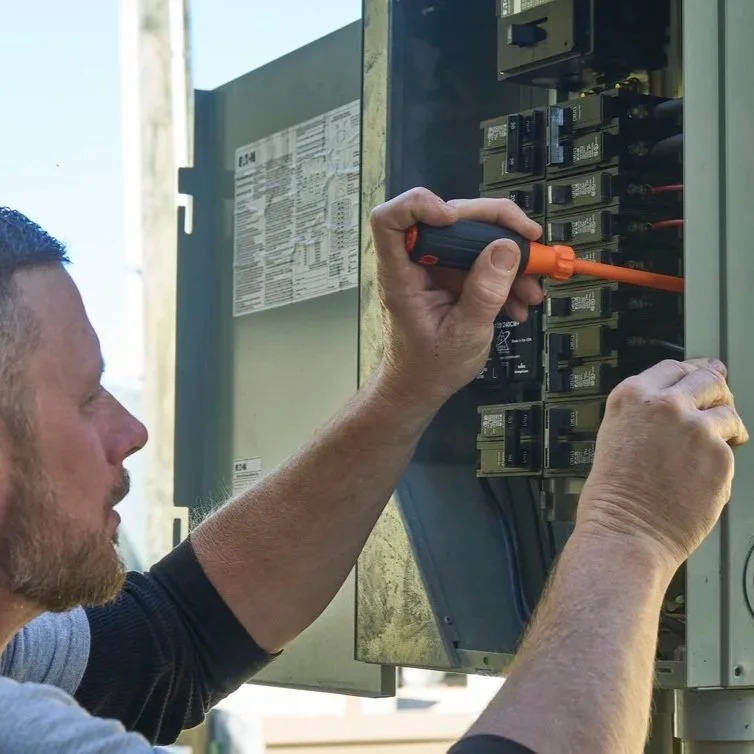
Circuit breakers don't ask for attention, but they do a big job, protecting your home from fires, overloads, and short circuits.
They live quietly behind a metal panel, rarely noticed unless something goes wrong. Circuit breakers don't ask for attention, but they do a big job, protecting your home from fires, overloads, and short circuits. They monitor your electrical system like bodyguards, ready to shut things down in a split second if a circuit draws too much current.
But even the best bodyguards eventually wear out. And when circuit breakers stop doing their job properly, you could be left with more than flickering lights. You could face serious safety issues. That's why understanding how circuit breakers work, and when to replace them, can make the difference between a safe home and a risky one.
What Circuit Breakers Are Actually Supposed To Do
A circuit breaker monitors the flow of electricity on a specific circuit. If the load becomes too high or a fault occurs, the breaker "trips" and interrupts the flow of electricity. That interruption prevents wires from overheating and potentially igniting.
Tripping isn't a failure. It's the circuit breaker doing its job. But if it trips constantly or stops tripping altogether, it's time to take a closer look.
We've heard the phrase, "I thought it was normal for the breaker to trip every time I used the hairdryer." That's not normal; it's a warning sign.
When Tripping Is A Red Flag
Circuit breakers are designed to trip occasionally when circuits are overloaded. But frequent or repeated tripping? That's a sign that something is off. Maybe the circuit is overloaded with too many devices. Maybe the wiring is damaged. Or maybe the breaker itself isn't working as intended.
Sometimes we find homes where homeowners simply reset the same breaker over and over, like it's a stubborn lamp. In one of our more memorable case studies and customer stories, a client had a bathroom breaker that tripped whenever they used the electric toothbrush and the ceiling fan at the same time. They assumed it was just "quirky." Turns out the breaker was malfunctioning, and the wiring was scorched.
If your breaker trips frequently and for no obvious reason, it may not be your appliances; it may be the breaker itself telling you it's done.
Breaker Lifespan Is Not Forever
Many people think circuit breakers last forever. They don't. A typical lifespan for a circuit breaker is 30 to 40 years, but heavy use, moisture, heat, and electrical surges can dramatically shorten it. If your home is over 30 years old and still has the original panel, it's worth scheduling an inspection.
Breakers wear down from repeated tripping. The internal mechanism may lose its sensitivity, leading to delayed or failed trips. That's like having a smoke alarm that only works sometimes.
We've pulled breakers from panels that looked fine on the outside but were melted on the inside. That kind of hidden damage doesn't make noise; it just waits quietly for a failure.
Signs A Breaker Might Need Replacement
The warning signs are usually subtle at first. A breaker that feels warm to the touch. A light buzzing sound inside the panel. Lights that dim slightly when the AC kicks on. Outlets that stop working intermittently.
Another sign is a breaker that won't reset or keeps tripping with no load connected. If you flip the switch and it instantly snaps back, or if it stays in the "on" position but delivers no power, it's time for a replacement.
In rare cases, breakers stop tripping altogether even when there's a fault. That's the most dangerous situation of all. Your system may look fine on the outside while current is flowing through an overloaded wire behind the wall.
Why Breaker Replacement Isn't A DIY Project
Breaker replacement might sound like a simple switch-out, but it's anything but simple. First, the panel needs to be de-energized correctly, which involves turning off the main service power, something that should only be done by a licensed electrician. Second, not all breakers are interchangeable. They must match the panel brand and model, as well as the correct amperage rating and breaker type.
Using the wrong breaker can create unsafe connections, fail to interrupt power when needed, or void your homeowner's insurance in the event of a fire.
We've seen panels with mismatched breakers jammed into slots that weren't designed for them. Some had labels scratched off, others had double-tapped connections that violated every code in the book. None of it was safe. Breakers are part of a carefully calibrated system. Installing the wrong one is like putting truck tires on a compact car and hoping for the best.
Common Breaker Myths That Don't Hold Up
"My breakers are fine because the power still works." Not always true. A breaker can appear to function normally but still fail to trip when needed.
"It's okay to reset a breaker as many times as you want." Breakers are mechanical devices. Excessive resets weaken the mechanism. If you're resetting the same breaker every few days, it's time to call a professional.
"Old breakers are better because they don't trip as often." Breakers that rarely trip in high-load situations may no longer be functioning properly. Less tripping isn't always a good thing.
"I don't need to worry about my panel because it passed inspection years ago." Code requirements evolve. Electrical loads increase. Passing inspection once doesn't mean your system is safe today.
Panels And Breakers That Need To Go
Some older electrical panels and breakers have a poor safety reputation. Federal Pacific, Zinsco, and certain Pushmatic models are widely known for failing to trip during overloads. These panels have been involved in enough incident reports that many electricians recommend full replacement regardless of current performance.
We've replaced panels that hadn't tripped breakers for over a decade, despite obvious wiring issues. When the panel itself is the problem, no number of replacement breakers will make the system safe.
Benefits Of Modern Breaker Technology
Today's breakers offer more than basic protection. AFCI (Arc Fault Circuit Interrupter) breakers detect dangerous arcing conditions that older breakers miss. GFCI (Ground Fault Circuit Interrupter) breakers protect against electrical shock, especially in wet areas. Some breakers even offer Bluetooth monitoring, letting you track usage or receive alerts when a circuit trips.
Upgrading to modern breaker technology can improve safety, convenience, and, in some cases, insurance premiums. And if your home has growing electrical demands, think EV chargers, home offices, or hot tubs, a breaker upgrade may be necessary to keep up.
Why A Professional Inspection Matters
Diagnosing a failing breaker isn't always straightforward. It requires testing equipment, knowledge of electrical load behavior, and experience with code compliance. Professionals know how to spot the early signs of trouble and evaluate whether a breaker, a circuit, or the entire panel needs attention.
In our line of work, case studies and myth-busting topics often show how small signs turned into major issues simply because nobody knew what to look for.
When we perform an inspection, we don't just test for power; we test for safety, load balance, breaker response time, and panel condition. We also check for signs of overheating, corrosion, or improper wiring. Breakers may not be exciting, but they're vital. Giving them a little professional attention goes a long way toward protecting your home.
Why It's Better To Replace Before Failure
Waiting for a breaker to fail isn't just inconvenient, it's risky. Tripped breakers mean no power. Failed breakers mean no protection. Upgrading a breaker or panel before a failure gives you control over timing, cost, and comfort.
Breaker replacement isn't just about convenience. It's about safety, reliability, and peace of mind. The truth? Breakers don't last forever, and they definitely don't fix themselves.
Kennedy Electric is a reliable full-service electrical company serving residential and commercial customers in Citrus, Hernando, and Pasco Counties. We offer electrical remodeling, electrical repair, circuit breakers, electric panel installations, and electric panel repair solutions. As a licensed, bonded, and fully insured electrical contractor, we offer prompt and unparalleled service. We adhere to the latest codes and regulations. Call now to get a free estimate.
