The Pros and Cons of Smart Home Electrical Technology
Why does a house with all this “smart” tech still feel harder to live in than it should? Lights lag, apps glitch, breakers trip, and the electric bill keeps creeping up like something is quietly wrong.
Most homeowners start digging into smart home electrical technology after a moment of pure frustration. Standing in the kitchen, asking a voice assistant to turn off lights that should already be off. Watching a smart thermostat lose connection during a Florida heat spike. Realizing a home packed with modern upgrades feels less reliable than it did ten years ago. The promise sounds great, but the day-to-day experience often raises the same question. Is smart home electrical technology actually helping, or just creating new problems?
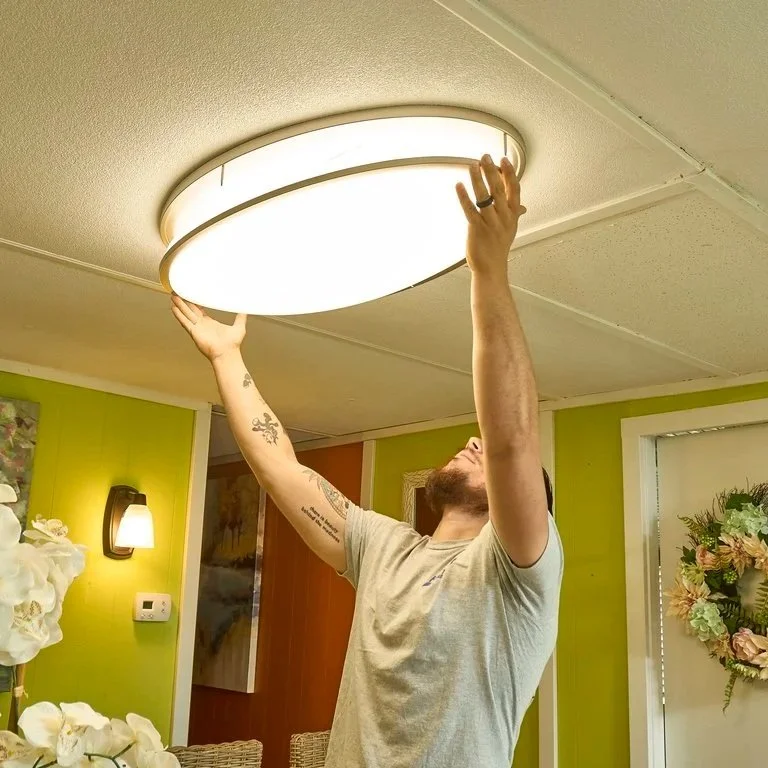
Electrician installing modern ceiling light fixture, supporting smart lighting integration, energy efficiency, and improved everyday home comfort.
Why Smart Home Electrical Technology Feels Inevitable Now
Smart home electrical technology did not become popular because homeowners wanted more apps. It gained traction because modern homes place heavier demands on electrical systems than ever before. Air conditioning runs longer, appliances pull more power, and devices stay connected around the clock. Florida homes feel this shift especially hard due to heat, humidity, and long cooling seasons that strain the electrical infrastructure daily.
Many homeowners assume smart technology is optional or cosmetic. In reality, the way electricity is managed in homes has changed, whether homeowners actively opted in or not. Smart thermostats, EV chargers, security systems, and connected appliances quietly depend on communication, load management, and electrical coordination. Even homes that feel only partially upgraded often rely on smart electrical behavior behind the scenes.
The inevitability creates tension. Homeowners want the benefits without the headaches. When smart systems work well, homes feel responsive and efficient. When systems clash or get installed without proper planning, frustration replaces convenience. Understanding both sides of smart home electrical technology helps homeowners decide how far to lean into it and where caution matters.
The Pro Everyone Notices First: Daily Convenience
The most obvious advantage of smart home electrical technology is convenience. Lights turn off automatically. Thermostats adjust without constant manual changes. Devices respond to schedules instead of reminders. For busy households, these features remove small but constant annoyances.
Smart lighting reduces wasted energy from forgotten switches. Smart outlets cut power to devices that would otherwise draw electricity all day. Timers and sensors handle tasks homeowners rarely want to think about. Over time, that convenience adds up to fewer interruptions and smoother routines.
In Florida homes, convenience ties closely to comfort. Smart thermostats adjust cooling based on occupancy and time of day. Ceiling fans sync with temperature settings. Outdoor lighting responds to sunset, not guesswork. When installed thoughtfully, smart electrical technology reduces daily friction in ways homeowners feel immediately.
Where Convenience Starts Turning Complicated
Convenience becomes a problem when systems overlap without coordination. Multiple apps control similar functions. Devices compete for bandwidth. Settings conflict without an obvious explanation. Homeowners find themselves troubleshooting instead of relaxing.
Many smart devices work well individually but struggle as a group. A smart switch may not communicate smoothly with a smart hub. A thermostat update disrupts schedules. Power cycling becomes a regular habit. These issues frustrate homeowners because the technology promised simplicity.
The underlying issue is often electrical planning, not device quality. Smart home electrical technology requires coordination at the wiring, panel, and system levels. When devices get added piece by piece without a plan, convenience erodes. Homeowners feel blamed for problems they never expected to manage.
The Pro Homeowners Care About Later: Energy Awareness
Another major advantage of smart home electrical technology is visibility into energy usage. Traditional homes hide electricity behavior behind monthly bills and mystery spikes. Smart systems expose patterns.
Homeowners can see which appliances draw the most power. They notice when energy use peaks. They understand how daily habits affect costs. That awareness leads to smarter decisions, even without changing lifestyles dramatically.
In Florida, where cooling accounts for most energy use, smart systems highlight inefficiencies that would otherwise go unnoticed. Homeowners spot systems running longer than expected or cycling at odd hours. Fixing those issues reduces waste and stabilizes bills.
Energy awareness does not automatically lower costs, but it gives homeowners control. Instead of guessing, they respond to real information. That shift often improves satisfaction even when savings are gradual.
The Con of Too Much Information
More data does not always feel empowering. Some homeowners feel overwhelmed by constant alerts, graphs, and notifications. What starts as insight becomes noise.
Smart home electrical technology can create anxiety when homeowners feel responsible for monitoring every detail. Questions pile up. Why did usage spike today? Did something break? Is the system malfunctioning? Without context, data creates stress instead of clarity.
Professional setup and education help prevent this problem. Systems should highlight meaningful trends rather than every fluctuation. When smart technology focuses on useful information, homeowners stay informed without becoming hyper vigilant.
The Mistake of Assuming Smart Technology Is Plug and Play
A common false belief is that smart home electrical technology works instantly once devices are installed. That assumption leads to disappointment. Smart systems rely on infrastructure. Wiring, network layout, and panel capacity all influence performance.
Homeowners often install devices first and address infrastructure later. That sequence causes reliability issues. Devices disconnect. Response times lag. Power limitations surface unexpectedly.
Smart technology works best when electrical systems support it. Load management, proper low-voltage wiring, and sufficient panel capacity matter as much as the devices themselves. Skipping that foundation leads to frustration that feels unfair but predictable.
Understanding that smart homes require planning helps set realistic expectations. Technology enhances homes when systems align. Without alignment, even high-end devices underperform.
The Pros of Load Management and System Balance
Smart home electrical technology improves how power gets distributed. Smart panels, connected breakers, and managed circuits prevent overload by balancing demand.
Homes running multiple high-draw systems benefit most. Air conditioning, EV charging, pool equipment, and major appliances compete for power. Smart systems coordinate usage instead of letting everything peak simultaneously.
That balance reduces breaker trips and stress on electrical components. Homes feel more stable. Power interruptions become less frequent. Equipment lasts longer because it operates within safer ranges.
In Florida, where peak demand occurs daily, load management adds tangible value. Smart technology handles complexity quietly, rather than forcing homeowners to manage it manually.
The Con of Compatibility and Fragmentation
One downside of smart home electrical technology is fragmentation. Not all systems communicate well with each other. Homeowners end up managing multiple platforms.
Compatibility issues frustrate users who expect seamless integration. One device updates while another lags behind. Features break unexpectedly. Support gets scattered across manufacturers.
These problems rarely stem from homeowner error. The smart home industry evolves quickly, and standards shift. Electrical professionals help mitigate fragmentation by selecting systems known to work together rather than mixing incompatible products.
Without guidance, homeowners often learn compatibility lessons the hard way. Choosing technology based on features alone rather than system fit leads to frustration.
The Hidden Pro: Future Flexibility
Smart home electrical technology prepares homes for future upgrades. EV chargers, battery backups, solar integration, and new appliances become easier to add when systems already support communication and load management.
Homes without smart infrastructure often hit limits sooner. Panels max out. Circuits require reconfiguration. Upgrades become disruptive and expensive.
Planning creates flexibility. Even if homeowners do not plan major upgrades immediately, smart electrical foundations keep options open. That flexibility matters as technology adoption accelerates.
Florida homeowners increasingly consider backup power due to storms and outages. Smart systems integrate backup solutions more smoothly than traditional setups.
The Con of Upfront Cost and Perceived Complexity
Smart home electrical technology often costs more upfront. Devices, panels, wiring, and professional setup add to the cost compared to basic installations.
Some homeowners hesitate because the benefits feel abstract. Paying now for flexibility or data does not always feel satisfying. When budgets tighten, smart features become easy to postpone.
The complexity also intimidates homeowners. Learning new interfaces and trusting automation takes adjustment. Those who prefer simple systems may resist smart technology altogether.
Balancing cost, complexity, and benefit requires honest evaluation. Smart technology should solve real problems, not create pressure to adopt features that do not fit the household.
Why Shortcuts Create Long-Term Cons
Shortcuts undermine smart home electrical technology quickly. Using outdated wiring. Skipping load calculations. Adding devices without coordination. Each shortcut reduces reliability.
Homeowners often accept shortcuts during renovations to save time or money. Those decisions rarely fail immediately. Problems emerge gradually as usage increases.
Fixing shortcuts later costs more and disrupts daily life. Correct planning from the start prevents frustration from compounding.
Electricians with real-world experience recognize these patterns early. Companies like Kennedy Electric regularly see how shortcuts affect homes years after installation, shaping recommendations that prioritize long-term performance.
Living With Smart Technology That Actually Helps
When smart home electrical technology fits the home, daily life improves quietly. Lights respond instantly. The climate stays comfortable. Power feels predictable.
Homeowners stop managing systems manually. Technology supports routines instead of demanding attention. That balance represents the true value of smart electrical systems.
Understanding both pros and cons helps homeowners choose wisely. Smart technology works best when it serves the household rather than showing off features.
FAQs
Smart home electrical technology refers to systems that monitor, control, and manage electricity use through connected devices, panels, and automation rather than relying solely on manual switches and breakers.
Smart technology can reduce waste and improve efficiency by adjusting usage patterns, but savings depend on how systems are configured and used.
Smart homes require occasional updates and monitoring, but proper installation and planning reduce maintenance compared to piecemeal setups.
Many older homes can adopt smart systems, though electrical evaluations help identify upgrades needed for safe and reliable performance.
Unreliability often stems from poor wiring, overloaded electrical systems, or incompatible devices rather than flaws in the smart technology itself.
