

Tamper-Resistant Outlets: What Every Florida Parent Should Know
Why does every outlet suddenly feel like it is at eye level the second your baby starts crawling? Florida parents hit a wall when normal living turns into constant hovering, unplugging lamps, blocking furniture, and worrying that one distracted moment could lead to a shock, a scream, or a trip to the ER.
Most parents land on this topic after a very specific moment. It might be catching a toddler poking a toy into an outlet, watching tiny fingers tug at a phone charger, or realizing the outlets along the baseboards are exactly where a curious child spends the most time. That realization brings daily frustration and anxiety fast. Electrical safety stops being an abstract idea and becomes something that feels urgent, personal, and impossible to ignore, especially in a home that was never designed with small children in mind.
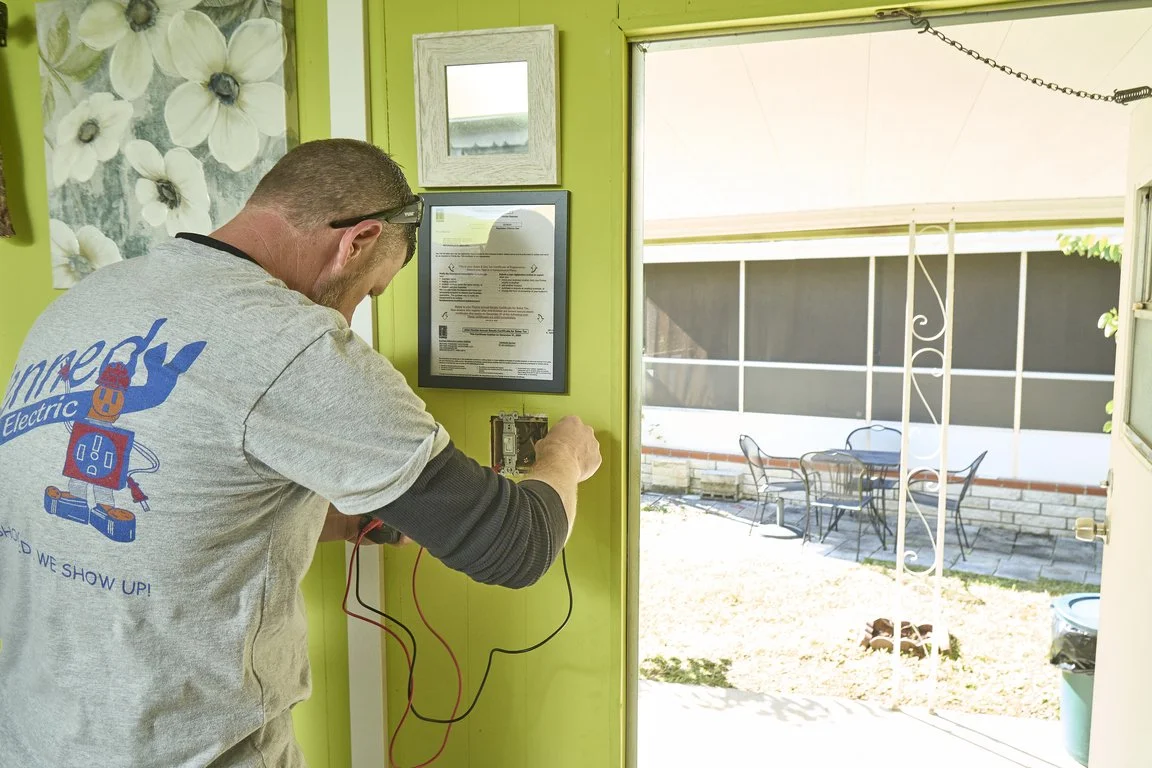
Electrician testing wall outlet voltage during safety upgrade, improving childproof electrical systems and reducing risks from worn receptacles inside homes.
Why Standard Outlets Were Never Designed For Curious Kids
Many parents assume that if outlets were truly dangerous, they would have been designed differently from the start. That belief causes hesitation when it comes to upgrades. Standard outlets were installed for adult use in homes where children were expected to be constantly supervised or kept away from certain areas. They offer no internal protection against objects being pushed into the slots, which means a paperclip, key, or toy can reach live electrical components with very little effort.
The misunderstanding matters because children do not interact with outlets the way adults do. Kids explore by poking, prodding, chewing, and testing reactions. Over time, normal outlet wear makes the problem worse. The internal tension that holds plugs in place loosens, creating gaps that expose energized parts more easily. Florida homes, especially older ones, often have outlets that have been used hard for decades. Ignoring how standard outlets actually function leaves parents relying solely on vigilance, which quickly becomes exhausting and unreliable.
What Makes Tamper-Resistant Outlets Fundamentally Different
Parents often search for “what are tamper-resistant outlets?” expecting a fancy plastic cover. Tamper-resistant outlets work on a completely different principle. Inside the outlet, spring-loaded shutters block access to the energized slots. Power flows only when equal pressure is applied to both slots simultaneously, which happens naturally when a plug is inserted but not when a child pokes one slot with a finger or object.
That difference changes everything for daily safety. Instead of relying on parents to remember to put on covers or reposition furniture, the protection becomes permanent and automatic. Over time, the outlet continues to protect even as kids grow stronger and more curious. Florida parents often do not realize these outlets are now standard in newer construction because older homes predate the requirement. Once installed, tamper-resistant outlets fade into the background, which is exactly the point. Safety becomes built in rather than constantly managed.
Why Outlet Covers Create A False Sense Of Progress
Plastic outlet covers are usually the first line of defense because they are cheap, widely available, and marketed as a complete solution. Parents feel productive installing them, but frustration sets in quickly. Covers fall out, get lost, or become toys themselves. Children learn to remove them surprisingly fast, especially once fine motor skills develop.
The bigger issue is what outlet covers do not address. They do not stabilize loose outlets, fix worn wiring, or prevent internal arcing or overheating. Over time, parents may feel safer while underlying risks quietly increase. Florida humidity and heat accelerate outlet wear, making older receptacles more dangerous even when covered. Relying solely on covers often delays real electrical improvements that actually reduce risk instead of just hiding it.
Why Loose Outlets Are A Bigger Red Flag Than Parents Think
Parents often notice outlets that wiggle slightly when plugging something in and assume it is normal wear. Searching “why does my outlet move” usually follows a moment when a child pushes on it or tries to pull something out. A loose outlet exposes gaps between the device and the wall where fingers, toys, or moisture can reach energized wiring.
That movement also stresses internal connections every time the outlet shifts. Over time, those connections heat up and arc, increasing fire risk. Florida homes experience temperature swings and humidity that accelerate deterioration behind the walls. Ignoring loose outlets turns a visible annoyance into a hidden hazard. Securing or replacing these outlets reduces both the risk of shock to children and the long-term electrical damage that can spread beyond a single device.
Why Extension Cords Become Kid Magnets
Parents often search “are extension cords dangerous for toddlers” after watching a child drag one across the floor. Extension cords and power strips attract kids because they are flexible, textured, and usually connected to interesting objects. Pulling a cord can bring lamps, monitors, or appliances crashing down. Chewing on cords introduces shock risk that parents rarely anticipate.
Long-term cord use also stresses outlets and circuits. Power strips overloaded with chargers and devices heat up, especially in Florida homes already managing heavy electrical demand from cooling systems. Over time, cords fray and plugs loosen, creating sparks and heat that go unnoticed behind furniture. Adding properly placed outlets reduces reliance on cords and removes a daily temptation in child-accessible spaces.
Why Electrical Panels Should Be On A Parent’s Radar
Electrical panels are often out of sight, leading parents to assume they are out of reach. Searching for “is my breaker panel dangerous for kids” usually happens after a child opens a door they weren't supposed to. Panels contain live components even when breakers appear off, and missing covers or blanks expose serious hazards.
Florida panels also face environmental stress from heat and moisture, especially in garages and utility rooms. Over time, corrosion and wear increase the risk. Securing access and updating outdated panels protects curious kids and improves system reliability. Parents who address panel safety early avoid the panic that comes when a child discovers switches that control the whole house.
Why GFCI And AFCI Protection Confuses Families
Parents frequently encounter GFCI and AFCI terms when researching safety, but struggle to understand what they actually do. Searching “what is a GFCI outlet” often leads to partial explanations. GFCI protection cuts power when it detects an imbalance, which reduces shock risk near moisture. AFCI protection detects dangerous arcing that can cause fires.
The confusion leads parents to assume one type covers all risks. In reality, both protections serve different roles. Homes lacking proper protection leave gaps that children can unknowingly exploit. Florida homes built before modern standards often lack one or both, especially in bedrooms and living areas. Over time, the absence of protection increases both shock and fire risk, even if everything appears normal on the surface.
Why Childproofing Is Not Just For Babies
Many parents believe electrical safety concerns fade once kids stop crawling. Searching “when can I stop baby proofing outlets” reflects that mindset. Older children introduce new risks through curiosity, independence, and experimentation. Kids plug and unplug devices, stack adapters, and overload outlets without understanding consequences.
Bedrooms and play areas often become power hubs filled with chargers, lamps, and electronics. Without proper outlet placement and circuit planning, children rely on power strips and adapters that increase risk. Over time, unsafe habits become routine. Electrical safety that evolves with a child’s age supports independence without introducing unnecessary danger.
Why Older Florida Homes Present Unique Challenges
Florida has a large number of family homes built decades ago, long before modern electrical safety expectations. Parents searching for “is my old house safe for kids” often discover outdated wiring, worn outlets, and missing protections. Heat, humidity, and long cooling seasons accelerate wear behind walls.
Older outlets lose tension faster, increasing exposure risk. Panels may lack modern safety features. Grounding may be incomplete or outdated. Childproofing these homes requires more than surface-level fixes. Addressing system age improves both safety and daily reliability, reducing the constant worry that comes from not trusting what is behind the walls.
Why Renovations Are The Best Time To Address Outlet Safety
Parents renovating often search “should I replace outlets during renovation” after seeing walls opened up. Renovations provide rare access to wiring, boxes, and layouts that shape long-term safety. Skipping upgrades during renovations usually leads to regret once walls close and access becomes difficult again.
Replacing standard outlets with tamper-resistant outlets during renovations integrates safety without disrupting finished spaces later. Adjusting outlet placement reduces reliance on cords and power strips. Florida families renovating for growth benefit most when child safety is built into the electrical plan, not an afterthought added as an accessory.
Why Peace Of Mind Comes From Built-In Protection
Parenting already demands constant attention. Electrical systems should not add to that mental load. Parents searching “how do I stop worrying about outlets” often realize peace of mind comes from removing hazards rather than monitoring them.
Tamper-resistant outlets shift safety from constant supervision to passive protection. Over time, parents notice fewer interruptions, fewer warnings, and fewer moments of panic. Homes feel calmer when electrical safety works quietly in the background. That relief grows as children gain independence without increasing risk.
Why Professional Electrical Insight Matters For Families
Parents often rely on online advice and products without understanding how their specific home's electrical system behaves. Florida homes vary widely in age, layout, and the system's condition. What works in one house may not address risks in another.
Electricians working with families see patterns parents miss, such as overloaded circuits, loose connections, or outdated protections hidden behind walls. Kennedy Electric regularly helps Florida parents move from patchwork solutions to integrated safety that grows with their family. That shift replaces constant worry with confidence in the home itself.
FAQs
Tamper-resistant outlets are required in newer construction, but many older Florida homes were built before the requirement. Upgrading older outlets adds safety without changing how the home looks or functions.
Tamper-resistant outlets provide built-in protection and eliminate the need for basic plastic covers. Covers may still be used temporarily, but permanent protection comes from the outlet itself.
Tamper-resistant outlets are designed for long-term use, but like any electrical device, they should be replaced if they become loose, damaged, or worn. Regular inspection keeps protection effective.
These outlets protect against accidental contact for people of all ages. They also reduce risk when inserting objects improperly or when outlets loosen over time.
Outlet replacement is typically quick and minimally disruptive. Many families upgrade room by room without major interruption to daily life.
Kennedy Electric works with Florida parents who want homes that support curiosity without constant fear. Tamper-resistant outlets turn everyday spaces into safer environments where families can focus less on hazards and more on living.
