
Spring Electrical Maintenance Checklist for Florida Homeowners
The AC kicks on, the lights flicker for half a second, and you tell yourself it is probably nothing, even though it did not do that last spring. Florida homeowners hit this moment every year, annoyed that familiar systems suddenly feel strained, bills start creeping up, and small electrical quirks show up right when the house should be settling into an easier season.
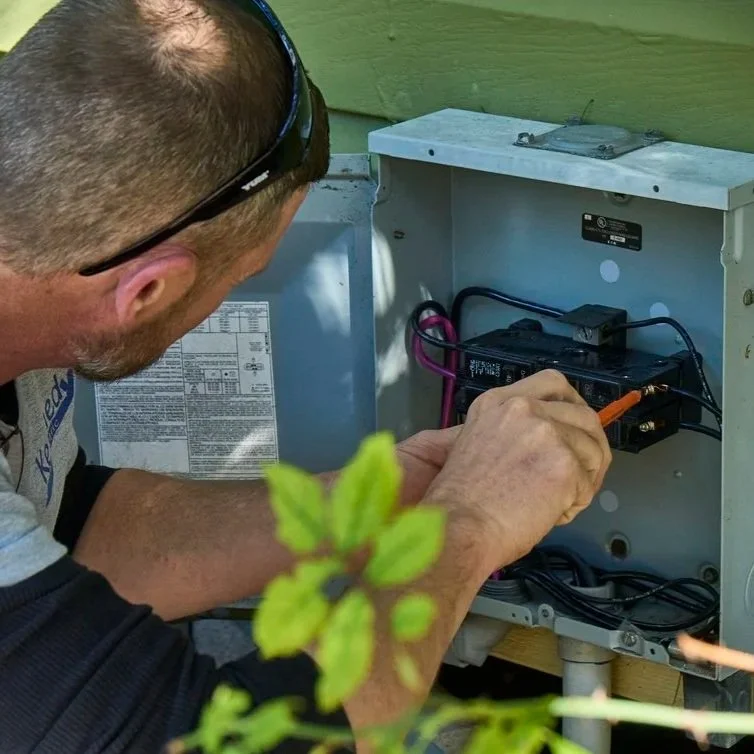
Electrician inspecting outdoor disconnect box during spring maintenance, helping homeowners prepare electrical systems for rising heat, storms, and seasonal demand.
Why Spring Is When Electrical Problems Start Showing Themselves
Spring feels calm on the surface, but for a Florida home, it is a transition period where electrical systems start shifting gears. Air conditioning begins running longer, outdoor equipment comes back online, and appliances that coasted through winter now work harder. Homeowners often assume electrical problems arrive in peak summer, but spring is when warning signs quietly appear. Slight breaker trips, humming panels, or outlets that feel warmer than usual show up now, long before anything fully fails.
The frustration comes from how subtle these issues feel. Nothing stops working outright, yet something feels off. Lights dim briefly, ceiling fans wobble, or garage outlets trip after rain. Spring electrical maintenance matters because it catches stress early, before daily inconvenience turns into emergency calls. Florida humidity, storms, and rising temperatures all combine to test electrical systems that may already be aging or overloaded.
Checking Your Electrical Panel Before It Gets Punishingly Hot
Homeowners rarely think about their electrical panel unless something trips. Spring is the ideal time to actually look at it. Panels in Florida homes endure heat year-round, and spring marks the ramp-up toward constant summer demand. Breakers that look discolored, feel warm, or trip repeatedly signal stress that will only intensify as temperatures rise.
Many homeowners assume that a breaker tripping once in a while is normal. Occasional trips can happen, but repeated issues on the same circuit point to overloads or worn components. A spring inspection allows time to address these problems without the pressure of the peak cooling season. Ignoring panel condition now often leads to frustrating outages later, right when comfort matters most.
Why Outdoor Electrical Components Deserve Extra Attention
Florida homes rely heavily on outdoor electrical equipment. Pool pumps, landscape lighting, exterior outlets, and HVAC components all live in humid, storm-exposed conditions. Spring rains and rising moisture levels reveal weaknesses that stayed hidden during drier months. GFCI outlets that fail to trip, cracked covers, or corroded connections pose real safety risks.
Homeowners often forget outdoor electrical systems until something stops working. Spring electrical maintenance brings those components back into focus. Proper covers, tight connections, and responsive protection devices reduce the chance of nuisance trips and shock hazards. Outdoor electrical issues also affect indoor systems by introducing moisture-related faults that travel back into circuits.
The Common Mistake Of Ignoring Ceiling Fans And Ventilation
Ceiling fans work hard in Florida homes. Spring is when they transition from occasional use to daily operation. Homeowners frequently overlook fans because they seem simple, but loose wiring, worn capacitors, and imbalanced blades create electrical strain and noise.
Fans that wobble, hum, or respond slowly to speed changes deserve attention. Those symptoms signal electrical resistance and mechanical wear that increase energy use. Spring maintenance catches these problems before fans run constantly through the summer. Ignoring them leads to higher bills and shortened equipment lifespan, adding frustration during the hottest months.
Why Outlets And Switches Tell A Bigger Story Than You Think
Warm outlets, buzzing switches, or loose plugs are not just annoyances. They indicate resistance in the wiring or at device contacts. Florida humidity accelerates corrosion, making spring an important checkpoint. Homeowners often dismiss these signs because devices still work, but that false assumption leads to bigger issues later.
Electrical maintenance includes testing outlets for proper grounding and tight connections. Spring is when homeowners notice more device use as routines change. Catching weak outlets now prevents overheating and potential damage when usage increases. These small fixes often eliminate daily frustrations that people quietly tolerate for months.
Lighting Systems And The Spring Reality Check
Lighting feels simple until flickering or dimming becomes routine. Spring storms and moisture affect fixtures, especially outdoors and in garages. Loose neutrals, aging ballasts, and corroded sockets result in inconsistent lighting.
Homeowners searching for a spring electrical maintenance checklist for Florida often do so after noticing lights behaving strangely during storms. Those signs point to grounding or connection issues that deserve attention. Addressing lighting problems in spring improves safety and reliability before summer weather adds stress.
The False Belief That Electrical Systems Rest In Winter
Many homeowners believe winter gives electrical systems a break. In Florida, systems never truly rest. Even mild winters include consistent HVAC use, pool equipment operation, and appliance demand. Spring exposes cumulative wear rather than fresh problems.
That outdated belief leads homeowners to delay inspections, assuming issues are sudden or unavoidable. In reality, spring electrical maintenance addresses wear that built up quietly over months. Recognizing that reality shifts maintenance from reactive to proactive, reducing surprises when demand peaks.
Appliances That Start Acting Up In Spring
Spring reveals appliance issues because usage patterns change. Refrigerators work harder as kitchens heat up. Dryers face higher humidity. Dishwashers handle heavier loads after holidays and gatherings. Appliances that seem fine in winter may struggle now.
Electrical maintenance includes observing appliance behavior. Longer cycles, louder motors, or frequent resets indicate electrical stress. Addressing those signs early prevents compounding wear and protects household circuits from overload. Florida homeowners often blame appliances themselves without realizing that electrical conditions play a role.
Why Surge Protection Matters More Than You Think
Spring storms bring lightning and power fluctuations. Whole-home surge protection often gets overlooked until electronics fail. Florida experiences frequent voltage spikes that slowly degrade sensitive components.
Homeowners assume surge strips cover everything, but whole home protection shields wiring and appliances at the source. Spring is the logical time to evaluate protection before storm season intensifies. Failing to implement surge protection leads to cumulative damage that shortens equipment lifespan and increases replacement costs.
Grounding And Bonding Issues That Surface In Spring
Grounding systems are affected by soil moisture changes and corrosion. Spring rains alter ground conductivity, exposing weak bonds. Homeowners rarely notice grounding problems until shocks or equipment malfunctions occur.
Electrical maintenance includes verifying grounding integrity. Poor grounding affects safety and system stability. Addressing it in the spring reduces risk during storm season and heavy electrical use. Florida soil conditions make this step especially relevant for long-term system health.
The Shortcut Of Waiting Until Something Fails
A common homeowner shortcut is to postpone maintenance until a clear failure occurs. That approach seems cost-effective but usually results in higher expenses and inconvenience. Emergency electrical issues disrupt routines and limit repair options.
Spring maintenance offers flexibility. Homeowners can schedule inspections and minor repairs without urgency. Addressing small issues now prevents stressful situations during peak summer demand when electricians are busiest, and comfort matters most.
How Electricians Approach Spring Electrical Maintenance
Electricians evaluate systems holistically. Panels, circuits, grounding, appliances, and outdoor equipment all interact. At Kennedy Electric, spring inspections often uncover patterns homeowners never noticed, like multiple circuits nearing capacity or aging components stressed by seasonal changes.
That comprehensive approach explains why checklists matter. Electrical systems function as networks, not isolated parts. Spring maintenance aligns with how Florida homes actually operate, reducing long-term frustration and surprise failures.
Timing And Planning Without Sales Pressure
Spring provides a window to understand system conditions without rushing decisions. Homeowners gain clarity about what needs attention now versus later. That knowledge reduces anxiety and improves budgeting for future upgrades or repairs.
Electrical maintenance does not require immediate action on every finding. It offers information that empowers homeowners to plan intelligently. In Florida, where systems work hard year-round, that planning makes daily life smoother and more predictable.
FAQs
Spring reveals wear from winter usage and prepares systems for heavier summer demand. Addressing issues now prevents failures during peak heat and storm season.
Breaker trips, warm outlets, outdoor outlet failures, and appliance strain often surface as humidity and usage increase.
Older homes often have wiring and panels closer to capacity. Spring maintenance helps identify stress before demand peaks.
Fixing resistance issues, overloaded circuits, and inefficient components improves system performance and reduces wasted energy.
Many electrical issues develop quietly. Professional evaluation catches hidden problems that homeowners may not notice until failure occurs.
