

Outlet Stopped Working, But Breaker Didn’t Trip? Here’s Why
Why did that outlet die for no reason? The breaker isn’t tripped, the lights still work, but now half the wall is useless.
You plug in your coffee maker before work, and nothing happens. No pop, no flicker, no warning. Now you are late, annoyed, and staring at a dead outlet while the breaker panel looks completely normal. That kind of everyday electrical mystery creates frustration fast, and it often signals something deeper going on behind the drywall.
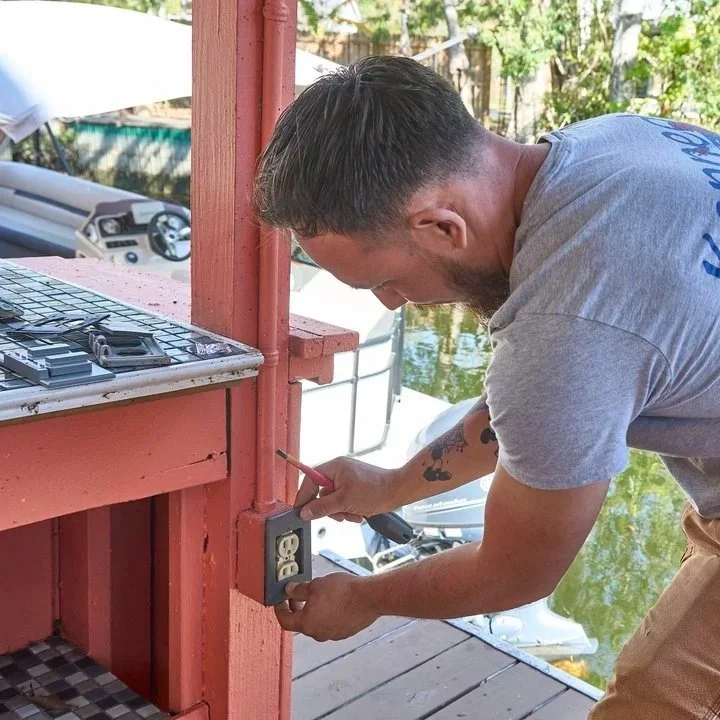
Electrician repairing outdoor outlet on deck highlighting professional troubleshooting for dead receptacles GFCI trips loose wiring residential electrical issues
It’s Not Always The Breaker You Think It Is
Most homeowners assume a dead outlet automatically means a tripped breaker. That assumption makes sense because breakers are designed to shut off power when something goes wrong. When you open the panel and see everything still in the “on” position, confusion sets in immediately.
Circuit breakers protect the entire circuit, not individual outlets. A single receptacle can fail while the rest of the circuit continues working without interruption. In many Florida homes, especially those built in the 1980s and 1990s, outlets are wired in sequence. Power flows into the first outlet, then out to the next, and continues down the line. If a connection loosens at one point, every outlet downstream can lose power even though the breaker remains engaged. That creates a strange scenario in which one side of the room works perfectly while the other appears completely dead.
Electrical systems are built in chains, not isolated islands. If the connection feeding one outlet fails, the rest of the chain breaks. The breaker does not trip because there is no overload or short circuit. The flow of electricity is interrupted. That difference is important. A breaker trip signals excessive current. A dead outlet without a trip often signals a physical break in the circuit path. Understanding that distinction helps narrow down the real cause instead of repeatedly flipping breakers and hoping something changes.
The Hidden GFCI You Forgot About
If you are typing “why did my outlet stop working but the breaker didn’t trip” into a search bar, there is a strong chance a GFCI outlet is involved. Ground fault circuit interrupters are designed to shut off power when they detect even a slight imbalance between hot and neutral conductors. That imbalance can indicate potential shock risk.
Florida homes commonly have GFCI outlets in kitchens, bathrooms, garages, laundry rooms, and exterior walls. What many homeowners do not realize is that one GFCI can protect multiple standard outlets downstream. A garage GFCI might control patio outlets. A bathroom GFCI could feed a bedroom outlet on the opposite side of the wall. When it trips, everything connected after it loses power.
Humidity plays a role here. Florida’s climate can trigger GFCI devices due to condensation and moisture. Even a small amount of moisture in an outdoor box or garage receptacle can cause a trip. Homeowners often forget these hidden connections and start tearing apart unrelated outlets, unaware that the solution may be a simple reset button in another room. If the GFCI continues to trip after a reset, it is usually a sign of a faulty appliance, moisture intrusion, or wiring damage that requires further evaluation.
Loose Connections And Backstab Wiring
When no GFCI is involved, and the breaker remains on, loose wiring connections are among the most common causes. Inside each outlet box, wires attach either under screw terminals or through push-in connectors known as backstab connections.
Backstab wiring is fast and efficient for initial installation. Builders frequently used it in production homes throughout Florida. Over time, though, those spring-loaded clips can lose tension. Electrical current generates heat, and heat causes expansion and contraction. That cycle repeats daily, especially in homes where air conditioning systems cycle constantly through long Florida summers. Gradual movement weakens the connection.
As resistance increases at a loose point, heat builds. Heat degrades metal contact and can even darken or melt insulation. Eventually, the connection may separate enough to interrupt power entirely. The breaker does not trip because there is no overload. The circuit is simply open. When I open these boxes during service calls, I often find one loose backstab connection feeding several downstream outlets. Re-securing wires under proper screw terminals creates a more durable connection and restores consistent power flow.
Burned Or Failed Receptacles
Outlets themselves wear out. Every time you plug in or unplug a device, the internal metal contacts flex slightly. Over time, especially in high-traffic areas like kitchens and living rooms, those contacts weaken. Plugs begin to feel loose. Intermittent power becomes common.
Eventually, the internal contacts can fail. You might notice discoloration on the faceplate or a faint burnt odor. In some cases, the outlet looks perfectly normal from the outside, but the internal bridge connecting the two halves of the receptacle has failed. That failure interrupts power to the downstream outlets.
Florida homes often experience high, sustained electrical loads due to air conditioning, pool equipment, and multiple electronics. Continuous demand accelerates wear on older receptacles. If an outlet stopped working in a location that regularly powers heaters, hair dryers, or heavy appliances, internal failure is a likely culprit. Replacing the outlet solves the immediate problem, but checking for signs of overheating helps prevent repeat issues.
The Daisy Chain Effect Behind Your Walls
Residential wiring typically follows a daisy chain layout. One cable feeds into the first outlet. Another cable exits that same box to feed the next outlet, and so on. That structure makes troubleshooting slightly more complex than most homeowners expect.
If the third outlet in the chain develops a loose connection, outlets four, five, and six may all lose power. Meanwhile, outlets one and two remain functional. That pattern can make the problem appear random. Without understanding the layout, you might assume multiple outlets failed independently.
Tracing the chain requires identifying which outlet is the last working one before the failure. Often, the faulty connection lies there. In older Florida homes that have undergone renovations, additions, or partial rewiring, the path may not follow a straightforward sequence. Wires may have been extended during remodeling, creating splices hidden in junction boxes. A methodical inspection is necessary to pinpoint the break without guesswork.
Rodents, Moisture, And Environmental Factors
Florida’s environment presents unique challenges. High humidity encourages corrosion at connection points. In coastal areas, salt air accelerates metal deterioration. Even indoor outlets can experience corrosion if moisture migrates into wall cavities.
Rodents also create problems. Attic wiring occasionally becomes a target for chewing. A partially damaged conductor may still allow some current to pass but fail under load. That can lead to an outlet that works intermittently before stopping completely.
Storms introduce another layer of risk. Heavy rain combined with wind-driven moisture can seep into exterior walls. Outdoor receptacles without proper in-use covers are especially vulnerable. Water intrusion can corrode terminals and cause a GFCI to trip or result in total power loss on that branch of the circuit. If an outlet stopped working after severe weather, environmental damage should be considered.
The Mistake Of Treating It As A Minor Inconvenience
A single dead outlet may seem minor. You rearrange furniture or run an extension cord temporarily. Over time, though, ignoring it can create clutter and even safety hazards.
Extension cords stretched across floors increase trip risks. Overloaded power strips used to compensate for a dead outlet can generate heat. That short-term workaround becomes a long-term habit. Electrical systems are designed for balanced distribution. When one point fails, strain shifts elsewhere.
More importantly, the cause of a dead outlet is rarely random. Loose connections, overheating, or corrosion do not improve on their own. They typically worsen. Addressing the root cause protects not just that outlet, but the entire circuit. At Kennedy Electric, we approach these calls by diagnosing the entire pathway, not just replacing the visible device.
When The Breaker Looks Fine But Isn’t
Although uncommon, breakers themselves can fail internally. A breaker handle may appear to remain in the “on” position even though its internal mechanism has tripped or degraded.
Older panels, particularly in homes that have not been updated in decades, may show signs of wear. Corrosion or heat damage inside the panel can prevent proper current flow. If multiple outlets on the same circuit lose power and no loose connections are found, the breaker may need to be replaced.
Florida’s heat and frequent lightning activity place additional stress on panels. Power surges and fluctuations can weaken internal components over time. A professional evaluation helps determine whether the issue lies in the outlet, the wiring, or the panel itself. Treating the system as a whole prevents repeat failures and restores confidence that your home’s electrical infrastructure is functioning safely.
FAQs
A loose connection, a failed receptacle, a tripped GFCI outlet, or an internal breaker issue can interrupt power without triggering a visible breaker trip. The problem often lies at a connection point upstream in the circuit.
Check all GFCI outlets in nearby bathrooms, kitchens, garages, and exterior walls. Press the reset button on each one to see if power returns to the dead outlet.
Yes, because the underlying cause may involve overheating or loose wiring. Ignoring it can increase fire risk and lead to further circuit damage.
High humidity and moisture intrusion can corrode wiring connections and trigger GFCI devices. Proper weather-resistant outlets and covers help reduce this risk.
If resetting breakers and GFCI outlets does not restore power, professional troubleshooting is recommended. Identifying the root cause protects the circuit and prevents future failures.
