

Motion Sensor Lights Not Working? Troubleshooting Guide
Why does the light stay off when you are standing right there waving your arms like an idiot? You walk up the driveway at night, hands full, expecting the motion sensor light to kick on like it always used to, and instead, you are left fumbling in the dark, irritated and wondering why it picked tonight to fail.
That moment usually turns into daily frustration fast. Missed motion lights mean wasted time, safety concerns, higher energy use from leaving other lights on, and the constant annoyance of a feature that was supposed to make life easier, now doing the opposite.
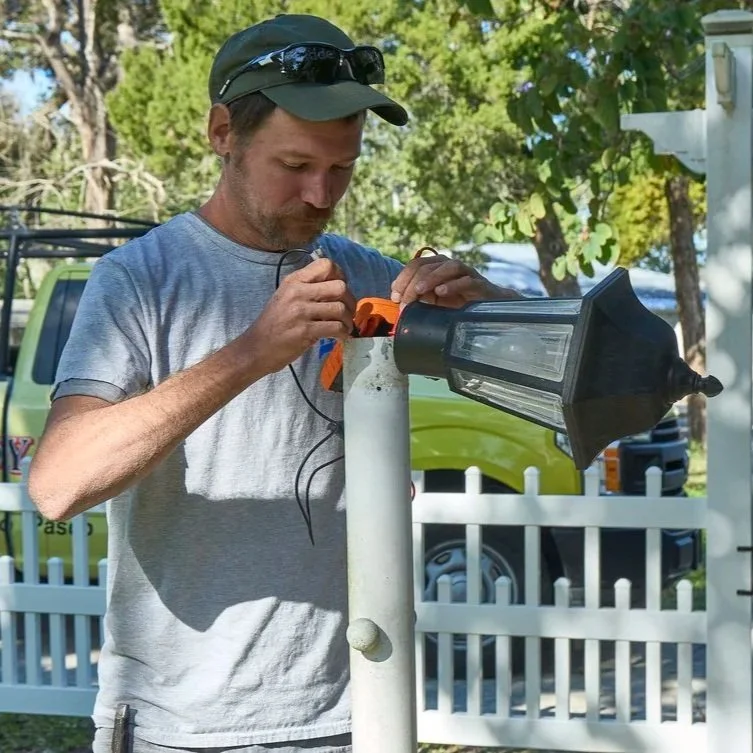
Electrician installing motion sensor light to improve outdoor visibility, security, and reliable automated lighting around residential property entrances.
Why Homeowners Search “Motion Sensor Lights Not Working”
Motion sensor light not working is a search that usually follows repeated small annoyances rather than a single big failure. Homeowners notice the light turning on late, staying off completely, or behaving inconsistently from night to night. The problem feels random, which makes it more frustrating than a burned-out light.
Florida homes rely heavily on motion sensor lights for convenience and security. Driveways, garages, side yards, patios, and pool areas all benefit from hands-free lighting. When those lights fail, homeowners lose both visibility and peace of mind. The inconvenience builds quickly when trash nights, late arrivals, or early mornings suddenly require flashlights or manual switches again.
Confusion grows because motion sensor lights appear simple on the surface. Most people assume the issue is the bulb or the sensor itself. In reality, motion sensor problems often involve settings, placement, wiring, or environmental conditions that slowly change over time. Understanding how these systems actually work makes troubleshooting far less frustrating.
How Motion Sensor Lights Actually Detect Movement
Motion sensor lights use passive infrared technology to detect changes in heat within their field of view. The sensor looks for movement that differs from the background temperature. When a warm object moves across detection zones, the light activates.
Homeowners often misunderstand motion detection and assume any movement should trigger the light. In reality, sensors respond best to movement that crosses their detection pattern rather than to movement that comes straight toward them. Walking directly at the sensor sometimes produces weaker activation than moving across its field of view.
That misunderstanding matters because placement and angle affect reliability. A sensor aimed incorrectly may miss movement entirely or activate inconsistently. Over time, homeowners assume the sensor is failing when the real issue is orientation or changes in the surrounding environment that interfere with detection.
The Common Mistake Of Assuming The Sensor Is Broken
A common homeowner mistake involves replacing bulbs or entire fixtures without addressing the underlying cause. Motion sensor lights often fail gradually rather than all at once. They may work sometimes, turn on late, or behave unpredictably.
People often assume electronics fail suddenly. Motion sensors more often struggle due to configuration changes, dirt buildup, or environmental interference. Jumping straight to replacement wastes money and leaves the real problem unresolved.
Ignoring early warning signs leads to bigger inconvenience later. A sensor that activates late today may stop activating altogether tomorrow. Understanding why behavior changes helps prevent repeated frustration and unnecessary replacements.
Why Motion Sensor Lights Stop Working After Heavy Rain Or Heat
Why do motion sensor lights stop working after rain is a common Florida homeowner question. Moisture affects sensors, wiring, and connections, especially in outdoor fixtures exposed to humidity, storms, and temperature swings.
Water intrusion causes corrosion at connections and sensor components. Even small amounts of moisture disrupt electrical signals, leading to delayed activation or complete failure. Florida heat compounds the problem by expanding materials and accelerating wear.
Homeowners often notice motion lights failing after storms or during humid stretches. The issue may temporarily resolve as things dry out, only to return later. Over time, corrosion worsens, and intermittent issues become permanent failures if left unaddressed.
Why Motion Sensor Lights Turn On Randomly At Night
Why does my motion sensor light turn on for no reason is one of the most frequently searched complaints about outdoor lighting. Random activations feel creepy and irritating, especially when they happen repeatedly throughout the night.
False triggers usually come from heat sources, moving foliage, or small animals passing through the detection zone. In Florida, palm fronds, bushes, and even heat rising from pavement can activate sensors if placement is off.
Another overlooked cause involves sensitivity settings. Sensors set too high respond to minor temperature changes or distant movement. Over time, homeowners forget that settings were adjusted during installation or troubleshooting, leading to ongoing false activation that feels mysterious.
How Sunlight And Headlights Interfere With Sensors
Motion sensors struggle when exposed to direct sunlight or reflective surfaces. Sunlight heats surfaces unevenly, creating temperature shifts that confuse detection zones. Headlights passing by at night can also introduce heat changes that trigger sensors.
Homeowners often install motion lights where they get partial sun exposure without realizing the impact. Over time, seasonal changes alter sun angles, making a previously stable installation unreliable.
Ignoring environmental exposure leads to repeated false triggers or missed activation. Adjusting placement or shielding sensors from direct light often solves the problem without replacing the fixture.
Why Motion Sensor Lights Stop Working Completely
Why did my motion sensor light stop working altogether is usually asked after a gradual decline ends in total failure. By that point, homeowners are frustrated and often ready to rip the fixture out.
Complete failure may involve power supply issues, failed sensors, damaged wiring, or worn components. Outdoor fixtures endure constant exposure that shortens their lifespan, especially in Florida’s climate.
Assuming total failure always means replacement overlooks repairable issues. Loose connections, failed bulbs, or damaged seals often cause outages that look permanent but are fixable when identified early.
The Hidden Role Of Wiring And Connections
Motion sensor lights rely on stable power and solid connections. Loose wiring creates voltage fluctuations that interfere with sensor operation. Homeowners often overlook wiring because the light may still turn on manually or intermittently.
Florida homes experience expansion and contraction due to heat and humidity, which loosen connections over time. Vibration from garage doors or nearby traffic adds to the problem.
Unchecked wiring issues worsen gradually. Sensors become unreliable, lights flicker, and eventually fail. Addressing connections early stabilizes performance and prevents damage to the sensor electronics.
Why Bulbs Matter More Than People Think
Not all bulbs work well with motion sensors. Some LED bulbs draw power differently than older incandescent bulbs, affecting sensor compatibility. Homeowners often swap bulbs without realizing the sensor depends on specific electrical characteristics.
Using incompatible bulbs causes delayed activation, flickering, or failure to turn on. Packaging does not always make compatibility obvious, leading to trial-and-error frustration.
Selecting bulbs designed for motion sensor use improves reliability and extends fixture life. Ignoring compatibility leads to repeated annoyance and unnecessary troubleshooting.
The Shortcut Of Leaving The Switch On All The Time
Many homeowners bypass motion sensors by leaving lights switched on constantly after problems begin. That shortcut defeats the purpose of the system and increases energy use.
Leaving lights on masks underlying issues. Sensors continue to degrade while homeowners accept higher bills and reduced convenience as normal.
Fixing the root problem restores functionality and prevents wasted energy. Motion sensors exist to reduce daily effort, not add ongoing inconvenience.
Why Placement Is Everything With Motion Sensors
Where should motion sensor lights be installed is a question many homeowners never ask until problems appear. Placement affects detection range, accuracy, and reliability.
Sensors mounted too high or too low may miss movement or trigger incorrectly. Angles that worked years ago may fail as landscaping grows or structures change.
Reevaluating placement improves performance without replacing hardware. Small adjustments often make a dramatic difference in reliability.
How Electricians See Motion Sensor Problems In Florida Homes
Kennedy Electric frequently encounters motion sensor lights installed correctly at first, but affected by environmental changes over time. Landscaping, added structures, and weather exposure gradually degrade performance.
Homeowners often feel embarrassed calling for help over something that seems small. In reality, motion sensor issues are common and fixable when approached methodically.
Professional troubleshooting identifies whether the issue involves settings, wiring, placement, or component failure. Correcting the right cause restores confidence in the system and removes daily irritation.
Why Ignoring Motion Sensor Problems Creates Bigger Issues
Motion sensor problems rarely stay isolated. Electrical issues that affect sensors often affect other outdoor circuits. Loose connections and moisture intrusion spread damage over time.
Ignoring problems increases repair scope and cost. A small sensor issue today may turn into fixture replacement or wiring repair later.
Addressing motion sensor problems early keeps outdoor lighting reliable and prevents safety concerns from escalating.
FAQs
Intermittent operation usually points to sensitivity settings, loose wiring, or environmental interference. These issues cause inconsistent detection rather than complete failure.
Yes, moisture and heat accelerate corrosion and component wear. Outdoor fixtures in Florida often fail faster without proper sealing and maintenance.
Some LED bulbs are incompatible with motion sensors. Using bulbs designed for sensor use improves reliability and activation speed.
Sunlight, reflections, or incorrect dusk-to-dawn settings can confuse sensors. Adjusting placement and light level controls usually resolves daytime activation.
Many issues are repairable if addressed early. The likelihood of replacement increases as corrosion or component failure progresses.
