

Low-Voltage Wiring for Smart Homes: What You Need to Know
Why does the Wi-Fi drop when someone closes a door or turns on the TV? Speakers cut out, cameras lag, and half the “smart” stuff in the house feels dumber every month.
Most homeowners start researching this topic after one too many daily annoyances. A doorbell camera freezes right when someone walks up. A smart thermostat loses connection in the middle of a Florida heat wave. A new gadget gets installed, but it only works in one corner of the house. The frustration builds because everything looks modern on the surface, yet the home never quite lives up to its promise. In many cases, the real problem sits behind the walls in the form of low-voltage wiring that was never planned, never upgraded, or never installed correctly in the first place.
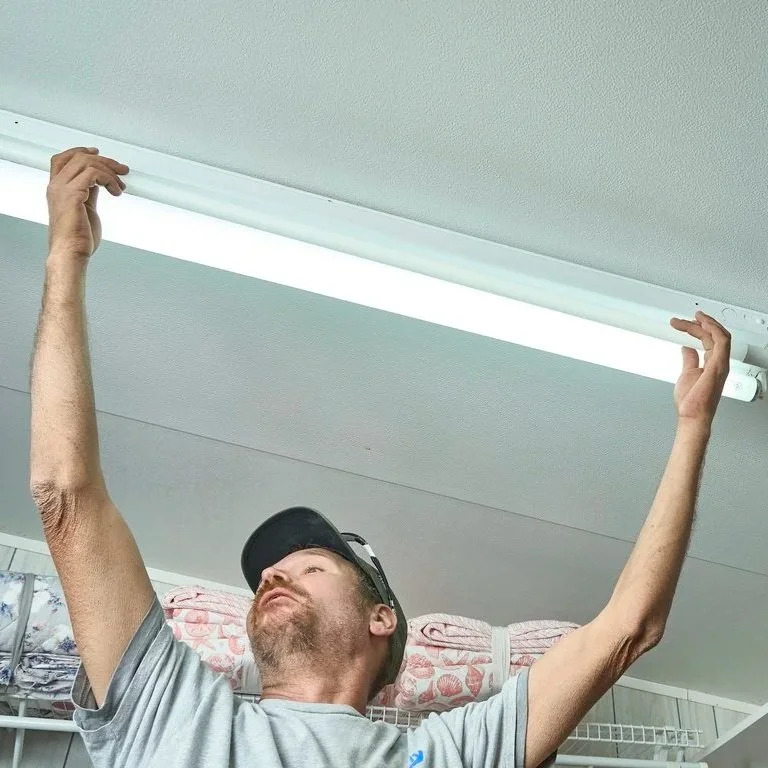
Electrician installing overhead lighting fixture, supporting smart home wiring infrastructure and reliable low voltage system performance throughout living spaces.
Why “Smart Home Problems” Usually Start With Wiring, Not Devices
Homeowners often blame devices when smart home systems act unreliably. Wi-Fi routers get replaced, apps get reinstalled, and settings get tweaked endlessly. That cycle rarely fixes the underlying issue because the devices are only as good as the infrastructure supporting them.
Low-voltage wiring is the backbone of smart homes. It supports data, communication, audio, video, and control systems that modern homes rely on every day. Internet access points, security cameras, structured cabling, smart lighting controls, and whole-home audio all depend on properly planned low-voltage wiring. When that wiring gets treated as an afterthought, performance suffers in ways that feel random and infuriating.
In Florida homes, especially, where construction spans decades of changing standards, many houses were never designed for today’s data demands. Walls hide a mix of outdated cabling, poorly routed lines, and shortcuts taken during renovations. The result feels like bad luck, but it is usually predictable. Devices struggle because the wiring behind them was never meant to support constant data flow across an entire home.
What Low-Voltage Wiring Actually Is and Why It Gets Misunderstood
Low-voltage wiring refers to cabling that carries signals and power at much lower voltages than standard electrical circuits. Instead of powering outlets or appliances, it handles communication. Ethernet cables, coaxial lines, speaker wire, control wiring, and security system cables all fall into this category.
Homeowners often misunderstand low-voltage wiring because it feels invisible. No sparks, no breakers, no obvious danger. That leads to the assumption that it is simple, flexible, or easy to change later. In reality, low-voltage wiring requires just as much planning as high-voltage electrical work, sometimes more.
The misunderstanding matters because poor planning locks in limitations. Running one cable instead of two. Using outdated cable types. Sharing pathways with electrical lines. Skipping proper termination. Each shortcut reduces reliability. Over time, those decisions show up as buffering, lag, dropped connections, and devices that never quite sync properly.
Ignoring low-voltage wiring early creates long-term performance issues that no app update can fix.
The Common Mistake of Relying on Wi-Fi for Everything
One of the most common homeowner mistakes is assuming Wi-Fi alone can handle a smart home. Wireless technology sounds convenient and flexible, so it feels logical to avoid wiring whenever possible.
Wi-Fi works well for many things, but it has limits. Walls, distance, interference, and competing devices all degrade performance. Florida homes with concrete block construction, metal framing, or additions often experience even more signal loss. When everything relies on Wi-Fi, congestion builds quickly.
Low-voltage wiring provides stability where wireless struggles. Hardwired access points deliver strong, even signals. Wired cameras stream reliably. Hardwired smart hubs communicate instantly without delay. Homeowners who rely entirely on Wi-Fi often end up chasing problems room by room instead of fixing the system as a whole.
The belief that wireless replaces wiring leads to frustration. Smart homes work best when wired and wireless systems complement each other rather than compete.
Why Low-Voltage Wiring Is About Planning, Not Just Cabling
Low-voltage wiring is not just about running cables. It is about designing pathways that support how a home actually functions. Where devices live. How rooms get used. Where technology may expand later.
Homeowners often add smart features one at a time. A camera here. A speaker there. Each addition feels small, but together they form a system. Without planning, cables get routed awkwardly, equipment ends up scattered, and troubleshooting becomes a guessing game.
Proper low-voltage planning centralizes equipment, labels connections, and anticipates growth. Extra runs get installed where future devices might go. Pathways stay accessible. Signal quality remains consistent across the home.
That foresight matters long term. Homes evolve. Families add devices. Technology changes. Wiring that was planned correctly adapts quietly, while poorly planned wiring forces disruptive retrofits later.
How Poor Low-Voltage Wiring Shows Up in Daily Life
Most homeowners do not think about wiring when systems fail. They feel the symptoms instead. Video feeds lag. Audio drops out between rooms. Smart lighting responds slowly or inconsistently.
Those issues often occur during peak usage. Evenings when streaming, gaming, and video calls overlap. Hot afternoons when thermostats, cameras, and sensors all communicate constantly. The system feels fine sometimes and broken others.
That inconsistency frustrates homeowners because it feels unpredictable. In reality, the wiring is overwhelmed or improperly configured. Bottlenecks form where cables share bandwidth, connectors degrade, or signal interference builds.
Over time, homeowners adapt by avoiding features they paid for. Cameras get ignored. Audio systems stay off. Smart features stop feeling smart. All because the foundation was never solid.
The Shortcut Problem in Renovations and Add-Ons
Renovations create many low-voltage problems. Walls get opened and closed quickly. Focus stays on finishes, not infrastructure. Wiring gets rushed or reused without evaluation.
Contractors may extend existing cables without testing. Old wiring gets buried behind new drywall. Incompatible cable types get mixed. Everything works on day one, then slowly degrades.
These shortcuts rarely fail immediately, which makes them harder to spot. Months later, devices act unreliably, and nobody connects the issue to the renovation. Homeowners end up paying twice, once for the shortcut and again for the fix.
Correct low-voltage wiring during renovations requires slowing down and planning beyond immediate needs. That mindset prevents frustration long after the paint dries.
Why Florida Homes Face Unique Low-Voltage Challenges
Florida homes face heat and humidity, and building materials that affect low-voltage wiring more than many homeowners realize. Attics run hot. Moisture impacts connections. Outdoor cameras and equipment are constantly exposed to environmental stress.
Cheap connectors corrode. Poorly protected cables degrade faster. Outdoor runs fail prematurely. These problems do not always show up as total failure. They appear as intermittent issues that drive homeowners crazy.
Smart homes rely on consistent communication. Environmental stress undermines that consistency. Proper cable selection, routing, and termination matter more in these conditions.
Ignoring Florida’s climate during low-voltage installation shortens system lifespan and increases maintenance headaches.
Why Retrofitting Is Harder Than Doing It Right the First Time
Retrofitting low-voltage wiring into finished homes is possible, but it is more invasive and costly than homeowners expect. Fishing cables through walls, ceilings, and attics takes time and precision.
Homeowners who delay wiring often end up compromising. Surface-mounted raceways. Limited device placement. Reduced performance to avoid disruption. None of those feels satisfying.
Installing proper low-voltage wiring during construction or major renovations offers flexibility that retrofits rarely match. Even adding conduit pathways for future use can make a major difference.
Understanding that reality helps homeowners make smarter decisions early, rather than postponing problems.
The Role of Professional Low-Voltage Design
Low-voltage wiring blends electrical knowledge with data, communication, and system design. Experience matters because small mistakes create big problems later.
Electricians who work with smart homes understand how systems interact. Power, data, grounding, and layout all influence performance. Coordinating low-voltage wiring with electrical work prevents interference and confusion.
Companies like Kennedy Electric see firsthand how poor wiring choices impact daily life. That experience informs designs that prioritize reliability instead of quick installation.
Professional planning feels less exciting than buying devices, but it determines whether those devices actually work.
Living in a Home Where Technology Just Works
Smart homes should reduce daily friction, not add to it. When low-voltage wiring gets planned correctly, systems fade into the background. Connections stay stable. Devices respond instantly. Technology supports routines instead of interrupting them.
Homeowners stop troubleshooting and start enjoying their spaces. Music flows between rooms. Cameras stream reliably. Wi-Fi feels strong everywhere without constant resets.
That experience depends less on brand names and more on infrastructure. Low-voltage wiring may be hidden, but it shapes how smart a home truly feels.
FAQs
Low-voltage wiring handles data, communication, and control systems such as the internet, cameras, audio systems, and smart devices without powering appliances or outlets.
Some smart devices work wirelessly, but performance and reliability improve significantly when key systems use properly installed low-voltage wiring.
Low-voltage wiring carries signals and low power for communication systems, while standard electrical wiring delivers high-voltage power to outlets and appliances.
Low-voltage wiring can be retrofitted, but it often requires opening walls or ceilings and works best when planned during renovations.
Frequent disconnections often trace back to poor wiring infrastructure, signal interference, or overloaded wireless networks rather than faulty devices.
