

LED vs. CFL vs. Incandescent vs. Halogen: Which Bulb Is Best?
Why does replacing a simple light bulb somehow feel like making the wrong decision every time? You stand in the aisle staring at boxes that promise savings, better light, longer life, and suddenly the house still feels too dim, too harsh, or more expensive to run than it should.
That frustration usually hits after changing bulbs room by room and realizing nothing feels consistent. Some rooms feel like operating rooms, others feel gloomy, and the electric bill keeps creeping up. Homeowners often delay figuring it out because bulbs seem minor, but the wrong choice quietly affects comfort, energy costs, and daily irritation throughout the home.
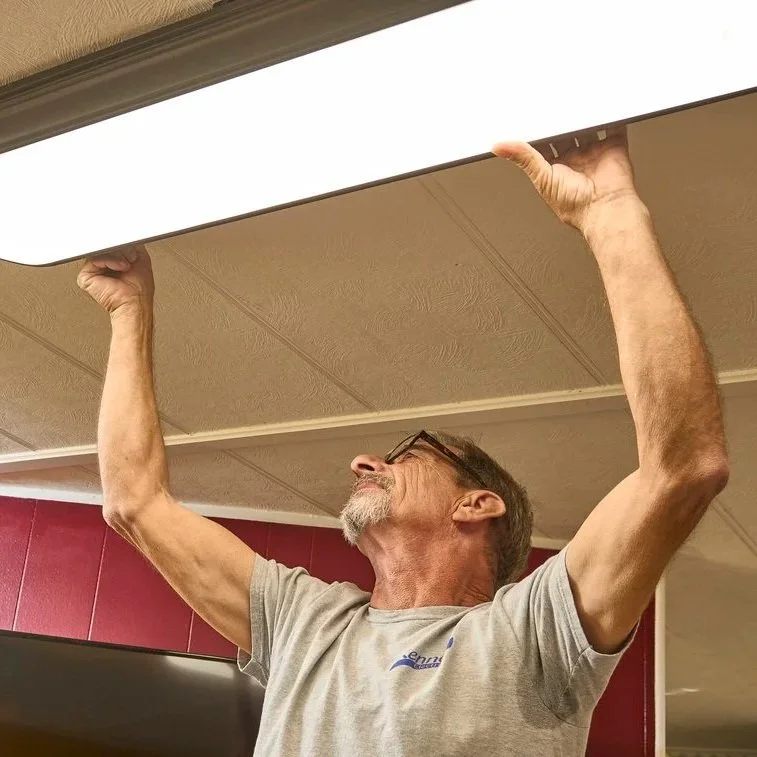
Electrician installing modern LED ceiling fixture to improve brightness, efficiency, and long-term lighting performance in residential living space.
Why Homeowners Keep Searching “Which Light Bulb Is Best For My Home”
Which light bulb is best is not a question homeowners ask casually. It comes after trial and error, wasted money, and the sense that lighting should not be this complicated. People expect to screw in a bulb and move on, not rethink color, brightness, heat, and lifespan every time a light burns out.
Florida homes add extra pressure to the decision. Lighting contributes heat, and heat drives cooling costs. Bulbs also run longer during summer evenings when rooms stay occupied later. Homeowners start noticing that certain rooms feel warmer, brighter, or harder to relax in. That discomfort pushes people to search for answers that explain why bulbs behave so differently.
Confusion grows because packaging focuses on marketing instead of real use. Watt equivalents, lumens, color temperature, and lifespan claims blur together without context. Without understanding how each bulb type actually performs in daily living spaces, homeowners keep swapping bulbs and hoping the next one finally feels right.
The Big Mistake Of Thinking All Bulbs Do The Same Job
One of the most common homeowner mistakes is assuming all bulbs do the same thing. If a bulb produces light, it feels interchangeable. That assumption causes problems because each bulb type behaves very differently in terms of heat output, light quality, and energy use.
Lighting affects more than visibility. It shapes how rooms feel, how long fixtures last, and how much strain goes on electrical systems. Treating bulbs as equals results in mismatched lighting that feels uncomfortable for no obvious reason. Over time, homeowners adapt by avoiding certain rooms, adding lamps, or leaving lights off longer than they want.
Understanding the differences between LED, CFL, incandescent, and halogen bulbs helps homeowners match the right bulb to the right space, rather than fighting lighting problems room by room.
Incandescent Bulbs And Why They Feel Familiar But Costly
Incandescent bulbs produce light by heating a filament until it glows. That process creates a warm, familiar light many homeowners still prefer. The color feels natural, and the bulb responds instantly when switched on.
The downside shows up in energy use and heat. Incandescent bulbs waste most of their energy as heat rather than light. In Florida homes, that extra heat adds to cooling demand, especially when multiple bulbs run for hours each evening. Homeowners may not feel the impact immediately, but it appears over time on energy bills and room comfort.
Incandescent bulbs also burn out more quickly than modern options. Frequent replacements add up, especially in hard-to-reach fixtures. While they feel simple and familiar, incandescents create ongoing cost and inconvenience that often go unnoticed until compared side by side with newer technologies.
Halogen Bulbs And The Illusion Of Being An Upgrade
Halogen bulbs operate similarly to incandescent bulbs but use a halogen gas to burn hotter and brighter. Many homeowners see them as a step up because they look cleaner, last slightly longer, and fit into compact fixtures.
That improvement comes with tradeoffs. Halogen bulbs run very hot, sometimes hot enough to affect fixtures and surrounding materials. In enclosed fixtures or recessed lighting, the heat shortens the lifespan and increases the risk of damage. Florida homes already fight heat, and halogen lighting quietly adds to the load.
Halogen bulbs also consume significantly more energy than LEDs while offering only marginal benefits over incandescents. Homeowners often choose them for their appearance without realizing the long-term costs and heat implications. Over time, rooms feel warmer, and replacements remain frequent.
CFL Bulbs And Why They Never Fully Caught On
Compact fluorescent lamps gained popularity as energy-saving alternatives to incandescents. They use less power and last longer, which appeals to homeowners trying to reduce bills.
The problem lies in performance and experience. CFLs often take time to reach full brightness, which frustrates people in kitchens, bathrooms, and entryways. The light quality can feel harsh or uneven, especially in living spaces meant to feel comfortable.
CFLs also contain small amounts of mercury, which creates disposal concerns. In Florida homes where humidity and heat affect electronics, CFLs tend to fail earlier than expected. Many homeowners tried them once, disliked the experience, and moved on, even if the energy savings made sense on paper.
LED Bulbs And Why They Changed Everything
LED bulbs produce light through solid-state electronics rather than heat. That difference makes them far more efficient, cooler, and longer-lasting than other options. Homeowners who switch fully to LED lighting often notice immediate improvements in comfort and energy use.
LEDs offer consistent brightness, instant-on performance, and wide control over color temperature. Warm tones mimic incandescent light, while cooler tones suit task areas. The ability to choose light quality removes the one-size-fits-all problem that plagued earlier bulb types.
Longevity matters too. LEDs last many times longer than incandescents and halogens. Fewer replacements mean less hassle, especially in high ceilings or outdoor fixtures. Over time, reduced heat output also eases strain on air conditioning systems in Florida homes.
Why Color Temperature Causes So Much Regret
'Why does my light feel too harsh or too yellow?' is a common homeowner complaint after switching bulbs. Color temperature plays a major role in how spaces feel, yet packaging often makes it confusing.
Lower color temperatures create warm, cozy light suited for living rooms and bedrooms. Higher temperatures produce cooler, brighter light ideal for kitchens, garages, and work areas. Randomly mixing temperatures creates visual discomfort that people struggle to explain.
Homeowners often buy bulbs based solely on brightness, ignoring color temperature. The result feels wrong even when the room looks well-lit. Understanding and matching color temperature to room function improves comfort without changing fixtures or layout.
The Shortcut Of Buying The Cheapest Bulb Every Time
Another common shortcut involves choosing the lowest-priced bulb without considering lifespan or energy use. That decision feels economical at checkout, but becomes expensive over time.
Cheap bulbs burn out faster, use more energy, and often deliver inconsistent light. Replacing them repeatedly costs more in the long run and adds frustration. In Florida homes where lights run longer in summer, those costs compound quickly.Investing in quality LED bulbs reduces replacements and stabilizes energy use. Over time, homeowners spend less time thinking about lighting at all, which is usually the goal.
How Bulb Choice Affects Fixtures And Wiring
Bulbs influence more than light output. Heat from incandescent and halogen bulbs stresses fixtures, sockets, and wiring. Over time, that heat loosens connections and degrades components.
LEDs run cooler, which protects fixtures and extends their life. In recessed lighting, enclosed fixtures, and outdoor applications, cooler operation matters significantly. Homeowners rarely connect fixture failures to bulb choice, but electricians see the relationship clearly.
Choosing bulbs that work with fixtures rather than against them improves long-term reliability and reduces repair needs.
Why Florida Homes Feel The Difference More Than Most
Florida homes experience longer cooling seasons and higher humidity. Bulbs that generate heat raise indoor temperatures and increase energy demand. That impact feels subtle day to day but significant over months.
Outdoor lighting also faces humidity and weather exposure. LEDs handle those conditions better when rated properly. Older bulb types struggle and fail faster outdoors, leading to frequent replacements and frustration.
Matching bulb type to Florida conditions improves comfort, reduces energy use, and lowers maintenance demands across the home.
How Electricians See Bulb Problems Play Out Over Time
Kennedy Electric often encounters homes where lighting problems appear unrelated at first. Flickering fixtures, warm sockets, and inconsistent brightness often trace back to the bulb rather than to wiring alone.
Homeowners rarely expect something as simple as a bulb to affect the system. Over time, repeated heat exposure and incompatible bulbs create small issues that build into bigger problems.
Choosing the right bulb simplifies lighting and protects electrical components. It also makes rooms feel intentionally lit rather than patched together.
FAQs
LED bulbs use the least energy while producing the same or better light output than other types. Over time, they reduce electricity use significantly.
LED bulbs cost more initially but last much longer and use less power. Most homeowners save money over time through lower bills and fewer replacements.
Flickering often indicates dimmer compatibility issues or poor-quality bulbs. Using bulbs rated for existing dimmers improves performance.
Mixing bulb types usually creates uneven light and discomfort. Using consistent bulb types and color temperatures produces better results.
Halogen bulbs offer good color but generate a lot of heat and use more energy. Most homeowners find that LED alternatives work better in the long term.
