

Is A Whole-Home Surge Protector Worth It In Lightning-Prone Florida?
Do I really need a whole-home surge protector, or am I just supposed to accept that every summer storm might fry something? How many times can my TV reboot before I admit this isn’t normal?
You’re sitting in your living room during a typical Florida afternoon thunderstorm. The sky cracks, the lights flicker, the WiFi drops, and your refrigerator makes that subtle clicking sound when the power stutters. At first, it feels like a minor annoyance. Then your microwave display starts glitching a few weeks later, or your garage door opener stops responding for no clear reason. That slow, creeping frustration often turns into rising repair bills and the uneasy feeling that your home’s electronics are taking a beating every storm season. That’s usually when homeowners start asking whether a whole-home surge protector is actually worth it in lightning-prone Florida.
As an electrician working in Florida homes, I can tell you that surge damage here is not theoretical. It’s common. The real question is not whether surges happen. It’s whether you want your appliances absorbing them directly.
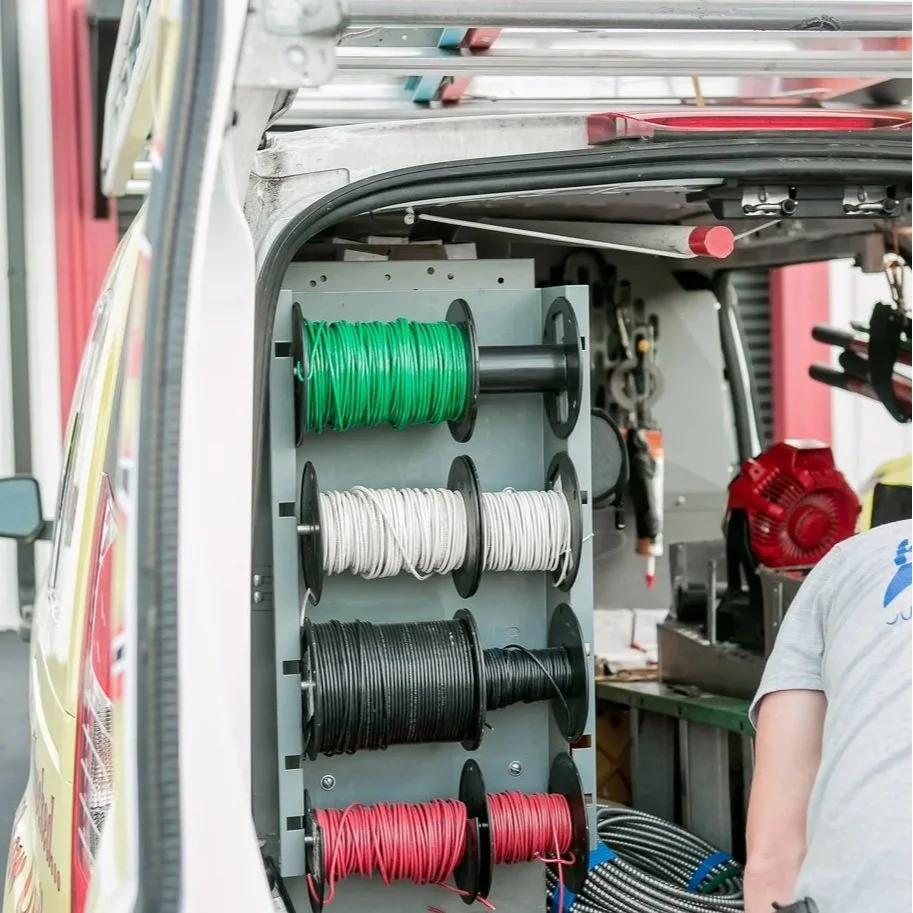
Service van stocked with wiring supplies representing whole home surge protector installation preparation protecting Florida homes from lightning damage.
Why Lightning In Florida Changes The Conversation
Florida consistently ranks among the highest states for lightning activity. Summer storms roll in fast, and even brief ones can pack serious electrical energy. A direct strike on your home is rare, but a nearby strike is not. When lightning hits a utility line, a transformer, or even the ground close to your neighborhood, voltage can spike across the electrical grid.
That spike travels along power lines and into homes connected to that system. Even if the surge lasts only a fraction of a second, it can overwhelm delicate electronic components. Modern appliances are full of circuit boards. Refrigerators, washing machines, air conditioners, and even dishwashers rely on digital controls. Those boards are far more sensitive than the old mechanical systems homeowners used decades ago.
Homeowners sometimes assume that if their lights come back on quickly, nothing serious happened. In reality, repeated small surges slowly degrade internal components. The appliance may continue working for months before failing. That delay makes it hard to connect the damage to storm activity, but the pattern is something we see repeatedly in Florida homes.
What A Whole-Home Surge Protector Actually Does
A whole-home surge protector is installed at your main electrical panel. Instead of protecting just one outlet or one device, it protects every circuit in the home. When the voltage entering the panel exceeds a safe threshold, the device diverts the excess energy to ground.
Think of it as a pressure relief valve. Under normal voltage, electricity flows through the panel to your circuits as usual. When a spike occurs, the surge protector reacts almost instantly, redirecting the dangerous portion away from your wiring and appliances.
Unlike plug-in surge strips, which only protect the devices connected to them, a whole-home surge protector defends built-in appliances. Your HVAC system, refrigerator, range, pool pump, and hardwired lighting circuits all benefit. In lightning-prone Florida, where surges can originate outside the home, intercepting them at the panel makes practical sense.
Why Plug-In Surge Protectors Alone Are Not Enough
One common homeowner mistake is assuming that a few power strips in the living room provide full protection. Plug-in surge protectors absolutely have value, especially for electronics like televisions and computers. However, they only defend devices connected directly to them.
Large appliances are rarely plugged into surge strips. Your air conditioner, water heater, and built-in microwave are connected directly to dedicated circuits. When a surge enters the panel, those appliances experience it before any plug-in protector can react.
Another misconception is that power strips last forever. Surge strips degrade over time as they absorb energy. Many homeowners have strips that are years old without realizing their protective capacity has diminished. Relying solely on outlet-level devices leaves gaps in protection, particularly during intense storm activity.
“Is A Whole-Home Surge Protector Really Necessary?”
Homeowners often type “Is a whole-home surge protector really necessary?” after hearing conflicting advice. The honest answer depends on your risk tolerance and the value of the electronics in your home.
If your home contains multiple smart appliances, entertainment systems, security equipment, and HVAC systems with digital boards, the potential cost of replacement can be significant. A single control board for an air conditioner can cost hundreds or even thousands of dollars.
In Florida, storm frequency increases the likelihood of repeated surge exposure. Even without direct lightning strikes, grid fluctuations during high-demand periods create voltage instability. Whole-home surge protection protects against both external lightning strikes and internal surges caused by large appliances cycling on and off.
The False Assumption That Insurance Covers Everything
Another outdated belief is that homeowners' insurance will cover any surge-related damage. While some policies may cover certain events, claims can be complex. Proving that a specific surge caused a specific appliance failure is not always straightforward.
Deductibles also matter. If your deductible is high, replacing a few damaged appliances may not justify filing a claim. Even if coverage applies, repeated claims can affect premiums over time.
Investing in surge protection reduces reliance on insurance as the first line of defense. Preventing damage is often less disruptive than navigating claims, scheduling replacements, and living without critical appliances.
Internal Surges Happen Daily
Lightning gets most of the attention, but internal surges occur every day. When your air conditioner kicks on during a hot Florida afternoon, it draws a significant amount of current. That startup creates a brief voltage fluctuation.
Refrigerators, pool pumps, and electric vehicle chargers also create small spikes when cycling. Those internal surges may not be dramatic, but they accumulate. Over months and years, they contribute to wear on circuit boards and sensitive electronics.
A whole-home surge protector helps manage these smaller spikes as well. It stabilizes the entire electrical system's environment. Instead of your appliances absorbing every fluctuation directly, the surge protector absorbs and redirects much of the stress.
Grounding And Why It Matters
Whole-home surge protectors rely on proper grounding. When excess voltage is diverted, it must have a safe path to ground. If your grounding system is outdated or compromised, the effectiveness of surge protection decreases.
Florida’s coastal areas introduce additional concerns. Salt air and moisture can affect grounding connections over time. Periodic inspection of grounding components supports the performance of surge protective devices.
At Kennedy Electric, we evaluate grounding integrity when installing panel-mounted surge protection. Protection is not just about adding a device. It is about ensuring the entire system works safely together.
Timing Matters In Storm Season
Florida's storm season places additional stress on electrical systems. Frequent thunderstorms mean repeated exposure to voltage spikes. Installing whole-home surge protection before peak storm months reduces vulnerability when risk is highest.
Many homeowners only consider surge protection after experiencing a costly failure. By that point, damage has already occurred. Taking action proactively changes the pattern from reactive repairs to preventive planning.
Seasonal timing also influences wear. After a particularly active storm season, surge protective components may have absorbed multiple events. Regular inspection keeps protection reliable year after year.
Where Whole-Home Surge Protection Provides The Most Value
Whole-home surge protectors offer the most value in homes with extensive electronics and modern appliances. Smart thermostats, WiFi routers, entertainment systems, and security cameras all rely on delicate circuitry.
Even lighting systems increasingly use LED drivers and control boards. A surge that once might have only dimmed an incandescent bulb can now damage an entire fixture. The modern electrical landscape is far more sensitive than older systems.
In Florida, where both lightning and high electrical demand are common, layered protection provides peace of mind. Combining whole-home surge protection with point-of-use surge strips for critical electronics offers comprehensive coverage.
So, Is It Worth It?
For many Florida homeowners, the question is less about whether surges happen and more about how much cumulative damage they are willing to accept. Replacing a control board here and a television there adds up.
Whole-home surge protection does not eliminate every possible risk. A direct lightning strike can still cause significant damage. However, it significantly reduces the impact of the vast majority of surge events.
Protecting the electrical backbone of your home often costs less than replacing a single major appliance. In lightning-prone Florida, where voltage instability is part of the environment, whole-home surge protection becomes a proactive step rather than a luxury add-on.
FAQs
Given Florida’s high lightning activity and frequent storms, whole-home surge protection provides valuable defense against voltage spikes. It helps protect built-in appliances and sensitive electronics from both external and internal surges. Many homeowners find that it reduces unexpected repair and replacement costs over time.
A whole-home surge protector significantly reduces the impact of most lightning-related surges, especially from nearby strikes. However, no device can guarantee full protection from a direct lightning strike. It still greatly limits damage in the majority of common surge scenarios.
Using both offers layered protection. Whole-home protection intercepts large incoming surges at the panel, while plug-in surge protectors shield specific electronics from smaller residual spikes. Together, they provide more comprehensive coverage.
The lifespan depends on the number and intensity of surges it absorbs. In storm-heavy areas like Florida, periodic inspection is advisable. Manufacturers provide guidance on expected service life, and indicator lights often show operational status.
Yes, when installed at the electrical panel, a whole-home surge protector helps defend all circuits, including those serving major appliances. That protection extends to air conditioners, refrigerators, and other hardwired equipment.
