

How To Prevent Electric Shock At Home: A Safety Guide
Why did that outlet zap me? Why am I nervous every time I plug something in near the sink?
You reach behind the coffee maker with damp hands, brush the metal prongs, and feel that sharp jolt shoot up your finger. It only lasts a split second, but your heart jumps, and now you are staring at the outlet, wondering what else in this house could shock you. That moment of surprise turns into daily anxiety, especially in kitchens, bathrooms, garages, and outdoor spaces where water is part of everyday life. Preventing electric shock at home is not about paranoia. It is about understanding how electricity behaves and how small oversights can turn into real safety risks.
As an electrician working in Florida homes, I have seen how often minor warning signs get brushed off. A small tingle from an appliance. An outlet that sparks when you plug something in. A breaker that trips occasionally in a bathroom. Those details matter. Electric shock prevention starts with paying attention to what your home is telling you.
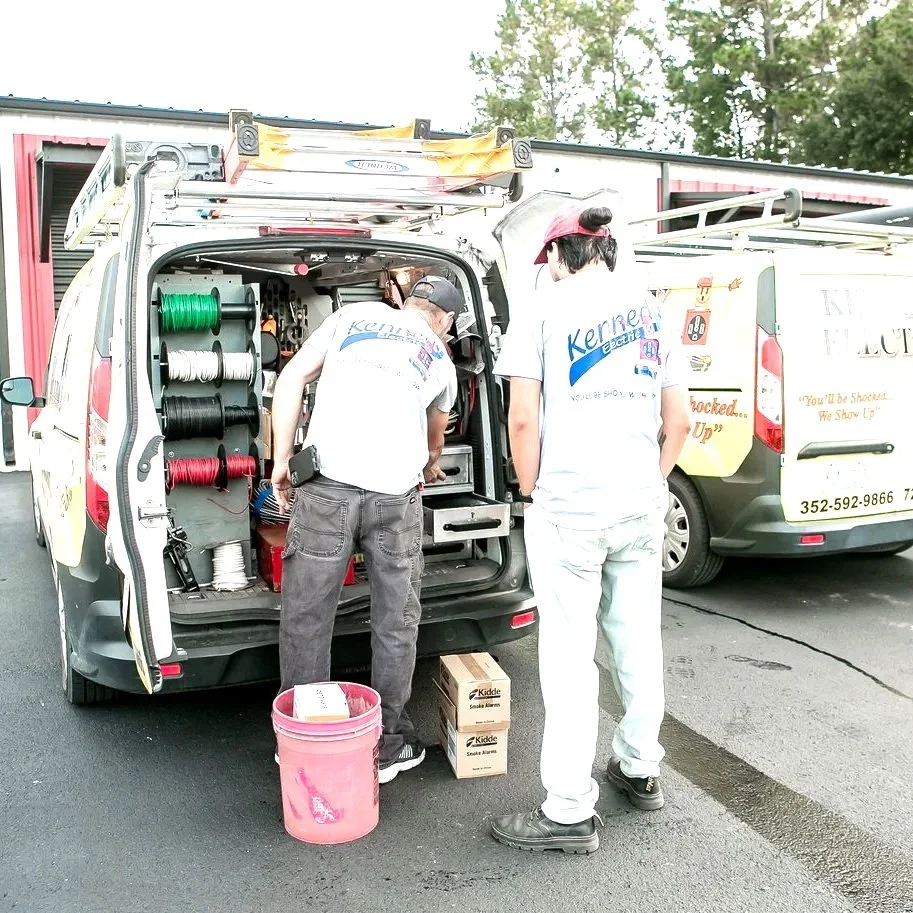
Kennedy Electric technicians preparing equipment highlighting professional inspection services focused on electrical grounding GFCI protection preventing household electric shock.
Understanding Why Electric Shock Happens In The First Place
An electric shock occurs when your body becomes part of an electrical circuit. Electricity always looks for a path to ground. If a wire is damaged, a device is improperly grounded, or moisture creates an unintended path, your body can serve as the connection. The severity of a shock depends on voltage, current, duration, and the path it takes through the body.
Many homeowners assume that if something is plugged in and working, it must be safe. That belief leads to complacency. Worn cords, cracked outlet plates, and loose connections can all increase shock risk even when lights turn on and appliances operate normally. Function does not always equal safety.
Florida’s climate adds another layer. High humidity, frequent rain, and outdoor living spaces increase exposure to moisture. Water lowers the body’s resistance to electrical current. A shock that might feel mild in a dry environment can become more dangerous when moisture is present. Preventing electric shock at home means accounting for both the electrical system and the surrounding environment.
The Role Of Grounding And Why It Matters More Than People Think
Grounding is one of the most misunderstood parts of residential electrical systems. A properly grounded system provides a safe path for stray electrical current to travel into the earth rather than through a person. Many homeowners never think about grounding until something goes wrong.
In older Florida homes, grounding systems may be outdated or incomplete. Two-prong outlets without a grounding conductor were once common. Replacing those outlets with three-prong versions without upgrading the wiring creates a false sense of security. Devices may appear grounded but lack a true protective path.
When a fault occurs inside an appliance, a grounded system allows the breaker to trip quickly. Without proper grounding, metal components of a device can become energized. Touching that surface can result in electric shock. Understanding the difference between cosmetic upgrades and true grounding improvements helps homeowners avoid risky shortcuts.
Why Do I Get Shocked When I Touch My Appliances?
Many people search “Why do I get shocked when I touch my appliances?” after feeling a small but noticeable tingle from a refrigerator, microwave, or washing machine. That sensation often indicates a grounding problem or a fault within the appliance.
Appliances contain internal wiring and components that can degrade over time. If insulation inside the appliance wears down, electricity may contact the metal housing. In a properly grounded system, that condition triggers a breaker or trips a GFCI. In a compromised system, the metal surface can remain energized at a low level.
Another common cause is reversed polarity or improper wiring at the outlet. Even small wiring errors can alter how current flows. That alteration may not prevent the appliance from functioning, but it can increase the risk of shock. Investigating even mild shocks is important because they can signal larger electrical safety concerns.
The Importance Of GFCI Protection In Florida Homes
Ground fault circuit interrupter outlets, commonly known as GFCIs, are critical for preventing electric shock at home. GFCIs monitor the balance of current flowing through a circuit. If they detect an imbalance, which can indicate electricity flowing through a person, they shut off power almost instantly.
Florida building codes require GFCI protection in kitchens, bathrooms, garages, laundry areas, and outdoor spaces. These areas are more likely to involve water. Despite that requirement, older homes may lack adequate protection or have GFCIs that no longer function properly.
Homeowners sometimes become frustrated when a GFCI trips repeatedly. Instead of investigating, they replace it with a standard outlet or bypass it entirely. That shortcut removes a key safety feature. Repeated tripping usually signals a ground fault or wiring issue that needs attention. Proper diagnosis maintains protection without sacrificing convenience.
Common Mistake: Using Extension Cords As Permanent Solutions
One of the most common homeowner mistakes in preventing electric shock involves extension cords. Extension cords are designed for temporary use. Using them permanently, especially in kitchens or outdoor areas, increases both shock and fire risk.
Cords run under rugs, across damp patios, or through doorways and experience wear and tear. Insulation can crack. Plugs can loosen. Connections may become exposed to moisture. In Florida’s humid climate, outdoor cords degrade faster than many people expect.
Proper practice involves installing additional outlets where needed rather than relying on cords. While extension cords are convenient, they introduce additional connection points and potential failure points. Each additional connection increases the chance of shock if insulation fails or grounding is compromised.
Why Does My Bathroom Outlet Keep Tripping?
Another frequent search phrase is “Why does my bathroom outlet keep tripping?” In most cases, that outlet is protected by a GFCI. Tripping indicates the device detected an imbalance in current. Moisture from showers, hair dryers drawing heavy loads, or small wiring faults can all cause trips.
Bathroom environments are uniquely challenging. Steam increases humidity. Hair dryers and curling irons pull significant current. If wiring connections are loose or the GFCI device is aging, nuisance trips may occur more frequently.
Rather than viewing tripping as an annoyance, it helps to see it as a safety signal. Replacing an old GFCI outlet or tightening connections behind it often resolves the issue. Ignoring repeated trips or swapping in a non-protected outlet removes a layer of protection specifically designed to prevent electric shock in wet environments.
Outdoor Electrical Safety And Weather Exposure
Florida homeowners spend significant time outdoors. Patios, pool areas, and outdoor kitchens all require electrical power. Outdoor receptacles must be weather-resistant and properly sealed to prevent water intrusion.
Improperly installed outdoor outlets can allow rainwater to enter the box. Over time, corrosion forms at connections. Corroded wiring increases resistance and can energize metal components unexpectedly. Even landscape lighting systems, if damaged or poorly installed, can create shock hazards in damp soil.
Using weather-rated covers that protect outlets even when cords are plugged in reduces risk. Regular inspection of exterior boxes for cracks, missing gaskets, or loose fittings also matters. Outdoor safety is not a one-time installation task. Exposure to sun, rain, and humidity means components require periodic evaluation.
The Hidden Risk Of Damaged Cords And Plugs
Electric shock prevention at home also involves attention to portable devices. Phone chargers, power strips, and appliance cords endure daily handling. Twisting, pulling, and bending stress internal conductors.
A cord that feels warm, has visible cracks, or exposes copper strands should be replaced immediately. Electrical tape is not a permanent solution. Damaged cords increase the chance of direct contact with live conductors.
Power strips overloaded with multiple high-draw devices present another risk. Heat buildup inside the strip can degrade insulation. Plugs may loosen over time, creating small arcs that damage contact points. Using properly rated equipment and replacing worn accessories prevents preventable shocks.
Teaching Household Members About Electrical Safety
Preventing electric shock at home involves everyone who lives there. Children may insert objects into outlets. Teenagers may use devices near water without thinking about the risk. Adults may plug in tools outdoors during rain.
Outlet covers in homes with young children reduce the risk of accidental contact. Clear rules about not handling electrical devices with wet hands or standing water nearby help reinforce safe habits. Simple conversations about why certain outlets trip or why cords should not be damaged build awareness.
Electrical safety is not about fear. It is about respect for how electricity works. When everyone understands the basics, accidental exposure decreases significantly.
Professional Inspection And Long-Term Prevention
Even with careful habits, hidden electrical issues can develop over time. Loose connections behind walls, aging panels, and deteriorating grounding systems require professional evaluation. Periodic inspection helps identify vulnerabilities before they result in electric shock.
At Kennedy Electric, we often find that homeowners tolerate small warning signs for years. A tingle from an appliance. An outlet that feels slightly warm. A GFCI that trips occasionally. Addressing those issues early restores confidence in the home’s safety.
Preventing electric shock at home is an ongoing process rather than a single upgrade. As appliances change and electrical demand increases, systems must adapt. Taking proactive steps today reduces the likelihood of frightening surprises tomorrow.
FAQs
The most common cause is faulty grounding or damaged wiring that allows electricity to contact metal surfaces or travel through unintended paths. Moisture in areas like kitchens and bathrooms increases the risk. Regular inspection of outlets, cords, and grounding systems helps reduce the chance of shock.
GFCI outlets monitor the balance of electrical current between hot and neutral wires. If they detect a difference that may indicate electricity flowing through a person, they shut off power almost instantly. That rapid response significantly lowers the risk of serious injury.
Even a mild shock indicates an underlying issue that should not be ignored. While small shocks may not cause serious injury, they can signal grounding problems or damaged equipment. Investigating the cause helps prevent more severe incidents later.
Older homes may lack modern grounding systems or sufficient GFCI protection, increasing the risk of shock. Wiring insulation may also degrade over time. Evaluating and updating older systems improves overall electrical safety.
High humidity lowers the body’s resistance to electrical current and can contribute to corrosion at electrical connections. Both factors increase the likelihood of shock in certain conditions. Maintaining proper outlet protection and weather-resistant installations helps offset those risks.
