Fall Electrical Prep: Get Your Home Ready for Storm Season
The lights flicker again, the air feels heavy, and you are already wondering which room will go dark first when the next storm rolls through. Plenty of Florida homeowners do not think about their electrical system until the power cuts out mid-dinner or the breaker starts clicking during a downpour.
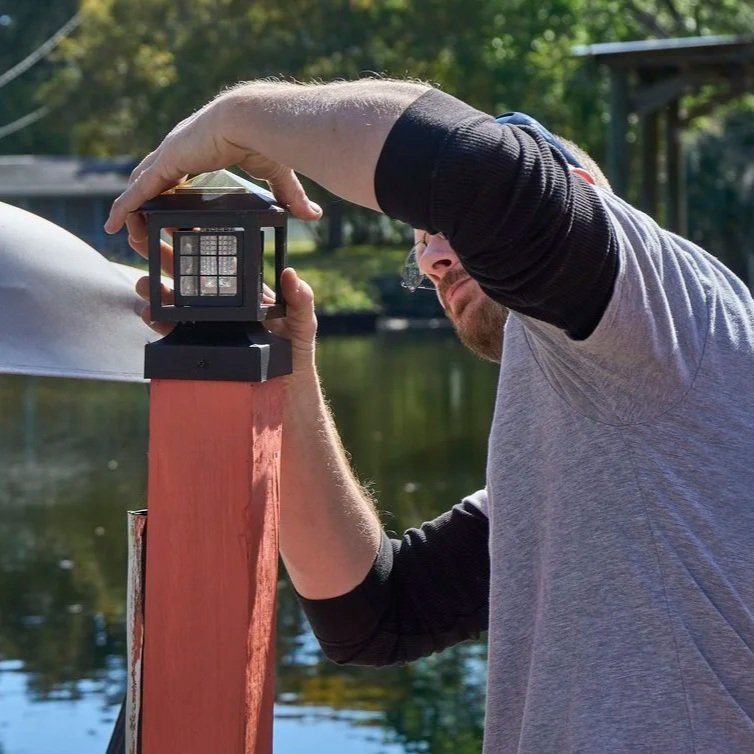
Electrician installing outdoor lighting fixture near waterfront, preparing home electrical systems for fall storms, moisture exposure, and increased lighting demand.
Fall Is When Florida Electrical Problems Start Showing Up
Fall has a way of exposing electrical weaknesses that stayed hidden all summer. Homeowners often assume storm season is only about wind and rain, but electrical systems feel the stress long before anything dramatic happens. Longer nights mean more lighting use, cooling systems still work hard, and sudden storms introduce moisture where it does not belong. Many people start searching things like “why do my lights flicker when it rains” or “power keeps tripping during storms” because fall is when these issues become impossible to ignore.
A common misunderstanding is believing that if power stayed on through last hurricane season, everything must still be fine. Electrical components age quietly, and small issues compound over time. Loose connections, worn breakers, and outdoor wiring that has endured years of heat and humidity start to react differently once fall storms arrive. Ignoring these early warning signs often leads to bigger problems later, including damaged appliances, unreliable power, and rising frustration every time the weather shows up in the forecast.
Why Storm Season Stresses Your Electrical System More Than You Expect
Storms do more than knock out power lines. Electrical systems inside the home react to pressure changes, moisture intrusion, and fluctuating voltage that comes with heavy weather. Homeowners often think the danger starts when lightning strikes nearby, but the stress actually builds long before that. Increased humidity affects connections, panels experience more load as households spend more time indoors, and minor faults start triggering safety responses.
Many Florida homes were wired for a different era of electrical demand. Modern households run more devices, smart systems, and high-demand appliances than wiring was originally designed to support. When storms hit, those systems get pushed even harder. Voltage irregularities can cause sensitive electronics to behave erratically, breakers to trip repeatedly, or lights to dim without a clear explanation. Over time, these stresses shorten the lifespan of electrical components and increase the chance of sudden failures during the worst possible moment.
The Common Mistake of Assuming Your Electrical Panel Is Fine
One of the most common homeowner assumptions is that the electrical panel only matters if breakers trip constantly. In reality, panels can degrade quietly while still appearing functional. Fall storms often expose issues such as corrosion, loose bus bars, or outdated breaker technology that no longer responds reliably to fluctuating conditions. Homeowners searching “do I need to upgrade my electrical panel” often reach that question after repeated storm-related annoyances.
Panels in Florida face unique challenges from humidity and salt air, even when located indoors. Moisture can enter through conduit, small gaps, or poorly sealed areas, gradually affecting internal components. When storms bring rapid changes in load or minor surges, those weakened parts struggle to respond properly. Over time, this leads to nuisance tripping, inconsistent power delivery, and a growing sense that the electrical system feels unpredictable rather than dependable.
Outdoor Wiring Takes the Hardest Hit During Fall Storms
Outdoor electrical components work quietly until the weather pushes them too far. Fall storms bring heavy rain, wind-driven debris, and saturated ground, which can put stress on exterior outlets, lighting, and buried wiring. Homeowners often search “is outdoor wiring safe in heavy rain” after noticing GFCI outlets tripping or landscape lights flickering during storms. These issues usually signal deeper exposure problems rather than simple inconvenience.
Outdoor wiring degrades faster than most homeowners expect. Sun exposure, moisture, and temperature swings break down insulation and seals over time. When fall storms arrive, water intrusion becomes more aggressive, especially around older fixtures or improperly sealed junctions. Ignoring these signs can lead to frequent outages, damaged circuits, or safety risks that extend beyond the exterior and start affecting indoor systems as well.
Why Whole Home Surge Protection Becomes a Bigger Deal in Fall
Surge protection often feels like an optional upgrade until storms start rolling through regularly. Fall brings more frequent power fluctuations as utility systems respond to weather-related stress. Homeowners commonly ask, “Do I really need surge protection?” after replacing an appliance or dealing with electronics acting strangely after a storm. These experiences usually occur because small surges accumulate over time.
Modern homes rely heavily on sensitive electronics that are prone to malfunction when the voltage is inconsistent. Televisions, smart thermostats, internet equipment, and even kitchen appliances contain delicate components. Without proper surge protection, repeated minor spikes gradually wear them down. Fall storms increase the frequency of these events, making protection less about catastrophic lightning strikes and more about everyday electrical stability during unpredictable weather.
Generator Readiness Is Not Just About Having One Installed
Many Florida homeowners feel a sense of relief once a generator is installed, assuming that box outside solves storm season worries. Fall storms quickly reveal that readiness involves more than ownership. Homeowners often search “why won’t my generator start during a storm” only after discovering maintenance gaps or connection issues when power drops unexpectedly.
Generators require regular inspection, testing, and proper transfer equipment to function safely and reliably. Fuel systems, batteries, and automatic switches all need attention before storm season ramps up. Ignoring these details often results in frustration during outages, wasted money on unused equipment, and ongoing inconvenience when power loss interrupts daily routines, rather than feeling manageable.
The False Comfort of DIY Electrical Fixes Before Storm Season
Fall inspires many homeowners to tackle small projects around the house, including electrical tweaks meant to prepare for storms. Replacing outlets, adding extension cords, or adjusting breakers can feel harmless, but shortcuts often create hidden problems. Homeowners searching “is it safe to replace an outlet myself” frequently underestimate how small wiring mistakes affect system performance under stress.
DIY fixes sometimes mask symptoms rather than solve underlying issues. Loose connections may seem stable until storms introduce vibration and moisture. Incorrectly installed devices can fail under load, leading to flickering lights or tripped breakers during bad weather. Over time, these shortcuts compound, making the electrical system less resilient exactly when reliability matters most.
How Aging Wiring Shows Its Weakness During Fall Storms
Older homes across Florida often carry wiring that was never designed for today’s electrical demands or storm patterns. Homeowners frequently type “old wiring problems during storms” after noticing unusual smells, buzzing sounds, or persistent outages during bad weather. These signs point to insulation breakdown, overloaded circuits, or outdated materials struggling under modern conditions.
Fall storms increase electrical load as households rely more on lighting, climate control, and indoor activities. Aging wiring reacts poorly to these demands, especially when combined with moisture intrusion or temperature changes. Ignoring these warning signs can lead to repeated outages, damaged equipment, and a lingering sense that the home feels unreliable during storms instead of protected.
Why GFCI and AFCI Devices Matter More Than You Think
Protective devices like GFCI and AFCI outlets quietly play a huge role during storm season. Homeowners often assume these devices only trip when something goes wrong, without realizing how they respond to moisture, arc faults, and unstable conditions. Searches like “why does my GFCI keep tripping when it rains” become common in the fall as the weather exposes vulnerabilities.
These devices are designed to interrupt power when unsafe conditions appear, which means frequent tripping often signals real issues rather than nuisance behavior. Moisture in outdoor circuits, deteriorating wiring, or overloaded outlets trigger protective responses. Understanding why these devices activate helps homeowners address the root causes rather than repeatedly resetting breakers and hoping for the best.
Timing Matters More Than Most Homeowners Realize
Fall sits in a narrow window where preparation still makes sense and urgency has not yet peaked. Waiting until storms are constant limits options and increases stress. Electrical systems respond better to planned attention than emergency fixes. Homeowners searching “when should I prepare my electrical system for storms” often wish they had acted earlier, once outages become frequent.
Seasonal transitions affect materials, load patterns, and moisture exposure. Addressing electrical readiness in the fall allows problems to be identified before they escalate during winter storms or extended outages. This timing reduces disruption, protects daily routines, and helps homeowners feel more in control when the weather turns unpredictable.
Working With Professionals Who Understand Florida Conditions
Electrical work is never one-size-fits-all, especially in Florida. Systems here face unique environmental challenges that require experience and local knowledge. Companies like Kennedy Electric see firsthand how storm season exposes weaknesses that generic solutions overlook. Homeowners benefit when electricians understand how humidity, heat, and storm frequency interact with residential systems.
Professional evaluations focus on long-term performance rather than quick fixes. Experienced electricians recognize patterns that signal future issues, not just immediate problems. That insight helps homeowners avoid repeated frustration, unexpected outages, and the feeling that storm season always catches them off guard rather than prepared.
FAQs
Lights flicker during fall storms because electrical systems experience voltage fluctuations, moisture exposure, and increased load at the same time. These conditions stress connections and components that may already be worn, causing noticeable changes in lighting performance.
Breakers tripping during heavy rain often indicate moisture intrusion, overloaded circuits, or aging components rather than normal operation. Repeated tripping signals that the system is reacting to unsafe conditions and should not be ignored.
Outdoor outlets deserve attention before storm season because they are exposed to rain, humidity, and debris. Faulty outdoor outlets can affect indoor circuits and increase safety risks during storms.
Surge protection helps manage repeated small voltage spikes that occur during storms, not just major lightning events. Over time, these small surges damage electronics and appliances without obvious warning signs.
Preparing early in the fall allows time to identify and address issues before storms become frequent. Waiting until outages occur limits options and often leads to reactive decisions rather than thoughtful improvements.
