

Electrical Safety for Kids: Age-by-Age Guide for Parents
Why does your house suddenly feel like a minefield the minute your child starts moving on their own? Florida parents hit a breaking point when everyday routines turn into constant hovering, unplugging cords, blocking outlets, and worrying that one distracted moment could lead to a shock, a fall, or a scary trip to urgent care.
Most parents search this topic after a very specific moment. It might be catching a baby crawling straight for an outlet, watching a toddler yank on a lamp cord, or realizing an older child is plugging and unplugging things to see what happens. That moment flips a switch mentally. Electrical systems stop feeling invisible and become a daily source of stress. Frustration builds, routines get disrupted, and the home starts to feel like it is working against you instead of supporting family life.
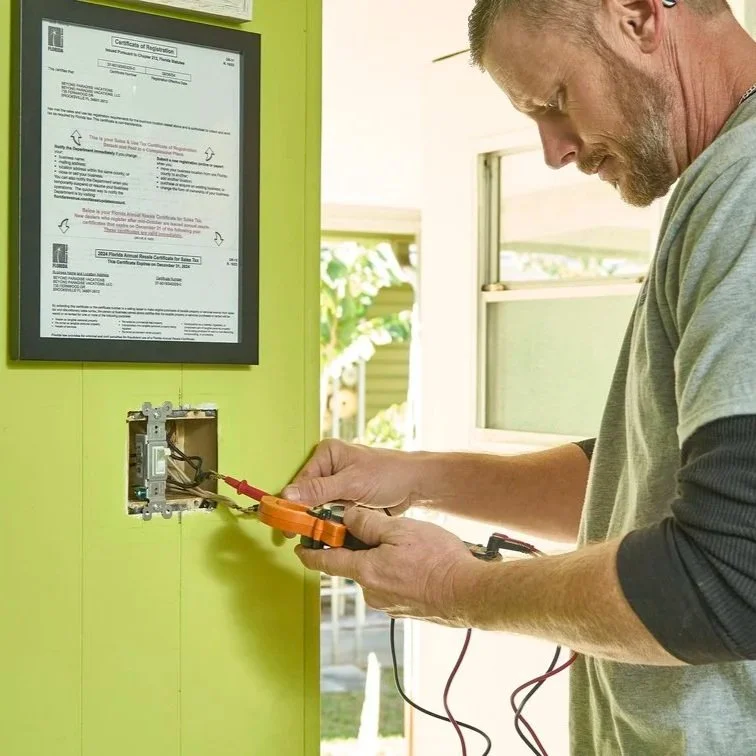
Electrician repairing wall outlet wiring during child safety upgrade, ensuring stable connections and tamper resistant protection for everyday family use.
Why Electrical Safety Looks Different At Every Age
Parents often assume electrical safety is a one-time checklist item handled during babyproofing. That assumption creates gaps as children grow and interact with their environment in new ways. Electrical risks change with motor skills, curiosity, strength, and independence. What works for an infant becomes useless for a toddler, and what protects a toddler does nothing for a school-age child experimenting with devices.
Ignoring how electrical safety evolves leads to constant catch-up. Parents react to scares rather than prevent them. Florida homes add another layer of complexity because heat, humidity, and long cooling seasons stress electrical systems over time. Understanding safety by age helps parents match protection to real behavior rather than hoping one solution lasts forever.
Infants And Crawlers: When Everything Goes In The Mouth
Parents often search “Are outlets dangerous for babies?” once crawling starts. Infants explore by grabbing, chewing, and banging objects without understanding danger. Outlets, cords, and plugs sit right at eye and hand level, making them irresistible. The primary risk at this stage comes from direct contact with energized components and pulling objects down from above.
Outlet covers seem like an obvious fix, but they fail quickly. Babies chew on them, knock them loose, or turn them into toys. Loose outlets become even more dangerous when pressed or pulled. Florida homes with older outlets often have worn tension that creates gaps. Permanent solutions, like tamper-resistant outlets and properly secured devices, reduce the need for constant supervision. Reducing floor-level hazards gives parents breathing room during a stage that already demands nonstop attention.
Toddlers And Walkers: When Curiosity Turns Physical
Parents type “why is my toddler obsessed with outlets” after watching repeated attempts to poke, pry, and pull. Toddlers test cause and effect relentlessly. They discover that cords move, switches click, and outlets resist pressure. Strength increases fast, making previous barriers ineffective.
Extension cords and power strips become major hazards at this stage. Toddlers pull cords to bring objects down, chew on flexible insulation, and insert items where they do not belong. Over time, cords fray, and plugs loosen, creating shock and fire risk. Florida heat accelerates wear, especially in rooms with heavy electrical use. Permanent outlet placement and reducing cord reliance remove temptation. Electrical safety for toddlers means redesigning the environment rather than relying on warnings they cannot understand yet.
Preschool Age: When Imitation Becomes Risky
Preschoolers copy what they see adults do. Parents search “my child keeps unplugging things” after realizing imitation has consequences. Kids want to plug in lamps, charge devices, and flip switches because they see adults do it daily. Fine motor skills improve, making outlet covers useless.
At this stage, loose outlets and unstable switches become serious risks. Kids apply pressure, wiggle devices, and explore openings. Worn outlets expose energized components more easily over time. Florida homes with decades-old wiring and devices show wear that adults overlook, but children exploit. Teaching basic rules helps, but physical protection matters more. Tamper-resistant outlets and stable devices reduce risk while allowing kids to learn without constant danger.
Early School Age: When Independence Grows
Parents often search “how do I teach my child electrical safety” once kids start spending time alone in rooms. School-age children understand rules but still act impulsively. Bedrooms fill with lamps, chargers, fans, and electronics that create new electrical loads.
Power strips multiply as kids plug in devices without understanding capacity. Overloaded strips heat up quietly behind furniture. Outlets loosen under repeated use. Over time, unsafe habits form around convenience. Florida homes already operate under heavy electrical demand from cooling systems, which compounds the problem. Electrical safety at this age means proper outlet placement, circuit planning, and guidance that matches real use rather than constant policing.
Preteens And Teens: When Experimentation Starts
Parents search “are extension cords safe for kids” again when older children start rearranging rooms and experimenting. Teens push boundaries, modify setups, and plug in higher-powered devices like gaming systems, speakers, and tools. Confidence outpaces understanding.
Improvised electrical solutions become common. Daisy-chained power strips, blocked vents, and overloaded circuits appear without warning. Over time, heat buildup damages wiring and devices. Florida humidity adds corrosion and degradation behind walls. At this stage, safety comes from a robust electrical infrastructure that tolerates mistakes without catastrophic failure. Education paired with solid systems supports independence without constant fear.
Why Parents Overestimate The Protection Of Outlet Covers
Many parents believe outlet covers handle electrical safety until children grow out of the phase. Searching “do outlet covers actually work” often follows frustration. Covers fall out, break, or get bypassed quickly. They do nothing to address wiring conditions, outlet stability, or internal arcing.
The false sense of security delays real improvements. Parents feel safer while risks quietly increase behind the wall. Florida homes with older receptacles experience faster wear due to heat and humidity. Outlet covers mask the problem instead of fixing it. Permanent solutions reduce daily stress and scale with a child’s development instead of falling behind it.
Why Loose Outlets And Switches Matter More With Kids
Parents notice loose outlets during normal use but often dismiss them as cosmetic. Searching “why does my outlet move” becomes urgent when a child presses on it. Movement exposes gaps where fingers and objects reach energized wiring.
Loose devices also stress internal connections. Over time, arcing and heat increase fire risk. Florida homes experience seasonal load changes that accelerate wear. Tight, properly mounted outlets protect children and improve overall system stability. Addressing looseness early prevents small annoyances from becoming serious hazards.
Why Electrical Panels Should Never Be Ignored
Parents assume breaker panels are out of reach until a child proves otherwise. Searching “Is my electrical panel dangerous for kids?” often follows a scare. Panels contain live components even when breakers are off. Missing covers or blanks expose severe risk.
Florida panels frequently sit in garages or utility rooms exposed to heat and moisture. Corrosion and wear increase danger over time. Securing access and updating outdated panels protects curious children and improves reliability. Parents who address panel safety early avoid panic later.
Why GFCI And AFCI Protection Confuses Parents
Parents often see GFCI and AFCI mentioned, but struggle to understand the difference. Searching “what is a GFCI outlet” usually leads to partial answers. GFCI protection reduces shock risk near moisture by cutting power when an imbalance occurs. AFCI protection detects arcing that can cause fires.
Assuming one type covers all risks leaves gaps. Homes without modern protection face higher shock and fire risks, especially when children interact with outlets and cords. Florida homes built before updated standards often lack comprehensive protection. Adding proper protection quietly reduces risk across all ages.
Why Older Florida Homes Need Extra Attention
Parents search “Is my old house safe for kids electrically?” after learning how standards have changed. Older homes often lack tamper-resistant outlets, modern protections, and stable wiring. Heat and humidity accelerate degradation behind walls.
Outlets lose tension faster. Wiring insulation breaks down. Grounding may be incomplete. Childproofing these homes requires addressing system age rather than adding accessories. Families living in older homes experience relief once underlying issues are corrected.
Why Renovations Are The Best Time To Address Safety
Parents renovating often search “should I upgrade outlets during renovation” when the walls open up. Renovations provide access to wiring, boxes, and layouts that shape long-term safety. Skipping upgrades leads to regret once access closes.
Replacing standard outlets, improving placement, and updating protection during renovations integrates safety without future disruption. Florida families renovating for growth benefit most when electrical safety planning happens alongside design decisions.
Why Teaching Safety Works Better In A Safer Home
Parents want to teach kids respect for electricity, but rules work best in environments designed for safety. Searching “how do I teach my child electrical safety” often focuses on lectures. Kids learn better through experience.
Homes with built-in protection allow exploration without constant danger. Protected outlets, stable systems, and thoughtful layouts support learning while reducing risk. Over time, kids develop safer habits without fear-driven supervision.
Why Peace Of Mind Matters For Parents
Parenting already brings enough stress. Electrical systems should not add to it. Parents searching “how do I stop worrying about electrical safety” realize peace of mind comes from trusting the home itself.
Age-appropriate electrical safety reduces constant vigilance. Homes designed for families allow parents to focus on relationships rather than on hazards. Electricians working with families see the relief that comes when safety becomes passive rather than reactive.
Why Professional Insight Helps Families
Online advice rarely accounts for how a specific home behaves electrically. Florida homes vary widely in age and layout. What works in one house may fail in another.
Electricians see patterns parents miss, such as overloaded circuits or hidden wear. Kennedy Electric helps Florida families move from patchwork fixes to systems that support kids at every stage. That shift replaces constant worry with confidence.
FAQs
Electrical childproofing should begin before a child starts crawling. Protection works best when in place before children can access hazards.
Tamper-resistant outlets protect against accidental contact but should be paired with proper outlet placement and education as kids grow.
Older children face different risks related to device use, overloading, and experimentation. Safety should adapt as children grow and become more independent.
Florida's heat and humidity accelerate the wear on electrical components, increasing the risk over time compared to milder climates.
Upgrades reduce hazards that require constant supervision, allowing parents to spend less time monitoring and more time on family life.
