Electrical Fire Prevention Checklist for Older Florida Homes
Why does an older house always come with that low-grade worry you cannot quite name? You flip a switch and hear a faint buzz, smell something warm near the panel, or watch the lights dip when the AC kicks on, and you wonder how long the wiring has been hanging on like that.
Most homeowners who are searching for this are reacting to those moments. An outlet that feels warmer than it should, a breaker that trips more often each summer, or a house that feels electrically tired. Older Florida homes pose unique fire risks because systems built for a different era are now pushed to withstand heat, humidity, and modern demands. When those risks get ignored, the outcome is not just inconvenience. It can mean damaged appliances, constant frustration, and dangerous conditions hidden behind walls that feel fine until they are not.
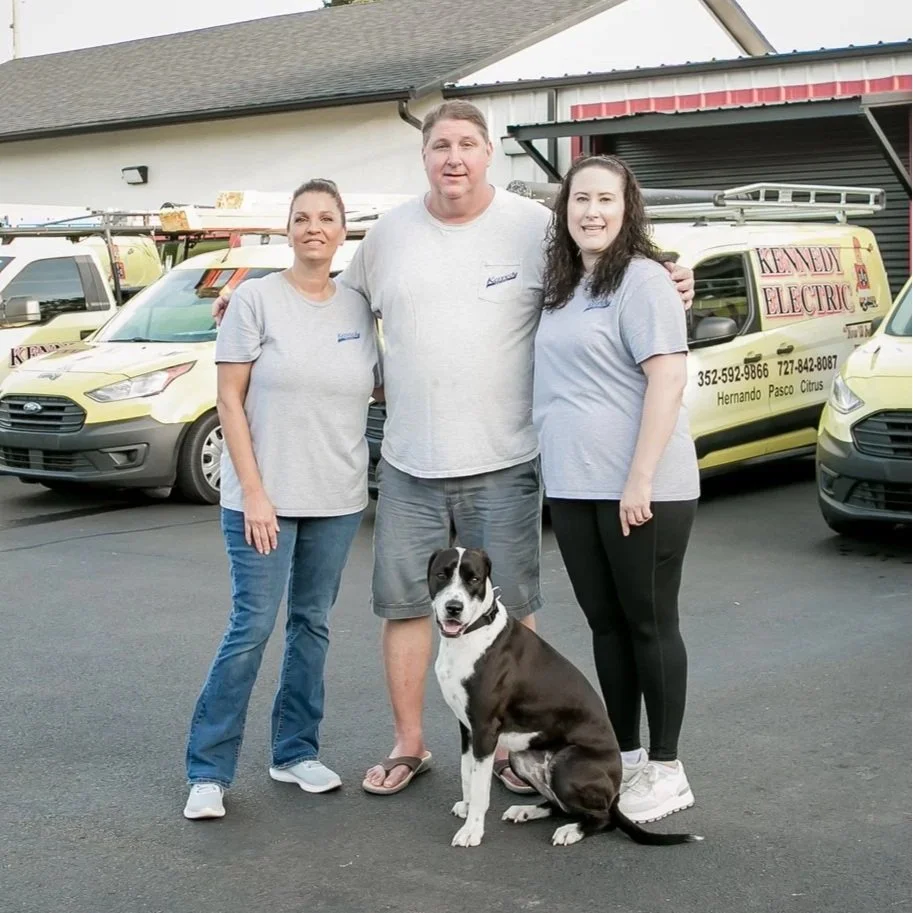
Kennedy Electric team standing with service vehicle, representing trusted expertise in upgrading older Florida homes for electrical safety.
Why Older Florida Homes Face Higher Electrical Fire Risk
Older homes in Florida were wired for a lifestyle that no longer exists. Decades ago, houses ran a refrigerator, a few lights, and maybe a window unit. Today, the same homes power central air conditioning, home offices, large televisions, chargers, smart devices, and kitchen appliances running simultaneously. Electrical systems that were once adequate now operate near their limits every single day.
Florida conditions make that strain more dangerous. Heat accelerates insulation breakdown. Humidity encourages corrosion inside panels, outlets, and junction boxes. Wiring expands and contracts constantly, loosening connections over time. Fire risk in older homes rarely comes from one big failure. It develops gradually as small weaknesses stack up year after year. Homeowners often adapt to flickering lights or frequent breaker trips without realizing that these are signs the system is under stress, which it was never designed to handle in the long term.
The Common Belief That Old Wiring Is Fine If It Still Works
One of the most common homeowner assumptions is that wiring is fine as long as power flows. Lights turn on, outlets work, appliances run, so the system must be safe. Electrical systems do not work that way. They can function while quietly becoming more dangerous.
Old wiring insulation dries out and cracks. Connections loosen. Resistance increases. Each of those changes creates heat. Heat damages surrounding materials and increases the chance of arcing. Florida homes accelerate this process because warm, humid conditions reduce the margin for error. By the time an outlet sparks or a burning smell appears, damage is often well underway inside the walls. Waiting for obvious failure is one of the most common reasons older homes experience electrical fires.
Electrical Panels That Were Never Meant For Modern Demand
Many older Florida homes still rely on electrical panels installed decades ago. Homeowners assume panels last forever if breakers reset properly. Internally, panels age even when they appear fine on the outside. Bus bars corrode, breaker contacts weaken, and connections loosen.
Panels designed for lower electrical demand struggle when modern loads are added without upgrades. Circuits run closer to capacity for longer periods, especially during Florida summers when cooling systems run constantly. That sustained load creates heat throughout the panel and wiring system. Fires related to panels often start from overheated connections rather than dramatic failures, making early warning signs easy to miss.
Why Outlets And Switches Wear Out Faster In Older Homes
Outlets and switches are mechanical devices with limited lifespans. In older homes, many have been used for decades without replacement. Contacts lose tension, plastic becomes brittle, and internal components degrade. Homeowners often notice plugs falling out easily or outlets feeling warm, but delay replacement.
Warmth indicates resistance and heat buildup. Florida heat amplifies that effect. Sparking outlets indicate arcing, which damages insulation and nearby materials. In older homes, worn outlets often connect to aging wiring, compounding the problem. Replacing outlets proactively reduces fire risk far more than homeowners expect.
Extension Cords And Power Strips As Permanent Wiring
Older homes often lack enough outlets for modern living. Homeowners compensate with extension cords and power strips. What feels like a practical workaround becomes a fire risk when used long-term.
Extension cords are not designed for continuous load. Kitchens, living rooms, and home offices in older homes often rely on them daily. Florida heat and humidity accelerate the breakdown of insulation inside cords. Cords tucked behind furniture or under rugs trap heat and hide damage. Electrical fires tied to extension cords usually begin internally, without visible warning, making them especially dangerous.
Why Breaker Trips Are A Warning Sign In Older Homes
When homeowners search, " Why does my breaker keep tripping in an old house?", they are often dealing with overloaded or deteriorating circuits. Breakers trip to stop unsafe current flow. Resetting them without investigation treats the symptom, not the cause.
Older wiring struggles under modern demand. Each breaker trip signals heat buildup somewhere in the system. Over time, that heat damages insulation and connections. Florida summers worsen the problem by pushing systems harder for longer periods. Frequent trips should never be ignored in older homes, even if power comes back on quickly.
The Hidden Risk Of Outdated Grounding Systems
Grounding standards have changed significantly over time. Many older Florida homes lack modern grounding or have incomplete systems. Homeowners often assume grounding only matters for shock protection. Grounding also stabilizes electrical current and reduces the risk of arcing.
Without proper grounding, electrical faults behave unpredictably. Arcing increases, heat builds faster, and damage spreads more easily. Florida's high humidity increases the risk of corrosion in grounding components, further reducing their effectiveness. Grounding issues rarely exhibit obvious symptoms until a failure occurs, making them among the most overlooked fire risks in older homes.
Why GFCI And AFCI Protection Matter More In Older Homes
Older homes often lack GFCI and AFCI protection entirely. Homeowners may have added a GFCI outlet in one location and assume the problem is solved. Protection must be installed correctly within the circuit to function as intended.
GFCI protection reduces the risk near water sources such as kitchens, bathrooms, and garages. AFCI protection detects dangerous arcing that can start fires inside walls. Older wiring is more prone to arcing due to insulation breakdown and loose connections. Without AFCI protection, those arcs continue unnoticed. Over time, repeated arcing ignites surrounding materials, leading to fires that appear to come from nowhere.
DIY Electrical Fixes That Compound Risk In Older Homes
DIY electrical work is common in older homes. Adding outlets, replacing switches, or installing fixtures feels manageable. The danger lies in compatibility. Older wiring methods, materials, and capacities differ from modern standards.
Incorrect wire sizes, improper connections, and overloaded circuits create stress points that worsen over time. Florida heat accelerates insulation breakdown around those mistakes. DIY work often skips load calculations and grounding considerations, increasing long-term fire risk. Problems may remain hidden until a spark, a smell, or an outage finally draws attention.
Seasonal Stress And Why Florida Summers Expose Weaknesses
Electrical fire risk rises during periods of sustained demand. Florida summers push older systems harder than any other season. Air conditioning runs constantly, reducing available capacity for other circuits.
Problems that seem manageable during cooler months worsen under summer load. Outlets heat faster, breakers trip more often, and wiring operates closer to failure. Homeowners often notice issues in summer and dismiss them once temperatures drop, allowing damage to continue quietly year after year.
Why Renovations Without Electrical Upgrades Increase Fire Risk
Many homeowners renovate older homes cosmetically without addressing the electrical infrastructure. New kitchens, lighting, and appliances increase electrical demand without upgrading wiring or panels.
That mismatch places constant stress on old systems. Florida homes renovated without an electrical evaluation experience higher fire risk because components never designed for modern loads are pushed beyond safe limits. Fires linked to renovated older homes often trace back to systems that were never updated to match new usage.
How Electricians Evaluate Fire Risk In Older Homes
Electricians assess older homes differently from newer ones. Load distribution, wiring condition, panel integrity, grounding, and connection quality all matter. Professionals evaluate how systems behave in real conditions rather than relying solely on visual inspection.
Electricians like Kennedy Electric understand how Florida's heat and humidity accelerate aging and how small warning signs connect to larger system risks. That experience allows problems to be identified before failure becomes dangerous rather than inconvenient.
The Emotional Toll Of Living With Electrical Uncertainty
Older homes carry charm, but electrical uncertainty creates daily stress. Homeowners hesitate to run appliances together, worry about leaving devices unattended, and feel uneasy during storms or outages. That constant low-level concern erodes comfort and confidence in the home.
Electrical systems should fade into the background. When they demand attention, something is wrong. Addressing fire risks in older homes restores peace of mind along with safety.
FAQs – Generator Services in Florida
Outdated wiring and overloaded circuits pose the greatest risk. Systems designed for lower demand struggle under modern usage, especially in Florida's heat.
Many older homes benefit from panel upgrades due to limited capacity and internal deterioration. Panels can function while still posing a fire risk.
Frequent breaker trips, warm outlets, flickering lights, or burning smells indicate potential issues. An inspection provides clarity beyond visible symptoms.
GFCI and AFCI protection significantly reduces the risk of shock and fire. Older homes often lack proper coverage, making upgrades especially valuable.
Older homes benefit from regular inspections every few years or after renovations. Florida conditions justify closer monitoring to catch early warning signs.
