

Downed Power Lines: What To Do And How To Stay Safe
Is that power line really just lying in my yard right now? Why is nobody else freaking out about that cable sparking near my driveway?
You step outside after a Florida storm, smell wet asphalt and broken branches, and then you see it. A thick black line stretched across your lawn or draped over your fence. Maybe it is humming. Maybe it is silent. Either way, your first instinct is confusion, followed quickly by fear. Downed power lines are not just storm debris. They can carry enough electricity to cause serious injury or death, even when they look harmless. Knowing what to do and how to stay safe in that moment can protect you, your family, and your neighbors.
As an electrician who has worked on storm-damaged properties in Florida for years, I can tell you that hesitation and misinformation are common. People assume that if the lights are out, the line must be dead. That assumption can turn a stressful situation into a life-threatening one.
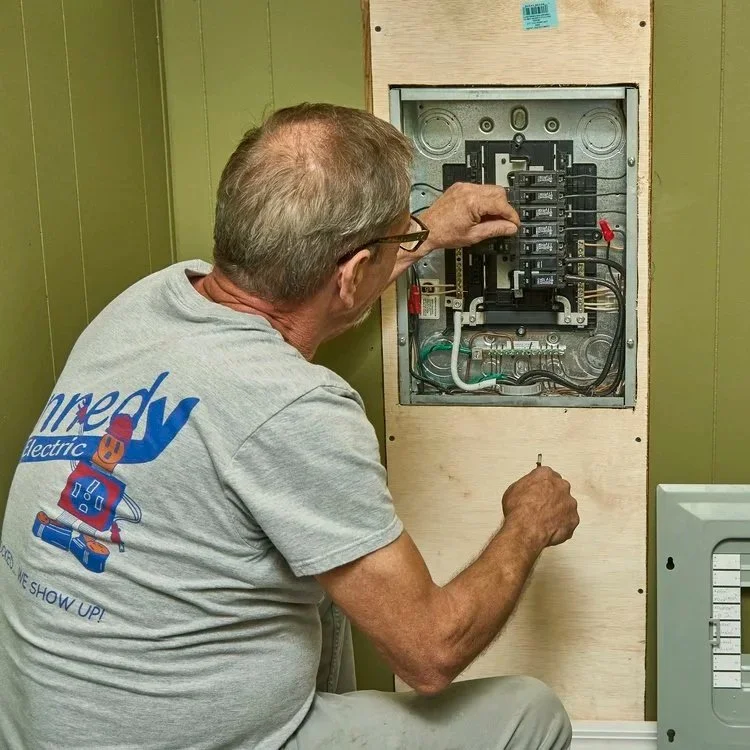
Electrician inspecting breaker panel after storm highlighting safety evaluation following downed power line incidents electrical system assessment.
Why Downed Power Lines Are More Dangerous Than They Look
One of the biggest misconceptions about downed power lines is that they pose a danger only when they are actively sparking. Electricity is not always visible. A line can lie quietly in grass or across a driveway and still be energized.
When a power line falls, it may remain connected to the electrical grid. Even if a breaker or recloser on the utility side trips, systems can automatically attempt to restore power. That means a line that appears safe can suddenly become energized again without warning. In Florida, where storms and high winds are common, utility crews work quickly, but automatic systems can complicate the situation.
Another hidden danger involves the ground around the line. Electricity spreads outward from the point of contact with the earth. The soil itself can become energized. Stepping near a downed power line can expose you to voltage differences between your feet. That condition, called a step potential, can cause an electric shock even without direct contact with the wire. Understanding that risk changes how you approach the scene.
What To Do Immediately If You See A Downed Power Line
When you see a downed power line, your first move should be to stop. Do not approach it to get a closer look. Do not attempt to move it with a stick, shovel, or any tool. Even non-conductive materials can become unsafe if conditions are wet or if the line is partially energized.
Keep a wide distance. Utility companies often recommend staying at least thirty feet away. In Florida neighborhoods with smaller yards, that may mean staying inside your home. If the line is across a road or driveway, block access from a safe distance and warn others verbally without stepping closer.
Call your local utility company immediately. If the line poses an immediate threat, such as sparking near a structure or blocking a roadway, contact emergency services as well. Reporting promptly allows trained crews to safely isolate and deenergize the line. Waiting for someone else to call creates unnecessary risk.
“Are Downed Power Lines Always Live?”
Many homeowners search “Are downed power lines always live?” after a storm. The honest answer is that you must assume they are. Even if your house has no power, nearby circuits may still be energized.
Power distribution networks are complex. Different lines serve different sections of a neighborhood. A fallen line may belong to a feeder that remains active while your specific home is out. In addition, backup generators and solar systems in the area can sometimes feed power back into lines if not properly isolated.
Assuming a line is dead because it is not sparking is dangerous. Electricity does not need to create visible effects to cause harm. Treat every downed power line as energized until confirmed otherwise by the utility provider.
The Hidden Hazard Of Vehicles And Downed Lines
Storm damage often brings another frightening scenario. A vehicle may strike a fallen line or become entangled in one. Many people instinctively rush to help the driver. Good intentions can put multiple lives at risk.
If a power line is touching a vehicle, the safest place for the driver is often inside the car. The vehicle can act as a protective shell, directing current around the occupants. Stepping out and touching the ground while also contacting the vehicle can create a path for electricity through the body.
Instruct the driver to remain inside and, if possible, avoid touching metal components. Call emergency services and the utility company immediately. Only in fire situations should occupants attempt to exit. If they must leave, they should jump clear of the vehicle without touching it or the ground, then shuffle away with feet together to reduce the risk of stepping. That information may feel technical, but understanding the principle in a real emergency can save a life.
Common Homeowner Mistake: Trying To Move The Line
One of the most dangerous mistakes I have seen in Florida neighborhoods is someone attempting to move a downed line to clear a driveway or yard. People often believe that using a wooden stick or wearing rubber gloves will keep them safe.
Rubber gloves from a toolbox are not designed for high-voltage protection. Wet wood from rain conducts electricity more than people realize. Even if the line appears to be a smaller service line rather than a large transmission cable, it can still carry significant current.
Moving a downed power line is a job for trained utility professionals with proper equipment. Attempting to relocate it, even slightly, risks direct contact and increases the chance of arcing. The inconvenience of waiting for crews is minor compared to the consequences of a shock injury.
Storm Season And Increased Risk In Florida
Florida’s storm season creates repeated exposure to downed power lines. High winds, lightning, and saturated soil weaken poles and uproot trees. Fallen branches often pull lines down unexpectedly.
Repeated storms also weaken infrastructure over time. Poles that survive one event may fail during the next. Lines stretched or stressed during previous storms can sag or snap more easily. That compounding wear increases the likelihood of encountering downed lines after severe weather.
Homeowners often focus on visible damage, such as roof leaks or fence repairs. Electrical hazards may not receive the same immediate attention, especially if power outages seem temporary. Prioritizing safety around electrical infrastructure during storm cleanup reduces risk for everyone in the household.
Children, Pets, And Downed Line Awareness
Children and pets introduce additional concerns. Kids may see a fallen line as just another object in the yard. Dogs may run toward it out of curiosity. In Florida neighborhoods where outdoor play is common, clear communication becomes critical.
Explain to children in simple terms that any fallen wire is dangerous and not to be touched. Keep pets indoors until the area is confirmed safe. Fencing off the area temporarily from a safe distance adds another layer of protection.
Education reduces panic and confusion. When everyone in the home understands the basic rule of staying far away, the chance of accidental contact drops significantly.
After The Line Is Removed: What Comes Next?
Once the utility company removes a downed power line and restores service, homeowners often assume the issue is resolved. However, secondary damage may remain. Surges associated with line failure and restoration can affect appliances, breakers, and sensitive electronics.
If you notice flickering lights, tripping breakers, or devices behaving oddly after a storm, a professional inspection may be warranted. Electrical panels, grounding systems, and service connections can experience stress during major weather events.
At Kennedy Electric, we often evaluate homes after storm-related incidents to verify that systems remain in stable condition. Florida’s climate makes electrical resilience important. Proactive inspection following severe weather helps identify weakened components before they fail unexpectedly.
How To Stay Safe During Cleanup And Repairs
Cleanup after a storm can be chaotic. Debris piles, fallen branches, and scattered materials make it easy to overlook electrical hazards. Before using chainsaws, ladders, or metal tools, scan the area for any nearby lines.
Avoid cutting tree limbs that are touching or supporting electrical lines. Even if the main line appears intact, tension from branches can cause unexpected movement. Let trained crews handle any vegetation in contact with power infrastructure.
Wear insulated gloves when handling debris near electrical service lines, but remember that personal protective equipment is not a substitute for distance. Staying clear remains the safest approach. Planning cleanup around confirmed safe zones prevents rushed decisions that lead to injury.
FAQs
Stay at least thirty feet away and keep others clear of the area. Do not attempt to move the line or touch anything in contact with it. Contact your local utility company immediately and, if there is immediate danger, call emergency services.
You must assume they are energized until the utility provider confirms otherwise. Even if your home has no power, nearby lines may still carry current. Automatic systems can also restore power without warning.
Driving over a downed power line is not safe. The line may be energized and can damage your vehicle or create a hazardous situation. Turn around and report the line to the utility company instead.
Remain inside the vehicle if there is no fire and call emergency services. Exiting the vehicle while it is in contact with an energized line can create a path for electricity through your body. Wait for professionals to declare the area safe.
Storm-related line failures can contribute to surges and stress on home electrical systems. After service is restored, monitor for any unusual behavior, such as flickering lights or tripped breakers. A professional inspection can help identify any lingering issues.
